Shavuot in the Warsaw Ghetto (1940)

Shimon Huberband was a student of the Rebbe and an amateur historian working for Emanuel Ringelblum’s underground Oneg Shabbat archive (Rabbi Huberband, who was killed along with Ringelblum and most of the archivists, was probably instrumental in convincing the Rebbe to entrust his manuscript to Ringelblum for burial). Rabbi Huberband  visited the court of Piaseczno on the holiday of Shavuot and provided a brief but evocative first-hand report.

fullsizeoutput_1de9

At the time (June 13-14, 1940) rumors circulated throughout the Warsaw Ghetto to the effect that France’s fall to the Nazis was imminent.

I went off to the Piaseczno Rebbe to his Hasidic gathering. There was a crowd of about 150 people, but the traditional dairy meal wasn’t served as it was in earlier years. The Rebbe said words of Torah, including many words of strengthening and encouragement. Various zmiros were sung. When the gathering concluded, the traditional dance—-with one person standing behind the other—began. During the dance the Rebbe wept profusely.

Huberband’s comment that the Rebbe wept profusely during the traditional dance is puzzling. Were these tears of anguish, tears of joy, or something else? The Rebbe’s sermon that day should provide insight, but it is unusually complex, relating to the question of how God, an infinite Being, could communicate with a finite human being. For the Rebbe, the holiday of Shavuot represented a direct and immediate transportation over this philosophical divide, an unmediated communication from God to the Jewish people. The Rebbe described this as nothing less than an intimate and mystical sharing of God’s very Self. Based on the content of the sermon, it is tempting to think that the the Rebbe’s tears were expressions of overwhelming gratitude at the immensity of this Divine communication. 

Sometimes the prosecutors overpower the Jewish people, Heaven forbid, and it is difficult for the Jewish people to be saved. Then the Holy One who is Blessed is revealed, which silences all the accusers, as in Egypt when the Almighty said I am God. Consequently Shavuot, the time of the receiving of the Torah—and any time when Torah is studied—is a moment of salvation, and no accuser has power over the Jewish people, Heaven forbid.  This is because God is speaking with us, and the essence of “I” is revealed. This is the sense of the verse, may Your kindness comfort me as You spoke to Your servant, not as one who speaks to one’s self, rather as You said to Your servant: When You spoke to mefor Torah is my delight and You speak to me.

The Rebbe was ever-cognizant of the material woes of his congregation, however, so he translated his mystical emotion into an appeal on their behalf by returning to a discussion of Psalms:

A song of ascents. I will raise my eyes to the mountains, where will my help come from? My help is from God, who creates Heaven and earth. We must understand the meaning of the question, where will my help come from? Don’t we know that God is the Savior?  Furthermore, what is the relevance of the reference to the creation of heaven and earth?

It is obvious that when the Jewish people are endangered, Heaven forbid, seeing no possibility of salvation, and they ask from where [me-ayin], then the response must be my help is from God, who creates Heaven and earth, for God also created them from nothingness [me-ayin], for there was no prior basis or possibility for their creation, so too he will save us now ex nihilo [me-ayin].

The fall of Paris was confirmed by the afternoon the day after Shavuot, ruining the immediate post-holiday atmosphere by casting an additional layer of gloom over the city. Warsaw Jews, however, would not be discouraged by the worsening military situation. Shimon Huberband recorded an example of the black humor typical of the Ghetto circulating at that time:

Jews are now very pious.  They observe all the ritual laws:  they are stabbed and punched with holes like matzahs, and have as much bread as on Passover; they are beaten like hoshanas, rattled like Haman; they are green as esrogim and thin as lulavim; they fast as if it were Yom Kippur; they are burnt as if it were Hanukah, and their moods are as if it were the Ninth of Av.

Adapted from

Torah from the Years of Wrath 1939-1943: The Historical Context of the Aish Kodesh

277 pages

Hardcover: $29.71

Softcover: $24.95

Kindle: $9.99 (free for Kindle Unlimited readers)
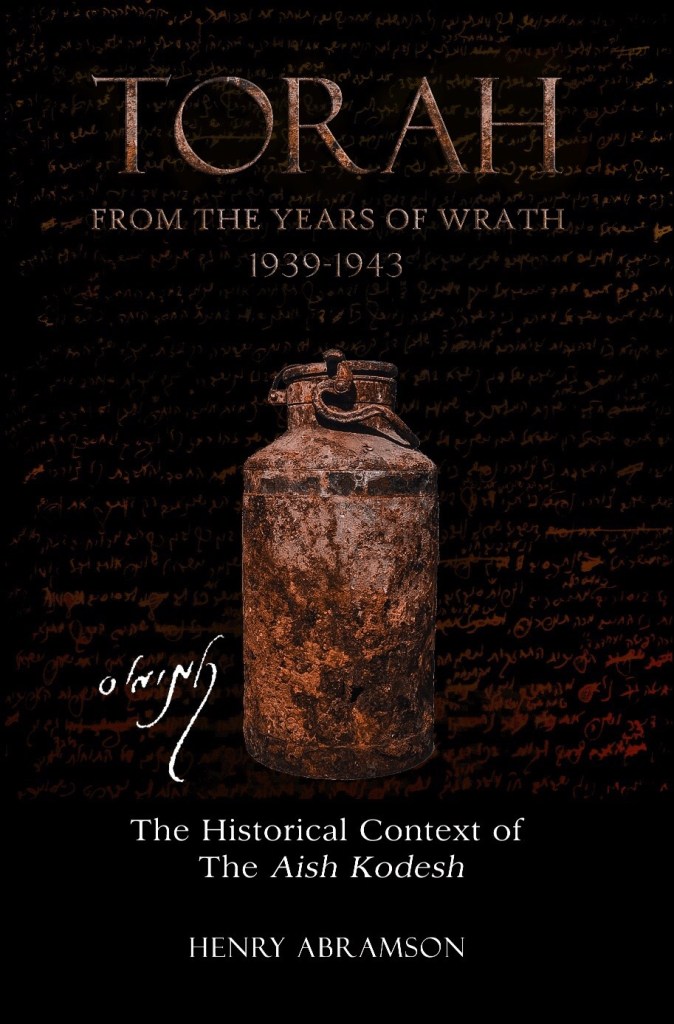
torah from the years of wrath final cover- front

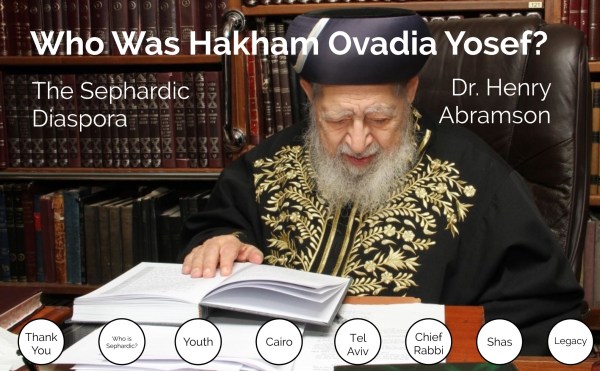
Who Was HaRav Ovadia Yosef?

Brief overview of the life and work of Hakham Ovadia Yosef, prominent Chief Sephardic Rabbi of Israel. Final installment in the Spring 2018 Lecture Series: The Sephardic Diaspora.

Sponsored by Katie and Vick Crespin of Miami Beach, FL

In honor of the Six Million and all who were killed just for being Jewish.

Greetings from Harvard

Hello everyone–

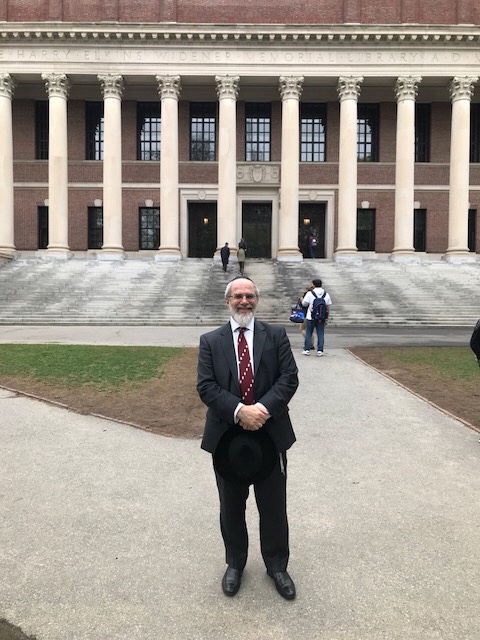
Had a great time here at the “Touro of Cambridge.” Great colleagues, great students, but looking forward to returning to the Mighty Avenue J for tomorrow’s lecture on Hakham Ovadya Yosef, last of the Spring 2018 series). Here’s a couple photos my wife took of me at my old hangouts: Widener Library and the rare books collection of Houghton Library.

Hope you all saw that Touro was recently ranked #1 for Jewish Students by the Algemeiner!

Parashat Emor in the Warsaw Ghetto (May 11, 1940)

The brief sense of relief felt by Warsaw Jews at the beginning of Passover 1941 did not last. Decrees expelling Jews from several towns were scheduled for the intermediate days of the holiday, and pressures upon the Jewish community increased dramatically. Diarists of the Ghetto record widespread confusion among the population over new Nazi policies implemented in early May 1941. For example, non-Jewish Poles wandering through Jewish streets were suddenly subject to seizure, a measure that was apparently connected with the demand for forced labor as the Nazis pushed their offensive on the western front. Ironically, many Poles even began to wear the Jewish armband in order to avoid the decree.

The bizarre and shifting boundaries of the Ghetto prompted Chaim Kaplan to note that “even the mystics freely admit this time that it is an insoluble riddle…Warsaw, like Noah’s Ark in its day, is full of compartments and partitions that block the roads in the very places where up to now there was the most traffic.  Thus for example on the corner of Nalewki and Nowolipki streets, a dividing wall has been made, and a man whose apartment is at Number 2 Nowolipki Street—a distance of only a few steps—is now forced to go around and around, via Nowloipki-Zamenhof-Gesia-Nalewki streets—a half hour’s walk…in any case, beautiful Warsaw has become a jail made up of cell after cell, whose inhabitants are treated like prisoners.”

The Rebbe’s drashah on Emor (May 11) returned to the theme of supra-rational divine “decrees” (hukim), introduced earlier in Passover. As Warsaw Jewry puzzled over frightful Nazi decrees that seemed senseless, the Rebbe exhorted them to affirm the hukim of the Torah in response. On a literary level, it seems as if the Rebbe drew upon the mood of confusion noted in the ghetto, emanating from the irrational persecution, and urged Jews to find solace in the supra-rational nature of the Divine decrees. When Jews submit to the will of the Creator while enduring what seems like self-defeating persecution, then in fact even the smallest religious effort attains great meaning:

Consequently, when it is a time of suffering for Jacob, Heaven forbid, we wonder what possible benefit we could derive from the experience. On the contrary, does it not diminish our study of Torah? Moreover, we are not concentrating on the performance of commandments as we once did.  Since we have become completely annulled before God, however, and we see that there is no one to save us other than the Holy One who is Blessed, therefore from this self-abnegation itself we draw closer to the Blessed one, to such an extent that all of our actions, speech, and thoughts are directed to God, and become fulfilled commandments.  That is to say, when we do everything which is possible for us to do.

Excerpted from Torah from the Years of Wrath: The Historical Context of the Aish Kodesh

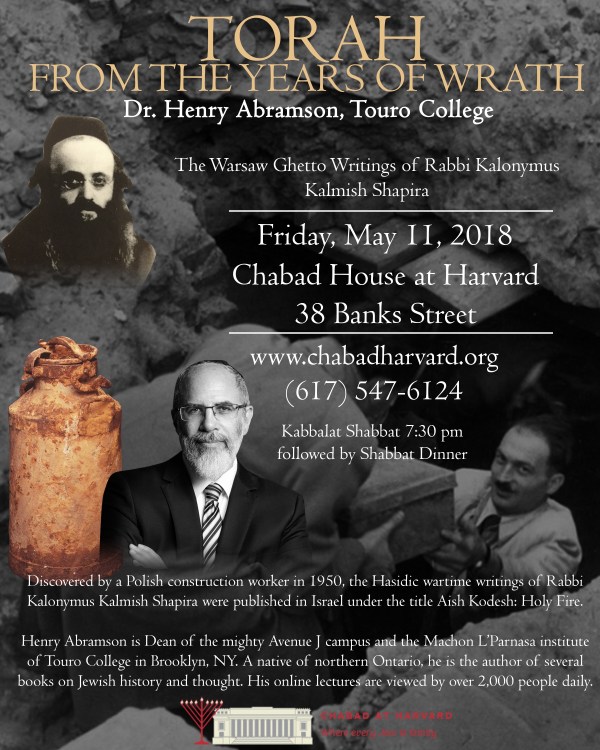
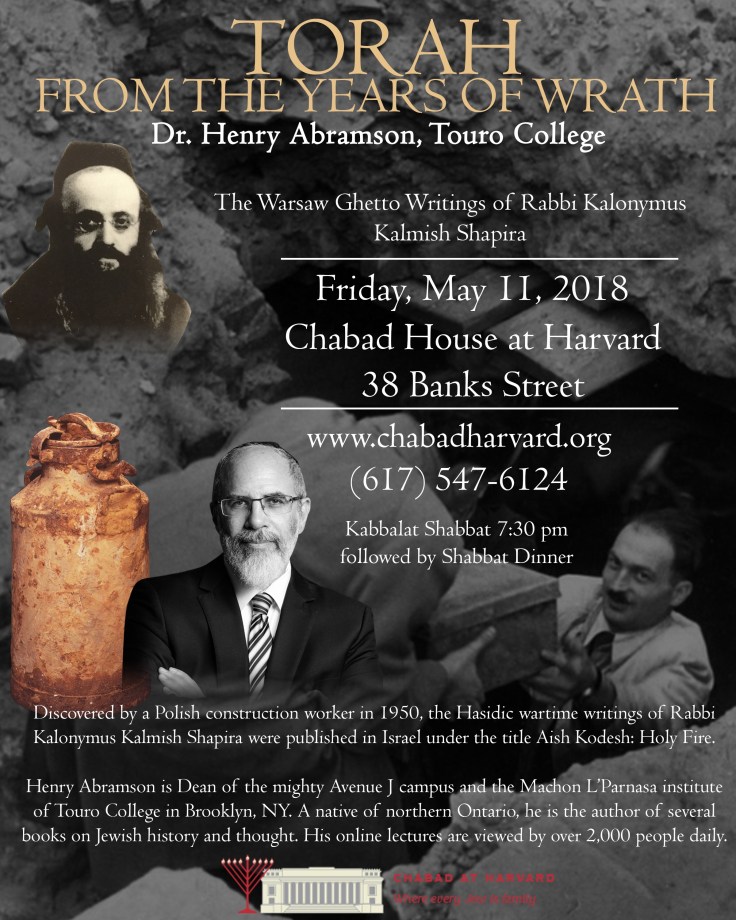
In Cambridge or Boston next Shabbos (May 11)? Please come by and say hello. Very proud to be speaking at the Chabad of Harvard.

img_3007

Reminder: No class tonight, resume next week

Good morning students of Jewish History!

Just a reminder that we will not be meeting tonight; classes will resume on Monday May 7. 

You can always use the extra time to catch up on some reading! Click here for a few suggestions

Looking forward to learning with you next week, the penultimate lecture in the Spring 2018 series on The Sephardic Diaspora

Henry Abramson

No Jewish History Lecture Monday April 30

Good morning–

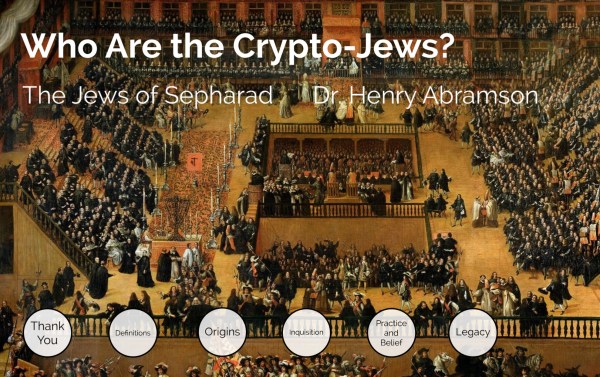
Just a quick note to those who attend in person at the Mighty Avenue J campus: we will not be meeting this Monday, April 30. Planning to reconvene on Monday, May 7 with the penultimate lecture of the season–the history of the Crypto-Jews. Fascinating stuff, I think.

H

P.S. Seeking sponsors for the last two lectures! $250 and everlasting fame (at least on YouTube). Please visit www.bit.ly/thefriendsofjewishhistory.

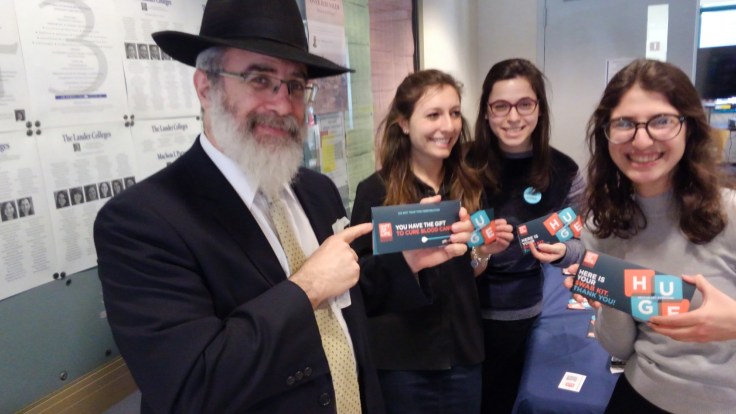
P.P.S.: Here’s a nice photo of some of the great students at Touro College who benefit from the sponsorships of the lectures! The Touro Student Activity Council members organized a bone marrow donor drive this week–a simple swab could save a life.

KIMG0169

The Secret Treasure of the Cairo Geniza (Talk at The WELL)

Here’s the video of the talk I gave at The WELL, my favorite institution of Sephardic Studies in New York. Really wonderful audience.

Having difficulty seeing the video? Click here.

Create a website or blog at WordPress.com

Up ↑