
Forced debates between Jews and Christians were a feature of medieval Jewish life, often with dire consequences.
Lectures in Jewish History and Thought. No hard questions, please.

Forced debates between Jews and Christians were a feature of medieval Jewish life, often with dire consequences.

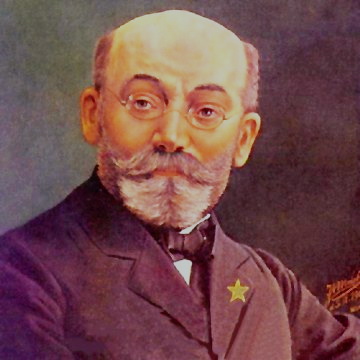
L.L. Zamenhof (1859-1917) was a Polish Jew who invented the world’s most successful artificial language, Esperanto. Conceived as a vehicle for world peace, Esperanto is even regarded by the Oomoto religion of Japan as the “language of heaven.”


This week marks the death anniversary of King Boleslaw V (The Chaste) in 1279. Boleslaw followed the tradition of his predecessors in Poland by creating incentives for Jewish settlement in Poland, including the establishment of Magdeburg Recht. Ultimately, these policies proved extremely attractive to Ashkenazi Jews from the Rhineland, making Poland a great center of Jewish civilization by the early modern period.

![Depiction of Host Desecration in Sternberg, Germany (1492). Diebold Schilling the Younger [Public domain], via Wikimedia Commons](https://henryabramson.com/wp-content/uploads/2013/11/schilling_hostienfrevel_ausschnitt.jpg?w=736)

![Menachem Begin, Jimmy Carter, and Anwar Sadat at Camp David (1978). By Fitz-Patrick, Bill, photographer [Public domain], via Wikimedia Commons](https://henryabramson.com/wp-content/uploads/2013/11/begin_carter_and_sadat_at_camp_david_1978.jpg?w=736)


One of the more colorful false messiahs in Jewish history, Jacob Frank made a career of conversion–first to Islam, then to Christianity, all the while leading a neo-Sabbatean movement that emphasized antinomian “purification through transgression.” His appeal to the Church in 1757 resulted in a modern-day disputation over the Talmud, and ultimately the burning of tens of thousands of precious volumes.


Pakistani terrorists attacked the Chabad House in Mumbai, India, on Wednesday, 29th of Heshvan, 5769 (26 November 2008). Part of a concerted attack that killed 179 and wounded hundreds, they murdered the young Chabad emissaries running the house, Rabbi Gavriel and Mrs. Rivky Holtzberg. Their infant son, who turned two the day after his parents were brutally killed, was heroically rescued by his Indian caregiver.


Hannah Szenes was a young Hungarian Jewish woman who joined the resistance in 1943, parachuting into Nazi-occupied territories with British support. She was captured and tortured, but did not divulge secret information on her colleagues. Her poetry, including the classic “Blessed is the Match,” survive and add to her legacy.

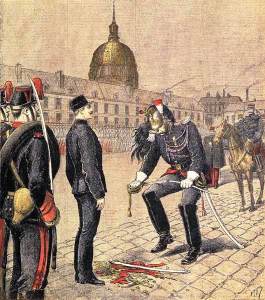
Wrongly accused of espionage, Captain Alfred Dreyfus was sentenced to Devil’s Island on the basis of remarkably tenuous evidence. May critics, including the famous writer Emile Zola, argued that Dreyfus was unfairly charged simply because he was a Jew in the French army. As evidence mounted that another officer was guilty, the Dreyfus Affair exposed the persistence of pervasive and deep-rooted antisemitism, questioning how effectively Jews were accepted in French society a full century after they were first emancipated.

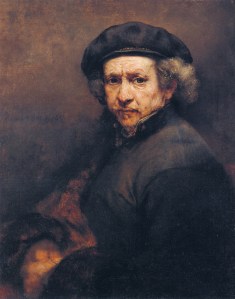
Rembrandt is well-known for his depictions of Jewish subjects, both as contemporary portraits and as models for Christian biblical characters.
 Henry Abramson