In early February 1940 the Nazis promulgated decrees that prohibited Jews from benefitting from general community charity services. Ration cards were distributed with racial distinctions: Jews received cards with a Star of David marked on them, while Poles and Germans received colored, otherwise unmarked cards. At this early date in the war, hunger did not stalk the ghetto as it would in subsequent years. The ration cards, however, only provided a daily average of 503 calories in the winter and spring of 1940, making the multiple charitable organizations such as the American Jewish Joint Distribution Committee (the “Joint”) absolutely essential (a black market economy, centered on food smuggled into the Ghetto, would become a major industry in the coming months). Even so, the Ghetto continued to absorb Jewish refugees from elsewhere in Poland, exacerbating the increasingly intolerable living conditions in Warsaw. The memoirs of Mary Berg, then sixteen years old, illustrate the news circulating in the Ghetto:
It seems that in Lodz the situation is even worse than here. A schoolmate of mine, Edzia Piaskowska, the daughter of a well-known Lodz manufacturer, who came to Warsaw yesterday, told us bloodcurdling stories about the conditions there. The ghetto has been established officially, and her family succeeded in getting out at the last moment only by bribing the Gestapo with good American dollars. The transfer of the Lodz Jews into the ghetto turned into a massacre. The Germans had ordered them to assemble at an appointed hour, carrying only fifty pounds of luggage apiece. At the same hour the Nazis organized extensive house searches, dragging the sick from their beds and the healthy from their hiding places, and beating, robbing, and murdering them. The quarter of Lodz which has been turned into the ghetto is one of the poorest and oldest sections of the city; it is composed mostly of small wooden houses without electricity or plumbing, which formerly were inhabited by the poor weavers. It has room for only a few tens of thousands; the Germans have crowded three hundred thousand Jews into it.
The well-to-do Jews managed to escape the Lodz ghetto by various means. Some bribed the Gestapo, like my friend’s family; others smuggled themselves out in coffins. The Jewish cemetery is outside the ghetto, and it is possible to carry dead persons there. Thus some people had themselves boarded up in caskets, which were carried off with the usual funeral ceremonies; before reaching the cemetery they rose from their coffins and escaped to Warsaw. In one case the person locked in the coffin did not rise up again: his heart had failed during the ghostly trip.
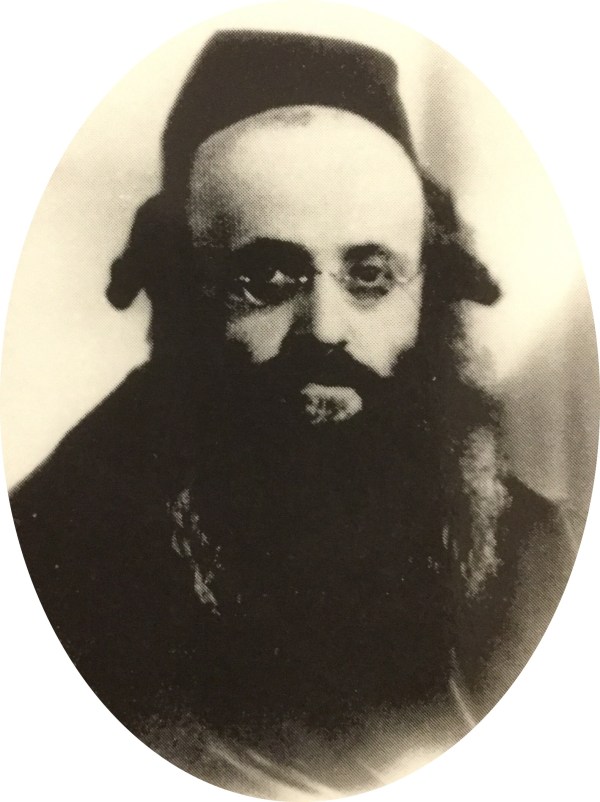
On a physical level, the Piaseczno Rebbe contributed to the relief efforts by maintaining a soup kitchen in his Yeshiva and home at 5 Dzielna street. In the spiritual realm, however, he exhorted Warsaw Jews to remain true to the principles and practices of their ancestral faith. On Parashat Vayakhel of the Jewish Year 5700 (March 2, 1940), he focused on the sanctity of the Sabbath day:
Six days you will work, and on the seventh day it will be holy for you, a Sabbath unto G-d. A well-known question in raised in the holy writings: why was it necessary for the verse to command, six days you will work? They would work of their own accord, and thus it would only be necessary to command the Sabbath.
The Rebbe’s question is especially pertinent because Sabbath observance was noticeably declining as Warsaw Jewry struggled to provide for themselves under the new Nazi ration system.
The following interpretation is possible. The Talmud (Shabbat 70a) derives the thirty-nine forbidden forms of Sabbath activity from the phrase these are the words: words, being plural, represent two; the words, represent three; the combined numerical value of all of the Hebrew letters in the word these is thirty-six; producing a total of thirty-nine.
Typical for his analytical style, the Rebbe pushed the reading of this Talmudic passage into a more philosophic bent, strangely prescient of intellectual trends that would dominate western thought decades later:
The rationale behind this numerical calculation of the letters of the Torah is possible because the letters of the Torah are unlike any other letters in any other book in the world. With regard other books, their essence is contained solely within the realm of their intent and intellectual framework. Since it is impossible to write pure thought in itself, therefore letters were employed as mere symbols from which words are built to thoughts and intentions. The letters, however, only have meaning as commonly-held symbols: the choice of representation is entirely arbitrary, and one letter could easily have replaced another letter.
In other words, the shape of letters in other languages is without intrinsic meaning. The form “P,” for example, represents a “p” sound in English but an “r” sound in Russian.
Such is not the case with the letters of the holy Torah. Every letter is precisely as it must be, and could not take a different shape. An alef could not represent a bet and a bet could not represent an alef. This is so because it is not merely the thought and intellectual content of the Torah that is holy—the holiness also diffuses to its physical vessels themselves, namely the letters. As this process of diffusion continues, even the fullness of the letters are suffused with holiness—not only the letters themselves, but even their individual and collective numerical values become holy, and are illuminated by the Torah such that we may learn from them.
The physical embodiment of holiness, in this case into the very shapes and forms of the Hebrew letters, is a major theme in the Rebbe’s thought. He continued:
It is well known from the holy Zohar [3:94, parshat Emor] that the difference between the Sabbath and a festival is that a festival is a “called holy”—one calls it “holy”—whereas the Sabbath is intrinsically holy, as it is written, for it is holy unto you. Furthermore we see that the Sabbath does not have a commandment exclusively associated with it (as Rosh Hashanah has the shofar, Yom Kippur the five afflictions, and Sukot the booths and the four species). The Sabbath is defined by the abstention from specific activities that one engages in during the six days of the week, for the Sabbath itself transforms profane time into sacred time. Furthermore, it is well known that the holiness of the Sabbath even extends into the six days of the week, with the first three days receiving their measure of holiness from the preceding Sabbath and the latter three days from the coming Sabbath. That is to say, not only does physical reality derive holiness from the Sabbath, but even profane time itself receives a measure of sanctity.
The Rebbe concluded his remarks with encouragement, pointing the role of Shabbat in the anticipated Redemption:
This explains the Talmudic dictum, “were the Jewish people to observe two Sabbaths, they would be immediately redeemed.” The first Sabbath refers to the Sabbath itself, and the second Sabbath refers to the weekdays that draw their sanctity from the Sabbath. For six days you will work, [the seventh day] will be holy for you, a Sabbath of Sabbaths: two Sabbaths, because you will thereby draw the holiness of the Sabbath into the other days of the week. Thus with this dictum, the Torah alludes numerically to the thirty-nine categories of forbidden activity—an allusion to the fact that everything is sanctified, even the numerical values of the letters, and from this we may derive Torah.
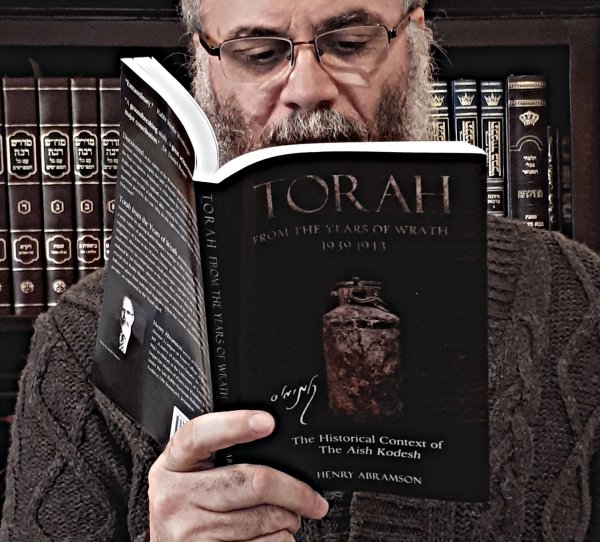
Torah from the Years of Wrath: The Historical Context of the Aish Kodesh
Hardcover special for readers with this link: $29.71