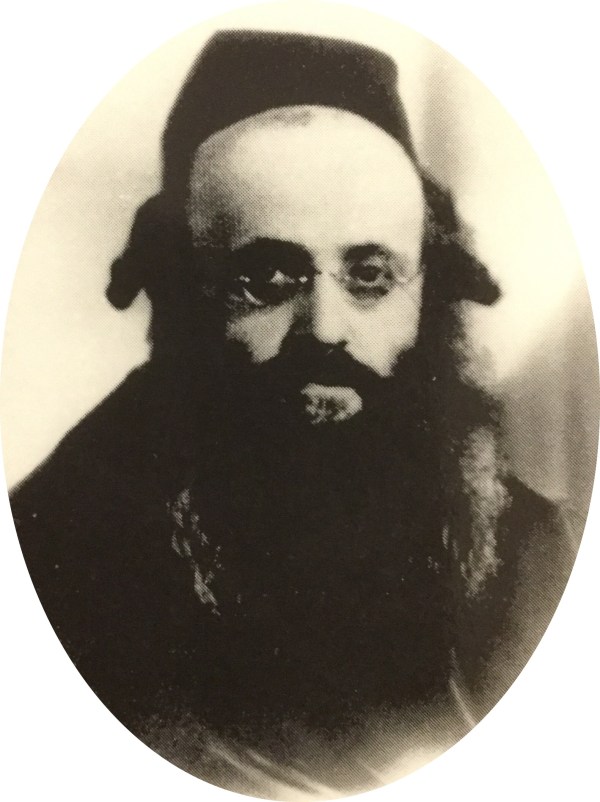
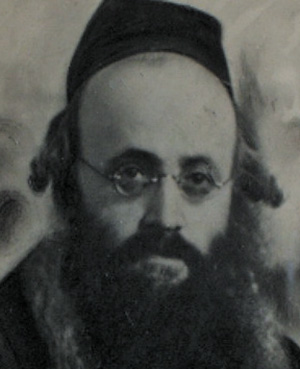
The Aish Kodesh on Shemot 5702

The winter of 5702 brutalized the Jews of the Warsaw ghetto with unforgiving cold. Chaim Kaplan, a school principal whose journal Scroll of Agony survived the war, recounts in his typically blunt prose how the physical privations of January 1942 affected the spiritual life of Ghetto inhabitants:

Gone is the spirit of Jewish brotherhood. The words “compassionate, modest, charitable” no longer apply to us. The ghetto beggars who stretch out their hands to us with the plea, “Jewish hearts, have pity!”  realize that the once tender hearts have become like rocks. Our tragedy is the senselessness of it all. Our suffering is inflicted on us because we are Jews, while the real meaning of Jewishness has disappeared from our lives.

Our oppressors herded us into the ghetto, hoping to subdue us into obedient animals. Instead, however, we are splitting and crumbling into hostile, quarrelsome groups. It is painful to admit that ever since we were driven into the ghetto our collective moral standard has declined sharply. Instead of uniting and bringing us closer, our suffering has led to strife and contention between brothers.  The Nazis, possibly with malice aforethought, put us in the hands of the Judenrat so that we might be disgraced in the sight of all. It is as if they were saying, “Look at them!  Do you call them a people?  Is this your social morality? Are these your leaders?”

It is not at all uncommon on a cold winter morning to see bodies of those who have died on the sidewalks of cold and starvation during the night. Many God-fearing, pious souls who, if the day happens to be the Sabbath, are carrying their tallith under their arms, walk by the corpses and no one seems moved by the sight.  Everyone hastens on his way praying silently that his will not be a similar fate. In the gutters, amidst the refuse, one can see almost naked children who were orphaned when both parents died earlier in their wanderings or in the typhus epidemic. Yet there is no institution that will take them in and care for them and bring them up as human beings. Every morning you will see their little bodies frozen to death in the ghetto streets. It has become a customary sight. Self-preservation has hardened our hearts and made us indifferent to the suffering of others. Our moral standards are thoroughly corrupted. Everyone steals! Petty thievery, such as picking pockets or stealing a hat or umbrella, is common.  Because kosher meat is terribly expensive, people have relaxed their observance of the laws regarding the eating of kosher food. Not only atheists and derelicts are guilty of this, but synagogue sextons and pious men as well. 

It is Nazism that has forced Polish Jewry to degrade itself thus.  Nazism has maimed the soul even more than the body!

The Piaseczno Rebbe’s words on the Shabbat of Parashat Shemot responded to the moral decline of the beleaguered Jewish population. The Rebbe was certainly aware of the ethical challenges of life in extremis in the Warsaw Ghetto. He identified three types of people who fear sin, for different reasons:

There is a kind of person who understands the bitterness of punishment for each and every sin, Heaven help us.  There also exists a greater type of person for whom the concept of sinning against God is in itself egregious.  This is without reference to a specific sin, rather it refers to anything which is contrary to God’s will, nonetheless he is not conscious of any personal sin, and he feels no fear that he may yet sin, continually assuring himself that he is good and his actions are good.  There is a third type of person, however, who is continuously in a state of trepidation that he not sin, and his heart is broken within him, saying ‘who knows if even now I am not rebelling against God?’  Insofar as he is sensitive, and always fearful, then he always discovers his own shortcomings. 

The difference between the three is as follows:  the first one, even though he knows the enormity of a given sin, has nevertheless failed to internalize fear within himself, and his heart does not tremble that he not sin.  The last of the three has internalized fear of sin, and his body, mind, and heart have been sensitized and tremble, that he not sin, finding within himself his shortcomings, and out of this extreme concern, he repents and those shortcomings are not able to take root within him.  Since the fear of sin and thoughts of repentance were established within himself prior to an act of sin, consequently repentance comes speedily after any shortcoming, Heaven forbid.

The last category—the person who feels deep concern for sin, even without committing any transgression—is discussed extensively in the Rebbe’s prewar writings, and is considered one who is capable of experiencing tremendous joy and spiritual growth. In the context of fear of sin, the Rebbe explains that this is because fear is an emanation fro the kabbalistic sefirah known as gevurah—for the spiritually unrefined, fear is sensed as regret for sinful behavior in the past tense. For those on a higher spiritual level, the energy of gevurah is accessed through fear of sin in general, in the future tense. The Rebbe continued his thought with an exhortation to renewed study of Hasidic thought:

For this reason, even now, when every mind is afflicted and every heart is sick, and it seems to people that they cannot speak of Hasidic matters…it is enough for us to hold on to the performance of simple, practical commandments. This is a mistake. First of all, we are bound by the imperative to serve God with all manner of devotion, even in these times. Secondly…a person who entertains such thoughts of fear [of sin]…after periods of introspection he sense will within himself an elevated consciousness, and even joy, because this is a purified fear, a form of “a delight in fear of You,” as we say in the Sabbath song, “Kah ekhsof,” a supernal fear which elevates the individual…

The fear is only the means of preventing sin, yet according to what we have written, it is all one. A person must acquire fear in order that he not sin, a perpetual fear that he not sin.  By means of this he will be elevated…as an expression of “delight in fear of You.” 

The Rebbe concluded his message with a reference to the Torah reading of the week. Moses was initially hesitant to accept God’s command to go to Pharaoh and demand the release of the Jewish people. God gives Moses as sign—a holy name, “I will be”—so that Moses will be able to convince the Jews that they will be freed:

This is alluded to within Moses our Teacher’s question, who am I…that I should take out [the Jewish people from bondage?].  Since he was the humblest of all people, therefore he began with thoughts such as these: who am Ithat I should take out [the Jewish people from bondage].

God responded, it is not that you are not worthy, and it is not that, Heaven forbid, that you have deficiencies, rather the fact that you question yourself is in itself a sign of holiness, Divine worship which illuminates and is drawn from the concept of “God—I will be.  Until now, a person was incapable of introspection, and said to himself: “until now I was nothing—but from now on I will be.” 

img_0935

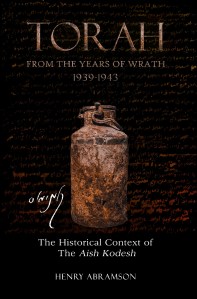
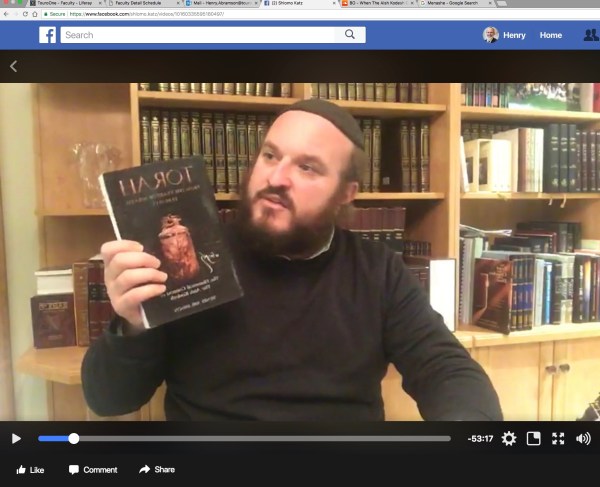
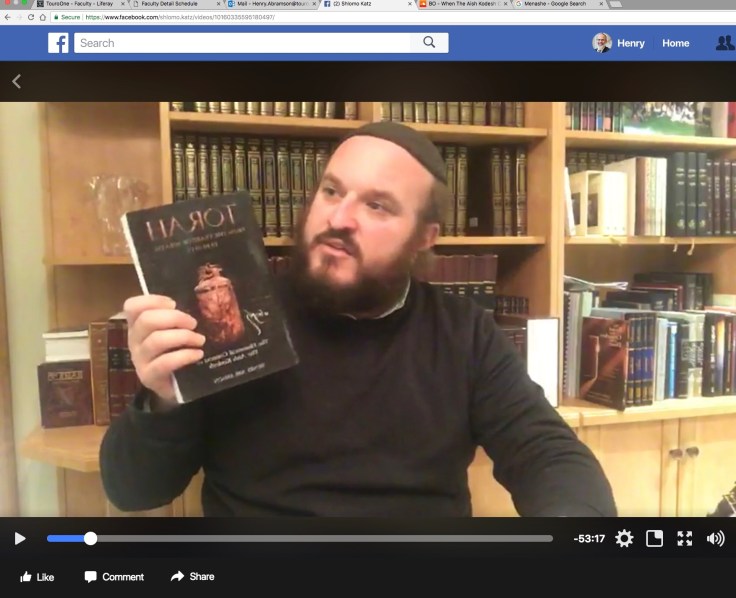
Torah from the Years of Wrath, 1939-1943: The Historical Context of The Aish Kodesh

The Sephardic Diaspora (Spring 2018 Lecture Series)

The Sephardic Diaspora

Spring 2018 Lecture Series

Monday Nights @ 7:00 pm

Main Auditorium, Touro College, 1602 Avenue J Brooklyn NY 11230 (718) 535-9333

Free and Open to the Public

No hard questions, please.

Eleanora_of_Toledo

Image: Eleanora of Toledo, student of Benvenida Abravanel

February 5: Who Was Benvenida Abravanel?

Consolasam_samuel_usque

February 12 :Who Was Samuel Usque?

(No Class Feb 19 President’s Day)

Chida

February 26: Who was the Chida?

WHOWASMOSESMONTEFIORE

March 5: Who Was Sir Moses Montefiore?

Sponsored by Christopher and Ann Marie Bray

mendoza-by-gillray

March 12: Who Was Daniel Mendoza?

Sponsored by LTC. Richard F. Moreno (US Army-Retired) in memory of his father Frank Moreno (1900-1994), born Pablo Igual Peiró in Sarrión, Spain and whose ancestors were Sephardim who converted to Catholicism as a result of the 14th century persecutions, culminating in the 1492 Alhambra Decree.

Judah_Touro_of_Newport_Rhode_Island

March 19: Who Was Judah Touro?

(No classes March 26, April 2, April 9)

sephardim holocaust

April 16: Sephardim and the Holocaust

Sponsored by LTC. Richard F. Moreno (US Army-Retired) in memory of his father Frank Moreno (1900-1994), born Pablo Igual Peiró in Sarrión, Spain and whose ancestors were Sephardim who converted to Catholicism as a result of the 14th century persecutions, culminating in the 1492 Alhambra Decree.

emma_lazarus_quote

April 23:Who Was Emma Lazarus?

new-mexico-crypto-jews

May 7: Who Are the Crypto-Jews?

ovadia

May 14: Who was Rabbi Ovadia Yosef?

Schedule subject to change: please follow us for updates!

Sponsor a lecture by donating $250 to our Touro College Scholarship Fund.

The Piaseczno Rebbe on Vayigash

On December 27, 1941, the Piaseczno Rebbe delivered his last recorded drashah on Parashat Vayigash in the Warsaw Ghetto. The previous month was especially brutal: an especially cold winter, combined with a severe coal shortage, exacerbated the typhus epidemic, and each morning a detail of the chevra kadisha patrolled the streets to collect the bodies of malnourished, homeless Jews who succumbed to the frigid temperatures. The icy weather was surpassed, however, by the cold cruelty of the Nazis, who conducted several public mass executions immediately prior to Hanukkah.

The Rebbe’s message meditated on the first word of the parashah: vayigash, which translates as “and he approached,” which is in itself a metaphor for prayer, our “approach” to G-d. The Rebbe further noted that our prayers are typically a combination of third person and second person statements. For example, when we say baruch ata Hashem—blessed are You, O G-d—we address G-d in the third person (blessed) and the second (You). The literal translation of these grammatical terms in Hebrew is significant: third person is nistar, meaning “hidden,” and second person is nokhakh, meaning “facing, present.” The Rebbe wrote:

Granted, there are times when a person cannot begin his prayer to Hashem in the second person, rather he can only approach G-d in the third person.  When one prays, however, there will be moments when G-d revealed and we draw close, in the sense of the second person… In the end, one may achieve closeness to Hashem, who is revealed in the sense of “you,” the second person. 

All this depends upon the approach (vayigash).  When a person does not pray in a merely casual or habitual manner,  rather he approaches and draws near to G-d, and prior to prayer one takes to heart the fact that prayer is a form of  complete attachment to the Blessed One, and in the manner that one would approach and draw near to a human king, so too should one mentally prepare to approach prayer, which is an approach to the Blessed One.  Ultimately, one will achieve the revelation of the second person and and complete attachment to G-d, and elicit beneficent acts of salvation for one’s self and for the entire Jewish people, amen.

img_0935


Ukrainian Translation Now Available!

fullsizeoutput_1eaa

Really pleased to receive author copies of the new Ukrainian translation of my first book! Thanks to translators Anton Kotenko and Oleksandra Nadtoky and all the great people at Dukh i Litera.

Who Was Don Yitshak Abravanel?

Brief video describing the life and work of Don Yitshak Abravanel (Abarbanel), a great Portuguese-Spanish Jewish thinker and leader.  Part of The Jews of Sepharad series.

kof cover DMA_Fotor

img_0935


Click here to view books by Dr. Abramson (remarkably amazing Chanukah reading)

Who Was Abraham Senior?

Brief video on the life and times of Abraham Senior, important 15th-century Spanish Jewish financier.

Suggestions for Chanukah Reading!

Click here to order.

img_0935

kof-cover-dma_fotor

MoT Front Cover

51JL35QT+IL


The Aish Kodesh: Chanukah in the Warsaw Ghetto

Kindling the candles for the Festival of Lights, we bless G-d for performing miracles of freedom “in those days, in this time.” The commentators have long resolved the jarring use of apparently non-parallel prepositions: in those days, meaning long ago, but in this time, meaning at the present  point in the calendar year. For survivors of the Shoah—and their children and grandchildren the resolution of the contradiction is not so simple. A glimpse of their ineffable perspective is afforded by the writings of Rabbi Kalonymus Kalmish Shapira, known to his followers as the Piaseczno Rebbe but more popularly as the Aish Kodesh.

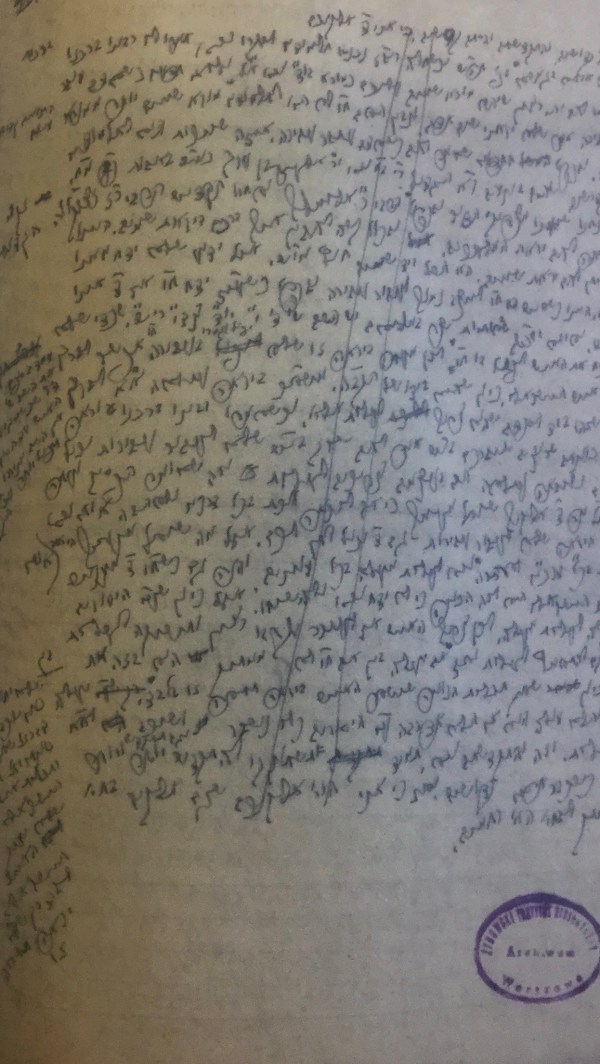
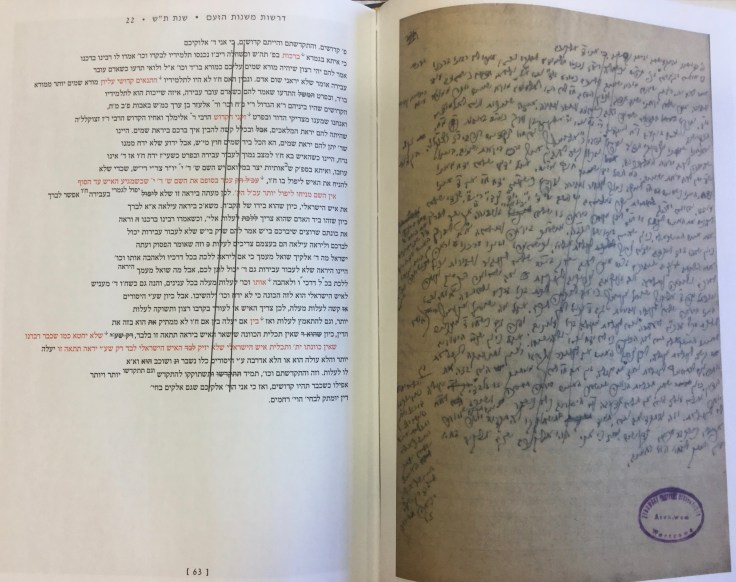
Discovered in a milk can buried in the rubble of the Warsaw Ghetto in 1950, the writings are experiencing a remarkable surge of research interest, including a forthcoming documentary film, widespread translations into multiple languages, a two-volume critical facsimile edition, and my own small  contribution which focusses on the historical context of his Holocaust writings. His comments on Chanukah 1941 and 1942 are especially chilling.

The Rebbe meditated on the clashing terms “in those days, in this time” by reflecting on the nature of persecution in Jewish history. The fall and early winter of 1941 was especially brutal. The Rebbe himself contracted and survived typhus, a disease with a 20 percent mortality rate that reached its peak in October with 3,358 recorded infections (the actual number was likely much higher). The price of heating coal became exorbitant as the Nazis rationed the city to finance their military advance into the Soviet Union, and the winter came early and with lethal force that year: the bodies of seventy orphaned, homeless children were collected off the streets on the night of the first snowfall. In November the German occupying force promulgated a decree that imposed the death penalty for Jews who entered the Aryan side city—by the beginning of Chanukah, twenty-three men, women and children were publicly executed, literally for the crime of crossing the street.

The Rebbe’s initial thoughts, as expressed in his drashah on Chanukah 5702, sought to resolve the puzzle posed by the verse by placing the horrific persecutions of 1941 within a broader historical schema. In reality, he argued, looking at the scope of the Jewish experience over the centuries indicated that periodic suffering was to be expected:

It is true that trials such as we are enduring now come only once every few centuries…Historical knowledge has the potential to cause damage, Heaven forbid, if we do not understand history…How can our historical awareness help our minds to understand that which the Blessed and Exalted One knows and understands? Why people are hurt under our current tribulations, more than the trials the Jews endured in the past?…Those people who say that trials such as these never existed in Jewish history are in error—what of the destruction of the Temple, and the fall of Betar?

A year later, the Rebbe changed his mind. Days before Chanukah of 5703 (December 1942), the Ghetto was virtually empty of Jews. Starting with Tisha B’Av, the Nazis began the great deportations, 6,000 Jews per day, to the death camp Treblinka. A population that once reached a peak of half a million was reduced  to a few thousand slave workers, including the Rebbe, working in one of the industrial “shops” set up in the city. Together with Jews who hid from the Nazi patrols, this tiny and poorly armed remnant would ultimately launch the heroic Warsaw Ghetto Uprising in the spring of 1943. We do not know what role the Rebbe played in the resistance (although survivor testimonies describe his incredible self-sacrifice in the labor camp Travniki, where he was martyred in November) because his Holocaust writings end with his last will and testament, dated January 1943. The underground group of amateur Jewish historians, codenamed Oneg Shabbat and working under the direction of Emanuel Ringelblum, asked the Rebbe to consign his manuscripts to them. Oneg Shabbat combined the Rebbe’s writings with other studies of the Warsaw Ghetto and buried them in three caches, hoping to unearth them after the war. A lone survivor identified one secret location, excavated in 1946, and the Rebbe’s documents were miraculously discovered four years later. The last archive is still missing.

The Rebbe reviewed his drashot stretching back to September 1939, editing, deleting, and annotating his addresses to his Hasidim. Reviewing his thoughts on Chanukah 1941, he added the following correction:

Note: Only the suffering up to the end of 5702 had previously existed. The unusual suffering, the evil and grotesque murders that the wicked, twisted murderers innovated for us, the House of Israel, from the end of 5702, in my opinion, from the words of the Sages of blessed memory and the chronicles of the Jewish people in general, there never was anything like them, and G-d should have mercy upon us and rescue us from their hands in the blink of an eye. The eve of the holy Sabbath, 18 Kislev 5703. The author.

In other words, the Rebbe corrected his earlier argument. “In those days” was nothing like “in this time.” The genocide that would later be named the Holocaust was a novum in Jewish history, and could not be adequately compared to any other period of persecution in our millennial existence. This is a sentiment shared by many survivors, their  children and grandchildren. Nevertheless, despite his troubling conclusion about the meaning of the Holocaust, the Rebbe’s faith remained unshaken. He ends, as do we, with a prayer for the immediate redemption, speedily and in our days.

img_0935

Life and Times of Rabbi Yosef Karo (With Rabbi Ya’akov Trump)

This lecture turned out nicely, I think. If you haven’t heard Rabbi Ya’akov Trump, you’re in for a treat–skip past my part to about 26:00 for the good stuff.

A century from now, people will say, “Trump, Trump…wasn’t there also a President by that name?”

Create a website or blog at WordPress.com

Up ↑