My son Alexander shows up in official Miami Marathon video at 0:38 seconds (red bandana) http://youtu.be/gxJRzYzQfoQ Please sponsor him at http://www.teamfriendship.org/Alexander to help kids with disabilities!
Please Support Alexander’s Marathon Bid for Friendship Circle


Hello everyone: my son Alexander is once again training to run the ING Miami Marathon to raise funds for Friendship Circle, a non-profit organization that helps children, teens and adults with special needs. Alexander is an avid runner with a long history of running for charitable causes: in 2010 he ran his first half-marathon (at age 12) and raised several thousand dollars for the Joe DiMaggio Children’s Hospital Foundation. Since then he’s been running with Team Friendship, and really counts on your support to help kids with various disabilities (the attached brief video, created by his sister Danit Malka, tells the story). Please support his bid to complete his second full marathon by visiting www.teamfriendship.org and sponsoring this organization generously. Thank you!
Nahmanides: Rabbi Moshe ben Nahman

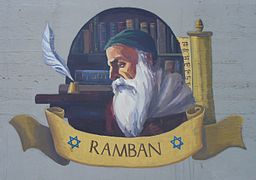
Nahmanides (Rabbi Moshe ben Nahman, or Ramban) was one of the most important thinkers of Jewish history. Brilliantly creative and intellectually courageous, his commentary on the Torah is widely studied eight centuries after his passing. Part of the Jewish Biography as History series by Dr. Henry Abramson.
Shmuel ha-Nagid (Jewish Biography as History)

![The Alhambra By Jim Gordon (originally posted to Flickr as Alhambra, Granada) [CC-BY-2.0 (http://creativecommons.org/licenses/by/2.0)], via Wikimedia Commons.](https://henryabramson.com/wp-content/uploads/2013/11/256px-alhambra_-_granada.jpg?w=736)
was an exemplar of the Golden Age of Spanish Jewry.

Rabbi Moshe ben Maimon: Maimonides

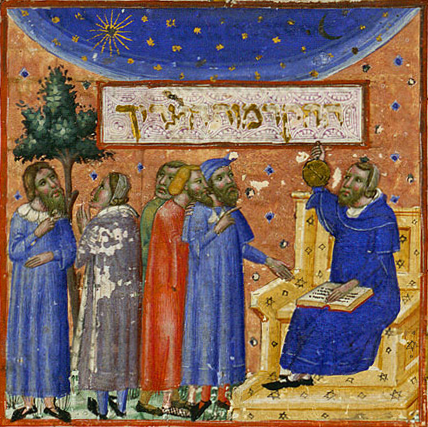
Rabbi Moshe ben Maimon (1135-1204) was a towering figure in medieval Jewish history, and continues to cast a long shadow into the Jewish present. Nevertheless, the work of the philosopher-physician endured significant controversy, including an especially sad episode in which Jews actually consigned his works to the flames.
Rav Sherira Gaon: The Jews of Babylon (Next Week: Sa’adia Gaon)

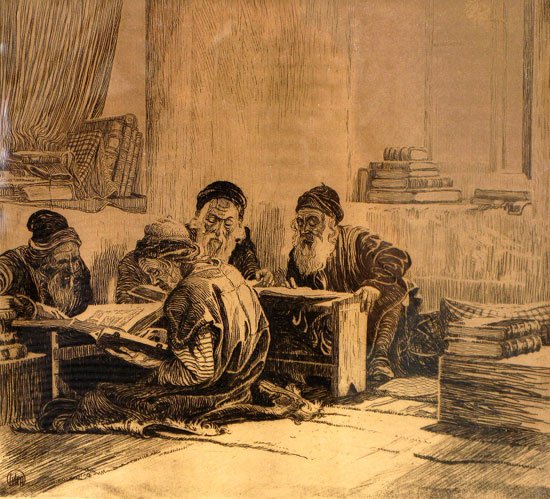
Who, exactly, wrote down the foundational texts of the Oral Torah? Who is responsible for the compiling of the Talmud? These were some of the questions addressed to Sherira Gaon, the Rosh Yeshiva of the great city of Pumbedita in Babylon in 987 by a young Rabbi in Tunisia. His famous response, preserved for over a thousand years, is an impressive survey of the Jewish intellectual tradition, leading up to the establishment of the greatest Talmudic centers in Jewish history.
Vladimir Ze’ev Jabotinsky (This Week in Jewish History)

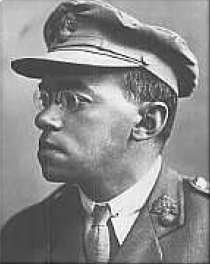
Vladimir Ze’ev Jabotinsky (1880-1940) was one of the most influential political thinkers in the first half of the twentieth century, founder of the Revisionist movement.
The Dreyfus Affair (This Week in Jewish History)

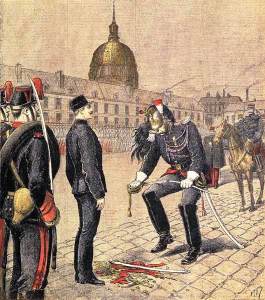
Wrongly accused of espionage, Captain Alfred Dreyfus was sentenced to Devil’s Island on the basis of remarkably tenuous evidence. May critics, including the famous writer Emile Zola, argued that Dreyfus was unfairly charged simply because he was a Jew in the French army. As evidence mounted that another officer was guilty, the Dreyfus Affair exposed the persistence of pervasive and deep-rooted antisemitism, questioning how effectively Jews were accepted in French society a full century after they were first emancipated.
Who Was Josephus? Fall 2013 Lecture Series in Jewish History Resumes This Week


Photo: Aryeh Abramson looks out over Iroquois Falls, Ontario, Canada, where he spent the Sukkot vacation visiting his grandparents.
Captured by the Roman General (and later Emperor) Vespasian while defending the Galilee, Josephus ultimately turned against his coreligionists and served as an advisor to the forces besieging Jerusalem during the first Roman-Jewish War. His first-hand observations of the destruction of the Temple and the collapse of Jewish sovereignty are an exceptionally important source for Jewish history–but are they reliable? Taking the name of his Roman patrons, he went on to a brilliant literary career as a prolific apologist for Judaism, but do his later works compensate for his affiliation with the Romans?
The Fall 2013 lecture series in Jewish History is scheduled to resume this Wednesday evening at 8:30 pm, Young Israel of Bal Harbour, 9592 Harding Avenue. The lectures are free and open to the community.
 Henry Abramson