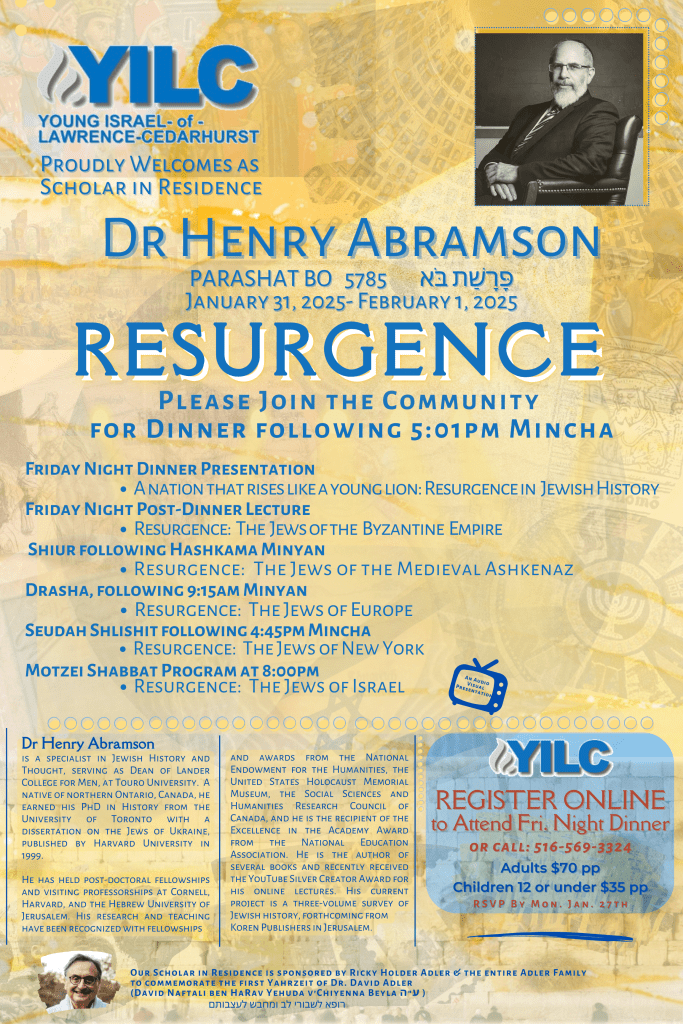
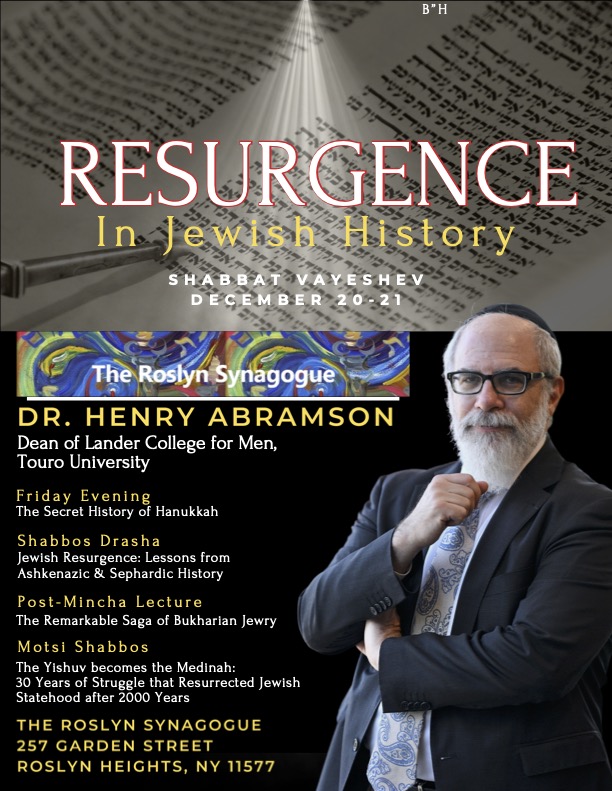
Really looking forward seeing my friends at YILC!

Lectures in Jewish History and Thought. No hard questions, please.


A presentation of the life of Golda Meir (1898-1978), spanning her immigration to Israel in 1921 through the end of her term as the fourth Prime Minister of Israel in 1974. The lecture will discuss the foundations of the Yishuv, the pre-state Jewish community, and touch on the major social and military conflicts that Israel…

Evgenia Ginzburg (1904-1977) was a Jewish woman who endured the horrors of the Stalinist Gulag. Charged and convicted of anti-Soviet activity in 1937, she was sent to the infamous work camps of Siberia for nearly two decades until her case was reviewed two years after Stalin’s death. She was ultimately rehabilitated, and published her memoirs…

An examination of the life and work of Emanuel Ringelblum (1900-1944), the heroic Polish scholar who organized the underground Oneg Shabbat society in the Warsaw Ghetto. Ringelblum recognized the extreme and unprecedented nature of the Nazi onslaught early in the war, and brought together a group of highly dedicated volunteers who recorded every aspect of…
Part I: Part II: Part III: Solomon Mikhoels (1890-1948) was one of the most prominent actors and directors in early Soviet Russia. His career coincides with the brief flourishing of Yiddish culture under the policy of korenizatsiia, or “indiginization,” when the Communist authorities sought to develop folk culture as a means of developing loyalty to the…

Shimon Dubnow (1860-1941), a noted historian and activist whose theories of Jewish survival in the diaspora were extremely influential in the shaping Jewish identity in the modern world, from the future of Russian Jewry to the establishment of the modern Federation movement in the United States. Dubnow’s scholarship was inextricably intertwined with the effort to…
Moses Mendelssohn was a hugely influential thinker in 18th-century Germany. An unusually gifted intellect, he became the primary spokesperson for the emancipation of Jews in the 18th century, and his cause was championed by many non-Jewish liberals of the era. Heralded as the founder of the Reform movement even though Mendelssohn himself maintained an observant…

Nathan of Hanover is best known for his moving chronicle of the Khmel’nyts’kyi (Chmielnicki) Rebellion. Entitled Yeven Metsulah (“The Abyss of Despair”), it records with remarkable fairness the social, political, economic and religious background of the mid-17th century Ukrainian movement against the Poles, along with the horrible pogroms perpetrated in the context of that violent…

Here’s the Torahcafe.com edited version, in one piece, with the PPTs integrated. A little easier to watch.


Ancient Jewish History from Abraham to Bar Kochba. Really excited to announce this new online course! Please click here for course information and registration.

A brief overview of one of the major early battles in the Chanukah revolt in 166 BCE.

Really looking forward to meeting students of the Ashkenazium in Budapest in January! Here’s the online course I set up to prepare them for the lectures. It’s open to the public as well. Enjoy in good health!

The Jewish History Lab lecture series resumes with live, in-person meetings at Young Israel of Lawrence-Cedarhurst on Wednesday nights at 7:30 pm. Free and open to the community! Zoom link available to YILC members and their guests. YouTube Channel members (Colleagues): please check your Community Tab for the link.
Six brief videos chronicling the 2021 journey with Kosher Riverboat Cruises up the Douro River to Salamanca, Spain and back through Portugal. A wonderful fantastic look at the rich history of Jews in the Iberian Peninsula, from the earliest settlement in Roman colonies (possibly earlier!) through the Visigoths, then the brief but brilliant Golden Age…
A brief discussion of the sudden rise of Kabbalistic study in 16th century Safed (Tsfat, Tsfas).
Today at 12:30 pm ET: a brief discussion of the stage of Jewish religious/literary activity that began in the 16th century, collectively known as the period of the Aharonim (the latter ones, distinguishing them from the Rishonim, or earlier ones).
Good morning fellow students of Jewish history! Join me at 1pm today for a brief discussion of the medieval origins of the once large Jewish population of Poland and Eastern Europe.
Please join us for a brief (24m) discussion of the first century of the Sephardic diaspora. Wishing everyone a blessed New Year!
Is it possible that the classic works of the Jewish ethical tradition are literary reactions to personal crises? Can we approach the great works of Maimonides, Rabbi Moshe Cordovero, Rabbi Moshe Chaim Luzzatto and others as strong responses to devastating reversals in their personal lives? Please join me at 12pm (ET, New York Time) for…