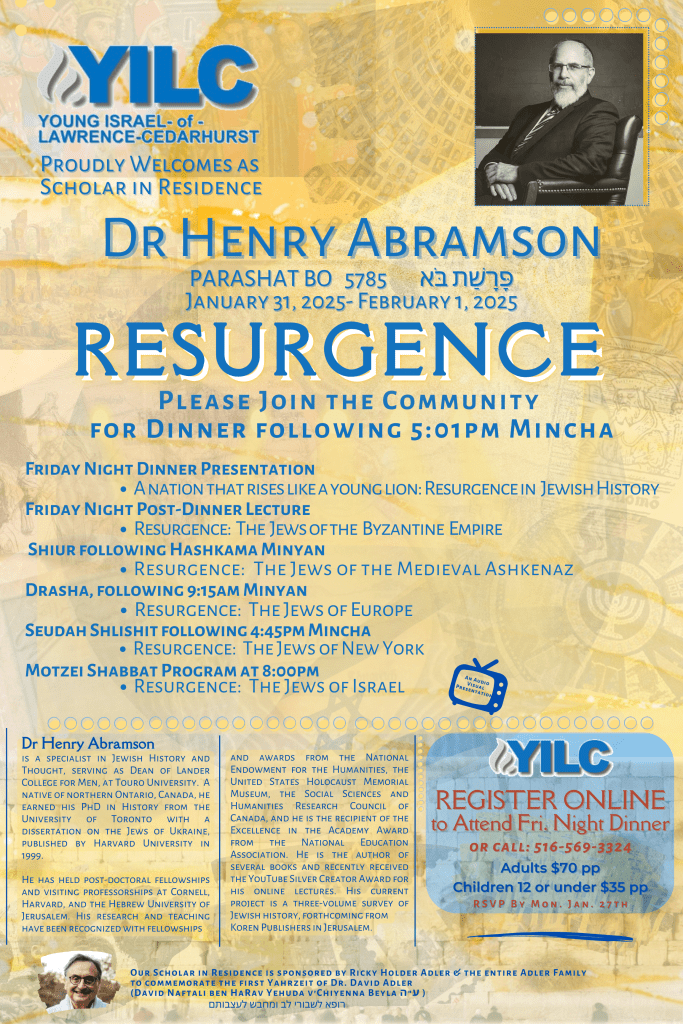
Really looking forward seeing my friends at YILC!

Lectures in Jewish History and Thought. No hard questions, please.


After several weeks without recording a drashah, perhaps related to the horrendous typhus outbreak of the late winter of 1941, the Rebbe delivered a series of powerful derashot for the Passover holiday. On the Seventh Day of Pesach he turned his attention to the subject of Torah learning. The memoirs of Chaim Kaplan, a former principal, describe…

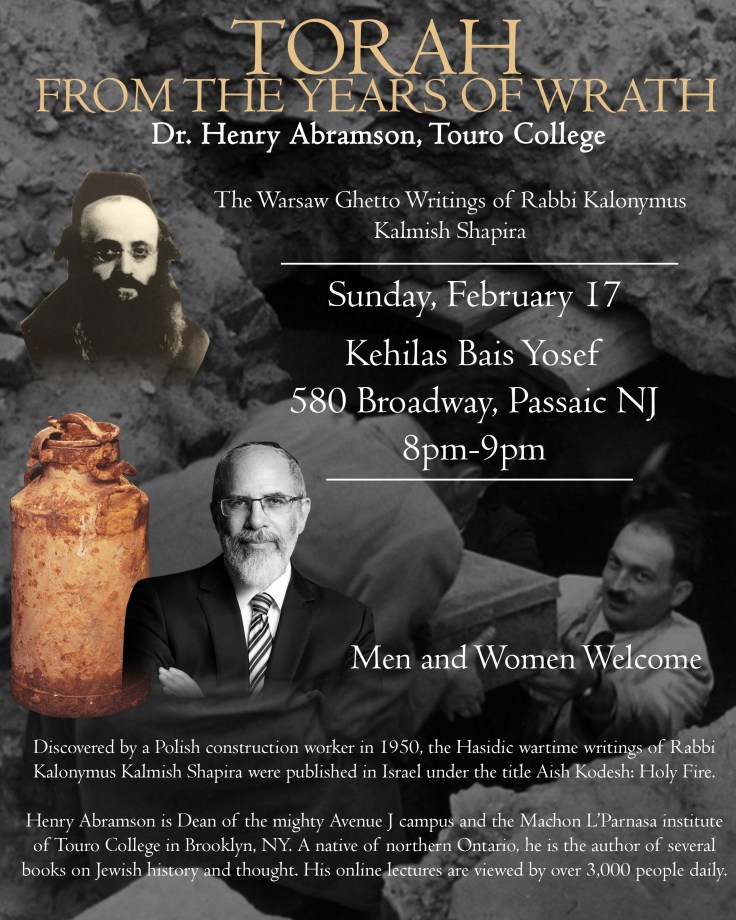
Passover in the Warsaw Ghetto: Inspiration for the Second Seder Taken from Torah from the Years of Wrath (Aish Kodesh) אני מבקש ומתחנן לפני כל אחד מישראל שילמוד בספרי, ובטח זכות אבותי הקדושים זצוקלל״ה יעמוד לו ולכל ביתו בזה ובבא “I request and plead every person of Israel to study my works—surely the merit of…

Brief lecture on the life and work of Judah Touro, an important 19th-century American philanthropist for whom, together with his father Isaac, Touro College was named.

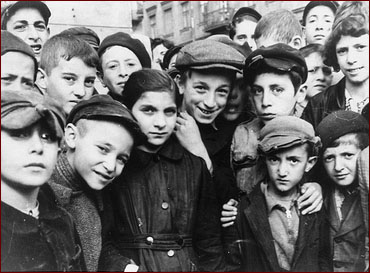
School principal Chaim Kaplan recorded the bleak mood in the Warsaw Ghetto on the eve of Passover of the Hebrew year 5701 (1941): Like the Egyptian Passover, the Passover of Germany will be celebrated for generations. The chaotic oppression of every day throughout this year of suffering will be reflected in the days of the…

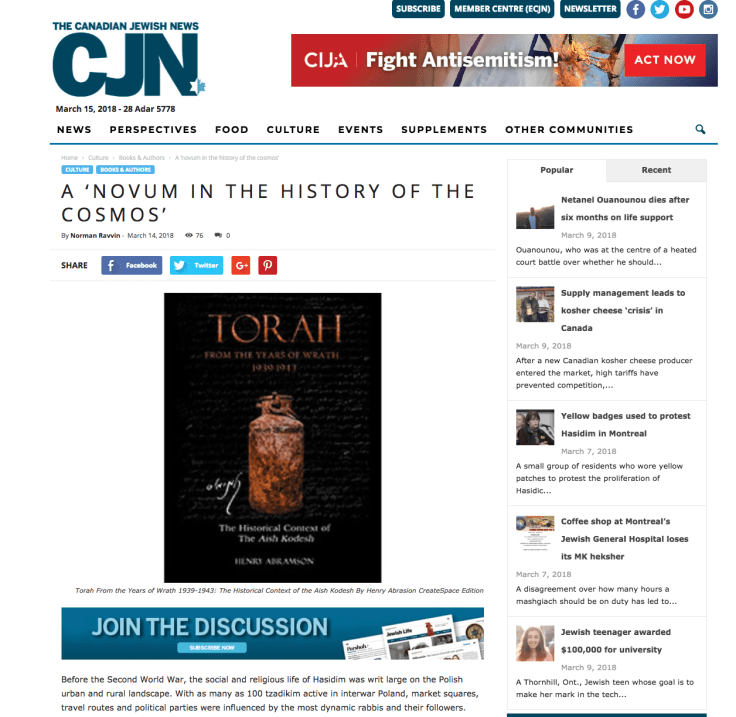
Really nice to see that readers in my native Canada are encountering the Piaseczno Rebbe: Here’s a new review by Dr. Norman Ravvin, appearing in the current Canadian Jewish News. Note to my dear readers: the book is in Judaica stores, on Amazon and Kindle, but my favorite (and the best value) is the beautiful…

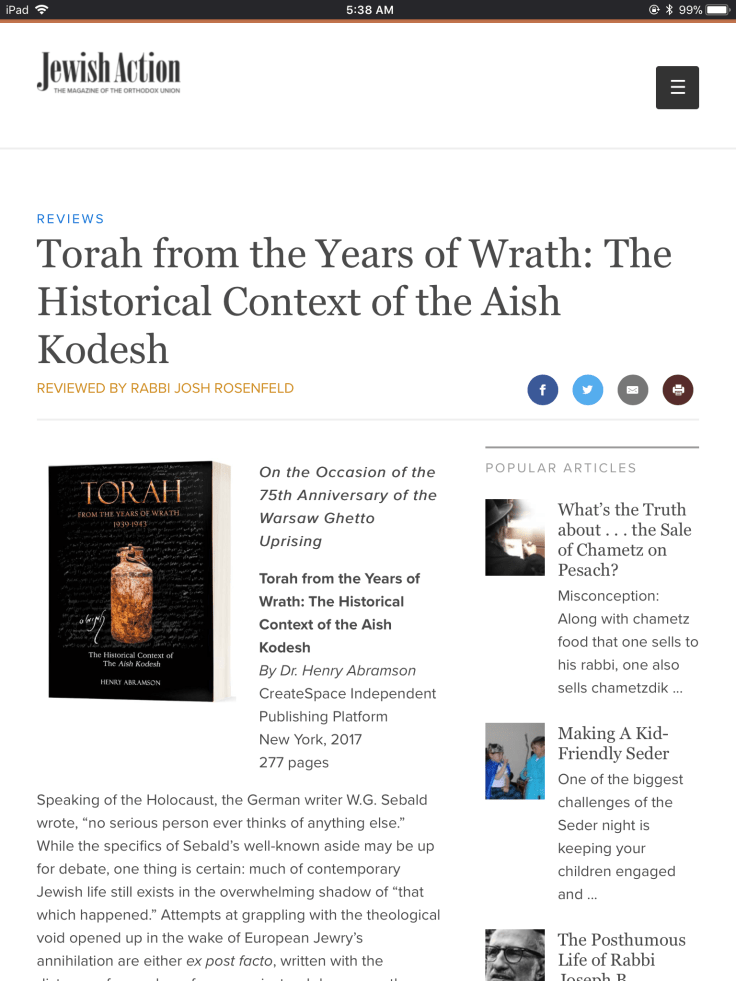
I’m grateful to Rabbi Josh Rosenfeld for his kind and thoughtful review of Torah from the Years of Wrath, which appeared in this month’s Jewish Action. Please click here to read his thoughts on the work of the Piaseczno Rebbe.

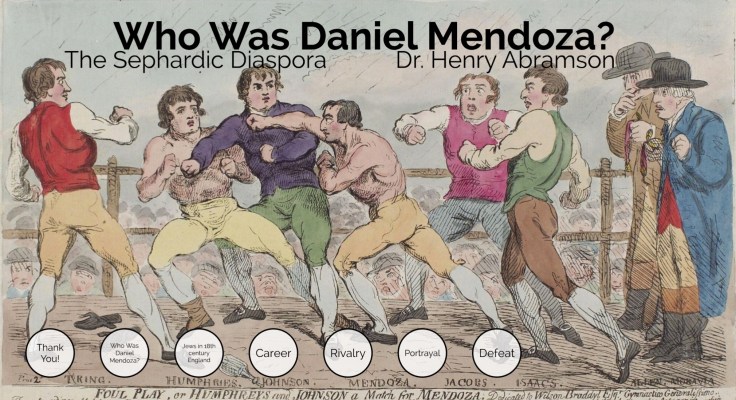
Brief lecture on the life and times of Daniel Mendoza, a Sephardic Jewish champion boxer of the 18th and early 19th century.

In early February 1940 the Nazis promulgated decrees that prohibited Jews from benefitting from general community charity services. Ration cards were distributed with racial distinctions: Jews received cards with a Star of David marked on them, while Poles and Germans received colored, otherwise unmarked cards. At this early date in the war, hunger did not…

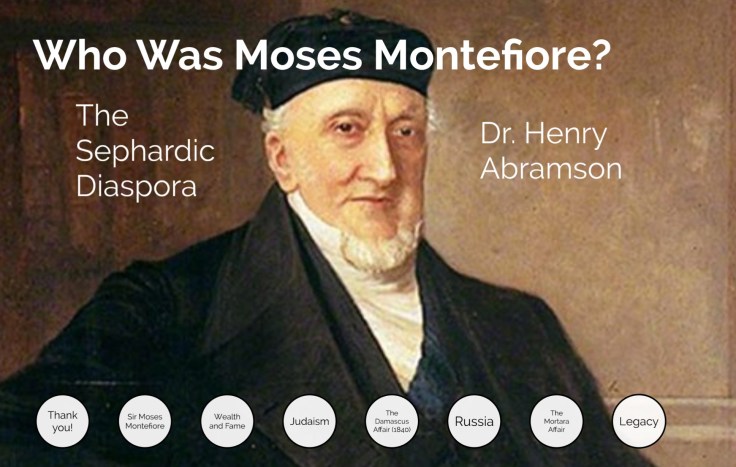
Brief presentation on the life and works of Sir Moses Montefiore, an important 19th century Sephardic English philanthropist. Part of the Sephardic Diaspora series.

“Faith is not an argument. It is a conversation, in which we listen, accept the premises of the interaction, make active choices and contributions, shift our direction as necessary based on the cues we hear, and most importantly, keep the conversation alive and active…Abramson’s work allows us to eavesdrop on one of the most powerful…

I am grateful for this thorough and kind review of the recent Ukrainian translation of “Ukrainians and Jews in Revolutionary Times” by Oleksandr Zinchenko, published in today’s Istorichna Pravda. If you don’t read Ukrainian (and refuse to read Google translate, which is close enough to the original to be seriously misleading), the revised English edition…

Brief presentation of the life and work of Rabbi Chaim Yosef David Azoulay, a fascinating Sephardic Rabbi of the 18th century. Part Three of The Sephardic Diaspora series.


Connect yourself with the Rav for as long as there is an Internet.

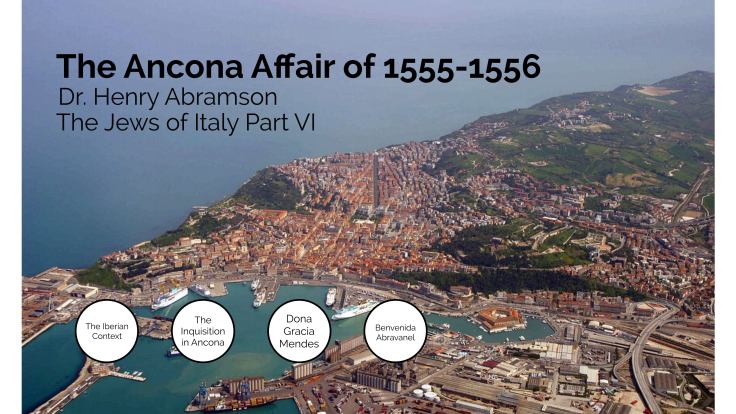
The remarkable story of two powerful Jewish women from Spain and Portugal and the challenge to Pope Paul IV for his maltreatment of Portuguese Jews in Italy.

True, he wrote a dictionary, but cryptic hints in his autobiographical poem suggest a more complicated background.

Not enough snow to cancel tonight’s class on Nathan of Rome!

A medieval historian recounts the remarkable story of four Rabbinic captives.

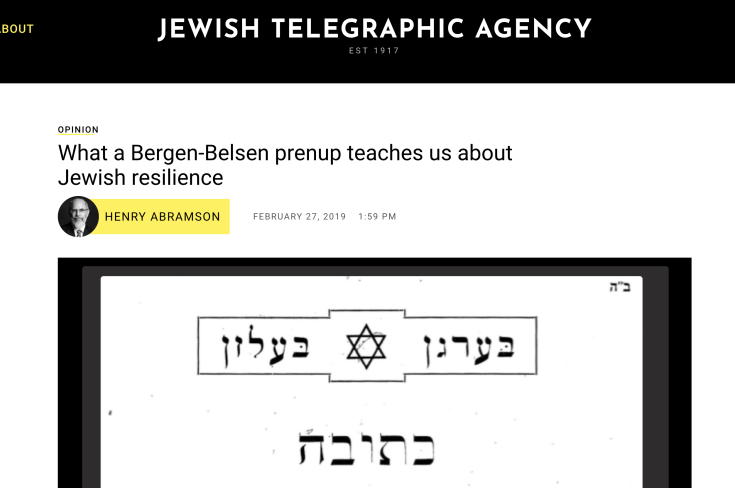
Please click here for a link to my recent article on a document I came across in the archives of the YIVO Institute for Jewish Research, published by the Jewish Telegraphic Agency. I’m really grateful to Laura Adkins, Opinion Editor, for shaping the piece. Also thanks to the incredibly helpful staff of YIVO for permission…

A brief lecture providing an overview of the life and work of Josephus, a Jewish historian who lived through the first Roman-Jewish war of the first century.

Josephus betrayed his people and watched the Romans destroy the Temple in Jerusalem. Did he ever regret his youthful decisions? Lecture begins promptly at 7.

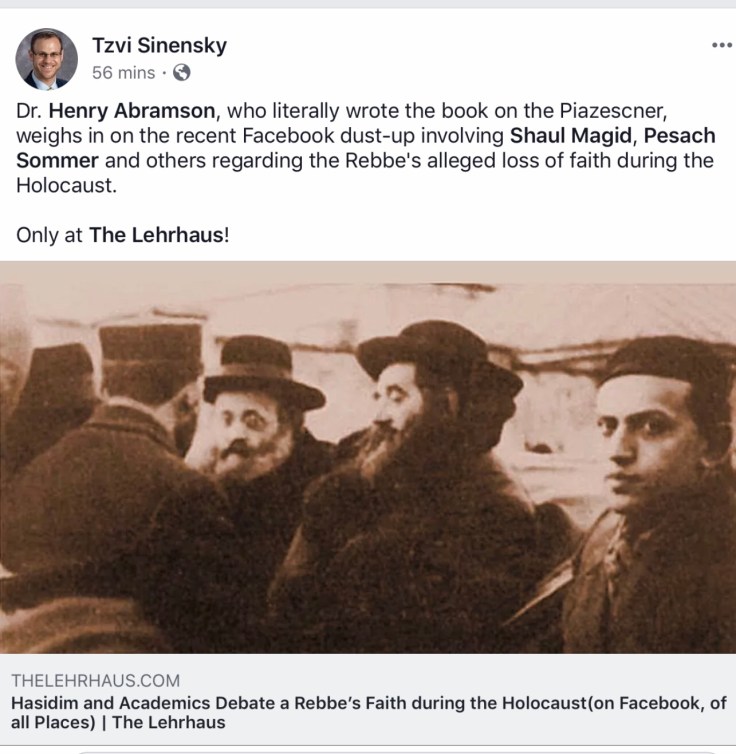
Was the Rebbe’s faith “broken” by the Holocaust?

SPIRITUAL HEROISM AND TRAGIC MARTYRDOM IN THE WARSAW GHETTO.

Get a head start on the first lecture by watching these intermittently interesting videos while peeling potatoes.

Good morning fellow students of Jewish History! Really excited to be starting the Spring Semester of Jewish History Lectures next week–it’s going to be a busy February, but I’m certainly looking forward to speaking with you about these fascinating topics! Here’s a quick list of what, where, and when. Unfortunately not all of these lectures…