Really looking forward seeing my friends at YILC!

Lectures in Jewish History and Thought. No hard questions, please.


Compiled by Rabbi Yehuda Ha-Nasi in an exceptionally difficult time for the Jewish people, the Mishnah created the possibility of creating a “portable Judaism.” After the destruction of the Temple in 70 and the dramatic escalation of the diaspora, the Mishnah allowed Jews to define their religion within an intellectual and textual context, outside of…

Virtually ignored by Jewish philosophers, Philo of Alexandria represented the high point of synthesis between Greek and Jewish thought in the ancient world, and had a huge influence on early Christian thinkers. A prominent representative of the Egyptian Jewish community to the Roman Emperor, and well-respected in his day by his coreligionists, he nevertheless had…

Wrongly accused of espionage, Captain Alfred Dreyfus was sentenced to Devil’s Island on the basis of remarkably tenuous evidence. May critics, including the famous writer Emile Zola, argued that Dreyfus was unfairly charged simply because he was a Jew in the French army. As evidence mounted that another officer was guilty, the Dreyfus Affair exposed…

Captured by the Romans, Josephus was a Jewish general who ultimately served as a military advisor to General Titus. Josephus recorded his first-hand observations of the destruction of the Temple, and went on to a brilliant literary career in Rome, describing Jews and Judaism to a wider audience. Who was Josephus–traitor to his people or…

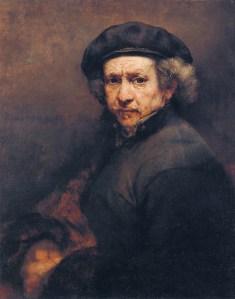
Rembrandt is well-known for his depictions of Jewish subjects, both as contemporary portraits and as models for Christian biblical characters.

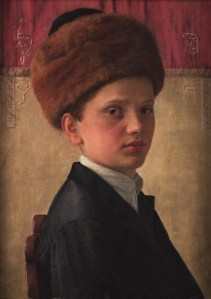
Photo: Aryeh Abramson looks out over Iroquois Falls, Ontario, Canada, where he spent the Sukkot vacation visiting his grandparents. Captured by the Roman General (and later Emperor) Vespasian while defending the Galilee, Josephus ultimately turned against his coreligionists and served as an advisor to the forces besieging Jerusalem during the first Roman-Jewish War. His first-hand…

Moses Maimonides (1135-1204) was one of the greatest minds the Jewish people ever produced: philosopher, jurist, physician, and an extremely prolific writer who left us classics like The Guide for the Perplexed and the Mishneh Torah. For several years I have been in the habit of reviewing his Laws of Repentance in the weeks leading up to the…

Pope Gregory I (“the Great”) was one of the most influential Church leaders of the medieval period. His policy on the treatment of Jews in Christian Europe, known by the Latin phrase “Sicut Judaeis,” instituted an official if ambivalent position that lasted from the sixth century to the beginnings of the modern era.

Reeling from the humiliating defeat of the Crimean War, the Russian Empire decides its policy of forcibly conscripting Jewish boys into military service is counterproductive, and finally abandons the cruel decades-old policy of taking underage children into thirty-one years of military training and service.

To view the Prezi associated with this lecture, please click here. Excerpt from “The Jewish Diaspora: A Brief History” Henry Abramson 3. The Roman-Jewish Wars Our sources for the Roman-Jewish wars of the first and second centuries are more substantial than those of earlier periods, primarily because the importance of developments in this tiny…

Born in turbulent times, Christianity emerged from its intensely Jewish roots to become the official religion of the Roman Empire within a remarkably brief period of time. As a daughter religion to Judaism, however, dissent between the two faiths slowly dominated the discourse as Christianity became less of a Jewish movement, and more of a…


Part Four of the Jews of the Danube series. Filmed in a new location without my usual technical support–sorry for the lower video and audio quality, but the lecture is ok. To see the visuals better, please click here. Next week we are back at our usual location with IT support!
Okay, this is cool: just saw the trailer for a documentary project I worked on several months ago. I can’t wait to see the whole thing! I was especially honored to work with Dr. Lawrence Schiffman, world expert on the Dead Sea Scrolls and senior scholar in Jewish history (he’s the last talking head in…

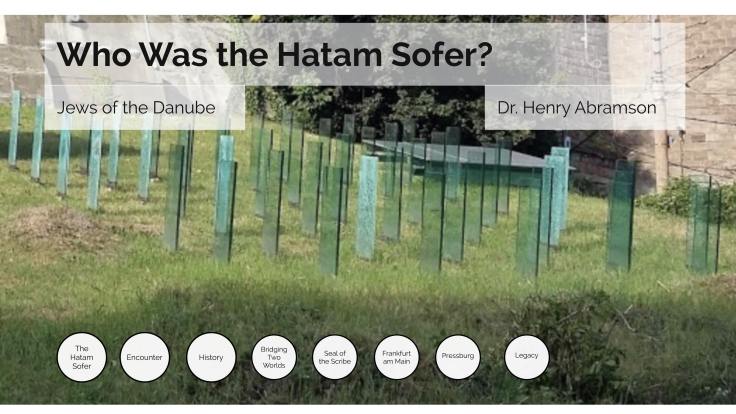
A scholar and a fighter, the Hatam Sofer articulated a definition of Orthodoxy for the modern era.

Brief video lecture on the life and work of Isaac of Vienna (c. 1180-c. 1250), author of the important Or Zaru’a.

We begin our discussion of the Jews of the Danube with the question: “Who Was Isaac of Vienna (the Or Zaru’a)?”

Unexpected and unexplained, a phalanx of glass obelisks emerge silently from the earthen mound, punctuating the atmosphere above what appears to be an anonymous tel. Some are transparent, others pebbled and translucent, but all glow with a faint green hue. Unyielding, they stand in rigid formation on the angled surface of the earth. These mute…

When the Hungarians purchased their alphabet, vowels were on sale (also plastic sofa coverings and chandeliers). By the time the Poles came around, all that was left were the consonants. This helps explain why we anglophones are so challenged by both languages: in the case of Hungarian, there are just way too many umlauts and…

Abandoned Nazi trucks were discovered by children playing in the shallows of the diminished Danube.