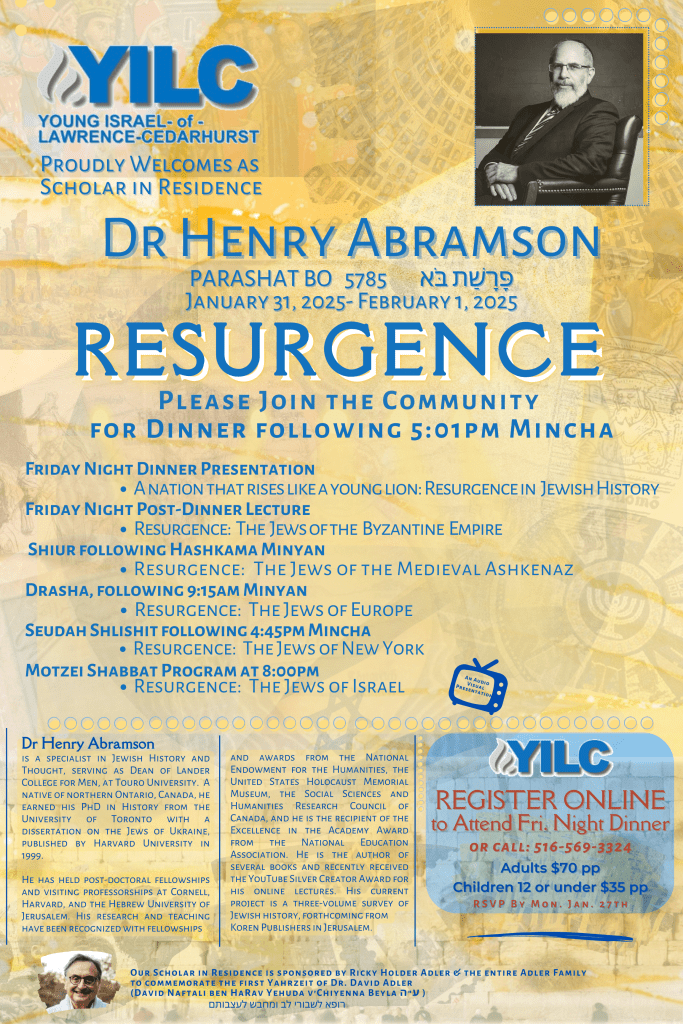
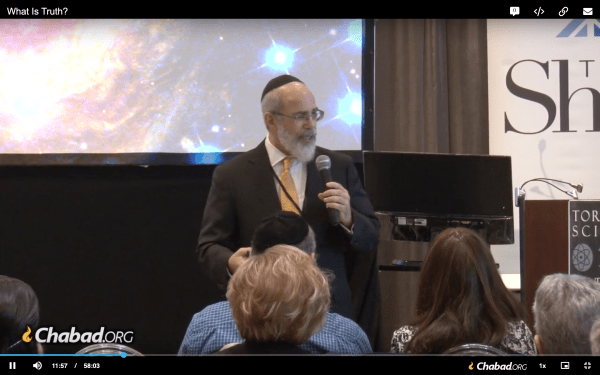
Really looking forward seeing my friends at YILC!

Lectures in Jewish History and Thought. No hard questions, please.


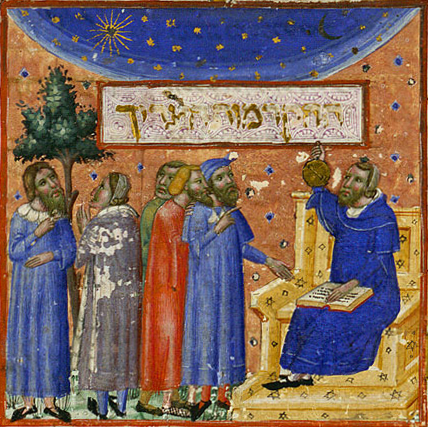
Rabbi Moshe ben Maimon (1135-1204) was a towering figure in medieval Jewish history, and continues to cast a long shadow into the Jewish present. Nevertheless, the work of the philosopher-physician endured significant controversy, including an especially sad episode in which Jews actually consigned his works to the flames.
To view the Prezi associated with this lecture, please click here.

One of the more colorful false messiahs in Jewish history, Jacob Frank made a career of conversion–first to Islam, then to Christianity, all the while leading a neo-Sabbatean movement that emphasized antinomian “purification through transgression.” His appeal to the Church in 1757 resulted in a modern-day disputation over the Talmud, and ultimately the burning of…

In one of the most bizarre episodes in Jewish history, the Central Asian kingdom of Khazaria converted to Judaism in the eighth century. Multiple sources confirm the conversion, yet the entire story remains a mystery. What was the nature of their Judaism? More importantly, what happened to them?

Sa’adia Gaon was an important Jewish philosopher and communal leader of the 9th and 10th centuries, famous in particular for his massive Book of Beliefs and Opinions. A child prodigy to rose to the highest ranks of Jewish scholarship, his thought left an indelible imprint on the Jewish spiritual tradition.

Wondering how to harness the power of the Internet for effective teaching? Confused and maybe alarmed by all the talk about using social media as a pedagogic tool? Sign up for these three workshops for teachers by visiting http://www.miamijewisheducators.org! A project of Touro College South and The Shul.

Pakistani terrorists attacked the Chabad House in Mumbai, India, on Wednesday, 29th of Heshvan, 5769 (26 November 2008). Part of a concerted attack that killed 179 and wounded hundreds, they murdered the young Chabad emissaries running the house, Rabbi Gavriel and Mrs. Rivky Holtzberg. Their infant son, who turned two the day after his parents…

Who, exactly, wrote down the foundational texts of the Oral Torah? Who is responsible for the compiling of the Talmud? These were some of the questions addressed to Sherira Gaon, the Rosh Yeshiva of the great city of Pumbedita in Babylon in 987 by a young Rabbi in Tunisia. His famous response, preserved for over…

Hannah Szenes was a young Hungarian Jewish woman who joined the resistance in 1943, parachuting into Nazi-occupied territories with British support. She was captured and tortured, but did not divulge secret information on her colleagues. Her poetry, including the classic “Blessed is the Match,” survive and add to her legacy.

Credited with the popularization of Christianity, Saul (later Paul) of Tarsus was influential in mediating Jewish ideas to an increasingly Gentile audience. Combining appealing concepts such as life after death and a personal Deity with a relaxed approach to the requirements of Rabbinic Judaism, the former Pharisee succeeded in spreading Christianity well beyond its narrow…

Vladimir Ze’ev Jabotinsky (1880-1940) was one of the most influential political thinkers in the first half of the twentieth century, founder of the Revisionist movement.


The Fourth Level: Remember the Family “In the Same Boat (Remember We are Family),” illustration of Level 4 by Rebecca Odessa, Courtesy The Wisdom Daily The Fourth Level: Remember the Family Translator’s Introduction The Fourth Level of Mercy calls attention to the fundamental connectedness of humanity. The Jewish people in particular maintain a strong familial…

The Third Level: Take Care of it Personally “Part of the Process (Take Care of it Personally),” illustration of Level 3 by Rebecca Odessa, Courtesy The Wisdom Daily The Third Level: Take Care of It Personally Translator’s Introduction The Third Level of Mercy addresses the personal role that God plays in the process of forgiveness. Rather…

The Second Level: Let it Go for Now “Whose K’tegors are These? (Let it Go)” Illustration of Level 2 by Rebecca Odessa, Courtesy The Wisdom Daily The Second Level: Let it Go for Now The second of the Thirteen Levels, “Who Bears Sin,” describes a degree of mercy that is even more profound than…

The First Level: The King who Endures Insult “The Insulted King,” illustration of Level 1 by Rebecca Odessa, Courtesy The Wisdom Daily Translator’s Introduction Rabbi Cordovero’s discussion of the Thirteen Levels of Mercy begins with an awesome depiction of human sin from God’s perspective. Given that all power in the Universe has God at…

Please visit https://www.smashwords.com/books/view/464044 and enter coupon code YT52E (Expires October 19, 2014). Please click here for excepts and supporting videos.
New for the Season of Repentance: a translation and modern commentary on Rabbi Moshe Cordovero’s classic of Jewish ethics, the Date Palm of Devorah (Tomer Devorah). Learn the Thirteen Levels of Mercy and discover how to forgive others (and yourself). Please visit http://www.jewishhistorylectures.org and click on “The Kabbalah of Forgiveness” for excerpts and videos. Publication date:…

Rabbi Samson Raphael Hirsch (1808-1888) articulated a strategy to allow Jews their traditional observances while participating actively in the modern world. Criticized from both the left and the right, his thought remains highly influential into the 21st century.

Founder of the famous Yeshiva of Volozhin, Rabbi Hayim ben Yitshad was one of the most influential proponents of traditional Talmudic study of the early 19th century. The author of Nefesh haHayim, he articulated a cogent response to the growing Hasidic movement.

In 1240 Nicholas Donin, a Jewish convert to Christianity, engaged in a public debate with his former teacher, Rabbi Yechiel of Paris. Donin charged that the Talmud was a noxious document that prevented the Jews from embracing Christianity, and brought a total of 35 distinct accusations against this ancient holy text. Ultimately, 24 carriage loads…

Jerusalem Day (Yom Yerushalayim) celebrates the unification of Jerusalem in the context of the Six-Day War of June 1967. This dramatic military achievement represented a victory that was both political and symbolic, giving Jews control over the the Old City and the Temple Mount after nearly 2000 years of exile.

Alexander has done well with his fundraising efforts to participate in the Boys Israel Leadership Training (BILT) program run by the National Council of Synagogue Youth. He’s already raised $858 toward his goal of $3,000! To all of you who participated, thanks very much. If you haven’t yet had a chance, please do so quickly,…

Rabbi Moshe Isserles was an exceptionally important Polish Jew of the 16th century. His commentary on the Code of Jewish Law brought Sephardic and Ashkenazic Jewry together to an unprecedented degree, and established the ascendancy of Polish Jewry over the older German community.