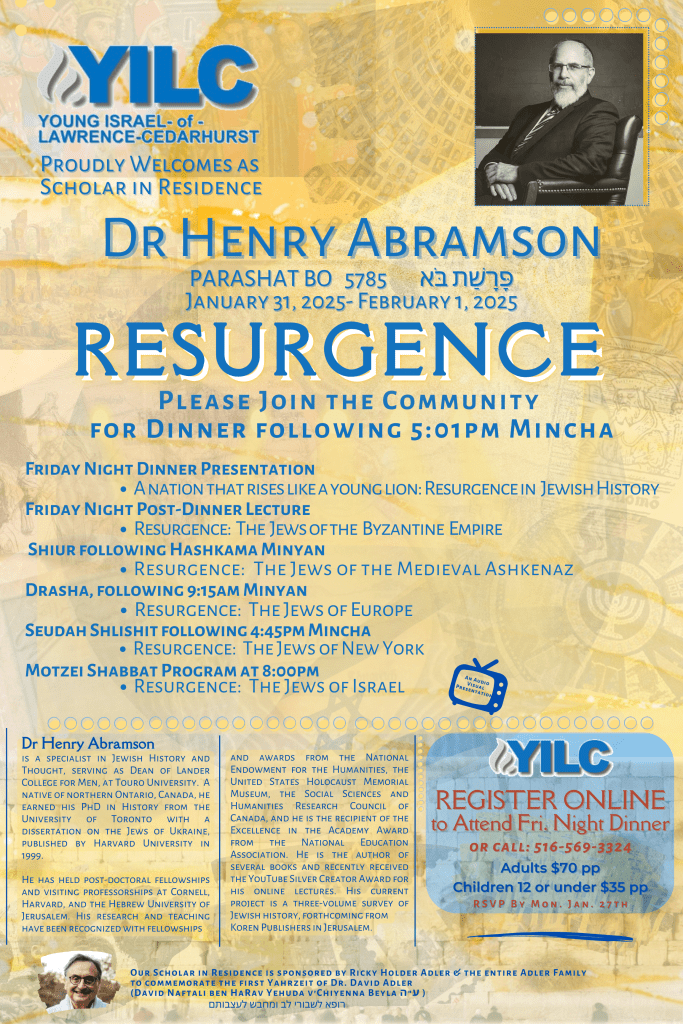
Really looking forward seeing my friends at YILC!

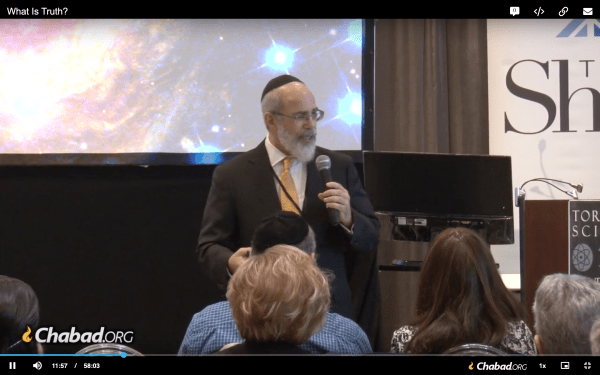
Lectures in Jewish History and Thought. No hard questions, please.


Nicholas Donin was an erstwhile Talmudic scholar who converted to Christianity and made a career of denouncing the Talmud. His charges, brought before the Pope, resulted in a massive destruction of priceless Jewish manuscripts in Paris, 1242. Part of the Jewish Biography as History lecture series by Dr. Henry Abramson.
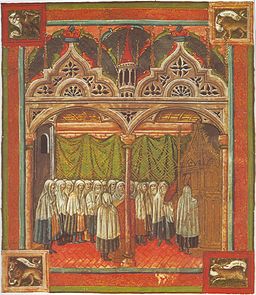
Rabenu Gershom, Me’or Ha-Golah (Our Teacher Gershom, Light of the Exile) was one of the most influential Jewish legislators of the High Middle Ages, affecting a wide variety of Jewish practices including monogamy, divorce law, and the right to privacy. Part of the Jewish Biography as History lecture series by Dr. Henry Abramson.

Yocheved was the daughter of one of Judaism’s greatest scholars: Rabbi Shlomo Yitzhaki, better known as Rashi. A fascinating woman in her own right, this lecture will survey some of the references to Yocheved (and her illustrious sisters) and what light this sheds on the history of medieval Jewish women.

To view the Prezi associated with this lecture, please click here. http://www.youtube.com/watch?v=1OnArXdHQdc

L.L. Zamenhof (1859-1917) was a Polish Jew who invented the world’s most successful artificial language, Esperanto. Conceived as a vehicle for world peace, Esperanto is even regarded by the Oomoto religion of Japan as the “language of heaven.”
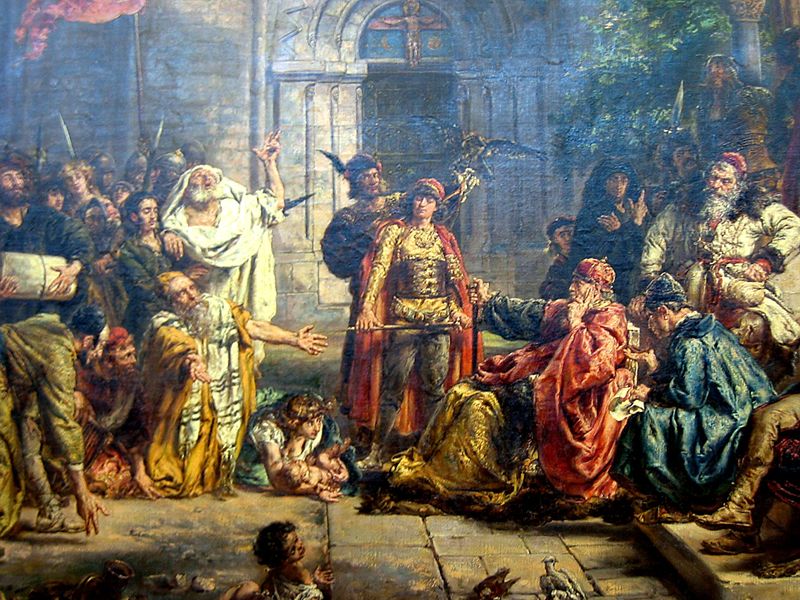
This week marks the death anniversary of King Boleslaw V (The Chaste) in 1279. Boleslaw followed the tradition of his predecessors in Poland by creating incentives for Jewish settlement in Poland, including the establishment of Magdeburg Recht. Ultimately, these policies proved extremely attractive to Ashkenazi Jews from the Rhineland, making Poland a great center of…

To view the Prezi associated with this lecture, please click here.
To view the Prezi associated with this lecture, please click here.

The Fourth Lateran Council, which met in 1215 at the behest of Pope Innocent III, issued several pieces of Church legislation with dire implications for Jews. The doctrine of transubstantiation was confirmed, leading to a new element in antisemitic canards: accusations that Jews “desecrated the host.”

Poet, politician and philosopher, Shmuel ha-Nagid was an exemplar of the Golden Age of Spanish Jewry.

In November of 1977, Egyptian President Anwar Sadat flew to Israel to address the Knesset. His meeting with his former enemy Prime Minister Menachem Begin ultimately resulted in the sometimes strained but nevertheless enduring Israel-Egypt peace accord, but his unpopularity with hardline Egyptians, opposed to making peace with Israel, resulted in his assassination in 1981.

To view the Prezi associated with this lecture, please click here. Excerpts from The Sea of Talmud: A Brief and Personal History Henry Abramson (2012) The Yeshiva administration must have put considerable thought into the wording of the hand-lettered sign posted outside the cafeteria. Many young men studying Talmud at this Jerusalem institution were taking…


Known as simply “The Rav,” Rabbi Dr. Yosef Baer (J.D.) Soloveitchik was arguably the most influential figure shaping the Orthodox Rabbinate in the United States in the 20th century. From his position at the Rabbi Isaac Elchanan Rabbinical Seminary at Yeshiva University, he ordained some 2,000 Rabbis over four decades. To view the Prezi associated…

Discovered in the rubble of the Warsaw Ghetto, the wartime writings of Rabbi Kalonymus Kalmish Shapiro (1889-1943) offer a unique and powerful perspective on the life and suffering of religious Jews during the horrific years of the Nazi occupation. By Dr. Henry Abramson According to my knowledge of the words of the Sages and the…

I’m a runner. I’ve been running as long as I can remember, including my first half-marathon at age 12 and my first full marathon at 14. Running gives me energy, and makes me feel like I can accomplish anything. I’m proud of my finishes, and even more proud that over the years I’ve raised almost…

Rabbi Israel Meir Kagan, better known as the Chofetz Chaim for his classic work on the sanctity of speech, was one of the major Rabbinic leaders of the late 19th and early 20th century. To view the Prezi associated with this lecture, click on the image below or here.
Hello students– We are scheduled to resume our lecture series this evening with a presentation on the Chofetz Chaim,one of the most influential Rabbinic thinkers of the late 19th and early 20th century. Rabbi Israel Meir Kagan is known principally for his dramatically creative analysis of the topic of forbidden speech (lashon ha-ra), and rose…

This video describes the changes in the political boundaries of the State of Israel from its inception 1948 through the disengagement from Gaza in 2005. Part of the Essential Lectures in Jewish History series by Dr. Henry Abramson. To view the Prezi associated with this video please click here.

Jacob Rodrigues Periera (1715-1780) was the inventor of dactylology, a method for teaching deaf-mutes to communicate. A crypto-Jew from Portugal, his first student was his sister. His methodology received phenomenal acclaim, he received honors from the King of France and was named to both the Royal Society of London. This video is part of This…

This is a brief academic presentation of the history of the Nazi attempt to destroy the Jews of Europe during World War II. Part of the Essential Lectures in Jewish History series by Dr. Henry Abramson. To view the Prezi used in this lecture, please click here.

Revered by many as Germany’s greatest poet, Heine struggled mightily with his Jewish identity in the culturally inimical milieu of the 19th century. This phenomenon, known as Judenschmerz, was widespread among 19th century western European Jews. Despite his 1825 conversion to Christianity, Heine maintained a long, albeit conflicted, relationship to his Jewish background. Part of…

Sarah Schenirer (1883-1935) founded the Bais Yaakov (Bet Ya’akov) school system for women. One of the most visionary educators of the twentieth century, her movement had global impact. To view the Prezi associated with this lecture, please click here.

Baptized at age 12 as the result of his father’s dispute with a synagogue, Benjamin Disraeli (1804-1881) rose to prominence as a novelist and politician, serving several times as England’s Prime Minister. Colorful and flamboyant, Disraeli dismissed his antisemitic critics by emphasizing, rather than downplaying, his Jewish origins.

The discovery of the mutilated body of a young boy in Kiev led to the false arrest of a Jewish laborer named Mendel Beilis. Ignoring the argument of investigating officers, the Russian government under Tsar Nicholas II pressed ahead with the prosecution of Beilis, arguing that the boy was murdered as part of a Passover-related…