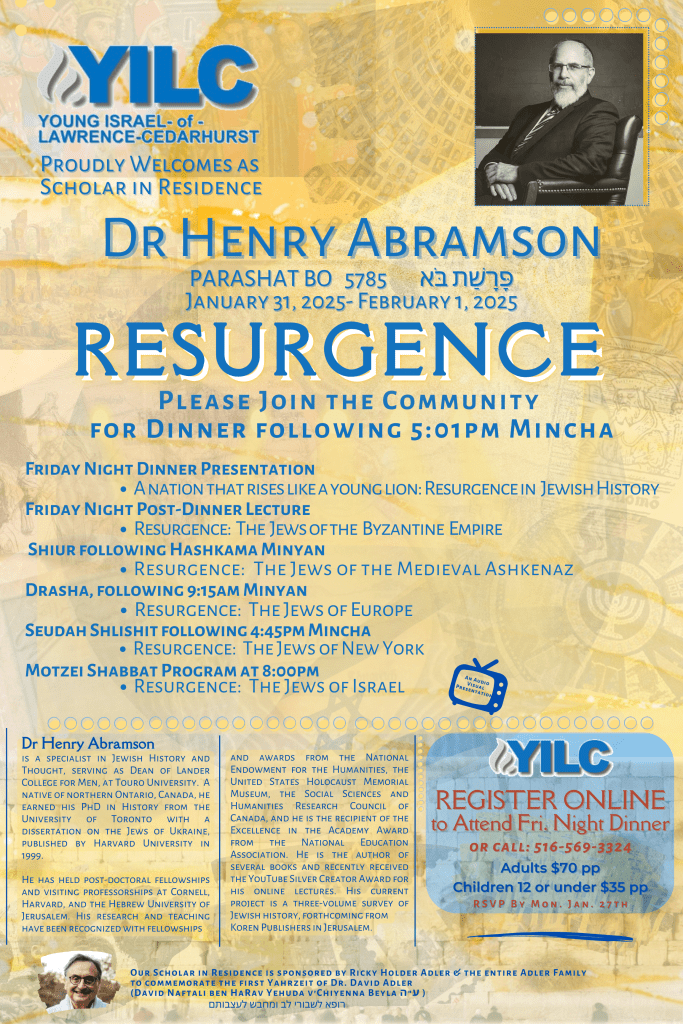
Really looking forward seeing my friends at YILC!

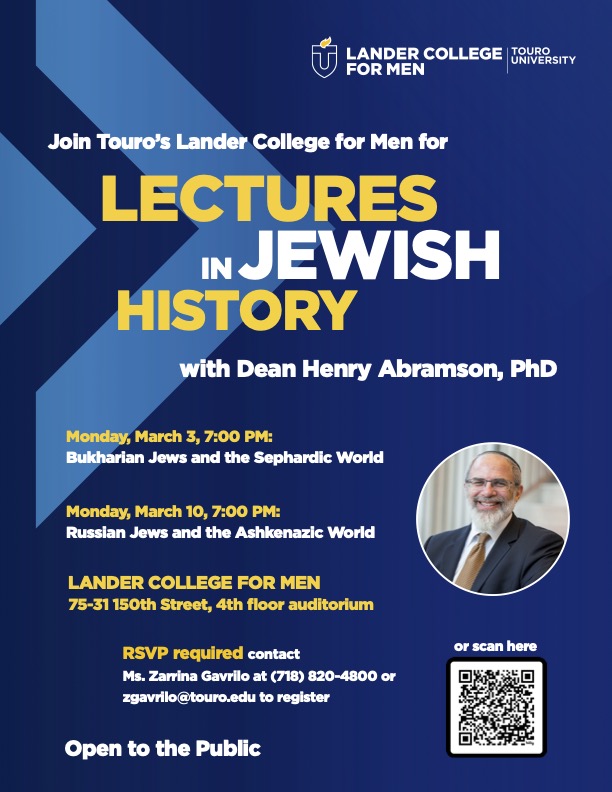
Lectures in Jewish History and Thought. No hard questions, please.


Dedicated to the memory of my father: A new translation and commentary of Moses Maimonides’ classic work on repentance. Softcover, 253 pages, illustrations. $18 after August 3, pre-order now for special price of $9 plus shipping. 5th edition (2017) Visit bit.ly/ordermot for more details.
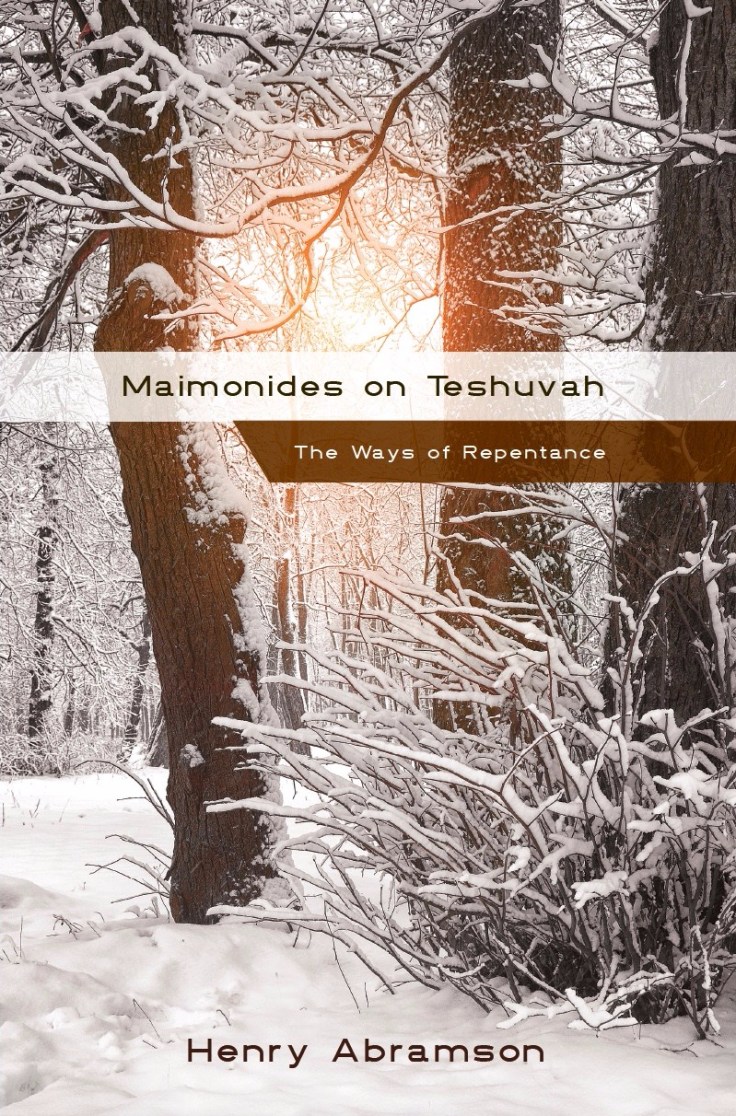
Dedicated to the memory of my father: A new translation and commentary of Moses Maimonides’ classic work on repentance. Softcover, 253 pages, illustrations. $18. Click here to order.
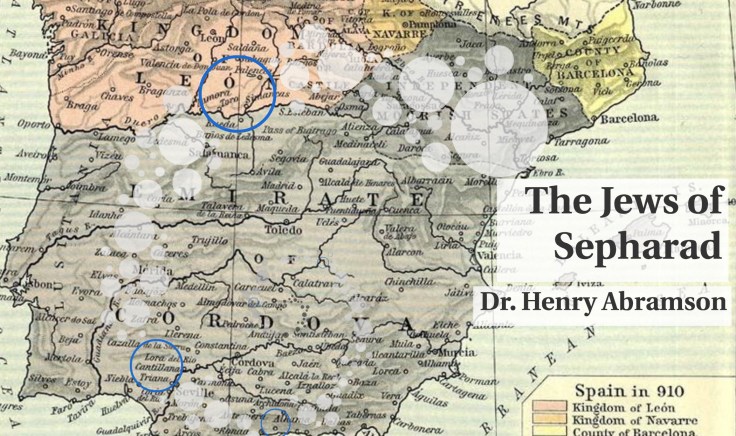
All lectures will be held in the Main Auditorium of the mighty Avenue J Campus 7:00 PM Free and Open to the Community Touro College 1602 Avenue J Brooklyn, NY 11230 September 11 September 18 September 25 October 2 No Class October 9 October 16 October 23 October 30 November 6 November 13…

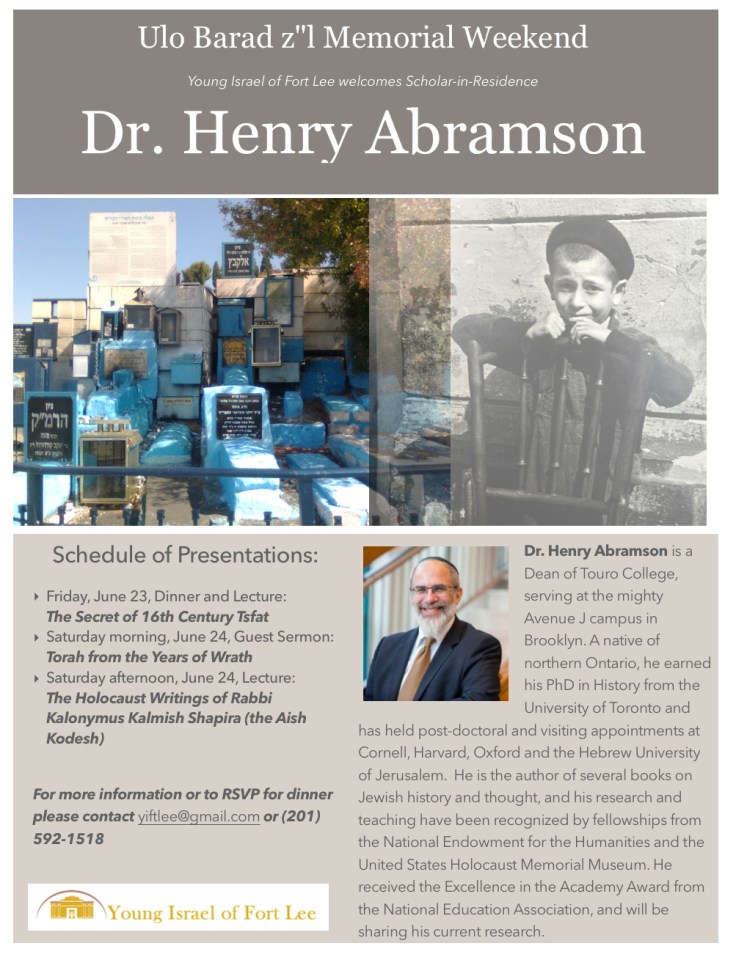
This amazing trip is now open to non-matriculated, visiting students! Join us–it promises to be a fantastic experience. Email me at abramson@touro.edu for more information.
The sixteenth century witnessed a phenomenal, short-lived explosion of Jewish spiritual creativity, centered in the sleepy Galilean town of Safed (Tsfat). Along with greats such as Rabbi Yosef Karo, Rabbi Moshe Cordovero was one of the founders of that unusual place, attracting still more Rabbis and especially Kabbalists to the mountaintop community, including Rabbi…
A brilliant 13th-century scholar of Rabbinic thought, Nahmanides’ defense of Judaism in a forced Church-sponsored debate earned him exile from his native Spain. An elderly sage, he emigrated to the Land of Israel, where he found a tiny Jewish community, desperately hanging onto the traditions of their ancestors. Summoning upon an immense reserve of energy,…
Brief survey of the major historical developments and themes affecting the land of Israel between the 2nd-century Bar Kochba rebellion and the Muslim conquest in the seventh century. Part of the Israel: The Land and its People series.
Certainly one of the greatest Rabbis of the entire Talmud, Akiva son of Joseph did not begin his study of Judaism before adulthood. His trajectory of incredible spiritual growth was punctuated by moments of great personal tragedy, and his martyrdom at the hands of the Romans after the failed second-century Bar-Kochba revolt has an enduring…
One of the greatest builders of ancient Israel, King Herod exploited his power as a Roman-sponsored ruler to develop the Temple, yet earned a reputation as a feared tyrant responsible for horrific massacres. HIs rule set the tone for the political climate in the Land of Israel during the tumultuous decades prior to the growth…
Born in the times of the Hasmonean rebellion celebrated with the holiday of Chanukah, Yohanan Cohen Gadol was one of the most prominent Jewish leaders during the brief period of Jewish freedom in the 2nd century BCE. Caught in the swirling controversy of internal religious debate, in his old age he abandoned his Pharisaic roots…
“Sweet singer of Israel,” David was the poet-warrior King who led the Jewish people to political and cultural prominence. Denied his most cherished goal of building the Temple, he lived a life of great personal challenge and heroic resurgence from tragedy, and his biography left an indelible mark on the Jewish understanding of leadership.


Compiled by Rabbi Yehuda Ha-Nasi in an exceptionally difficult time for the Jewish people, the Mishnah created the possibility of creating a “portable Judaism.” After the destruction of the Temple in 70 and the dramatic escalation of the diaspora, the Mishnah allowed Jews to define their religion within an intellectual and textual context, outside of…

Virtually ignored by Jewish philosophers, Philo of Alexandria represented the high point of synthesis between Greek and Jewish thought in the ancient world, and had a huge influence on early Christian thinkers. A prominent representative of the Egyptian Jewish community to the Roman Emperor, and well-respected in his day by his coreligionists, he nevertheless had…

Wrongly accused of espionage, Captain Alfred Dreyfus was sentenced to Devil’s Island on the basis of remarkably tenuous evidence. May critics, including the famous writer Emile Zola, argued that Dreyfus was unfairly charged simply because he was a Jew in the French army. As evidence mounted that another officer was guilty, the Dreyfus Affair exposed…

Captured by the Romans, Josephus was a Jewish general who ultimately served as a military advisor to General Titus. Josephus recorded his first-hand observations of the destruction of the Temple, and went on to a brilliant literary career in Rome, describing Jews and Judaism to a wider audience. Who was Josephus–traitor to his people or…

Rembrandt is well-known for his depictions of Jewish subjects, both as contemporary portraits and as models for Christian biblical characters.

Photo: Aryeh Abramson looks out over Iroquois Falls, Ontario, Canada, where he spent the Sukkot vacation visiting his grandparents. Captured by the Roman General (and later Emperor) Vespasian while defending the Galilee, Josephus ultimately turned against his coreligionists and served as an advisor to the forces besieging Jerusalem during the first Roman-Jewish War. His first-hand…

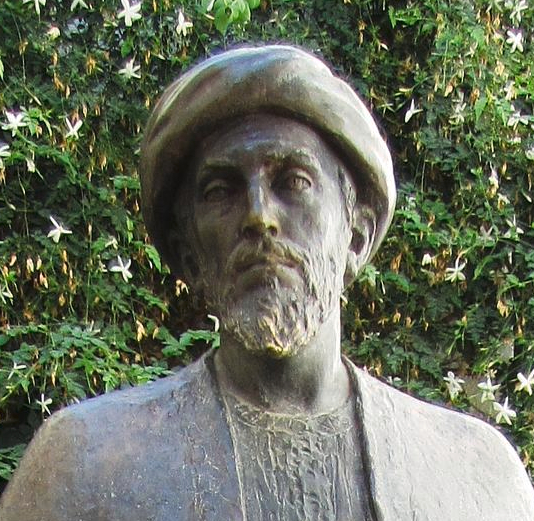
Moses Maimonides (1135-1204) was one of the greatest minds the Jewish people ever produced: philosopher, jurist, physician, and an extremely prolific writer who left us classics like The Guide for the Perplexed and the Mishneh Torah. For several years I have been in the habit of reviewing his Laws of Repentance in the weeks leading up to the…

Pope Gregory I (“the Great”) was one of the most influential Church leaders of the medieval period. His policy on the treatment of Jews in Christian Europe, known by the Latin phrase “Sicut Judaeis,” instituted an official if ambivalent position that lasted from the sixth century to the beginnings of the modern era.

Reeling from the humiliating defeat of the Crimean War, the Russian Empire decides its policy of forcibly conscripting Jewish boys into military service is counterproductive, and finally abandons the cruel decades-old policy of taking underage children into thirty-one years of military training and service.

To view the Prezi associated with this lecture, please click here. Excerpt from “The Jewish Diaspora: A Brief History” Henry Abramson 3. The Roman-Jewish Wars Our sources for the Roman-Jewish wars of the first and second centuries are more substantial than those of earlier periods, primarily because the importance of developments in this tiny…

Born in turbulent times, Christianity emerged from its intensely Jewish roots to become the official religion of the Roman Empire within a remarkably brief period of time. As a daughter religion to Judaism, however, dissent between the two faiths slowly dominated the discourse as Christianity became less of a Jewish movement, and more of a…