This Chanukah, buy some books for your former friends.

Here’s a few humble suggestions, including links for discounts for hardcovers in particular. Enjoy in good health!
img_0935

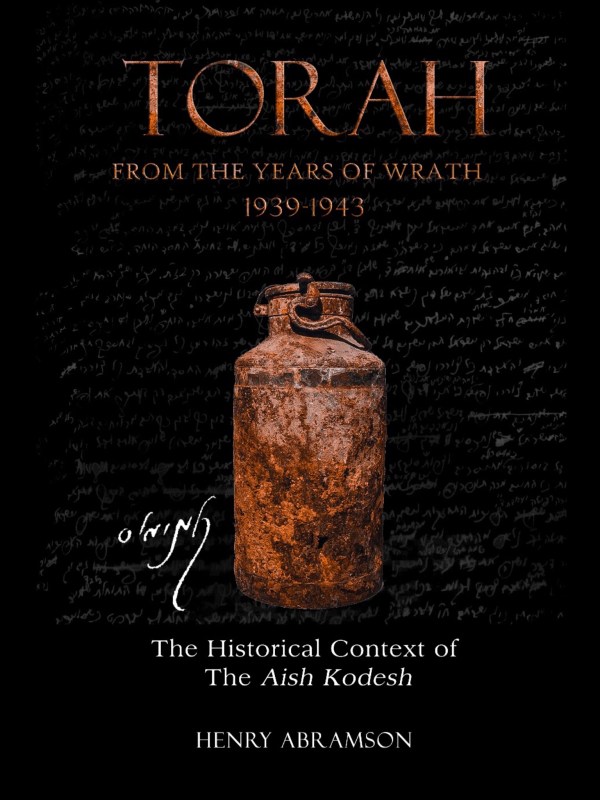
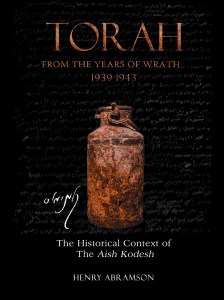
Torah from the Years of Wrath: The Historical Context of the Aish Kodesh

Discovered in the rubble of the Warsaw Ghetto in 1950, the wartime writings of Rabbi Kalonymus Kalmish Shapira illustrates his remarkable spiritual heroism during the Holocaust.

Paperback or Kindle from Amazon

Hardcover (15% off)


kof cover DMA_Fotor

The Kabbalah of Forgiveness: The Thirteen Levels of Mercy in Rabbi Moshe Cordovero’s Date Palm of Devorah (Tomer Devorah)

The Kabbalah of Forgiveness is an extended meditation of Thirteen Levels of forgiveness, exploring how we may emulate God to forgive others, and in some cases, to forgive ourselves as well.

Paperback or Kindle from Amazon

Hardcover (25% off)

MOT2018cover

Maimonides on Teshuvah: The Ways of Repentance
Moses Maimonides on Teshuvah covers both the practical aspects of personal self-transformation as well as related philosophical issues such as life after death, the World to Come, and the question of free will versus determinism. This text is essential for students of Jewish thought and all who are interested in spiritual growth.

The Sea of Talmud

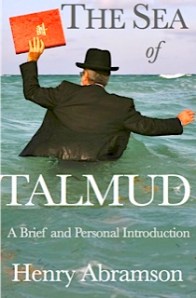
 The Sea of Talmud: A Brief and Personal Introduction 

Scholarly yet readable, The Sea of Talmud combines basic, authoritative information on the Talmud with the author’s unique and personal journey to traditional Judaism. Tracing the history of the Talmud from its origins in ancient Israel and Babylon to Internet-based texts, Dr. Abramson describes the excitement and thrill of studying Talmud from an insider’s perspective.

Paperback or Kindle from Amazon

RTT Cover 2

Reading the Talmud: Developing Independence in Gemara Learning

Reading the Talmud is a textbook designed for students who want to move beyond translations to learning the Talmud on their own. This book presents a proven, “no shortcuts” approach based on the traditional Yeshiva model. If you have enough Hebrew skills to work out a Biblical verse, and a healthy determination to toil in the Talmud, this book will help you develop independence in Gemara learning.

Paperback from Amazon

The Art of Hatred: Images of Intolerance in Florida Culture

The Art of Hatred: Images of Intolerance in Florida Culture

(Jewish Museum of Florida, 2001)

Museum catalog for travelling exhibit on the history of antisemitic iconography.

A Prayer for the Government: Ukrainians and Jews in Revolutionary Times, 1917-1920.

A Prayer for the Government: Ukrainians and Jews in Revolutionary Times, 1917-1920

(Harvard, 1999)

Revised and Updated version Now Available in Paperback and Kindle from Amazon

Hardcover (15% off)

After the fall of the Russian Empire, Jewish and Ukrainian activists worked to overcome previous mutual antagonism by creating a Ministry of Jewish Affairs within the new Ukrainian state and taking other measures to satisfy the national aspirations of Jews and other non-Ukrainians. This bold experiment ended in terrible failure as anarchic violence swept the countryside amidst civil war and foreign intervention. Pogromist attacks resulted in the worst massacres of Jews in Europe in almost three hundred years. Some 40 percent of these pogroms were perpetrated by troops ostensibly loyal to the very government that was simultaneously extending unprecedented civil rights to the Jewish population.

Abramson explores this paradox and sheds new light on the relationship between the various Ukrainian governments and the communal violence, focusing especially on the role of Symon Petliura, the Ukrainian leader later assassinated by a Jew claiming revenge for the pogroms. A Prayer for the Government treats a crucial period of Ukrainian and Jewish history, and is also a case study of ethnic violence in emerging political entities.
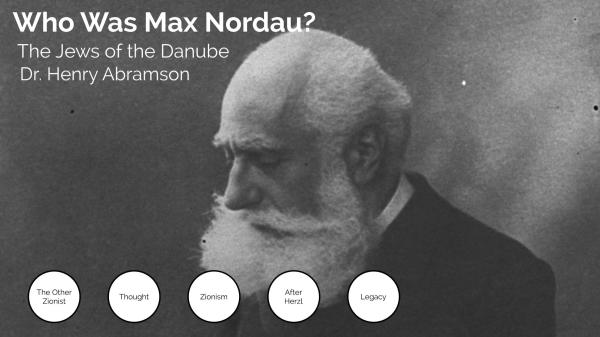
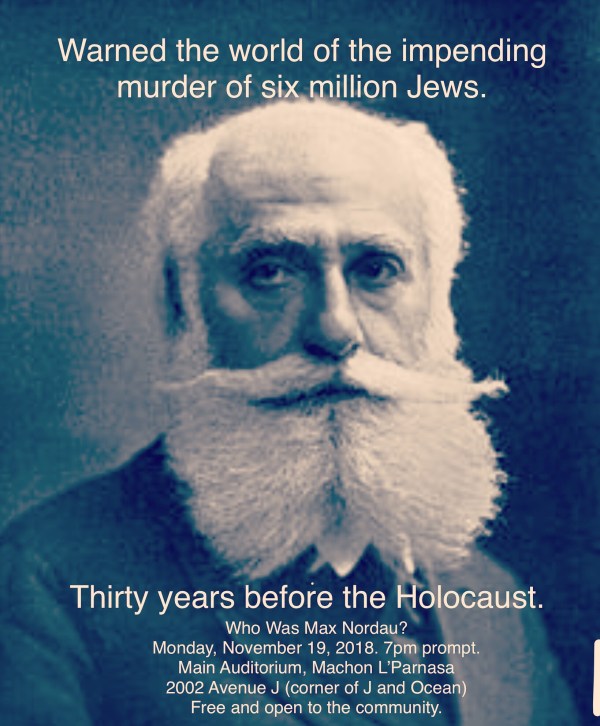
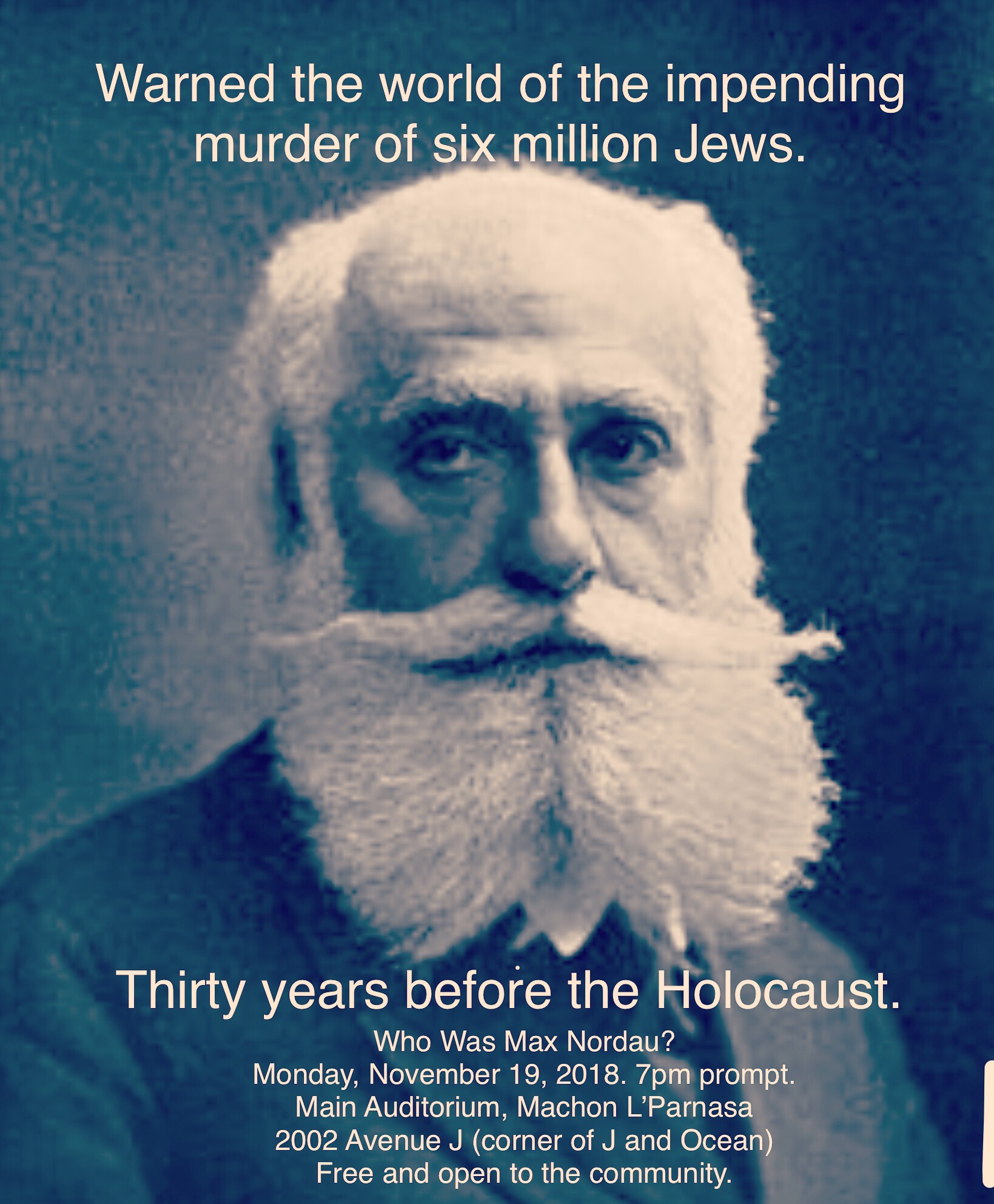
Who Was Max Nordau?

Part Four of the Jews of the Danube series. Filmed in a new location without my usual technical support–sorry for the lower video and audio quality, but the lecture is ok. To see the visuals better, please click here.  Next week we are back at our usual location with IT support!

Trailer for The Fatal Conflict: Judea and Rome

Okay, this is cool: just saw the trailer for a documentary project I worked on several months ago. I can’t wait to see the whole thing! I was especially honored to work with Dr. Lawrence Schiffman, world expert on the Dead Sea Scrolls and senior scholar in Jewish history (he’s the last talking head in the trailer). 

I think this is going to be great. it was certainly a lot of fun to work with the Australian team that put this together! Please click on the link to watch the 48-second trailer.
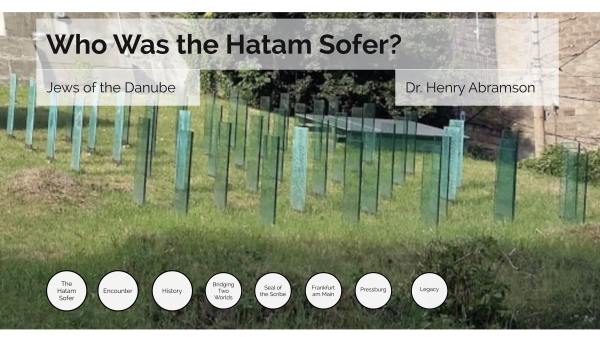
Who Was the Hatam Sofer (Chasam Sofer)? Jews of the Danube pt. 3

Reminder! Next Monday (November 19) we will meet at 2002 Avenue J, the Montak Campus of Machon L’Parnasa. Just down the street from the Mighty Avenue J campus of Touro College.

Who Was Isaac of Vienna (Or Zaru’a)? The Jews of the Danube pt. 2

Brief video lecture on the life and work of Isaac of Vienna (c. 1180-c. 1250), author of the important Or Zaru’a.

Jewish History Lectures Resume Monday Night!

Who Was Isaac of Vienna (the Or Zaru’a?)

Monday, November 5

Who Was the Hatam Sofer (Chasam Sofer)?

Monday, November 12

Who was Max Nordau?

Monday, November 19

Note: this lecture will be held in the beautiful new Machon L’Parnasa campus at 2002 Avenue J, just down the street from our regular location.

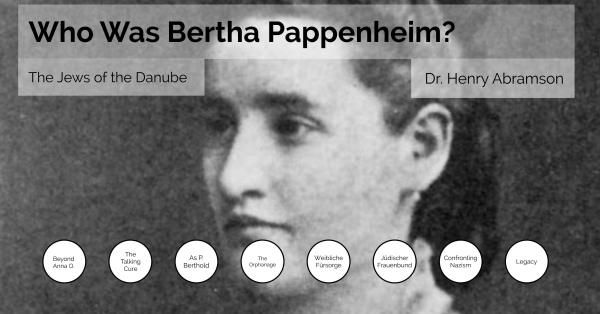
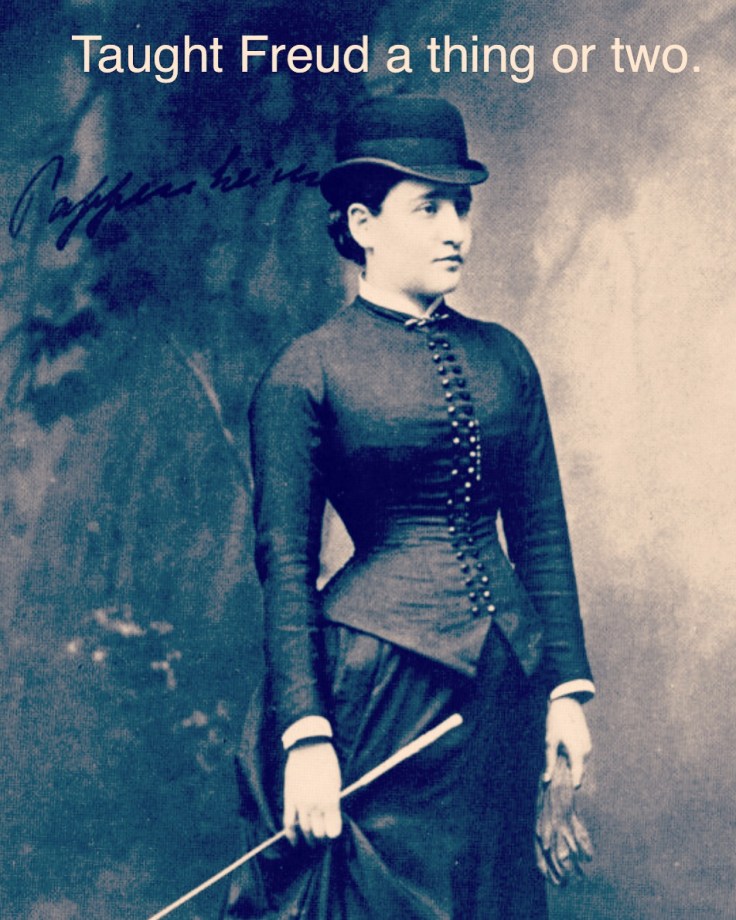
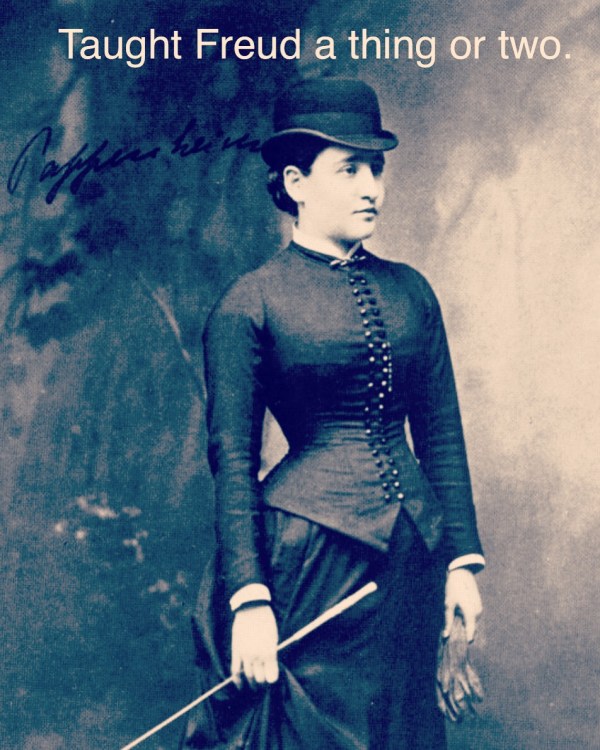
Who Was Bertha Pappenheim?

Monday, November 26

All lectures scheduled for Monday nights, beginning promptly at 7:00 pm in the Main Auditorium of the Mighty Avenue J campus of Touro College, 1602 Avenue J, Brooklyn NY 11230 (November 12 will be held at 2002 Avenue J). Lectures are free and open to the public; we encourage support of our brilliant students by offering sponsorships ($500) online at the Friends of Jewish History Scholarship Fund.

For more information write Henry.Abramson@touro.edu or call (718) 535-9333. No hard questions, please.

The Tomb of the Hatam Sofer in Bratislava, Slovakia

Unexpected and unexplained, a phalanx of glass obelisks emerge silently from the earthen mound, punctuating the atmosphere above what appears to be an anonymous tel. Some are transparent, others pebbled and translucent, but all glow with a faint green hue. Unyielding, they stand in rigid formation on the angled surface of the earth. These mute sentinels bear witness to the earthly remains and heavenly destination of 23 holy Jews of Bratislava, Slovakia, as well as the saintly scholar Moses Schreiber, known to generations of his followers as the “Seal of the Scribe:” Hatam Sofer.

Earlier this month I had the privilege of visiting the grave of this remarkable scholar as a historian traveling the Danube River with Kosher River Cruises. Together with leaders of the Simon Wiesenthal Center and 150 Jewish history enthusiasts, we cruised upriver from Budapest, Hungary to Passau, Germany exploring the thousand-year legacy of Danubian Jewry, meeting with representatives of the emergent Jewish communities, culminating in a moving ceremony at Mauthausen concentration camp for the dedication of a plaque to the memory of Simon Wiesenthal, a former prisoner who dedicated the rest of his life to hunting Nazi war criminals and the establishment of the remarkable Museum of Tolerance. Our itinerary was rich and varied, but to my surprise, one of the most powerful moments was the visit to this 18th-century gravesite and its amazing history.

A heavy black triangle juts out alongside the glass sentinels, running at an oblique angle to the road. Inside, a solemn slot-like narrow entrance allows reluctant access to the underground mausoleum where the Hatam Sofer and 22 other holy Jews lie, intact and undisturbed, since the Second World War. The story of their survival in death is as remarkable as the monument built to commemorate them.

A prewar photograph documents the size of the old Jewish cemetery of the city formerly known as Pressburg. Since the seventeenth century, thousands of Jews lay buried on the bank of the Danube, their tombstones glowing with ethereal light as darkness gave way to dawn every morning. A deeper darkness descended on the community in 1943, when local pro-German fascists confiscated the cemetery with plans to pave it over for new tram lines.

In what would be one of their last acts as a community, the Jews of Bratislava begged for permission to exhume the remains of their ancestors for reburial in the newer Jewish cemetery. For reasons which are unclear, the fascists granted this request and even grudgingly allowed for the protection in situ of the Hatam Sofer’s grave and those that immediately surrounded it.

Money undoubtedly played a role in this begrudging mercy, probably accelerated by a rumor that a terrible curse would befall anyone who disturbed these holy bones. A massive concrete sarcophagus was constructed around the protected tombs, sealing them in below the tram lines that eventually carried Bratislava’s commuters to work every day.

With the fall of Communism, a consortium of philanthropists, Jewish communal leaders and Slovak politicians arranged for the construction of the modern mausoleum designed by the award-winning Slovak architect Martin Kvasnica. The non-Jewish Kvasnica, born in 1958, had previously only worked on one small Jewish project, a kosher kitchen for the emerging Bratislava community, led by Chief Rabbi Baruch Myers, a Chabad shaliach originally from New Jersey.

With Chief Rabbi Baruch Myers (l) and Prague historian David Kraus (r).

Researching the complex considerations necessitated by Jewish law, Kvasnica designed a memorial befitting the stature of the Hatam Sofer. Dignified and otherworldly, Kvasnica’s artistic genius literally invites the pilgrim to descend–literally–into the grave of Rabbi Sofer, while at the same time the visitor perceives the ongoing influence of this immortal spiritual giant. Kvasnica’s art demonstrates how not even the Nazis could extinguish the flame of his Torah.

Architect Martin Kvasnica. Drawing of the entrance to the Hatam Sofer memorial is on the left.

The disciple who first encounters the site may be puzzled by the mute aqua obelisks standing above ground, but that first sensation is dissipated by the unease one feels walking into the black stone entryway. Narrow and confining, open to the sky like a traditional ohel-grave, the floor slopes down to a right-angle entry on the left. A last warning to the visitor is posted there in Hebrew, English, German and Slovak: respect this holy place.

Only one word separates the Hebrew text from the translations: the word lefanekhah. Readers of Hebrew thus receive a nuanced message: “A holy place lies before you.” The site has sanctity for all visitors, but for Jews, this is personal. This is the grave of our revered teacher, a link in the chain of transmission of Torah from Sinai to the present day, a chain that reaches to our own generation.

Rabbi Schreiber (1762-1839) was first and foremost a posek, a Rabbi trusted with the difficult task of rendering decisions on Talmudic law. Known for his scholarly erudition, he was particularly distinguished for his articulation of a path for the Jews of his tumultuous times. The rapid political, social and economic changes of his era were nothing less than tectonic in scope, as society wrestled with the possibility of granting emancipation to the Jewish minority. Many Jews openly embraced the political freedoms associated with emancipation, but when it was slow to arrive in German-speaking regions, many opted to simply convert to Christianity to receive the economic, professional and social benefits of abandoning Judaism. Other Jewish communities tried to stem the tide of assimilation by partially adapting to modernity, adopting external non-Jewish mannerisms like dress and language while attempting to remain true to the essential tenets of Judaism.

The Hatam Sofer (alternatively spelled Chasam Sofer) disagreed vociferously. His view of the benefits of modernity was decidedly negative: in exchange for a mess of pottage, the Jews were sacrificing their birthright. Proclaiming a strenuous opposition to the temptations of acculturation, he formed the nucleus of the Haredi approach to modernity, expressed in numerous communities throughout Israel, North America and Europe.

Kvasnica brilliantly captured the enduring impact of the Hatam Sofer’s legacy while preserving the unusual underground sarcophagus created in the 1940s. After descending into the well-lit central chamber, the sloping ceiling is interrupted by what appears to be the protruding lower edges of the green obelisks that rise above ground. The effect is one of strange continuity, as the visitor suddenly recognizes the interconnectedness of the surface world and the subterranean legacy of these spiritual giants. Like intellectual engines, they feed the upper world with their radiant energy–tallest among them is the marker of the Hatam Sofer himself.

The experience of holiness is overwhelming. Standing with my wife, I recited a brace of Psalms in memory of the Jews buried here, along with the many martyrs of the Holocaust.

May the memory of the righteous be a blessing.

Create a website or blog at WordPress.com

Up ↑