Really looking forward to meeting this community!

Lectures in Jewish History and Thought. No hard questions, please.


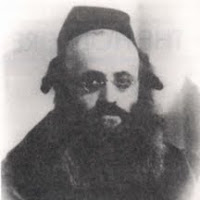
Rabbi Israel Meir Kagan, better known as the Chofetz Chaim for his classic work on the sanctity of speech, was one of the major Rabbinic leaders of the late 19th and early 20th century. To view the Prezi associated with this lecture, click on the image below or here.
Hello students– We are scheduled to resume our lecture series this evening with a presentation on the Chofetz Chaim,one of the most influential Rabbinic thinkers of the late 19th and early 20th century. Rabbi Israel Meir Kagan is known principally for his dramatically creative analysis of the topic of forbidden speech (lashon ha-ra), and rose……

This video describes the changes in the political boundaries of the State of Israel from its inception 1948 through the disengagement from Gaza in 2005. Part of the Essential Lectures in Jewish History series by Dr. Henry Abramson. To view the Prezi associated with this video please click here.

Jacob Rodrigues Periera (1715-1780) was the inventor of dactylology, a method for teaching deaf-mutes to communicate. A crypto-Jew from Portugal, his first student was his sister. His methodology received phenomenal acclaim, he received honors from the King of France and was named to both the Royal Society of London. This video is part of This……

This is a brief academic presentation of the history of the Nazi attempt to destroy the Jews of Europe during World War II. Part of the Essential Lectures in Jewish History series by Dr. Henry Abramson. To view the Prezi used in this lecture, please click here.

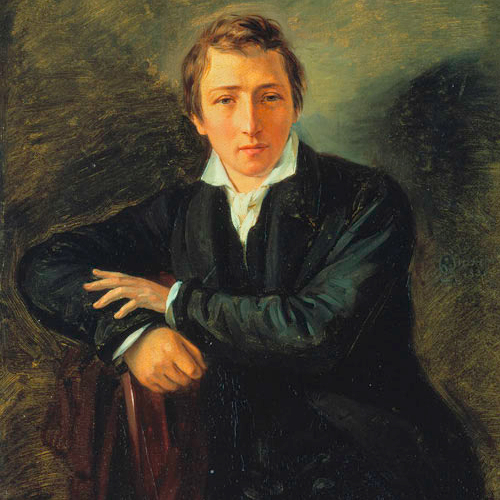
Revered by many as Germany’s greatest poet, Heine struggled mightily with his Jewish identity in the culturally inimical milieu of the 19th century. This phenomenon, known as Judenschmerz, was widespread among 19th century western European Jews. Despite his 1825 conversion to Christianity, Heine maintained a long, albeit conflicted, relationship to his Jewish background. Part of……

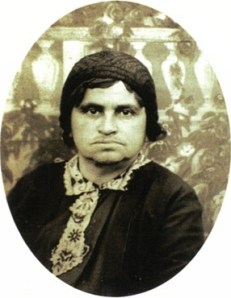
Sarah Schenirer (1883-1935) founded the Bais Yaakov (Bet Ya’akov) school system for women. One of the most visionary educators of the twentieth century, her movement had global impact. To view the Prezi associated with this lecture, please click here.

Baptized at age 12 as the result of his father’s dispute with a synagogue, Benjamin Disraeli (1804-1881) rose to prominence as a novelist and politician, serving several times as England’s Prime Minister. Colorful and flamboyant, Disraeli dismissed his antisemitic critics by emphasizing, rather than downplaying, his Jewish origins.

The discovery of the mutilated body of a young boy in Kiev led to the false arrest of a Jewish laborer named Mendel Beilis. Ignoring the argument of investigating officers, the Russian government under Tsar Nicholas II pressed ahead with the prosecution of Beilis, arguing that the boy was murdered as part of a Passover-related……

A thematic introduction to the topic of women in Jewish history, part of the Essential Lectures in Jewish History series by Dr. Henry Abramson. To view the Prezi associated with this lecture please click here.

In October of 1946, ten Nazi defendants were hung on gallows erected by the International Military Tribunal. One of the most notorious, the propagandist Julius Streicher, uttered the phrase “Purimfest 1946” moments before his death, unconsciously echoing a mysterious passage in the Biblical book of Esther itself. Fascinating footnote in Jewish History!
Rabbi Yisrael Lipkin of Salant (Israel Salanter, 1810-1883) was the founder of the modern Mussar movement that revolutionized traditional Jewish education. Controversial during his lifetime, his ideas ultimately permeated the Yeshiva system as a whole. Part of the Jewish Biography as History series in Jewish History.


The Thirteenth Level: The Moment of Innocence “The Moment of Innocence,” illustration of Level 13 by Rebecca Odessa, Courtesy The Wisdom Daily The Thirteenth Level: The Moment of Innocence Translator’s Introduction The Thirteenth and final Level of mercy carries an absolute guarantee: one who masters this level can forgive anyone. The Thirteenth Level renders all……

The Twelfth Level: Remember Where They Came From “Family Tree (Remember Where They Came From),” illustration of Level 12 by Rebecca Odessa, Courtesy The Wisdom Daily The Twelfth Level: Remember Where They Came From Translator’s Introduction The final element of the triad is Level Twelve. In Level Ten we……

The Eleventh Level: Do More for Those Who Do More “Serve and Protect (Do More for Those Who Do More),” illustration of Level 11 by Rebecca Odessa, Courtesy The Wisdom Daily The Eleventh Level: Do More for Those Who Do More Translator’s Introduction The second part of the triad of Levels Ten, Eleven and Twelve……

The Tenth Level: Do the Right Thing Anyway “The Hook (Do the Right Thing Anyway),” illustration of Level 10 by Rebecca Odessa, Courtesy The Wisdom Daily The Tenth Level: Do the Right Thing Anyway Translator’s Introduction The Tenth, Eleventh and Twelfth Levels together comprise a triad of strategies for forgiving others, particularly people with whom……

The Ninth Level: Bury the Past “The Scapegoat (Bury the Past),” illustration of Level 9 by Rebecca Odessa, Courtesy The Wisdom Daily The Ninth Level: Bury the Past Translator’s Introduction The Ninth Level of Mercy addresses a principal common to both Kabbalah and physics: energy never dissipates of its own accord; rather it is redirected……

The Eighth Level: Maintain a Core of Love “Maintain a Core of Love,” illustration of Level 8 by Rebecca Odessa, Courtesy The Wisdom Daily The Eighth Level: Maintain a Core of Love Rabbi Cordovero expands upon the metaphysics of forgiveness in the Eighth Level. God preserves a core region of positive regard for every human……

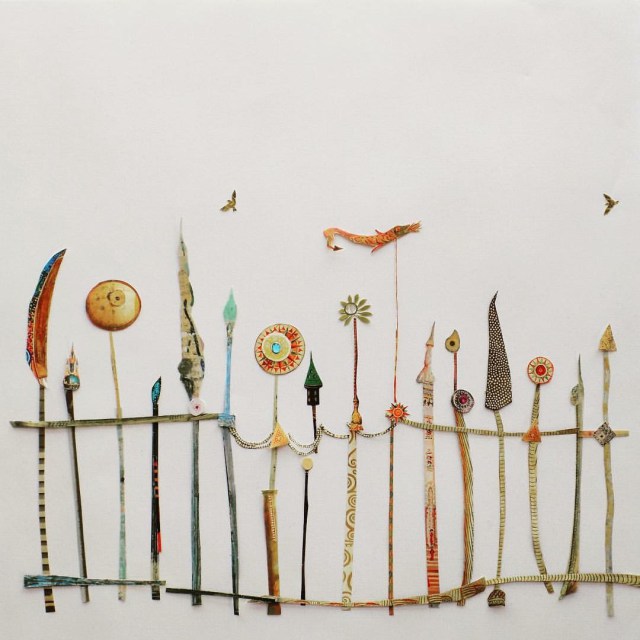
The Seventh Level: A Knot is Stronger “Building a Fence (A Knot is Stronger),” Illustration of Level 7 by Rebecca Odessa, Courtesy The Wisdom Daily The Seventh Level: A Knot is Stronger Translator’s Introduction Rabbi Cordovero begins the Seventh Level of Mercy with a well-known teaching from the Talmud (Berakhot 34b): “in a place where penitents……

The Sixth Level: Who Makes Your Lunch? “Who Makes Your Lunch?” illustration of Level 6 by Rebecca Odessa, Courtesy The Wisdom Daily The Sixth Level: Who Makes Your Lunch? Translator’s Introduction The Sixth Level begins with a deeply mystical passage in Ezekiel, set in the years immediately prior to the 6th century BCE destruction of……

The Fifth Level: Release the Anger “Release the Anger,” illustration of Level 5 by Rebecca Odessa, Courtesy The Wisdom Daily The Fifth Level: Release the Anger Translator’s Introduction The prophet Zechariah portrays God as a shepherd with two staffs: one is called “pleasantness” (נאם) and the other is called “woundings” (חובלים). In his commentary on Date……

The Fourth Level: Remember the Family “In the Same Boat (Remember We are Family),” illustration of Level 4 by Rebecca Odessa, Courtesy The Wisdom Daily The Fourth Level: Remember the Family Translator’s Introduction The Fourth Level of Mercy calls attention to the fundamental connectedness of humanity. The Jewish people in particular maintain a strong familial……

The Third Level: Take Care of it Personally “Part of the Process (Take Care of it Personally),” illustration of Level 3 by Rebecca Odessa, Courtesy The Wisdom Daily The Third Level: Take Care of It Personally Translator’s Introduction The Third Level of Mercy addresses the personal role that God plays in the process of forgiveness. Rather……

The Second Level: Let it Go for Now “Whose K’tegors are These? (Let it Go)” Illustration of Level 2 by Rebecca Odessa, Courtesy The Wisdom Daily The Second Level: Let it Go for Now The second of the Thirteen Levels, “Who Bears Sin,” describes a degree of mercy that is even more profound than……