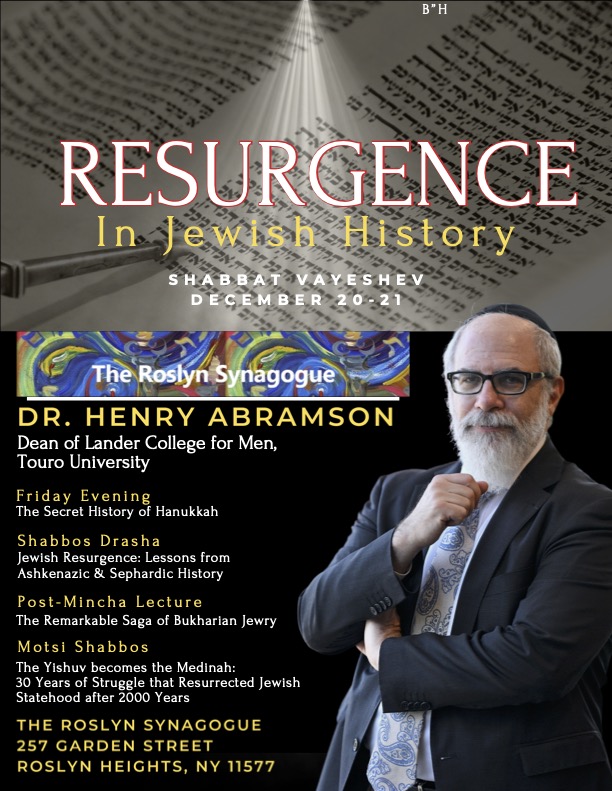
Really looking forward to meeting this community!

Lectures in Jewish History and Thought. No hard questions, please.


The Thirteenth Level: The Moment of Innocence “The Moment of Innocence,” illustration of Level 13 by Rebecca Odessa, Courtesy The Wisdom Daily The Thirteenth Level: The Moment of Innocence Translator’s Introduction The Thirteenth and final Level of mercy carries an absolute guarantee: one who masters this level can forgive anyone. The Thirteenth Level renders all……

The Twelfth Level: Remember Where They Came From “Family Tree (Remember Where They Came From),” illustration of Level 12 by Rebecca Odessa, Courtesy The Wisdom Daily The Twelfth Level: Remember Where They Came From Translator’s Introduction The final element of the triad is Level Twelve. In Level Ten we……

The Eleventh Level: Do More for Those Who Do More “Serve and Protect (Do More for Those Who Do More),” illustration of Level 11 by Rebecca Odessa, Courtesy The Wisdom Daily The Eleventh Level: Do More for Those Who Do More Translator’s Introduction The second part of the triad of Levels Ten, Eleven and Twelve……

The Tenth Level: Do the Right Thing Anyway “The Hook (Do the Right Thing Anyway),” illustration of Level 10 by Rebecca Odessa, Courtesy The Wisdom Daily The Tenth Level: Do the Right Thing Anyway Translator’s Introduction The Tenth, Eleventh and Twelfth Levels together comprise a triad of strategies for forgiving others, particularly people with whom……

The Ninth Level: Bury the Past “The Scapegoat (Bury the Past),” illustration of Level 9 by Rebecca Odessa, Courtesy The Wisdom Daily The Ninth Level: Bury the Past Translator’s Introduction The Ninth Level of Mercy addresses a principal common to both Kabbalah and physics: energy never dissipates of its own accord; rather it is redirected……

The Eighth Level: Maintain a Core of Love “Maintain a Core of Love,” illustration of Level 8 by Rebecca Odessa, Courtesy The Wisdom Daily The Eighth Level: Maintain a Core of Love Rabbi Cordovero expands upon the metaphysics of forgiveness in the Eighth Level. God preserves a core region of positive regard for every human……

The Seventh Level: A Knot is Stronger “Building a Fence (A Knot is Stronger),” Illustration of Level 7 by Rebecca Odessa, Courtesy The Wisdom Daily The Seventh Level: A Knot is Stronger Translator’s Introduction Rabbi Cordovero begins the Seventh Level of Mercy with a well-known teaching from the Talmud (Berakhot 34b): “in a place where penitents……

The Sixth Level: Who Makes Your Lunch? “Who Makes Your Lunch?” illustration of Level 6 by Rebecca Odessa, Courtesy The Wisdom Daily The Sixth Level: Who Makes Your Lunch? Translator’s Introduction The Sixth Level begins with a deeply mystical passage in Ezekiel, set in the years immediately prior to the 6th century BCE destruction of……

The Fifth Level: Release the Anger “Release the Anger,” illustration of Level 5 by Rebecca Odessa, Courtesy The Wisdom Daily The Fifth Level: Release the Anger Translator’s Introduction The prophet Zechariah portrays God as a shepherd with two staffs: one is called “pleasantness” (נאם) and the other is called “woundings” (חובלים). In his commentary on Date……

The Fourth Level: Remember the Family “In the Same Boat (Remember We are Family),” illustration of Level 4 by Rebecca Odessa, Courtesy The Wisdom Daily The Fourth Level: Remember the Family Translator’s Introduction The Fourth Level of Mercy calls attention to the fundamental connectedness of humanity. The Jewish people in particular maintain a strong familial……

The Third Level: Take Care of it Personally “Part of the Process (Take Care of it Personally),” illustration of Level 3 by Rebecca Odessa, Courtesy The Wisdom Daily The Third Level: Take Care of It Personally Translator’s Introduction The Third Level of Mercy addresses the personal role that God plays in the process of forgiveness. Rather……

The Second Level: Let it Go for Now “Whose K’tegors are These? (Let it Go)” Illustration of Level 2 by Rebecca Odessa, Courtesy The Wisdom Daily The Second Level: Let it Go for Now The second of the Thirteen Levels, “Who Bears Sin,” describes a degree of mercy that is even more profound than……


To view the Prezi associated with this lecture, please click here. http://www.youtube.com/watch?v=1OnArXdHQdc

L.L. Zamenhof (1859-1917) was a Polish Jew who invented the world’s most successful artificial language, Esperanto. Conceived as a vehicle for world peace, Esperanto is even regarded by the Oomoto religion of Japan as the “language of heaven.”

This week marks the death anniversary of King Boleslaw V (The Chaste) in 1279. Boleslaw followed the tradition of his predecessors in Poland by creating incentives for Jewish settlement in Poland, including the establishment of Magdeburg Recht. Ultimately, these policies proved extremely attractive to Ashkenazi Jews from the Rhineland, making Poland a great center of……

To view the Prezi associated with this lecture, please click here.

To view the Prezi associated with this lecture, please click here.

The Fourth Lateran Council, which met in 1215 at the behest of Pope Innocent III, issued several pieces of Church legislation with dire implications for Jews. The doctrine of transubstantiation was confirmed, leading to a new element in antisemitic canards: accusations that Jews “desecrated the host.”

Poet, politician and philosopher, Shmuel ha-Nagid was an exemplar of the Golden Age of Spanish Jewry.

In November of 1977, Egyptian President Anwar Sadat flew to Israel to address the Knesset. His meeting with his former enemy Prime Minister Menachem Begin ultimately resulted in the sometimes strained but nevertheless enduring Israel-Egypt peace accord, but his unpopularity with hardline Egyptians, opposed to making peace with Israel, resulted in his assassination in 1981.

To view the Prezi associated with this lecture, please click here. Excerpts from The Sea of Talmud: A Brief and Personal History Henry Abramson (2012) The Yeshiva administration must have put considerable thought into the wording of the hand-lettered sign posted outside the cafeteria. Many young men studying Talmud at this Jerusalem institution were taking……

Rabbi Moshe ben Maimon (1135-1204) was a towering figure in medieval Jewish history, and continues to cast a long shadow into the Jewish present. Nevertheless, the work of the philosopher-physician endured significant controversy, including an especially sad episode in which Jews actually consigned his works to the flames.

To view the Prezi associated with this lecture, please click here.