I know most of you follow me for Jewish history, not American politics. The Mueller Report, however, carries tremendous implications for Jewish history in Israel and in the US.
I recently read it in preparation for a seminar with Honors students at Touro College (yes, all 400 pages, plus another 300 pages of indictments and other supplementary material), and it’s absolutely clear to me that everyone concerned with the future of the United States and the role it plays in global politics should spend time with this document. Understanding that it’s a heavy lift for many undergraduates (literally and figuratively), I prepared some shortcuts that will allow students to read the unmediated words of the Report in preparation for our 2-hour seminar, and it occurred to me that others might benefit from this small public service.
Here’s an excerpt from my instructions to students.
We will begin the year with a political topic by reading the US Justice “Report on the Investigation Into Russian Interference in the 2016 Presidential Election,” known popularly as The Mueller Report. Without doubt, this is one of the most consequential—and controversial—documents of the last half-century, and how it is handled by our representatives will have signal implications for American society as a whole.
I anticipate our debate of the contents of this book will be seasoned and vigorous, but I will remind you all of our commitment to the values of respectful scholarly dialogue. Americans of all political stripes are passionate about the topics treated in the Mueller report, but as members of the Society of Fellows we are enjoined to listen respectfully to our peers and refrain from ad hominem arguments, no matter how much we may disagree with our interlocutors.
The Mueller report is in the public domain at the Department of Justice Website (https://www.justice.gov/storage/report.pdf). The assigned printed copy includes several useful supplementary documents such as the text of the indictments brought by the Office of the Special Counsel.
The Mueller Report deserves to be read in its entirety. Weighing in at 444 pages (with another 300 in the provided printed version) it’s hard to make that demand of an undergraduate student, given the many academic demands placed on your time (I do believe, however, that it is incumbent on all our elected representatives to actually read this Department of Justice report, and not rely on summaries). I encourage you to work your way through the entire text (as well as the 300 additional pages of supporting documents in the Appendices), but I would like to offer the following shortcuts:
- Do not read the various essays supplied by the publisher until you have read the sections of the Report indicated below. I consider them very helpful texts, but the authors were not laboring under restrictions that required them to remain as studiously neutral as Robert Mueller himself. If you find yourself lost in the maze of people and events, you may consult the texts as necessary, but place your emphasis on the Mueller Report itself.
- The Mueller Report is divided into two roughly equal sections. Part I is dedicated to the analysis of the efforts of the Russian government to influence the 2016 Presidential Election; Part II studies the charge that the Trump administration attempted to obstruct justice in the course of this investigation. We will be concentrating our discussion on Part I, which is clearly of grave concern for the 2020 elections: as Mueller put it in his nine-minute May 29 Press Conference (Video and transcript available here: https://www.vox.com/2019/5/29/18644237/robert-mueller-remarks-transcript ): “there were multiple, systematic efforts to interfere in our election. That allegation deserves the attention of every American.” Therefore be sure to read the following (page numbers refer to the printed edition I ordered for you, not the page numbers in the original report).
- Introduction, Executive Summary, and The Special Counsel’s Investigation (I) (59-71)
- Russian “Active Measures” Social Media Campaign (II) (72-93)
- Skim sections III-IV.
- Read Prosecution and Declination Decisions (V) (232-257)
- Read the Indictments in US v. Internet Research Agency (547-583) and US. v. Viktor Borisovich Netysho et al. (587-615).
3) Whereas Part I speaks to the real and present danger of further foreign interference in our elections, Part II speaks to the future of American political culture, presenting very difficult decisions before us and our elected representatives. Once again I recommend reading the entire Report, but certainly give priority to the following sections:
- Read the Introduction, Executive Summary and Background Legal and Evidentiary Principles (263-276)
- Read section IIA “Factual Results of the Obstruction Investigation” (277-287). In the remaining sections IIB-IIK, skim by reading the “Overview” paragraph, skimming the “Evidence,” and then reading the “Analysis” section (you may wish to go back and reread the relevant sections in “Evidence”). Note that in his Analysis of B-K, Mr. Mueller identifies three elements related to Obstruction: an Obstructive Act, a Nexus to a Proceeding, and Intent. All three are crucial.
- Read Section IIL, “Overarching Factual Issues” (418-420).
- Skim Section III, Legal Defenses to the Application of Obstruction-Of-Justice Statues to the President.”
- Read final paragraph of Section III (180-181) and Section IV, Conclusion (182).
This promises to be an extremely important and informative opening Honors Colloquium. I look forward to discussing the relevant issues and their implications for our society in the coming year.
If you have any questions, please do not hesitate to reach out.
Sincerely,
Henry Abramson, PhD
Dean



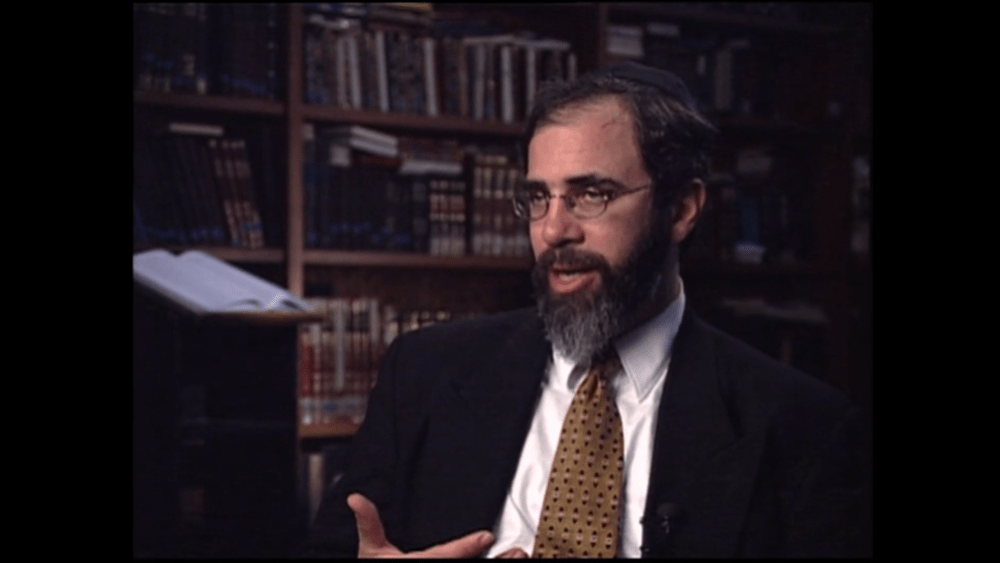




 Henry Abramson