Can’t see the video? Please click here.
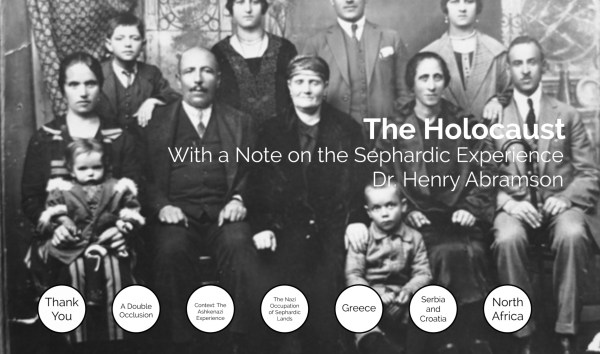
The Holocaust with a Note on the Sephardic Experience
Can’t see the video? Please click here.
Lectures in Jewish History and Thought. No hard questions, please.
Can’t see the video? Please click here.
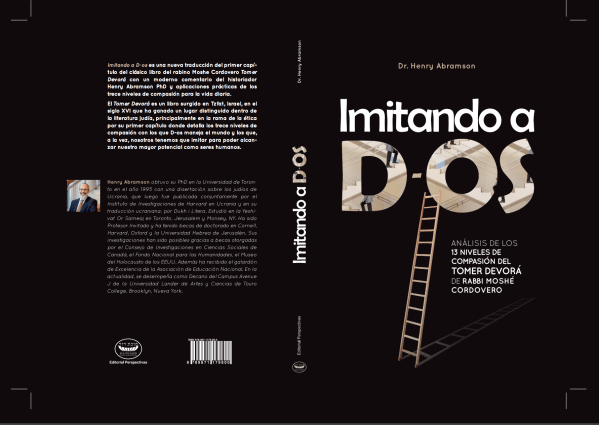
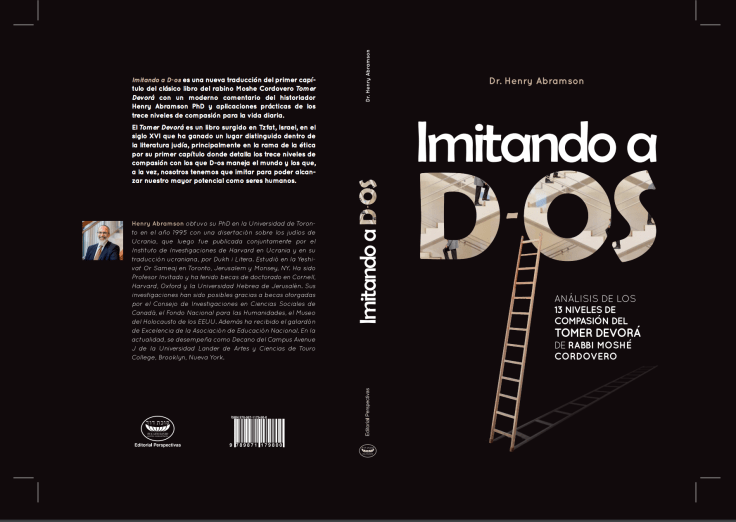
Happy to see this Spanish translation of The Kabbalah of Forgiveness forthcoming in the next few weeks! The cover is really striking. Thanks to Jésica Neuah at Editorial Perspectivas!
Can’t see the video? Try clicking here.
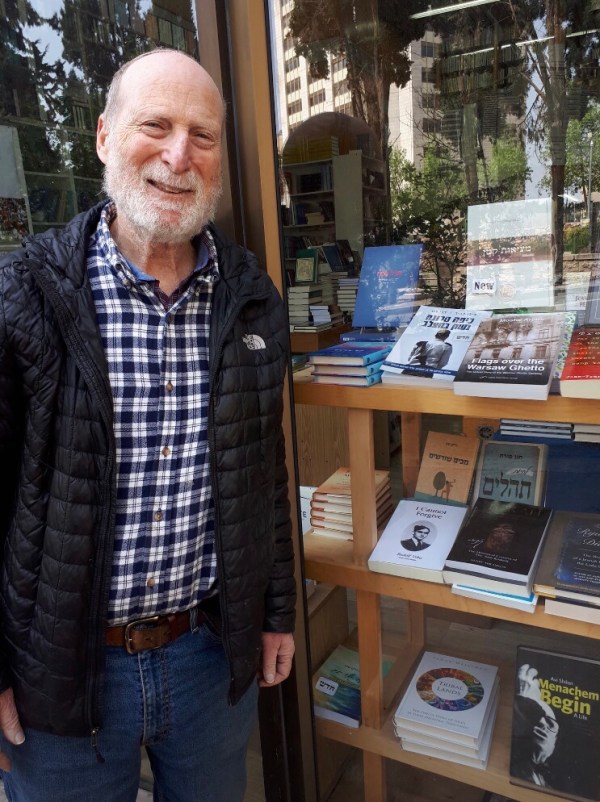
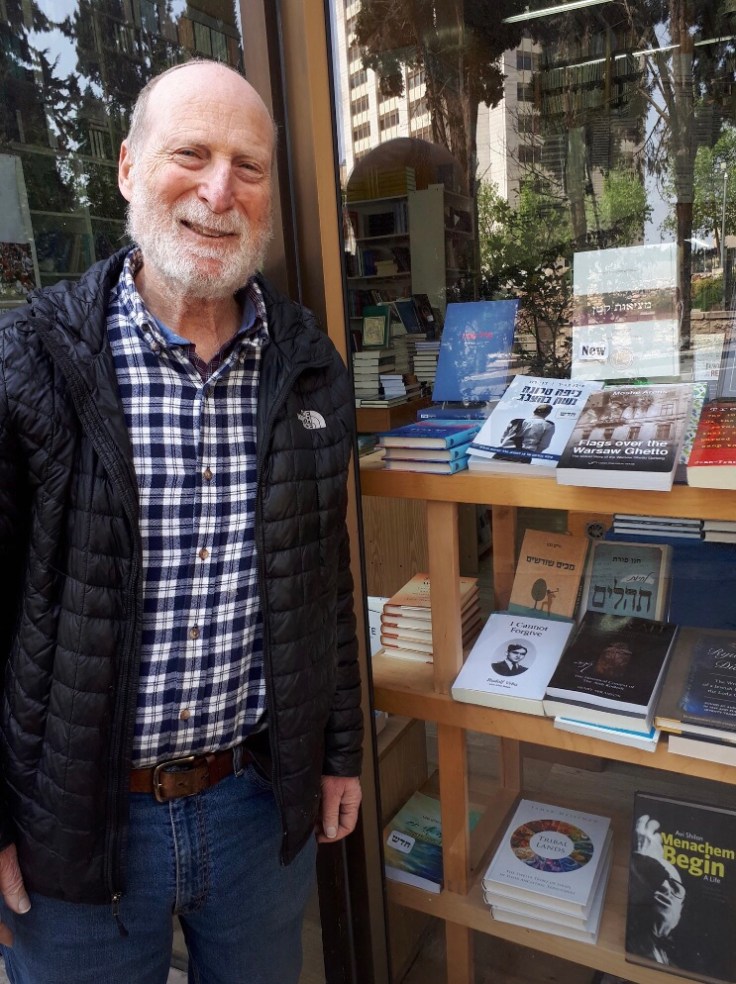
Wow–just heard that Torah from the Years of Wrath got promoted to the window display at M. Pomeranz Books in Jerusalem! Thanks to my friend Dr. Mike Chigel for plugging the book to MR. POMERANZ HIMSELF, shown here just outside the display! I’m really grateful to be part of the community of students of the Piaseczno Rebbe world-wide–really satisfying to see his Torah displayed in this prestigious location. Shabbos started super-early this morning!

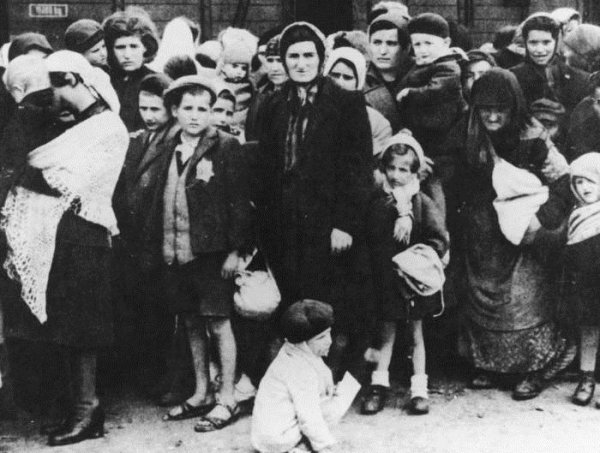
In commemoration of Yom Ha-Shoah, our Jewish History lecture on Monday night will be dedicated to a topic frequently overlooked in discussions of the Holocaust: the experience of Sephardim. Please click here for details.
Most of my own published work on the Holocaust has been in the Askhenazic world, notably my recent study of the Warsaw sermons of Rabbi Kalonymus Kalman Shapira (the “Aish Kodesh,” see below). For my overview of the Sephardic experience, please see “A Double Occlusion: Sephardim and the Holocaust.” In Sephardic and Mizrahi Jewry: From the Golden Age of Spain to Modern Times, edited by Zion Zohar, 285-299. New York: New York University Press, 2005.
Torah from the Years of Wrath, 1939-1943
The Historical Context of the Aish Kodesh
Recent Reviews:
Rabbi Josh Rosenfeld in Jewish Action
Dr. Chana Silberstein in Lubavitch International
Dr. Norman Ravvin in Canadian Jewish News
Rabbi Pesach Sommer in Pesach Sheini
Joels Davidi, Jewish History Channel, in Medium
Alan Jay Gerber in The Jewish Star
Click here to order from Amazon
Special on new hardcover edition: 15% off at Lulu.com.


Very honored to be speaking with Rabbi Eli Mansour for The WELL, a wonderful new institution dedicated to women’s education in the Sephardic community. Please spread the word! This lecture is open to men and women.

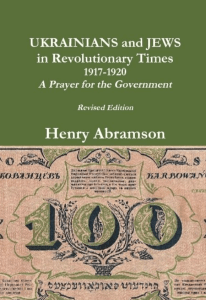
After the fall of the Russian Empire, Jewish and Ukrainian activists worked to overcome previous mutual antagonism by creating a Ministry of Jewish Affairs within the new Ukrainian state and taking other measures to satisfy the national aspirations of Jews and other non-Ukrainians. This bold experiment ended in terrible failure as anarchic violence swept the countryside amidst civil war and foreign intervention. Pogromist attacks resulted in the worst massacres of Jews in Europe in almost three hundred years. Some 40 percent of these pogroms were perpetrated by troops ostensibly loyal to the very government that was simultaneously extending unprecedented civil rights to the Jewish population. Henry Abramson explores this paradox and sheds new light on the relationship between the various Ukrainian governments and the communal violence, focusing especially on the role of Symon Petliura, the Ukrainian leader later assassinated by a Jew claiming revenge for the pogroms. A Prayer for the Government treats a crucial period of Ukrainian and Jewish history, and is also a case study of ethnic violence in emerging political entities. This revised edition contains a new Foreword and Afterword by the author.
Praise for the First Edition (Harvard, 1999)
“Abramson provides a serious, thoughtful, and carefully worded work…the most balanced and complete existing account [of the pogroms of 1919] in the secondary literature…it is hoped that future scholars will take his professional spirit and tone to further a productive dialogue about the mistakes, misunderstandings, lost opportunities of this dark chapter in Ukrainian and Jewish history.”
Dr. Erik Lohr, Kritika
“Extremely sober, scholarly, and morally balanced…a model of scholarly objectivity…Henry Abramson has written an important work that deserves a broad audience.”
Dr. Theodore R. Weeks, Nationalities Papers
“Henry Abramson has written a landmark book on Ukrainian-Jewish Relations during the Revolution…Abramson’s book rises above national agendas to provide an objective analysis of the complex revolutionary period…new archival evidence confirms Abramson’s analysis…Abramson’s book deserves praise as an outstanding contribution to the field.”
Dr. Serhy Yekelchyk, The Russian Review
“Abramson’s book opens a new page in the historiography of Jewish-Ukrainian relations; for a change, Jews are not called communists and Ukrainians are not condemned as fascists…Recommended for all college libraries.”
Dr. Andrew Ezergailis, Choice
“Voici un livre à traduire d’urgence de l’anglais. Le double patronage des instituts de Harvard [i.e. the Center for Jewish History and the Ukrainian Research Institute] qui le cautionnent est déjà une garantie, mais la lecture confirme la solidité de la recherche.”
Danylo Karsnowicki, Bulletin de l’Association française des études ukrainiennes
“Imperative for any historian to approach the material with clear-headed and sober judgement. Abramson reaches this standard, providing a distinct service to scholarship and to memory.”
Dr. Joshua Rubinstein, H-Net
“Abramson does for the 1918-20 pogroms what other recent scholarship has done for earlier pogroms: he removes the ‘myth’ of the pogrom by conducting extensive research to reveal the ‘facts’…Abramson is joining the chorus of Jewish scholars whose goal is the demystification of modern antisemitism by revealing its political, socio-economic and, in the case of a pogrom, mass psychological sources…At the same time, Abramson’s main story is not Ukrainian violence against Jews, which is all most people remember after Schwartzbard and Babi Yar, but the hope of Ukrainian and Jewish intellectuals that, in a post-tsarist world, Jews and Ukrainians can live in harmony.”
Dr. David Shneer, East European Jewish Affairs
“Few topics in Eastern European history are as complex, emotional, and politically charged as Ukrainian-Jewish relations, all the more so during the troubled times of the Russian Revolution…In his first monograph, Henry Abramson plunges head on into this forbidding swamp. The result is a thoughtful, lucid, and levelheaded study…the most authoritative study to date…one can only hope that this book will soon be translated into Ukrainian and Hebrew. Both Jewish and Ukrainian historians and laymen who have been long accustomed to view each other and this ear in black and white terms will benefit from the nuanced, thoughtful gray that colors Abramson’s study.”
Dr. Amir Weiner, Polin
“Abramson’s impressive command of Ukrainian and Jewish sources lends itself to a critical shift toward the understanding of modern ethnic conflict as a radically contingent phenomenon rather than an escalation of venerable ‘historic hatreds.’”
Dr. Olga Litvak, Association for Jewish Studies Review
“This important study takes a new look at a critical period of Jewish-Ukrainian relations that has been at the center of many controversies, both in the politics of the time and in historiography up to the present day. The book is based on a thorough examination of the available published sources and on a host of hitherto inaccessible and unused archival materials. Henry Abramson approaches the different historiographical problems, over which the Jewish and Ukrainian communities are deeply divided, with great care and circumspection. The result is a highly readable book, breaking new ground and attaining a degree of objectivity that might settle most of the thorny issues involved.”
Dr. Heinz-Dietrich Löwe, The Journal of Modern History
“In the best tradition of historical scholarship, Abramson transcends the parochial, stereotypical, and apologetic tone which divided Jewish and Ukrainian writings into highly subjective trends of interpretation…What we get instead is a balanced and well researched interpretative analysis of the circumstances that brought about the sudden blooming—and withering—of a “newborn friendship” between Jews and Ukrainians. Viewing this relationship from both perspectives, Abramson’s Prayer is as much a chapter of Ukrainian as it is of Jewish history…A Prayer for the Government is a must for scholars and laymen alike.”
Dr. Erich Haberer, Shofar
“Abramson does a ground breaking job of cutting through the myths…Abramson’s study goes beyond the stale debate of ‘who was the most guilty of pogroms’ to explore the political motives of politically active Ukrainians and Jews in a broader context…Abramson’s study is a major contribution to the field, reminding us of impossibility of understanding the Russian Empire and its Soviet successor without reference to their component nationalities, not the least the Ukrainians and the Jews.”
Dr. John D. Klier, The Historian
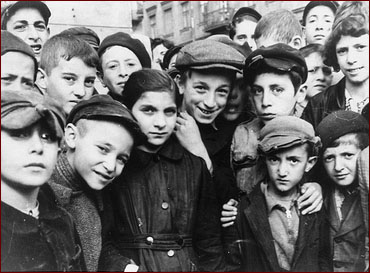
After several weeks without recording a drashah, perhaps related to the horrendous typhus outbreak of the late winter of 1941, the Rebbe delivered a series of powerful derashot for the Passover holiday. On the Seventh Day of Pesach he turned his attention to the subject of Torah learning. The memoirs of Chaim Kaplan, a former principal, describe the experience of secret Torah schools for children during the weeks leading up to Passover:
Jewish children learn in secret. In back rooms, on long benches near a table, little schoolchildren sit and learn what it’s like to be Marranos. Before the ghetto was created, when the Nazis were common in our streets, we trembled at the sound of every driven leaf; our hearts turned to water at the sound of any knock on the door. But with the creation of the ghetto, the situation improved somewhat. The Jewish teachers engage in their teaching with confidence that they and their pupils are in relatively little danger. The Jewish police are assumed to be reliable; even if they uncover “forbidden learning” they will not betray us to the heathens. In addition, to a certain extent we do have a semblance of permission. The Self-Aid is authorized to open and support “training points” for Jewish children. We are allowed to feed, direct, and train them; but to educate them is forbidden. But since training is permitted, we allow ourselves education as well. In time of danger the children learn to hide their books. Jewish children are clever–when they set off to acquire forbidden learning they hide their books and notebooks between their trousers and their stomachs, then button their jackets and coats. This is a tried-and-true method, a kind of smuggling that is not readily detected.
The Rebbe began his ma’amar by quoting an unusual Midrash:
שיר השירם רבה ב:ד:א אמר רבי חונייא: לשעבר אדם מראה איקונין באצבעו והיה נזוק, ועכשיו אדם מניח ידו על האזכרה כמה פעמים ואינו נזוק.
Shir ha-Shirim Rabbah 2:4:1: Rabbi Hunya said: once, a person who gestured with his finger at an image would be punished. Now, a person places his hand over a Name many times and is not punished.
The Rebbe, it should be noted parenthetically, had a highly idiosyncratic and precise editing style, analyzed beautifully by Dr. Daniel Reiser in his recently published critical edition of the Rebbe’s wartime writings. The Rebbe would strike out passages of his own composition, but would not do so with any citation from Torah passages (even those that did not mention the name of God) and selected words like “Israel.” Instead, he would place such passages selected for deletion inside round parentheses, as per this photograph below. The Hebrew reads עה׳׳פ (ויתן אל משה) ככלו וכו׳ לדבר, with the word ויחל written above the line as an insert. 
The Rebbe’s respect for the written form of the Biblical text, even in his own draft writings, is explained partially in his comments on Passover 1941, which address the strange Midrash of Rabbi Hunya:
זאת אומרת שהשמות הם כביכול צורות של מעלה, כי איתא כמה פעמים בזוה״ק שקודם שנברא כל איש ואחר פטירתו הוא עומד לפניו ית׳ באותה צורה שהוא בעלה״ז בגופו, כי הצורה רוחני היא, דמות בבואה של נפש שנשתלשלה ונתגלה, בשר ועצמות הפנים הם רק האמצעים שעל ידם נתגלה הצורה, כעין הצבעים שמציירים בהם צורת איזה אדם, שאין לומר שעל הצבעים בלבד כוונותנו כשמדברים איזה איש חכם, רק על הצורה ותחתית נפשו וחכמתו של החכם הזה שנצטיירה בזה, והצבעים רק העצמאים הם…וכעין זה הוא בצורות השמות של קדושה, הדיו הוא רק האמצעי לצייר צורות אותיות אלו, ומה הן הצורות עצמן ולמה דוקא צורות אלו, השתלשלת הארת אורות של קדושה עילאה בהאה לכלל התגלות הן, א׳׳כ כביכול אוקונין של מלך הם.
That is to say, the Names [of God] are, as it were, the Heavenly forms, as we see many times in the holy Zohar that before a person is created and after he passes, he stands before the Blessed One in that form that he physically represented in this world, for the form itself is spiritual, an image that enters into the soul as it descends and is revealed, flesh and bones and a visage that are only the medium through which the form is revealed, like the colors used by an artist to represent the form of some person. One does not say that we mean the colors alone when we speak of some wise person, rather it is the form, the underlying soul and the wisdom of that person that is represented artistically—the colors are only the medium. So too regarding the forms of the holy Names. The ink is merely the medium with which we draw the letters. What are the forms themselves, and why do they manifest themselves in specifically this manner? They are the cascade of emanations of holy, supernal light, that come to take this form. Thus, they are as it were, actually the images of the King.
In other words, the textual, morphological letters–as they are constructed and combined to form words and sentences–are manifestly holy, capturing in some ineffable manner the emanation of God’s presence in the world, in graphical form. The Rebbe reached deeper into mystical sources by citing the medieval Kabbalist Rabbi Avraham Gikatilla, who wrote that “the entire Torah is bound up with the Tetragrammaton–that is why it is called ‘The Torah of Hashem–perfect.'” The Rebbe’s focus, however, was on the importance of children learning Torah, and he returned to Talmudic sources by discussing Shabbat 104a:
אמרי ליה רבנן לריב”ל אתו דרדקי האידנא לבי מדרשא ואמרו מילי דאפילו בימי יהושע בן נו”ן לא איתמר כוותייהו אל”ף בי”ת אלף בינה גימ”ל דל”ת גמול דלים מ”ט פשוטה כרעיה דגימ”ל לגבי דל”ת שכן דרכו של גומל חסדים לרוץ אחר דלים ומ”ט פשוטה כרעיה דדל”ת לגבי גימ”ל דלימציה ליה נפשיה ומ”ט מהדר אפיה דדל”ת מגימ”ל דליתן ליה בצינעה כי היכי דלא ליכסיף מיניה
The Rabbis said to Rabbi Yehoshua ben Levi: the children are coming now to the Bet Midrash, and they will say things, the likes of which were not even said in the days of Yehoshua bin Nin: Alef bet: aluf binah [learn wisdom]. Gimel dalet: gmul dalim [help the poor]. Why does the gimel extend its foot to the dalet? This is the way of the kind person, to run after the poor. And why does the dalet extend his hand to the gimel? To make himself available. And why does the dalet turn his face away from the gimel? So that the gimel may give to him in secret, and that the dalet would not be embarrassed.
The Rebbe was using this passage to illuminate the mystical concept that the very forms of he Hebrew letters contained deep teachings “the likes of which were not even said in the days of Yehoshua bin Nun.” The shape of the letters gimel and dalet together shed light on the relationship between donor and recipient, with the gimel stepping forward to aid the dalet, who turns his face away in shame yet accepts the proffered assistance:
The very shapes of the letters, explained the Rebbe, represent the “diagramming” of their underlying significance:
בין מחשבה שכבר נצטיירה לבין מחשבה שלא נצטיירה, שמחשבה שנצטיירה, גם במרום יותר מתגלה, משל לאיש המביט על דבר המצויר, שמחשבתו יותר חזקה. והנה נתינוק שלומד צורות האותיות, פועל התגלות במרום גם בצורות האותויות,ומנן התגלות האותיות היתירה שנעשה במרום באותיות נמשך גם לו לתינוק התגלות בצורות האותיות, משא׳׳כ הגדול שלימוד האותיות אינו לומד כי כבר יודע אותו, ורק את פשט הדברים לומד, לכן רק בפשט התורה פועל התגלות במרום וגם לו, משא׳׳כ אלו הקדושים שגילו כ׳׳כ התגלות גם בצורות האותיות ,מ׳׳ט פשוטה כרעי׳ דגימל וכו׳״, קרא אותם הגמרא ׳דרדקי׳.
The difference between a concept that is diagrammed and a concept that is not diagrammed is that the concept that is diagrammed is revealed more clearly even in the supernal realm. This is likened to a person who looks at a graph and understands more fully the concept thereby represented. When a child studies the forms of the letters, the child effects supernal revelation of the forms of the letters, and in so doing draws down to the child the revelation of the forms of the letters. This is not the case with an adult who studies the letters—the adult does not study them because they are already known, and the adult merely studies the simple meaning of the words, and thus only effects the revelation of the simple meaning of the words in the supernal realm, reverberating to the student. Those holy ones, on the other hand, revealed so much regarding the forms of the letters: “why does the gimel extend it’s foot, etc.” The Talmud calls them “children.”
In other words, the Rebbe urged his Hasidim to slow down their learning process in order to look deeper at the subject of their learning, indeed to look at the texts with the tabula rasa mentality of children: an adult with full proficiency in Hebrew would not be able to ask the question, “why does the gimel look like a person walking?” Only by looking deeply–even “unlearning” rote concepts and schemas, at least temporarily–will the student merit to grasp Torah, “the likes of which has not been said even since the days of Yehoshua bin Nun.”
The Rebbe then turned to the incredible power of learning with childlike freshness. One of the characteristics of Piaseczno Hasidism is the attempt to reflect on a given situation from the Divine perspective. Here, the Rebbe cites a Talmudic passage well-known to pedagogues (Ta’anit 7a):
והיינו דאמר ר’ חנינא הרבה למדתי מרבותי ומחבירי יותר מרבותי ומתלמידי יותר מכולן
As R. Hanina said, “I learned much from my Masters, and even more from my colleagues–but from my students most of all.”
The primary and ultimate Teacher of Torah is God. If this Talmudic dictum is true, asks the Rebbe–then what can God learn from us, his humble students?
לכן כשאנו לומדים דבר חדש והקב׳׳ה לומד אתנו בבחי׳ ״המלמד תורה,״ אז גם במרום התורה מתגלה יותר…
לכן גם כשהאיש חוזר על למודו צריך שבכל פעם יתעמק יותר וילמוד בכל פעם חדשות מהתורה, כדי שיהי׳ הוא ית׳ מלמדו גם עתה, ופועל בזה התגלות במרום ועל ידי ההתגלות שעושה במרום נעשה גם אצלו למטה התגלות.
Thus when we learn something new, and The Holy One teaches us in the capacity of “the One who teaches Torah,” then Torah is further revealed in the supernal realm…
Therefore, when a person reviews Torah learning, one must reach deeper, seeking new insights at every opportunity, in order that the Blessed One become the Teacher again, and effect thereby greater supernal revelation—and through this revelation on high, also effect revelation below with the student.
God, as it were, “knows” the entire Torah. Yet according to the Torah itself, expressed in R. Hanina’s teaching, the “most” important elements of the Torah are not expressed in the supernal realm until they are grasped, even diagrammed, in the physical realm. The Rebbe explains that God is waiting for us to learn the Torah in the lower world–so that the Torah may be learned in return in the upper world. And the deepest, most powerful teachings of the Torah are accessible only to those students who commit to learn with limitless, child-like questioning.
One can only imagine the impact the Rebbe’s words must have had on his audience at 5 Dzielna street, celebrating the second Passover of Warsaw under the heavy Nazi oppression. The Rebbe was always cognizant of the suffering of his congregants, and concluded his message with the salvific power of learning:
ומכל דבר שעושה ד׳ צריכים ללמוד, כי כשהב״ד הלקו למי מלקות הי׳ זה תורה כי קיימו מצוה בתורה ללקות למי שנתחייבו מלקות, לכן גם היסורים שד׳ מייסר אותנו תורה הם, וכשהאיש לומד מהם, אז נעשה הקב״ה בשעה זו מלמד תורה, ׳ומתלמידי יותר מכולם,׳ ונעשה התגלות מעלה ומטה ועל ידי התגלות בטלה ההסתרת פנים ונמתקין הדינין…
We must also learn from everything that God does, for when a Bet Din delivers lashes to someone who is guilty of lashes, this is also Torah: keeping the commandment of delivering lashes. Thus even the tribulations that God visits upon us are Torah, and when a person learns from them, then the Holy One enters at that moment into the capacity of the One who teaches Torah—“and from my students most of all”—effecting revelation on high and in the mundane world. Through this revelation, the hiding of the face is nullified, and the judgments are sweetened…
In other words: when the Jews see the Torah in everything around them–not just the text, but the very fabric of their lives, even in the depths of the Warsaw Ghetto–when they grasp the hidden secrets of Torah, taught during the terrible phase of hester panim, “the hiding of the Divine face,” then the need for additional revelation is obviated, and God no longer need “teach” in this modality.
This approach to understanding the Holocaust is something the Rebbe hesitated to state explicitly, and was more characteristic of his earlier derashot. By the spring of 1942–and especially after and escapee from the death camp Chelmno arrived in the Ghetto and informed the Jewish underground of what the Nazis were doing to the Jewish deportees–the Rebbe would abandon this argument altogether. This is not to say that he rejected his earlier attempts to frame the persecution in a Torah context. He never repudiated his theological position, even to his very last will and testament, buried with the manuscripts in January 1943. Scholars will continue to debate the complexities of the Rebbe’s thought, but for his Hasidim in the Ghetto, he ended on a note expressing steadfast hope in redemption, connected to the Song at the Sea, read on the Seventh Day of Passover:
ובשהש׳׳ר פ׳׳ד איתא ‘צדיקים העמידה לי בחרבנה יותר מצדיקים שהעמידה לי בבנינה’ וזה לימוד שהקב׳׳ה מלמד אותנו ועי׳׳ז נעשה התגלות למעלה ולמטה והמתקת הדינים והמשכת הרחמים כנ׳׳ל. וזה ‘ויאמינו בד׳ ובמשה עבדו’, ואיתא בשהש׳׳ר שעל זמן היותם במצרים קאי, שגם אז בהיותם בצרה האמינו לכן ,אז ישיר.
In Song of Songs Rabah it is written, “the righteous stood for Me in times of destruction even more than the righteous stood for Me in times of rebuilding…” This is the meaning of “and they believed in God and in Moshe, God’s servant.” It is written in Song of Songs Rabah that this refers to the time when the Jews were in Egypt, that even at a time of suffering they believed—thus, “at that time he sang.”
****
Material taken from a shiur delivered at Young Israel of Lawrence-Cedarhurst, based on research from Torah from the Years of Wrath 1939-1943: The Historical Context of the Aish Kodesh.
Rabbi Josh Rosenfeld in Jewish Action
Dr. Chana Silberstein in Lubavitch International
Dr. Norman Ravvin in Canadian Jewish News
Rabbi Pesach Sommer in Pesach Sheini
Joels Davidi, Jewish History Channel, in Medium
Alan Jay Gerber in The Jewish Star
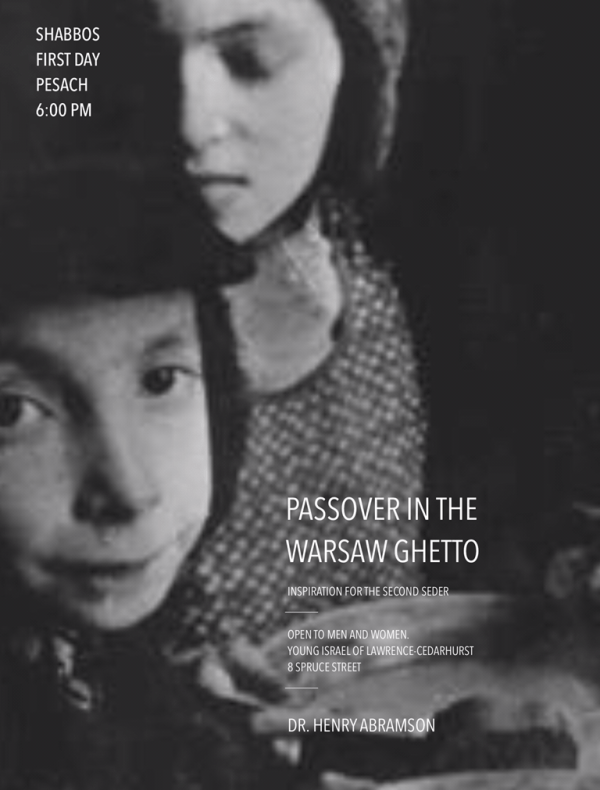

Passover in the Warsaw Ghetto: Inspiration for the Second Seder
Taken from Torah from the Years of Wrath (Aish Kodesh)
אני מבקש ומתחנן לפני כל אחד מישראל שילמוד בספרי, ובטח זכות אבותי הקדושים זצוקלל״ה יעמוד לו ולכל ביתו בזה ובבא
“I request and plead every person of Israel to study my works—surely the merit of our holy ancestors will stand for this Jew and his family, in this world and the next.” From the last will and testament of Rabbi Kalonymus Kalmish Shapira
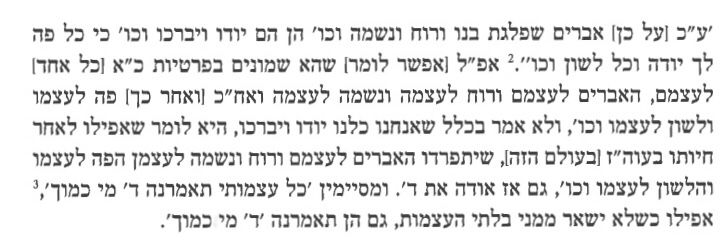
Therefore the organs, that You have set within us, and the spirit and the soul [that You have breathed into our nostrils, and the tongue that you placed in our mouth]—all of them shall thank and bless…for all mouths will thank You and all tongues [will vow loyalty to You]. Since the liturgy specifies each organ individually—the organs on their own, the ruach and the neshamah on its own, and afterwards the mouth and the tongue on their own, rather than in an all-inclusive manner such as we will all thank and bless—this indicates that even after life in this world [has ceased], when all the physical organs are separated, the ruach and the neshamah are separated, and the mouth and the tongue are separated as well, even then I will thank Hashem. We conclude [the nishmah prayer] with the verse, all my bones cry out, Hashem, who is like You. Even when nothing of my self remains except for bones, they will still cry out, Hashem, who is like You.


Blessed is the Omnipresent…blessed is the One who gave Torah to his people Israel, blessed is He. The Torah speaks of four sons.” What is the significance of the blessing from upon the Blessed One that is expressed as the Torah speaking of four sons?
We have already discussed that the very same verse alludes to both the answer to the wicked son and the answer to the son who does not know how to ask: And you shall relate it to your children…because of this which Hashem did for me. It is obvious that the Torah does not intend to distance the wicked son, rather it considers both sons in the category of “one who does not know how to ask,” and initiates the discussion in holiness. The “son who does not know” does not know how to ask at all, whereas the “wicked son” simply has bad information, and does not know how to ask for good information. Therefore the Torah answers them both with the same verse, indicating how to initiate a discussion in the atmosphere of holiness and how to draw them near. For the son who does not know [how to ask] at all, it is sufficient to say, and you will relate it [to your children…because of this which Hashem did for me], and in this fashion you initiate the conversation. For the wicked son, on the other hand, who possesses bad information, and thus does not know to ask in an atmosphere of holiness, one must first “blunt his teeth,” and in this fashion you initiate the discussion with him and draw him near.
We recite in our ahavah rabah prayer, “our Father, compassionate Father, have mercy on us and give our hearts understanding.” Since the Holy One who is Blessed fulfills the entire Torah, and you will teach your children is also one of the commandments of the Torah, thus “our Father, You command us to teach our children, therefore give us understanding.” This is reason for the juxtaposition of the sections blessed is the Omnipresent…blessed is the One who gave Torah to his people Israel, blessed is He. The Torah speaks of four sons.” Since it is a Torah commandment to return and draw near all types of children—the wise, the simple, the one who does not know how to ask, and even the wicked—therefore the Hagadah does not state, do not answer a fool, or as the Talmud states, “it is forbidden to respond to a Jewish apostate.” Rather, one must return them and draw them all close. In this fashion, even the Blessed One now fulfills this commandment [of teaching all of one’s children], even the wicked son, Heaven forbid, for they have more than adequately fulfilled the notion of blunt his teeth with us. May we now be drawn close to the Blessed One with compassion. Perhaps this explains the juxtaposition of the next phrase [in the Hagadah], originally our ancestors were idolators…and now the Omnipresent has drawn us near to Divine service, meaning such has always been the case—they were always so distant, and yet the Omnipresent drew them close to His worship.


It once happened that Rabbi Eliezer [and his colleagues discussed the Exodus from Egypt] until their students came and announced, “the time for the morning recitation of the shma prayer has arrived. We must understand. Was it not also apparent to the Rabbis that the time for reciting the shma had arrived? If one might argue that they had intended to continue their discussions (for after all there is a span of several hours’ duration in which one might recite the shma), why then did they immediately cease [their discussion] upon their student’s arrival? From the text it seems that they continued their discussions until their students arrived—and then ceased immediately.
A possible response. The Talmud states (Berakhot 28) that when Rabban Yohanan ben Zakai took ill, his students came to visit. When he saw them, he began to weep…he said to them, “if I were being taken [before a human court to be judged, would I not be afraid? How much more so should I be afraid to appear before the Heavenly court]. Furthermore, there are two paths before me [and I do not know upon which path they will lead me].” We must understand. If this was why he wept, why did he only begin to weep upon seeing his students, and not beforehand?
The Talmud (Makot 10) states, “do not teach a student who is unworthy.” The Talmud states (Yoma 87) that the reason for this seems to be to avoid having “the Rabbi in Paradise and the student in Gehinom.” Similarly, a student should not learn from an unworthy Rabbi. If the student is unsuitable, and a Rabbi does not teach him, it is certain that his end will be in Gehinom. Why, then, should a Rabbi not teach him? The opposite also applies, that a student should not learn from an unsuitable Rabbi for this very reason, for this [an unlearned student learning from an unsuitable Rabbi] seems to compound the problem.
A Rabbi and his students are bound together in this world and the next. Consequently, when one of them is in Paradise, he is negatively affected when the other is in Gehinom, Heaven forbid. This is the sense of the Talmudic dictum, “in order that he should not be in Paradise while his student is in Gehinom,” for his share of Paradise will be diminished when his student is in Gehinom, and vice versa.
Rabban Yohanan ben Zakai was humble with regard his own status, saying “I do not know upon which path they will lead me.” He saw, however, that his students were extraordinarily righteous. Therefore he began to cry upon seeing them, since he said that he did not know which path he would travel, and if his students were to enter Paradise, he was concerned lest he diminish, Heaven forbid, their share of Paradise. So too with the case of Rabbi Eliezer and Rabbi Yehoshua [and the other rabbis] who spent the night discussing the Exodus. In their humility it seemed to them as if they had accomplished nothing. When their students appeared before them, however, and they saw how their countenances beamed after this night, and they saw what effect their Torah discussions of the Exodus had on their students, they stopped.
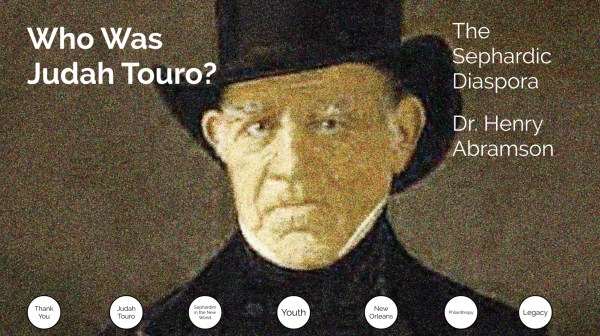
Brief lecture on the life and work of Judah Touro, an important 19th-century American philanthropist for whom, together with his father Isaac, Touro College was named.
 Henry Abramson