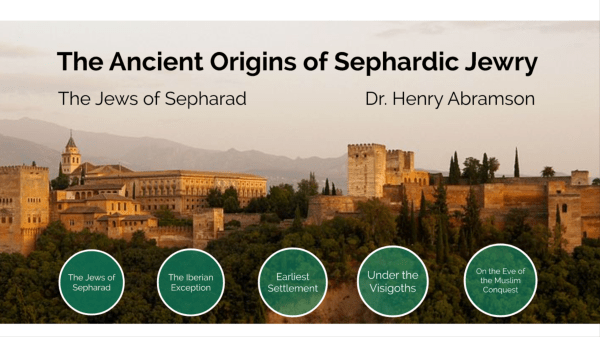
A brief overview of the earliest history of Sephardic Jewry, from earliest settlement through the Visigothic period to the Muslim conquest of 711.
For the Fall Schedule of Lectures, please click here. To sponsor a lecture, please click here.
Lectures in Jewish History and Thought. No hard questions, please.

Day 20:Corrosive Habits
Sunday, September 10, 2017 English Translation Follows
י״ט אלול
4.4
וּמֵהֶן חֲמִשָּׁה דְּבָרִים הָעוֹשֶׂה אוֹתָן אֵין חֶזְקָתוֹ לָשׁוּב מֵהֶן, לְפִי שְׁהֶן דְּבָרִים קַלִּים בְּעֵינֵי רֹב הָאָדָם, וְנִמְצָא חוֹטֶא וְהוּא יְדַמֶּה שְׁאֵין זֶה חֵטְא; וְאֵלּוּ הֶן: (א) הָאוֹכֵל מִסְּעוֹדָה שְׁאֵינָהּ מַסְפֶּקֶת לִבְעָלֶיהָ–שֶׁזֶּה אֲבַק גָּזֵל, וְהוּא מְדַמֶּה שֶׁלֹּא חָטָא וְיֹאמַר כְּלוּם אָכַלְתִּי אֵלָא בִּרְשׁוּתָן. (ב) וְהַמִּשְׁתַּמֵּשׁ בַּעֲבוֹטוֹ שֶׁלֶּעָנִי–שֶׁהַעֲבוֹט שֶׁלֶּעָנִי אֵינוּ אֵלָא כְּגוֹן קֻרְדֹּם וּמַחְרֵשָׁה, וְיֹאמַר בְּלִבּוֹ אֵינָן חֲסֵרִים, וַהֲרֵי לֹא גָזַלְתִּי אוֹתוֹ. (ג) וְהַמִּסְתַּכֵּל בָּעֲרָיוֹת–מַעֲלֶה עַל דַּעְתּוֹ שְׁאֵין בְּכָּךְ כְּלוּם, שְׁהוּא אוֹמֵר וְכִי בָּעַלְתִּי אוֹ קָרַבְתִּי; וְהוּא אֵינוּ יוֹדֵעַ שֶׁרְאִיַּת הָעֵינַיִם עָווֹן גָּדוֹל, שְׁהִיא גּוֹרֶמֶת לְגוּפָן שֶׁלָּעֲרָיוֹת, שֶׁנֶּאֱמָר “וְלֹא-תָתוּרוּ אַחֲרֵי לְבַבְכֶם” (במדבר טו,לט). (ד) וְהַמִּתְכַּבֵּד בִּקְלוֹן חֲבֵרוֹ–אוֹמֵר בְּלִבּוֹ שְׁאֵינוּ חֵטְא, לְפִי שְׁאֵין חֲבֵרוֹ עוֹמֵד וְלֹא הִגִּיעָה לוֹ בֹּשֶׁת, וְלֹא בִיְּשׁוֹ אֵלָא עָרַךְ מַעֲשָׂיו הַטּוֹבִים וְחָכְמָתוֹ לְמוּל מַעֲשֶׂה חֲבֵרוֹ אוֹ חָכְמָתוֹ, כְּדֵי שֶׁיֵּרָאֶה מִכְּלָלָן שְׁהוּא מְכֻבָּד וַחֲבֵרוֹ בָּזוּי. (ה) וְהַחוֹשֵׁד כְּשֵׁרִים–אוֹמֵר בְּלִבּוֹ שְׁאֵינוּ חֵטְא, לְפִי שְׁהוּא אוֹמֵר מַה עָשִׂיתִי לוֹ, וְכִי יֵשׁ שָׁם אֵלָא חֲשָׁד שֶׁמֶּא עָשָׂה אוֹ לֹא עָשָׂה, וְהוּא אֵינוּ יוֹדֵעַ שֶׁזֶּה עָווֹן שֶׁמֵּשִׂים אָדָם כָּשֵׁר בְּדַעְתּוֹ כְּבַעַל עֲבֵרוֹת.
And there are five things that we assume a person cannot normally rectify through teshuvah, because they are things that most people do not take seriously, and people sin without realizing it. These are they:
1) One who eats as a guest at the table of a host who cannot afford the meal. This is a minor form of theft. The guest feels that it is no sin, saying, “I did not eat anything without the permission of the host.”
2) One who uses the collateral of a poor person, such as a shovel or a plow deposited to secure a loan, saying, “I did not take anything away from the pledge, I did not steal anything at all.”
3) One who ogles a woman, thinking to himself that this means nothing. He says, “did I have relations with this woman, or even draw close to her?” He does not realize that what the eye sees can be a great sin, since it may lead to inappropriate relations, as it is written (Numbers 15:39), do not seek after your heart.
4) One who honors one’s self through the downfall of another, saying that it is no sin because the other person is not present, and will not hear and be embarrassed. Instead, one merely praises one’s own good deeds and intelligence in contrast to the deeds and intelligence of the other person, with the intent that people should notice who deserves honor and who deserves disdain.
5) One who suspects the innocent, saying that this is no sin. “What did I do to him? Did I do anything other than suspect him? Perhaps he did something wrong, perhaps he did not.” One does not realize that it is a great sin to consider a decent person to be a sinner.
Translation from Maimonides on Teshuvah (5th Edition, 2017)

Day 17-18-19: Impediments to Teshuvah
English Translation Follows
4.1
עֶשְׂרִים וְאַרְבָּעָה דְּבָרִים מְעַכְּבִין אֶת הַתְּשׁוּבָה. אַרְבָּעָה מֵהֶן עָווֹן גָּדוֹל; וְהָעוֹשֶׂה אֶחָד מֵאַרְבַּעְתָּן–אֵין הַקָּדוֹשׁ בָּרוּךְ הוּא מַסְפִּיק בְּיָדוֹ לַעֲשׂוֹת תְּשׁוּבָה, לְפִי גֹּדֶל חֶטְאוֹ. וְאֵלּוּ הֶן: (א) הַמַּחְטִיא אֶת הָרַבִּים; וּבִכְלַל עָווֹן זֶה, הַמְּעַכֵּב אֶת הָרַבִּים מִלַּעֲשׂוֹת מִצְוָה. (ב) וְהַמַּטֶּה חֲבֵרוֹ מִדֶּרֶךְ טוֹבָה לְדֶרֶךְ רָעָה, כְּגוֹן מַסִּית וּמַדִּיחַ. (ג) וְהָרוֹאֶה בְּנוֹ בְּתַרְבּוּת רָעָה, וְאֵינוּ מְמַחֶה בְּיָדוֹ–הוֹאִיל וּבְנוֹ בִּרְשׁוּתוֹ אִלּוּ מִחָה בּוֹ הָיָה פּוֹרֵשׁ, וְנִמְצָא כְּמַחְטִיא אוֹתוֹ; וּבִכְלַל עָווֹן זֶה כָּל שֶׁאפְשָׁר בְּיָדוֹ לְמַחוֹת בַּאֲחֵרִים בֵּין רַבִּים בֵּין יְחִידִים וְלֹא מִחָה, אֵלָא יַנִּיחַ אוֹתָן בְּכִשְׁלוֹנָן. (ד) וְהָאוֹמֵר אֶחֱטָא וְאָשׁוּב; וּבִכְלַל זֶה הָאוֹמֵר אֶחֱטָא, וְיוֹם הַכִּפּוּרִים מְכַפֵּר.
4.1 There are twenty-four things that impede teshuvah. Four of them are serious sins, and God does not allow the one who commits them to do teshuvah because of their severity. These are they:
1) One who causes many to sin, and this category includes one who prevents others from doing good.
2) One who tempts another away from the good path; for example, one who incites or instigates.
3) One who sees his child moving in a bad direction and does not rebuke him. Since his child is under his authority, if he were to rebuke him, the child would in turn reform himself, and therefore it is as if the parent caused the child to sin. Also included in this category is one who has it within his power to rebuke others, whether individuals or many people, and fails to rebuke them, rather leaving them to the consequences.
4) One who says, “I will sin and I will repent,” and included in this category is one who says, “I will sin, and Yom Kippur will provide atonement.”
4.2
וּמֵהֶן חֲמִשָּׁה דְּבָרִים הֶן נוֹעֲלִין דַּרְכֵי הַתְּשׁוּבָה בִּפְנֵי עוֹשֵׂיהֶן; וְאֵלּוּ הֶן: (א) הַפּוֹרֵשׁ מִן הַצִּבּוּר–לְפִי שֶׁבִּזְמָן שֶׁיַּעֲשׂוּ תְּשׁוּבָה, לֹא יִהְיֶה עִמָּהֶן וְאֵינוּ זוֹכֶה עִמָּהֶן בַּזָּכויּוֹת שֶׁעוֹשִׂין. (ב) וְהַחוֹלֵק עַל דִּבְרֵי חֲכָמִים–לְפִי שֶׁמַּחְלֻקְתּוֹ גּוֹרֶמֶת לוֹ לִפְרֹשׁ מֵהֶן, וְאֵינוּ יוֹדֵעַ דַּרְכֵי הַתְּשׁוּבָה. (ג) וְהַמַּלְעִיג עַל הַמִּצְווֹת–שֶׁכֵּיוָן שֶׁנִּתְבַּזּוּ בְּעֵינָיו, אֵינוּ רוֹדֵף אַחֲרֵיהֶן וְלֹא עוֹשָׂן; וְאִם לֹא יַעֲשֶׂה, בְּמַה יִזְכֶּה. (ד) וְהַמְּבַזֶּה רבּוֹתָיו–שֶׁדָּבָר זֶה גּוֹרֵם לָהֶן לְדָחְפוֹ וּלְטָרְדוֹ כְּיֵשׁוּעַ וּכְגֵיחֲזִי, וּבִזְמָן שֶׁנִּטְרָד לֹא יִמְצָא מְלַמֵּד וּמוֹרֶה לוֹ דֶּרֶךְ הָאֱמֶת. (ה) וְהַשּׂוֹנֵא אֶת הַתּוֹכָחוֹת–שֶׁהֲרֵי לֹא הִנִּיחַ לוֹ דֶּרֶךְ תְּשׁוּבָה, שֶׁהַתּוֹכָחָה גּוֹרֶמֶת לִתְשׁוּבָה, שֶׁבִּזְמָן שֶׁמּוֹדִיעִין לוֹ לָאָדָם חֲטָאָיו וּמַכְלִימִין אוֹתוֹ, חוֹזֵר בִּתְשׁוּבָה כְּמוֹ שֶׁכָּתוּב בַּתּוֹרָה: “זְכֹר, אַל-תִּשְׁכַּח” (דברים ט,ז), “מַמְרִים הֱיִיתֶם” (דברים ט,ז), “וְלֹא-נָתַן ה’ לָכֶם לֵב וכו'” (דברים כט,ג), “עַם נָבָל, וְלֹא חָכָם” (דברים לב,ו). וְכֵן יְשַׁעְיָהוּ הוֹכִיחַ אֶת יִשְׂרָאֵל וְאָמַר “הוֹי גּוֹי חֹטֵא” (ישעיהו א,ד), “יָדַע שׁוֹר קֹנֵהוּ וכו'” (ישעיהו א,ג), “מִדַּעְתִּי, כִּי קָשֶׁה אָתָּה” (ישעיהו מח,ד); וְכֵן צִוָּהוּ הָאֵ-ל לְהוֹכִיחַ לַחַטָּאִים, שֶׁנֶּאֱמָר “קְרָא בְגָרוֹן אַל-תַּחְשֹׂךְ” (ישעיהו נח,א). וְכֵן כָּל הַנְּבִיאִים הוֹכִיחוּ לְיִשְׂרָאֵל, עַד שֶׁחָזְרוּ בִּתְשׁוּבָה. לְפִיכָּךְ צָרִיךְ לְהַעְמִיד בְּכָל קָהָל וְקָהָל מִיִּשְׂרָאֵל חָכָם גָּדוֹל וְזָקֵן וִירֵא שָׁמַיִם מִנְּעוּרָיו וְאָהוּב לָהֶם, שֶׁיְּהֶא מוֹכִיחַ לָרַבִּים וּמַחְזִירָן בִּתְשׁוּבָה. וְזֶה שֶׁשּׂוֹנֵא אֶת הַתּוֹכָחוֹת, אֵינוּ בָּא לַמּוֹכִיחַ וְלֹא שׁוֹמֵעַ דְּבָרָיו; לְפִיכָּךְ יַעֲמֹד בְּחַטֹּאותָיו, שְׁהֶן בְּעֵינָיו טוֹבִים.
And among them are five things that close the doors to the ways of teshuvah, and these are they:
1) One who separates from the community, for at the time that they repent, he will not be among them and will not receive merit along with them.
2) One who quarrels with the words of the wise, for his dispute will cause him to separate from them, and he will not know the ways of return.
3) One who ridicules the commandments. Since they are insignificant in his eyes, he will not seek to fulfill them, and if he does not fulfill them, what will be his merit?
4) One who demeans his teachers, for this causes them to push him off and distance him as Jesus and Gehazi. When he is ostracized he will not find a teacher to show him the true path.
5) One who hates rebuke, for he does not allow himself a way to do teshuvah. Rebuke is a cause for teshuvah, for when a person is informed of his misdeeds, and feels ashamed, he will repent, as it is written in the Torah (Deuteronomy 9:7), remember, and do not forget…you were rebellious, and God did not give you a heart (2:6) a foolish, unwise people. Similarly, Isaiah rebuked the Jewish people, saying (Isaiah 1:4) O sinful people (1:3) the ox knows is master (48:4) I know that you are difficult. God commanded him to rebuke those who transgress, as it is written (58:1), call out from your throat, do not hold back. Thus did all the prophets rebuke the Jewish people so that they would return in teshuvah. Therefore every single Jewish community must appoint a great sage, elderly and God-fearing from his youth, well-loved by the people, who will rebuke the community and cause them to return in teshuvah. One who hates rebuke will not participate in this rebuke, will not hear his words, and therefore will remain in his sin, considering his behavior good.
4.3
וּמֵהֶן חֲמִשָּׁה דְּבָרִים הָעוֹשֶׂה אוֹתָן אי אִפְשָׁר לוֹ שֶׁיָּשׁוּב תְּשׁוּבָה גְּמוּרָה, לְפִי שְׁהֶן עֲווֹנוֹת שֶׁבֵּין אָדָם לַחֲבֵרוֹ, וְאֵינוּ יוֹדֵעַ חֲבֵרוֹ שֶׁחָטָא לוֹ, כְּדֵי שֶׁיַּחְזִיר לוֹ אוֹ יִשְׁאַל מִמֶּנּוּ לִמְחֹל לוֹ; וְאֵלּוּ הֶן: (א) הַמְּקַלֵּל אֶת הָרַבִּים–לֹא קִלַּל אָדָם יָדוּעַ, כְּדֵי שֶׁיִּשְׁאַל מִמֶּנּוּ כַּפָּרָה. (ב) וְהַחוֹלֵק עִם גַּנָּב–לְפִי שְׁאֵינוּ יוֹדֵעַ גְּנֵבָה זוֹ שֶׁלְּמִי הִיא, אֵלָא הַגַּנָּב גּוֹנֵב רַבִּים וּמֵבִיא לוֹ וְהוּא לוֹקֵחַ; וְעוֹד שְׁהוּא מְחַזֵּק יַד הַגַּנָּב, וּמַחְטִיא אוֹתוֹ. (ג) וְהַמּוֹצֶא אֲבֵדָה וְאֵינוּ מַכְרִיז עָלֶיהָ עַד שֶׁיַּחְזִירָהּ לִבְעָלֶיהָ–לְאַחַר זְמָן, כְּשֶׁיַּעֲשֶׂה תְּשׁוּבָה אֵינוּ יוֹדֵעַ לְמִי יַחְזִיר. (ד) וְהָאוֹכֵל שֹׁר עֲנִיִּים וִיתוֹמִים וְאַלְמָנוֹת–אֵלּוּ בְּנֵי אָדָם אֲמֵלָלִין הֶן וְאֵינָן יְדוּעִים וּמְפֻרְסָמִים, וְגוֹלִים מֵעִיר לְעִיר, וְאֵין לָהֶם מַכִּיר, כְּדֵי שֶׁיֵּדַע שֹׁר זֶה שֶׁלְּמִי הוּא וְיַחְזִירֶנּוּ לוֹ. (ה) וְהַמְּקַבֵּל שֹׁחַד לְהַטּוֹת דִּין–אֵינוּ יוֹדֵעַ עַד הֵיכָן הִגִּיעָה הַטָּיָה זוֹ וְכַמָּה הוּא כּוֹחָהּ כְּדֵי שֶׁיַּחְזִיר, שֶׁהַדָּבָר יֵשׁ לוֹ רַגְלַיִם; וְעוֹד שְׁהוּא מְחַזֵּק יַד זֶה, וּמַחְטִיא אוֹתוֹ.
There are five things that prevent a person from complete teshuvah, since they are sins between one person and another, and one cannot know whom he has harmed such that he might repay him for his loss, or beg forgiveness. These are they:
1) One who curses a large number of people, without specifying a particular individual, such that he might later beg his forgiveness.
2) One who shares stolen property with a thief. Since he does not know the origin of the stolen property [to return it], as the thief sold him property taken from many people. Furthermore, he supports the thief and his sinful behavior.
3) One who finds lost property and does not announce it, so that the property may be returned to its owner. He may later do teshuvah, but he will not know who should receive the lost object.
4) One who consumes extorted property owned by the poor, orphans and widows. These are downtrodden people, they are not well known, and they wander from city to city, and there is no one who will say, “whose property is this?” such that it will be returned.
5) One who accepts a bribe to pervert justice. He does not know how far the implications of this judgment will reach, nor the extent of its impact, such that he might rectify it, for there was some basis for the judgment. He also supports the person who offered the bribe.
Translation from Maimonides on Teshuvah (5th edition, 2017)
Image: The Invisible World, by Rene Magritte

Day 16: Sticks and Stones
Wednesday, September 6, 2017 English Translation Follows
3:14
כָּל אֶחָד וְאֶחָד מֵאַרְבָּעָה וְעֶשְׂרִים אֲנָשִׁים אֵלּוּ שֶׁמָּנִינוּ–אַף עַל פִּי שְׁהֶן יִשְׂרָאֵל, אֵין לָהֶן חֵלֶק לָעוֹלָם הַבָּא. וְיֵשׁ עֲבֵרוֹת קַלּוֹת מֵאֵלּוּ, וְאַף עַל פִּי כֵן אָמְרוּ חֲכָמִים שֶׁהָרָגִיל בָּהֶן אֵין לוֹ חֵלֶק לָעוֹלָם הַבָּא, כְּדֵי לְהִתְרַחַק מֵהֶן וּלְהִזָּהֵר מֵהֶן.
וְאֵלּוּ הֶן: הַמְּכַנֶּה אֶת חֲבֵרוֹ, וְהַקּוֹרֶא לַחֲבֵרוֹ בְּכִנּוּיו, וְהַמַּלְבִּין פְּנֵי חֲבֵרוֹ בָּרַבִּים, וְהַמִּתְכַּבֵּד בִּקְלוֹן חֲבֵרוֹ, וְהַמְּבַזֶּה תַּלְמִידֵי חֲכָמִים, וְהַמְּבַזֶּה רִבּוֹתָיו, וְהַמְּבַזֶּה אֶת הַמּוֹעֲדוֹת, וְהַמְּחַלֵּל אֶת הַקֳּדָשִׁים.
בַּמֶּה דְּבָרִים אֲמוּרִים שֶׁכָּל אֶחָד מֵאֵלּוּ אֵין לוֹ חֵלֶק לָעוֹלָם הַבָּא, בְּשֶׁמֵּת בְּלֹא תְּשׁוּבָה. אֲבָל אִם שָׁב מֵרִשְׁעוֹ, וּמֵת וְהוּא בַּעַל תְּשׁוּבָה–הֲרֵי זֶה מִבְּנֵי הָעוֹלָם הַבָּא, שְׁאֵין לָךְ דָּבָר שֶׁעוֹמֵד בִּפְנֵי הַתְּשׁוּבָה: אַפִלּוּ כָּפַר בָּעִיקָר כָּל יָמָיו, וּבָאַחֲרוֹנָה שָׁב–יֵשׁ לוֹ חֵלֶק, שֶׁנֶּאֱמָר “שָׁלוֹם שָׁלוֹם לָרָחוֹק וְלַקָּרוֹב, אָמַר ה’–וּרְפָאתִיו” (ישעיהו נז,יט).
כָּל הָרְשָׁעִים וְהַפּוֹשְׁעִים וְהַמְּשֻׁמָּדִים וְכַיּוֹצֶא בָּהֶן שֶׁחָזְרוּ בִּתְשׁוּבָה, בֵּין בַּגָּלוּי בֵּין שֶׁחָזְרוּ בְּמַטְמוֹנִיּוֹת–מְקַבְּלִין אוֹתָן, שֶׁנֶּאֱמָר “שׁוּבוּ בָנִים שׁוֹבָבִים” (ירמיהו ג,כב): אַף עַל פִּי שֶׁעֲדַיִן שׁוֹבָב הוּא, שֶׁהֲרֵי בַּסֵּתֶר בִּלְבָד חוֹזֵר וְלֹא בַּגָּלוּי–מְקַבְּלִין אוֹתוֹ בִּתְשׁוּבָה.
Each one of these twenty-four people that we have listed, even though they are of Israel, they have no share in the World to Come. There are also lesser sins than these that the Sages have warned that habitual transgression also removes a person from the World to Come, and therefore a person should take special care to distance himself from them.
These are they: one who creates a disparaging nickname for another, and one who calls another by such a name. One who embarrasses another in public, and one who seeks honor through the downfall of another. One who disdains the scholars, and one who disdains his teachers. One who disdains the holidays, and one who desecrates holy things.
What sort of circumstance are we discussing that each one of these people would not have a share in the World to Come? When such a person dies without repenting. If he repented of his wicked ways before he died, however, he is a Master of Teshuvah, and he is among those who have a share in the World to Come, for nothing can stand against teshuvah. Even one who denies the essence of Judaism all his life, and at the end he repents, has a share, as it is written (Isaiah 57:19), shalom, shalom to the far and to the near, says God, and I will heal him.
All of the wicked and the sinners and the apostates and their like who repent, whether publicly or privately, are accepted, as it is written (Jeremiah 3:22), return, returning children. Even though he is still returning, for he is only returning in secret and not in public, his teshuvah is accepted.
Translation from Maimonides on Teshuvah (5th edition 2017)

Day 15: More Cautionary Tales
Tuesday, September 5, 2017 English Translation Follows
3.10
מַחְטִיאֵי הָרַבִּים: אֶחָד שֶׁהִחְטִיא בְּדָבָר גָּדוֹל, כְּיָרָבְעָם וְצַדּוּק וּבַיְתּוֹס; וְאֶחָד שֶׁהִחְטִיא בְּדָבָר קַל, אַפִלּוּ לְבַטַּל מִצְוַת עֲשֵׂה. וְאֶחָד הָאוֹנֵס אֲחֵרִים עַד שֶׁיֶּחֶטְאוּ כִּמְנַשֶּׁה, שֶׁהָיָה הוֹרֵג יִשְׂרָאֵל עַד שֶׁיַּעַבְדוּ עֲבוֹדָה זָרָה; אוֹ שֶׁהִטְעָה אֲחֵרִים וְהִדִּיחָם כְּיֵשׁוּעַ.
Those who cause others to sin: it matters not whether the sin is large, such as that of Jeroboam and Zadok and Boethus, or whether the sin is small, even to nullify a positive commandment. It matters not if one forces others to sin like Manasseh, who would kill a Jew who did not worship an idol, or if one tempts or persuades others like Jesus.
3.11
הַפּוֹרֵשׁ מִדַּרְכֵי צִבּוּר: אַף עַל פִּי שֶׁלֹּא עָבַר עֲבֵרוֹת, אֵלָא נִבְדַּל מֵעֲדַת יִשְׂרָאֵל וְאֵינוּ עוֹשֶׂה מִצְווֹת בִּכְלָלָן וְלֹא נִכְנָס בְּצָרָתָן וְלֹא מִתְעַנֶּה בְּתַעְנִיתָן, אֵלָא הוֹלֵךְ בְּדַרְכּוֹ כְּאֶחָד מִגּוֹיֵי הָאָרֶץ, וּכְאִלּוּ אֵינוּ מֵהֶן–אֵין לוֹ חֵלֶק לָעוֹלָם הַבָּא.
הָעוֹשֶׂה עֲבֵרוֹת בְּיָד רָמָה כִּיהוֹיָקִים: בֵּין שֶׁעָשָׂה קַלּוֹת, בֵּין שֶׁעָשָׂה חֲמוּרוֹת–אֵין לוֹ חֵלֶק; וְזֶה הוּא הַנִּקְרָא מְגַלֶּה פָּנִים בַּתּוֹרָה, מִפְּנֵי שֶׁהֵעִיז מִצְחוֹ וְגִלָּה פָּנָיו וְלֹא בּוֹשׁ מִדִּבְרֵי תּוֹרָה.
One who separates from the ways of the community, even if he does not sin but only separates from the congregation and does not perform commandments together with them, refraining from sharing in their suffering with them and fasting with them, instead going about as if he were not Jewish, and not one of them: he has no portion in the World to Come.
And one who commits a sin in a haughty manner like Jehoiachim, whether he commits one of the light sins or whether he commits one of the severe sins, he has no share. This is what is meant by “he reveals his face before the Torah,” because he hardens his forehead and shows his face without embarrassment before the words of Torah.
3.12
שְׁנַיִם הֶם הַמּוֹסְרִים: הַמּוֹסֵר חֲבֵרוֹ בְּיַד גּוֹיִים לְהָרְגוֹ אוֹ לְהַכּוֹתוֹ, וְהַמּוֹסֵר מְמוֹן חֲבֵרוֹ בְּיַד גּוֹיִים אוֹ בְּיַד אַנָּס שְׁהוּא כְּגוֹי–שְׁנֵיהֶם, אֵין לָהֶן חֵלֶק.
There are two types of informers. One who hands over his fellow to non-Jews for execution or physical punishment, and one who hands over the wealth of his fellow to non-Jews, including a Jewish extortionist who is effectively like a non-Jew. Both of these have no share.
3.13
מַטִּילֵי אֵימָה עַל הַצִּבּוּר שֶׁלֹּא לְשֵׁם שָׁמַיִם: זֶה הָרוֹדֶה צִבּוּר בְּחָזקָה וְהֶם יְרֵאִים וּפוֹחֲדִים מִמֶּנּוּ הַרְבֵּה, וְכַוָּנָתוֹ לִכְבוֹד עַצְמוֹ וּלְכָל חֲפָצָיו, לֹא לִכְבוֹד שָׁמַיִם, כְּגוֹן מַלְכֵי הַגּוֹיִים.
One who spreads fear in the community for the wrong reasons refers to one who rules over the community with force, making people fear and tremble before him. He does this with the intention of self-aggrandizement. His actions are not at all for the sake of Heaven, and he behaves like the kings of the nations.
Translation from Maimonides on Teshuvah (5th Edition, 2017)

Day 14: Heresy, Part 2
Monday, September 4, 2017 English Translation Follows
3.8
שְׁלוֹשָׁה הֶן הַנִּקְרָאִין אֲפֵיקוֹרוֹסִים: הָאוֹמֵר שְׁאֵין שָׁם נְבוּאָה כְּלָל, וְאֵין שָׁם מַדָּע שֶׁמַּגִּיעַ מֵהַבּוֹרֵא לְלֵב בְּנֵי הָאָדָם; וְהַמַּכְחִישׁ נְבוּאָתוֹ שֶׁל מֹשֶׁה רַבֵּנוּ; וְהָאוֹמֵר שְׁאֵין הַבּוֹרֵא יוֹדֵעַ מַעֲשֵׂה בְּנֵי הָאָדָם. כָּל אֶחָד מִשְּׁלוֹשָׁה אֵלּוּ אֲפֵיקוֹרוֹס.
שְׁלוֹשָׁה הֶן הַכּוֹפְרִים בַּתּוֹרָה: הָאוֹמֵר שְׁאֵין הַתּוֹרָה מֵעִם ה’, אַפִלּוּ פָּסוּק אֶחָד, אַפִלּוּ תֵּבָה אַחַת–אִם אָמַר מֹשֶׁה אֲמָרוֹ מִפִּי עַצְמוֹ, הֲרֵי זֶה כּוֹפֵר בַּתּוֹרָה; וְכֵן הַכּוֹפֵר בְּפֵרוּשָׁהּ, וְהִיא תּוֹרָה שֶׁבְּעַל פֶּה, וְהִכְחִישׁ מַגִּידֶיהָ, כְּגוֹן צַדּוּק וּבַיְתּוֹס; וְהָאוֹמֵר שֶׁהַבּוֹרֵא הִחְלִיף מִצְוָה זוֹ בְּמִצְוָה אַחֶרֶת, וּכְבָר בָּטְלָה תּוֹרָה זוֹ, אַף עַל פִּי שְׁהִיא הָיְתָה מֵעִם ה’, כְּגוֹן הַנּוֹצְרִים וְהַהגרִים. כָּל אֶחָד מִשְּׁלוֹשָׁה אֵלּוּ כּוֹפֵר בַּתּוֹרָה.
There are three kinds of apikorsim. One who says that there is no prophecy at all, and that there is no knowledge of the Creator that reaches the heart of a human being. One who denies the prophecy of Moses our Teacher. One who says that the Creator is unaware of the deeds of humanity. Each of these three is an apikoros.
There are three kinds of deniers of Torah. One who says that the Torah does not come from God, even a single verse, even a single word. If he says that Moses wrote it on his own, behold this is a denier of Torah. One who denies the interpretation of Torah, which is the Oral Torah, and contradicts its teachers, as did Zadok and Boethus. One who says that the Creator exchanged one commandment for another, making the earlier Torah irrelevant, even though it came from God, like the Christians and the Muslims. Each of these three is a denier of Torah.
3.9
שְׁנַיִם הֶן הַמְּשֻׁמָּדִים: הַמְּשֻׁמָּד לַעֲבֵרָה אַחַת, וְהַמְּשֻׁמָּד לְכָל הַתּוֹרָה כֻּלָּהּ. הַמְּשֻׁמָּד לַעֲבֵרָה אַחַת–זֶה שֶׁהִחְזִיק עַצְמוֹ לַעֲשׂוֹת אוֹתָהּ עֲבֵרָה בְּזָדוֹן וְנִתְפַּרְסַם בָּהּ וְהֻרְגַּל, אַפִלּוּ הָיְתָה מִן הַקַּלּוֹת, כְּגוֹן שֶׁהֻחְזַק תָּמִיד לִלְבֹּשׁ שַׁעַטְנֵז אוֹ לְהַקִּיף פֵּאָה, וְנִמְצָא כְּאִלּוּ בָּטְלָה מִצְוָה זוֹ מִן הָעוֹלָם אֶצְלוֹ–הֲרֵי זֶה מְשֻׁמָּד לְאוֹתוֹ דָּבָר: וְהוּא, שֶׁיַּעֲשֶׂה לְהַכְעִיס. וְהַמְּשֻׁמָּד לְכָל הַתּוֹרָה, כְּגוֹן הַחוֹזֵר לְדָתֵי הַגּוֹיִם בְּשָׁעָה שֶׁגּוֹזְרִין שְׁמָד וְיִדָּבֵק בָּהֶן, וְיֹאמַר וּמַה בֶּצַע לִי לְהִדָּבֵק בְּיִשְׂרָאֵל שְׁהֶן שְׁפָלִים וְנִרְדָּפִים, טוֹב לוֹ שֶׁיִּדָּבֵק בְּאֵלּוּ שֶׁיָּדָן תַּקִּיפָה–הֲרֵי זֶה מְשֻׁמָּד לְכָל הַתּוֹרָה כֻּלָּהּ.
There are two types of apostates: an apostate for a single sin, and an apostate for the entire Torah. An apostate for a single sin is one who has intentionally habituated himself to a particular transgression. He is well-known for this sin, which he regularly commits, even if it might be one of the lighter sins such as wearing clothing made out of wool and linen, or cutting the hair on the sides of his head in the forbidden manner, as if he considers the commandment irrelevant. This person is called an apostate for such a thing, providing he is doing it to anger God. An apostate for the entire Torah is like someone who turns to the religion of the nations during a time of forced conversion, joining them and saying “what does it benefit me to be part of the Jewish people, who are lowly and persecuted? It would be better for me to join with these people who are more powerful.” Behold, this is an apostate for the entire Torah.
Translation from Maimonides on Teshuvah (5th Edition, 2017)

Day 13 Apostasy, Part I
Sunday, September 3, 2017 English Translation Follows
3.6
וְאֵלּוּ שְׁאֵין לָהֶן חֵלֶק לָעוֹלָם הַבָּא, אֵלָא נִכְרָתִין וְאוֹבְדִין, וְנִדּוֹנִין עַל גֹּדֶל רִשְׁעָם וְחַטָּאתָם, לְעוֹלָם וּלְעוֹלְמֵי עוֹלָמִים: הַמִּינִים, וְהָאֲפֵיקוֹרוֹסִים, וְהַכּוֹפְרִים בַּתּוֹרָה, וְהַכּוֹפְרִים בִּתְחָיַת הַמֵּתִים, וְהַכּוֹפְרִים בְּבִיאַת הַגּוֹאֵל, וְהַמְּשֻׁמָּדִים, וּמַחְטִיאֵי הָרַבִּים, וְהַפּוֹרְשִׁים מִדַּרְכֵי צִבּוּר, וְהָעוֹשֶׂה עֲבֵרוֹת בְּיָד רָמָה בְּפַרְהֶסְיָה כִּיהוֹיָקִים, וְהַמּוֹסְרִים, וּמַטִּילֵי אֵימָה עַל הַצִּבּוּר שֶׁלֹּא לְשֵׁם שָׁמַיִם, וְשׁוֹפְכֵי דָּמִים, וּבַעֲלֵי לְשׁוֹן הָרַע, וְהַמּוֹשֵׁךְ עָרְלָתוֹ.
These are the people who do not have a share in the World to Come; rather they are cut off and lost, and judged according to the severity of their wickedness and sins for all time. The minim. The apikorsim. Those who deny Torah. Those who deny the resuscitation of the dead. Those who deny the coming of the Redeemer. The apostates. Those who cause others to sin. Those who separate from the ways of the community. One who sins in a haughty and public manner like Jehoiachim. The informers. Those who provoke needless fear in the community. Those who shed blood. Those who spread gossip. Those who deny the covenant.
3.7
חֲמִשָּׁה הֶן הַנִּקְרָאִין מִינִים: הָאוֹמֵר שְׁאֵין שָׁם אֱלוֹהַּ, וְאֵין לָעוֹלָם מַנְהִיג; וְהָאוֹמֵר שֶׁיֵּשׁ שָׁם מַנְהִיג, אֲבָל הֶם שְׁנַיִם אוֹ יותֵר; וְהָאוֹמֵר שֶׁיֵּשׁ שָׁם רִבּוֹן אֶחָד, אֵלָא שְׁהוּא גּוּף וּבַעַל תְּמוּנָה; וְכֵן הָאוֹמֵר שְׁאֵינוּ לְבַדּוֹ רִאשׁוֹן וְצוּר לַכֹּל; וְכֵן הָעוֹבֵד אֱלוֹהַּ זוּלָתוֹ, כְּדֵי לִהְיוֹת מֵלִיץ בֵּינוֹ וּבֵין רִבּוֹן הָעוֹלָמִים. כָּל אֶחָד מֵחֲמִשָּׁה אֵלּוּ מִין.
There are five types of minim. One who says that there is no God, that the world has no master. The one who says that there is a master, but that there are two or more of them. The one who says there is one master, but he is a physical being. And similarly the one who says he was not the first Creator of all. One who worships another god in order that he will act as an intercessor between him and the Master of the Universe. Each one of these five is called a min.
Translation from Maimonides on Teshuvah (5th Edition, 2017)

Day 11-12: Never Regret Doing the Right Thing
Friday-Saturday September 1-2, 2017. English translation follows.
3.3
2017כָּל מִי שֶׁנִּחַם עַל הַמִּצְווֹת שֶׁעָשָׂה, וְתָהָה עַל הַזָּכויּוֹת, וְאָמַר בְּלִבּוֹ וּמַה הוֹעַלְתִּי בַּעֲשִׂיָּתָן, אוּלַי לֹא עָשִׂיתִי אוֹתָן–הֲרֵי זֶה אִבַּד אֶת כֻּלָּן, וְאֵין מַזְכִּירִין לוֹ שֵׁם זְכוּת בָּעוֹלָם: שֶׁנֶּאֱמָר “וְצִדְקַת הַצַּדִּיק לֹא תַצִּילֶנּוּ בְּיוֹם רִשְׁעוֹ” (ראה יחזקאל לג,יב), אֵין זֶה אֵלָא בְּתוֹהֶה עַל הָרִאשׁוֹנוֹת.
כְּשֵׁם שֶׁשּׁוֹקְלִין עֲווֹנוֹת אָדָם וְזָכויּוֹתָיו, בְּשָׁעַת מִיתָתוֹ–כָּךְ בְּכָל שָׁנָה וְשָׁנָה, שׁוֹקְלִין עֲווֹנוֹת כָּל אֶחָד וְאֶחָד מִבָּאֵי הָעוֹלָם עִם זָכויּוֹתָיו בְּיוֹם טוֹב שֶׁלְּרֹאשׁ הַשָּׁנָה: מִי שֶׁנִּמְצָא צַדִּיק, נֶחְתָּם לְחַיִּים; וּמִי שֶׁנִּמְצָא רָשָׁע, נֶחְתָּם לְמִיתָה. וְהַבֵּינוֹנִי, תּוֹלִין לוֹ עַד יוֹם הַכִּפּוּרִים: אִם עָשָׂה תְּשׁוּבָה, נֶחְתָּם לְחַיִּים; וְאִם לָאו, נֶחְתָּם לְמִיתָה.
Anyone who regretted performing a positive deed and doubted its value, saying “what good has it done me to do these things? If only I had not done them!” Behold, this person loses everything, and gains no merit at all. This is as it is written (Ezekiel 33:12) the righteousness of the righteous will not save him on the day of his wickedness. This refers only to one who regrets his earlier good deeds.
Just as the demerits of a person are measured against his merits on the day of his death, so too every year the demerits of every human being in the world are measured against his merits on the holy day of Rosh Hashanah. A person who is found righteous is sealed for life. A person who is found wicked is sealed for death. The “intermediate” is kept waiting until Yom Kippur. If he repents, he is sealed for life, and if not, he is sealed for death.
3.4
אַף עַל פִּי שֶׁתְּקִיעַת שׁוֹפָר בְּרֹאשׁ הַשָּׁנָה גְּזֵרַת הַכָּתוּב, רְמָז יֵשׁ בּוֹ: כְּלוֹמַר עוּרוּ עוּרוּ יְשֵׁנִים מִשִּׁינַתְכֶם, וְהָקִיצוּ נִרְדָּמִים מִתַּרְדֵּמַתְכֶם; וְחַפְּשׂוּ בְּמַעֲשֵׂיכֶם וְחִזְרוּ בִּתְשׁוּבָה, וְזִכְרוּ בּוֹרַאֲכֶם. אֵלּוּ הַשּׁוֹכְחִים אֶת הָאֱמֶת בְּהַבְלֵי הַזְּמָן, וְשׁוֹגִים כָּל שְׁנָתָם בְּהֶבֶל וְרִיק אֲשֶׁר לֹא יוֹעִיל וְלֹא יַצִּיל–הַבִּיטוּ לְנַפְשׁוֹתֵיכֶם, וְהֵטִיבוּ דַּרְכֵיכֶם וּמַעַלְלֵיכֶם; וְיַעֲזֹב כָּל אֶחָד מִכֶּם דַּרְכּוֹ הָרָעָה, וּמַחְשַׁבְתּוֹ אֲשֶׁר לֹא טוֹבָה.
לְפִיכָּךְ צָרִיךְ כָּל אָדָם שֶׁיִּרְאֶה עַצְמוֹ כָּל הַשָּׁנָה כֻּלָּהּ, כְּאִלּוּ חֶצְיוֹ זַכָּאי וְחֶצְיוֹ חַיָּב; וְכֵן כָּל הָעוֹלָם, חֶצְיוֹ זַכָּאי וְחֶצְיוֹ חַיָּב: חָטָא חֵטְא אֶחָד–הֲרֵי הִכְרִיעַ עַצְמוֹ וְהִכְרִיעַ אֶת כָּל הָעוֹלָם כֻּלּוֹ לְכַף חוֹבָה, וְגָרַם לָהֶם הַשְׁחָתָה; עָשָׂה מִצְוָה אַחַת–הֲרֵי הִכְרִיעַ אֶת עַצְמוֹ וְהִכְרִיעַ אֶת כָּל הָעוֹלָם כֻּלּוֹ לְכַף זְכוּת, וְגָרַם לָהֶן תְּשׁוּעָה וְהַצָּלָה. זֶה הוּא שֶׁנֶּאֱמָר “וְצַדִּיק יְסוֹד עוֹלָם” (משלי י,כה), זֶה שֶׁצִּדַּק עַצְמוֹ הִכְרִיעַ אֶת כָּל הָעוֹלָם כֻּלּוֹ וְהִצִּילוֹ.
וּמִפְּנֵי עִנְיָן זֶה, נָהֲגוּ כָּל בֵּית יִשְׂרָאֵל לְהַרְבּוֹת בִּצְדָקָה וּבְמַעֲשִׂים טוֹבִים וְלַעְסֹק בַּמִּצְווֹת, מֵרֹאשׁ הַשָּׁנָה עַד יוֹם הַכִּפּוּרִים, יָתֵר מִכָּל יְמוֹת הַשָּׁנָה. וְנָהֲגוּ כֻּלָּם לָקוּם בַּלַּיְלָה בַּעֲשֶׂרֶת יָמִים אֵלּוּ, וּלְהִתְפַּלַּל בְּבָתֵּי כְּנָסִיּוֹת בְּדִבְרֵי תַּחֲנוּנִים וְדִבְרֵי כִּבּוּשִׁין עַד שֶׁיֵּאוֹר הַיּוֹם.
Even though the blowing of the shofar is a decree of the Torah, the reason for the commandment is an allusion: awaken, awaken, you who are deep in your sleep. Rise from your unconsciousness and examine your actions. Return in teshuvah and remember your Creator. You who forget the truth amidst wasted time, spending all your years in meaningless and empty pursuits that neither help nor rescue. Look into yourselves and improve your ways and deeds. Abandon, all of you, your wrong path and harmful plan.
Therefore every year a person should regard himself as being half praiseworthy and half blameworthy, and so too the world as half praiseworthy and half blameworthy. If one were to commit a single sin, one would tip one’s self and the entire world to the side of guilt, and cause its destruction. If one were to commit one positive deed, one would tip the entire world to the side of merit, and bring about its salvation and rescue. This is the meaning of the verse (Proverbs 10:25): a righteous person is the foundation of the Universe, which refers to the one who rights himself and tips the balance of the entire world, thus rescuing it.
Thus during the period between Rosh Hashanah and Yom Kippur all Jews engage in additional charitable activities, performing more good deeds and involving themselves in more commandments, than during the rest of the year. It is customary for Jews to rise at night during these ten days to recite prayers of penitence and petition in the synagogues until daybreak.
3.5
בְּשָׁעָה שֶׁשּׁוֹקְלִין עֲווֹנוֹת אָדָם עִם זָכויּוֹתָיו, אֵין מְחַשְּׁבִין עָלָיו תְּחִלַּת עָווֹן שֶׁחָטָא בּוֹ וְלֹא שֵׁנִי, אֵלָא מִשְּׁלִישִׁי וְאִלַּךְ. אִם נִמְצְאוּ עֲווֹנוֹתָיו מִשְּׁלִישִׁי וְאִלַּךְ מְרֻבִּין עַל זָכויּוֹתָיו, אוֹתָן שְׁנֵי הָעֲווֹנוֹת מִצְטָרְפִין וְדָנִין אוֹתוֹ עַל הַכֹּל.
וְאִם נִמְצְאוּ זָכויּוֹתָיו כְּנֶגֶד עֲווֹנוֹתָיו אֲשֶׁר מֵעָווֹן שְׁלִישִׁי וְאִלַּךְ, מַעְבִירִין כָּל עֲווֹנוֹתָיו רִאשׁוֹן רִאשׁוֹן: לְפִי שֶׁהַשְּׁלִישִׁי נֶחְשָׁב רִאשׁוֹן, שֶׁכְּבָר נִמְחֲלוּ הַשְּׁנַיִם; וְכֵן הָרְבִיעִי הֲרֵי הוּא רִאשׁוֹן, שֶׁכְּבָר נִמְחַל הַשְּׁלִישִׁי; וְכֵן עַד סוֹפָן.
בַּמֶּה דְּבָרִים אֲמוּרִים, בַּיָּחִיד, שֶׁנֶּאֱמָר “הֶן-כָּל-אֵלֶּה, יִפְעַל-אֵ-ל–פַּעֲמַיִם שָׁלוֹשׁ, עִם-גָּבֶר” (איוב לג,כט). אֲבָל הַצִּבּוּר–תּוֹלִין לָהֶן עָווֹן רִאשׁוֹן וְשֵׁנִי וּשְׁלִישִׁי, שֶׁנֶּאֱמָר “עַל-שְׁלֹשָׁה פִּשְׁעֵי יִשְׂרָאֵל, וְעַל-אַרְבָּעָה לֹא אֲשִׁיבֶנּוּ” (עמוס ב,ו). וּכְשֶׁמְּחַשְּׁבִין לָהֶן עַל דֶּרֶךְ זֶה, מְחַשְּׁבִין לָהֶן מֵרְבִיעִי וְאִלַּךְ.
הַבֵּינוֹנִיִּים–אִם הָיָה בִּכְלַל מֶחְצָה עֲווֹנוֹת שֶׁלָּהֶן שֶׁלֹּא הִנִּיחַ תְּפִלִּין מֵעוֹלָם–דָּנִין אוֹתוֹ כְּפִי חֲטָאָיו, וְיֵשׁ לוֹ חֵלֶק לָעוֹלָם הַבָּא; וְכֵן כָּל הָרְשָׁעִים שֶׁעֲווֹנוֹתֵיהֶם מְרֻבִּין–דָּנִין אוֹתָן כְּפִי חַטֹּאותֵיהֶם, וְיֵשׁ לָהֶן חֵלֶק לָעוֹלָם הַבָּא: שֶׁכָּל יִשְׂרָאֵל יֵשׁ לָהֶן חֵלֶק לָעוֹלָם הַבָּא, אַף עַל פִּי שֶׁחָטְאוּ–שֶׁנֶּאֱמָר “וְעַמֵּךְ כֻּלָּם צַדִּיקִים, לְעוֹלָם יִירְשׁוּ אָרֶץ” (ישעיהו ס,כא); אֶרֶץ זוֹ מָשָׁל–כְּלוֹמַר אֶרֶץ הַחַיִּים, וְהוּא הָעוֹלָם הַבָּא. וְכֵן חֲסִידֵי אֻמּוֹת הָעוֹלָם, יֵשׁ לָהֶן חֵלֶק לָעוֹלָם הַבָּא.
When the demerits of a person are calculated against his merits, sins that a person commits once or even twice are not included. Only those which are committed three times or more are calculated. If it turns out that these thrice-repeated sins are greater than a person’s merits, those two earlier occasions are included and one is judged for them all.
If one’s merits are equal to the thrice-repeated sins and onward, then the sins are evaluated individually. The third transgression is considered the first, because the earlier two occasions have already been forgiven. So too, the fourth transgression is considered the first, because the third has already been forgiven, and so on.
Under what circumstances does this apply? To an individual, as it is written (Job 33:29) for all these things God does, twice or thrice, with a man. Regarding a community, however, the first, second and third occasions are left hanging, as it is written (Amos 2:6) three sins of the Jewish people [I will discount], but from four I will not turn away. These sins are judged, the fourth and later occasions are also judged.
Regarding the intermediate, if there are included among the half of his demerits the omission of wearing tefilin, he is judged according to the nature of his sin, but he still has a place in the world to come. So too all wicked people, whose sins are excessive, are judged according to those sins, yet they retain a share in the World to Come, for all Israel has a share in the world to come, even though they sin, as it is written (Isaiah 60:21) and your people are all righteous, they will forever inherit the land. The land is an allegory for the Land of Life, which is the World to Come. The righteous people of the nations of the world have a place in the World to Come in a similar manner.
Translation from Maimonides on Teshuvah (5th Edition, 2017)

Day 10
Elul 9 Thursday, August 31, 2017 English Translation follows
כָּל אֶחָד וְאֶחָד מִבְּנֵי הָאָדָם, יֵשׁ לוֹ זָכויּוֹת וַעֲווֹנוֹת. מִי שֶׁזָּכויּוֹתָיו יְתֵרוֹת עַל עֲווֹנוֹתָיו, צַדִּיק; וּמִי שֶׁעֲווֹנוֹתָיו יְתֵרוֹת עַל זָכויּוֹתָיו, רָשָׁע; מֶחְצָה לְמֶחְצָה, בֵּינוֹנִי.
וְכֵן הַמְּדִינָה–אִם הָיוּ זָכויּוֹת כָּל יוֹשְׁבֶיהָ מְרֻבּוֹת עַל עֲווֹנוֹתֵיהֶם, הֲרֵי זוֹ צַדֶּקֶת; וְאִם הָיוּ עֲווֹנוֹתֵיהֶם מְרֻבִּין, הֲרֵי זוֹ רְשָׁעָה. וְכֵן כָּל הָעוֹלָם כֻּלּוֹ.
Every single human being has both merits and demerits. One whose merits exceed his demerits is righteous, and one whose demerits exceed his merits is wicked. If they are equal in number, he is an “intermediate.”
It is so with the nations. If the merits of the inhabitants of a nation exceed their demerits, the nation is righteous. If its demerits are more numerous, the nation is wicked, and so with the entire world.
3.2
אָדָם שֶׁעֲווֹנוֹתָיו מְרֻבִּין עַל זָכויּוֹתָיו–מִיָּד הוּא מֵת בְּרִשְׁעוֹ, שֶׁנֶּאֱמָר “עַל רֹב עֲוֹנֵךְ” (ירמיהו ל,יד; ירמיהו ל,טו; הושע ט,ז). וְכֵן מְדִינָה שֶׁעֲווֹנוֹתֶיהָ מְרֻבִּין–מִיָּד הִיא אוֹבֶדֶת, שֶׁנֶּאֱמָר “זַעֲקַת סְדֹם וַעֲמֹרָה כִּי-רָבָּה” (בראשית יח,כ). וְכֵן כָּל הָעוֹלָם כֻּלּוֹ, אִם הָיוּ עֲווֹנוֹתֵיהֶם מְרֻבִּין–מִיָּד הֶן נִשְׁחָתִין, שֶׁנֶּאֱמָר “וַיַּרְא ה’, כִּי רַבָּה רָעַת הָאָדָם בארץ” (בראשית ו,ה).
וְשִׁקּוּל זֶה אֵינוּ לְפִי מִנְיַן הַזָּכִיּוֹת וְהָעֲווֹנוֹת, אֵלָא לְפִי גָּדְלָן: יֵשׁ זְכוּת שְׁהִיא כְּנֶגֶד כַּמָּה עֲווֹנוֹת, שֶׁנֶּאֱמָר “יַעַן נִמְצָא-בוֹ דָּבָר טוֹב” (מלכים א יד,יג); וְיֵשׁ עָווֹן שְׁהוּא כְּנֶגֶד כַּמָּה זָכויּוֹת, שֶׁנֶּאֱמָר “וְחוֹטֶא אֶחָד, יְאַבֵּד טוֹבָה הַרְבֵּה” (קוהלת ט,יח). וְאֵין שׁוֹקְלִין אֵלָא בְּדַעְתּוֹ שֶׁלְּאֵ-ל דֵּעוֹת, וְהוּא הַיּוֹדֵעַ הֵיאַךְ עוֹרְכִין הַזָּכויּוֹת כְּנֶגֶד הָעֲווֹנוֹת.
A person whose demerits exceed his merits dies immediately in his wickedness, as it is written (Jeremiah 30:14), [I struck you down…] because of your many sins. So too will a nation whose demerits are excessive be destroyed immediately, as it is written (Genesis 18:20) the cry of Sodom and Gemorah, for it is great. So too the entire world. If its demerits are excessive, it will be destroyed immediately, as it is written (Genesis 6:5) for God saw that the evil of humanity was great.
This measurement is not made in terms of the number of merits and demerits, rather according to their significance. There are some merits that are equivalent to many demerits, as it is written (I Kings 14:13) for there is found in him a good thing. There can be some demerits that are equivalent to many merits, as it is written (Ecclesiastes 9:18) one sinner destroys much good. This assessment may only be made in the Mind of the All-Knowing God, who knows how to evaluate merits and demerits.
Translation from Maimonides on Teshuvah (5th Edition, 2017)

Day 9: Accepting an Apology
Wednesday August 30, 2017 English Translation follows
2.10
אָסוּר לָאָדָם שֶׁיִּהְיֶה אַכְזָרִי וְלֹא יִתְפַּיַּס, אֵלָא יִהְיֶה נוֹחַ לְרַצּוֹת וְקָשֶׁה לִכְעֹס, וּבְשָׁעָה שֶׁמְּבַקֵּשׁ מִמֶּנּוּ הַחוֹטֶא לִמְחֹל, מוֹחֵל בְּלֵבָב שָׁלֵם וּבְנֶפֶשׁ חֲפֵצָה; וְאַפִלּוּ הֵצֵר לוֹ הַרְבֵּה וְחָטָא לוֹ הַרְבֵּה, לֹא יִקֹּם וְיִטֹּר. וְזֶה הוּא דַּרְכָּם שֶׁלְּזֶרַע יִשְׂרָאֵל, וְלִבָּם הַנָּכוֹן. אֲבָל הַגּוֹיִים עַרְלֵי לֵב אֵינָן כֵּן, אֵלָא “וְעֶבְרָתוֹ שְׁמָרָה נֶצַח” (עמוס א,יא); וְכֵן הוּא אוֹמֵר עַל הַגִּבְעוֹנִים לְפִי שֶׁלֹּא מָחֲלוּ ולא נתפייסו, “וְהַגִּבְעֹנִים לֹא מִבְּנֵי יִשְׂרָאֵל הֵמָּה” (שמואל ב כא,ב).
It is forbidden for a person to be cruel and not be appeased. Rather, one should be quick to forgive and slow to anger. When the sinner asks him for forgiveness, he should forgive him with a full heart and generous spirit. Even if the sinner seriously aggrieved and harmed him, he should not take vengeance nor bear a grudge. This is the way of the seed of Israel, and their hearts are true. Other nations of uncircumcised hearts are not like this; rather they preserve their anger forever. This is what is said of the givonim, who would not forgive nor be appeased, and the givonim were not of the Jewish people.
2.11
הַחוֹטֶא לַחֲבֵרוֹ, וּמֵת חֲבֵרוֹ קֹדֶם שֶׁיְּבַקַּשׁ מִמֶּנּוּ מְחִילָה–מֵבִיא עֲשָׂרָה בְּנֵי אָדָם וּמַעְמִידָן עַל קִבְרוֹ, וְאוֹמֵר לִפְנֵיהֶם חָטָאתִי לַה’ אֱלֹהֵי יִשְׂרָאֵל וְלִפְלוֹנִי זֶה שֶׁעָשִׂיתִי לוֹ כָּךְ וְכָּךְ. וְאִם הָיָה חַיָּב לוֹ מָמוֹן, יַחְזִירוֹ לְיוֹרְשָׁיו; לֹא הָיָה יוֹדֵעַ לוֹ יוֹרֵשׁ–יַנִּיחֶנּוּ בְּבֵית דִּין, וְיִתְוַדֶּה.
If a person wrongs someone who died before the sinner could ask for forgiveness, he should bring ten men to his grave and say before them, “I sinned before the Lord God of Israel and this person through this wrongful act.” If the sinner owes money to the deceased, he should pay it to his inheritors. If he does not know who they are, he should leave it with the Jewish court, and confess.
Translation from Maimonides on Teshuvah (5th edition, 2017)
 Henry Abramson