I’ve been selected as a presenter to speak about my latest book, The Kabbalah of Forgiveness: The Thirteen Levels of Mercy in Rabbi Moshe Cordovero’s Tomer Devorah (The Date Palm of Devorah). Please check out the Limmud’s Facebook Page or website for more information (the full schedule and list of presenters will be live in December).
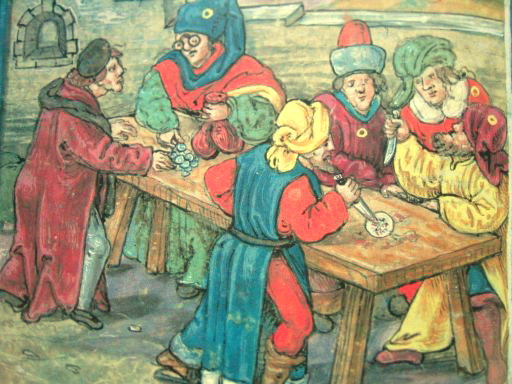
Depiction of Host Desecration in Sternberg, Germany (1492). Diebold Schilling the Younger [Public domain], via Wikimedia CommonsConcise video lecture describing the four main expressions of antisemitic ideology in the medieval period. Warning: images are disturbing.
Breaking the history of antisemitism into four major periods (Ancient Xenophobia, Early Christian Anti-Judaism, Medieval Jew-hatred, and Modern Antisemitism), Dr. Abramson focusses on the third period to look at the ideological basis for the false charges of ritual murder, blood libel, and desecration of the host, ending with a discussion of the Judensau image.
The Jewish Biography as History series at the Young Israel of Bal Harbour continues this week with a presentation on Rabban Yohanan ben Zakkai, a major figure whose bold and heroic leadership rescued the Jewish people from the threat of national oblivion in the wake of the destruction of Jerusalem in the first century.
Lectures are scheduled for Wednesday nights at 8:00 pm and are free an open to the community.
I’m so glad that so many of you decided to download my latest book, “The Kabbalah of Forgiveness: The Thirteen Levels of Mercy in Rabbi Moshe Cordovero’s Date Palm of Devorah (Tomer Devorah).” I’m also very grateful that many of you have found this work meaningful, especially in the rare moment of the season of repentance that we are enjoying for a few more days.
If you have time to jot down a few words describing your thoughts about the book (any highly superlative praise will do), perhaps you would consider going online and letting other potential readers know? Here’s a few links:
And if you haven’t had a chance to download a copy for yourself, don’t worry: the free offer extends until the 19th of October. Please visit smashwords and enter coupon code YT52E.
Do you prefer a hard copy? Please visit one of these booksellers:
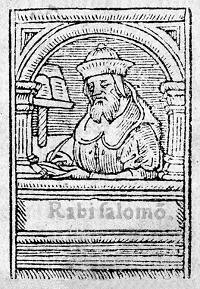
This lecture serves as an introduction to the Rishonim, a body of Rabbinic scholars associated with the 9th through the 15th centuries of the common era. Part of the Essential Lectures in Jewish History series.
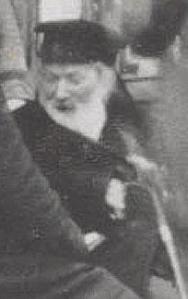
Israel Meir Kagan (photo courtesy Baruch Chafetz via Wikimedia Commons)
Brief video highlighting the life and work of Rabbi Israel Meir Kagan (1838-1936), one of the most influential Rabbis of the 20th century. Better known as the Chofetz Chaim (*one who desires life,” taken from Psalm 34).
This concludes the Thirteen Levels, by which a human may imitate the Creator, which are the Higher Levels of Mercy. Their precious value: if one behaves according to them in this world, this will open up the corresponding level on high. Precisely as one behaves, one will cause the flow from above, and cause that level to illuminate the world.
Therefore one should not lose consciousness of these Thirteen Levels, and the verse should not leave one’s mouth, so that it will serve as a reminder. When one encounters a situation when one needs to employ one of the levels, let one remember and say “behold, this matter requires the use of this level, and I do not wish to move away from it, such that this level not be hidden or removed from the Universe.”
The Thirteenth and final Level of mercy carries an absolute guarantee: one who masters this level can forgive anyone. The Thirteenth Level renders all the earlier levels unnecessary, but there’s a big catch: the Thirteenth Level is spiritually exhausting, and can only be sustained for brief periods of time. It requires phenomenal concentration and a massive investment of personal energy, and as such it should only be invoked when all other levels prove insufficient.
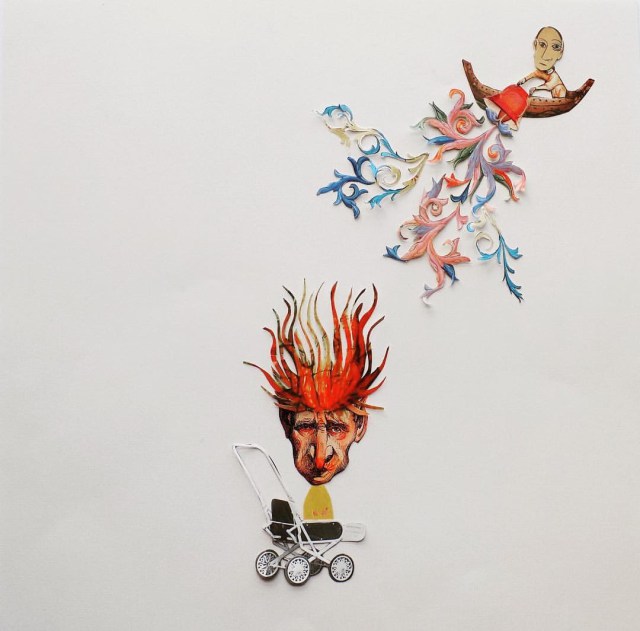
The theory is simple, the technique complex. The basic idea of the Thirteenth Level is that no matter how despicable a person has become, there was certainly a time when that person was completely innocent. No matter how damaged the relationship, there was a time when it was new and healthy. Contemplating that moment of innocence is the essence of the Thirteenth Level, which Rabbi Cordovero calls “the level that contains all previous levels.”
Behold, this is a trait of God for the Jewish people: when they have exhausted the merit of their ancestors and the like, what does God do? Behold, based on merit alone, they are unworthy. It is written: I remembered you, the kindness of your youth, the love when you were a bride.
God literally remembers the early days, the love that once was, and shows mercy to the Jewish people. In this manner God recalls for their benefit all the commandments they performed from the day they were born, and all the positive attributes through which God causes the universe to function for them. Out of all this, God creates a special method to show them mercy, a level that includes all of the previous levels, as is explained in the Idra. So too should a person perfect one’s dealings with other people. Even if one cannot find any reason from all of the preceding, one should say, “there was once a time when this person did not sin. At that moment, or in those early days, this person was good.” One should think of the good things the other person did as a child, and recall the love that one has for a child who is yet nursing. With this method, one will not be able to find a person who is undeserving of benefit, unworthy of prayer and mercy.


![Depiction of Host Desecration in Sternberg, Germany (1492). Diebold Schilling the Younger [Public domain], via Wikimedia Commons](https://henryabramson.com/wp-content/uploads/2013/11/schilling_hostienfrevel_ausschnitt.jpg)









 Henry Abramson