![Menachem Begin, Jimmy Carter, and Anwar Sadat at Camp David (1978). By Fitz-Patrick, Bill, photographer [Public domain], via Wikimedia Commons](https://henryabramson.com/wp-content/uploads/2013/11/begin_carter_and_sadat_at_camp_david_1978.jpg?w=736)
Anwar Sadat Visits Israel (This Week in Jewish History)

Lectures in Jewish History and Thought. No hard questions, please.


To view the Prezi associated with this lecture, please click here.


One of the more colorful false messiahs in Jewish history, Jacob Frank made a career of conversion–first to Islam, then to Christianity, all the while leading a neo-Sabbatean movement that emphasized antinomian “purification through transgression.” His appeal to the Church in 1757 resulted in a modern-day disputation over the Talmud, and ultimately the burning of tens of thousands of precious volumes.

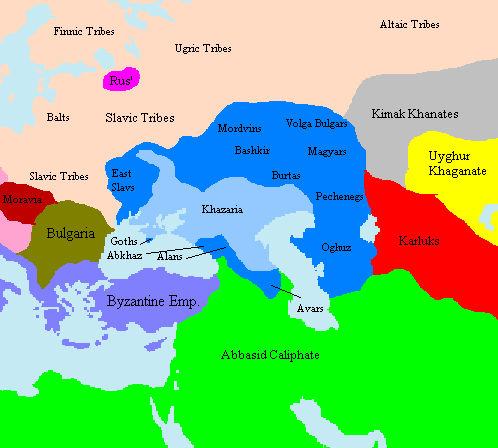
In one of the most bizarre episodes in Jewish history, the Central Asian kingdom of Khazaria converted to Judaism in the eighth century. Multiple sources confirm the conversion, yet the entire story remains a mystery. What was the nature of their Judaism? More importantly, what happened to them?


Sa’adia Gaon was an important Jewish philosopher and communal leader of the 9th and 10th centuries, famous in particular for his massive Book of Beliefs and Opinions. A child prodigy to rose to the highest ranks of Jewish scholarship, his thought left an indelible imprint on the Jewish spiritual tradition.


Pakistani terrorists attacked the Chabad House in Mumbai, India, on Wednesday, 29th of Heshvan, 5769 (26 November 2008). Part of a concerted attack that killed 179 and wounded hundreds, they murdered the young Chabad emissaries running the house, Rabbi Gavriel and Mrs. Rivky Holtzberg. Their infant son, who turned two the day after his parents were brutally killed, was heroically rescued by his Indian caregiver.

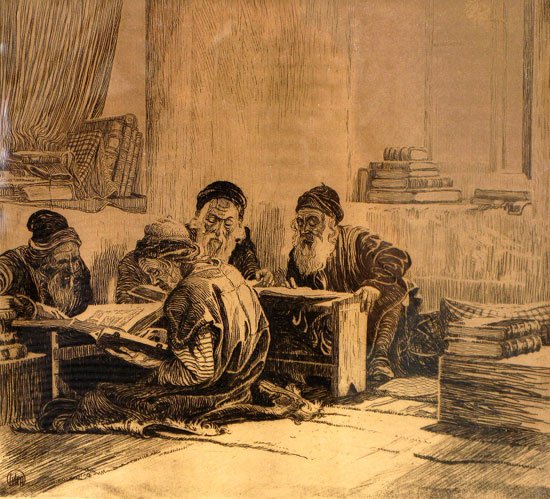
Who, exactly, wrote down the foundational texts of the Oral Torah? Who is responsible for the compiling of the Talmud? These were some of the questions addressed to Sherira Gaon, the Rosh Yeshiva of the great city of Pumbedita in Babylon in 987 by a young Rabbi in Tunisia. His famous response, preserved for over a thousand years, is an impressive survey of the Jewish intellectual tradition, leading up to the establishment of the greatest Talmudic centers in Jewish history.


Hannah Szenes was a young Hungarian Jewish woman who joined the resistance in 1943, parachuting into Nazi-occupied territories with British support. She was captured and tortured, but did not divulge secret information on her colleagues. Her poetry, including the classic “Blessed is the Match,” survive and add to her legacy.

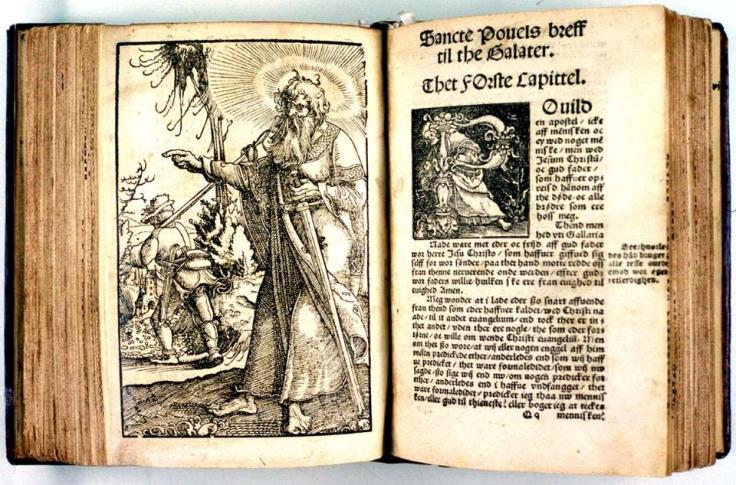
Credited with the popularization of Christianity, Saul (later Paul) of Tarsus was influential in mediating Jewish ideas to an increasingly Gentile audience. Combining appealing concepts such as life after death and a personal Deity with a relaxed approach to the requirements of Rabbinic Judaism, the former Pharisee succeeded in spreading Christianity well beyond its narrow origins among a small group of Jews in Jerusalem to become a massively powerful world religion, albeit distant from its Jewish origins.
NEXT WEEK: Sherira Gaon and the Jews of Babylon

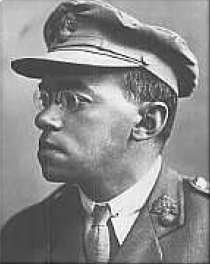
Vladimir Ze’ev Jabotinsky (1880-1940) was one of the most influential political thinkers in the first half of the twentieth century, founder of the Revisionist movement.
 Henry Abramson