The Mishnah: Creating a Portable Judaism HIS 155 Lecture 1.5

Alter Kacyzne, "Pinsk Jews Reading Mishnah," 1924. Source: YIVO Institute for Jewish Research via Wikimedia Commons.
Alter Kacyzne, “Pinsk Jews Reading Mishnah,” 1924. Source: YIVO Institute for Jewish Research via Wikimedia Commons.

Compiled by Rabbi Yehuda Ha-Nasi in an exceptionally difficult time for the Jewish people, the Mishnah created the possibility of creating a “portable Judaism.” After the destruction of the Temple in 70 and the dramatic escalation of the diaspora, the Mishnah allowed Jews to define their religion within an intellectual and textual context, outside of the traditional Temple service.

To view the Prezi associated with this lecture, please click here.

Excerpt from “The Jewish Diaspora: A Brief History”

Henry Abramson

5. The Mishnah

By the middle of the second century, Judaism and the Jewish people were in dire straits. With the destruction of the Temple in 70 and the expulsion of Jews from Jerusalem, the religious and political center of the Jewish people had disappeared, with no serious second option available. The disastrous failure of the heroic Bar-Kokhba revolt of 132-136 and the punishing persecution under the Emperor Hadrian sapped the remaining will for political renaissance, and the scope of the diaspora extended dramatically as Jewish families sought more peaceful homes and livelihoods throughout the near east. All that remained were the small group of Rabbis centered primarily around the town of Tiberias in the Galilee, diligently teaching the Torah they had learned  orally from their masters, struggling to maintain the chain of tradition back to Sinai. The very survival of the Jewish people and their Torah was in doubt.

We must understand the existential crisis facing this embattled minority during those difficult years. The very center of Jewish identity, the Temple in Jerusalem, had been gone for three generations–elderly grandparents could only relate hazy childhood memories to their descendants, and even that weak understanding of the Temple was rapidly disappearing. Decades of discriminatory economic policies, specifically designed to weaken Jewish attachment to Jerusalem and the Torah, inexorably took their toll. Brutal, intrusive regulation banned the public study of Torah and central Jewish rituals such as circumcision. These and many other centrifugal factors drove more and more Jewish families out of the Land of Israel, seeking more peaceful economic climates where they could practice their faith unmolested or, for untold thousands of Jews, to abandon their religion altogether.  Demographic studies of the period show a dramatic decrease in the population of Jews during the first few centuries following the destruction of the Temple, and the reasons for the decline are obvious. The loss of the Temple was a far greater tragedy than the elimination of a national shrine. Losing represented the creation of a vacuum at the very heart of Jewish identity. How could the Jews survive such an elemental blow to their communal self-image?

The response came from Rabbi Yehuda ha-Nasi, a visionary leader who saw the need for bold, dramatic measures to preserve the Jewish heritage and secure the Jewish future. According to Talmudic legend, he was born on the day Rabbi Akiva was martyred at the hands of the Romans, foretelling the great leadership role he would occupy in the struggling Jewish polity. Famously wealthy, the Talmud demonstrates his financial standing with an example that is quaint by modern-day standards but inspired wonder among the ancients: it is said that he was so wealthy that his household seved radishes year-round, regardless of season.

He held the title Nasi, or “Prince,” a designation that signified the last remnant of Jewish power ceded the Jews by the Roman authorities (his name is sometimes anglicized as “Judah the Prince”). The position was largely ceremonial, as the limited Jewish self-government was completely subordinated to Roman governing control, but he maximized the power of his office through carefully limiting the scope of his affairs and, especially, through cultivating strong relationships with important Romans. In particular, Rabbi Yehuda ha-Nasi had an extensive running theological dialogue with a mysterious “Antoninus.”  According to The Talmudic account of these exchanges, they shared a friendship from childhood, extending through Rabbi Yehuda’s appointment as Nasi, and Antoninus’ tenure as Emperor. The elevated philosophic tone of their debates suggests that Antoninus was none other than Marcus Aurelius, although he would have been much older than Rabbi Yehudah ha-Nasi, and some historians identify Rabbi Yehuda’s interlocutor as a later Emperor.

The essence of Rabbi Yehuda’s bold innovation was his recognition that Judaism had to transform itself to a portable religion if it was to survive the challenges of the second century. Unhooked from the Temple and it’s rituals, the Jews needed something that would preserve their identity in a rapidly expanding diaspora. This novel challenge had a partial precedent In the Exodus, when the Jews wandered the wilderness with a tent-like Tabernacle (mishkan) that was dismantled and reconstructed at each new encampment. Those early years of migration proved that the Jews were sufficiently resilient to withstand the physical and spiritual challenges of a peripatetic faith–could that strength be tapped once again, after centuries of sedentary existence? Moreover, could the Jews repeat this feat in the absence of both Temple and tabernacle?

Rabbi Yehuda’s genius, and his courage, lay in his decision to radically break from tradition by committing the Oral Torah to writing. Disregarding fierce opposition, he argued that the exigencies of the time demanded a bold measure, if Judaism was to survive the challenges of persecution, dispersal and assimilation. Specifically, he utilized the prestige of his office and his phenomenal intellect to collect all the oral traditions circulating among the Jewish people and commit them to writing in a single, massive document. Together with the biblical text (the first five Books of Moses, otherwise known as the Written Torah) this document would act as the spiritual, intellectual, and legal glue that held the Jewish people together for millennia.

The huge amount of data in this oral tradition had been overwhelming at the time, and several important sages such as Rabbi Meir had kept personal written copies of major teachings, although they were careful not to circulate them in deference to the ban on writing the Oral Torah. While Rabbi Yehuda respected the religious opposition to his innovation, he argued that that the ban would become irrelevant if it intimately caused the Jews to lose the teachings altogether (and with it, their very identity as a people). Taking the verse in Psalms as his guide, he maintained that it was a “time to act for God–they have destroyed Your Torah.”

Ultimately, the teachings were condensed into a text called the Mishnah,which is derived front the Hebrew word “to teach” and “to repeat.” Broken into six sections, the Mishnah covered the following topics:

Hebrew Title

English Translation

Main Topic

Zera’im Seeds Agricultural law
Mo’ed

Appointed Times

Sabbath and Holidays
Nashim Women Marriage and Divprce
Nezikin Damages Civil and Criminal Law
Kodashim Holy Things Temple Rituals
Taharot Purifies  Ritual Purity

These six sections, abbreviated by the term Shas (shisha sidrei Mishnah) covered every legal aspect of Jewish life. The Talmud, which is discussed later, is essentially an extended commentary on the Mishnah. 

Rabbi Yehuda applied two basic principles to his editing work on the raw texts that formed the Mishnah. First, he practiced a studies conservatism, hesitant to discard texts even when they appeared deeply flawed. Fragmentary, misleading or redundant teachings were not included in the carefully crafted Mishnah, but they were nevertheless retained and ultimately preserved in other, less authoritative collections such as the baraitot and the tosefta. These rejected texts ultimately became very useful in the formulation  of the Talmud, as Rabbis used them as evidence in their heated arguments over the correct interpretation of the Mishnah.

Second, he intentionally preserved the oral character of these teachings by retaining variant opinions, even (or especially) when these voices contradicted accepted practice or ruling. Individual passages in the Mishnah typically express the opinion of two to four different opinions on a topic under discussion, without indicating which opinion is considered authoritative. In other words, the Mishnah is certainly not a law code, for if that were its main purpose, the only opinions presented would be the definitive, correct expressions of Jewish law. On the contrary–the Mishnah may appear to the novice student a jumble of opinions, without any sense of direction or purpose. Subjecting the Mishnah to the searching analysis of the Talmud, however, the finer subtleties of Rabbi Yehuda’s brilliant editing hand become obvious.

Ironically, it is the very ambiguities of the Mishnah that preserve the philosophical and pedagogic demands for orality.  Like many ancient texts, the Mishnah cannot be adequately learned without the guidance of a qualified teacher. More significantly, however, the Mishnah requires a study partner, or hevruta (Ashkenazic pronunciation: hevrusa, the “h” pronounced as a mild guttural).  The Mishnah alone is decidedly unhelpful to students working through the text on their own, since it filled with so many missing facts, logical dead ends, and dramatically inconclusive arguments. Like following a faint trail through the forest, A lone traveller can easily mistake slight variations in the terrain for the correct path, and ultimately end up very far from the intended destination. During the medieval period some important commentaries were penned by luminaries such as Maimonides, diminishing the opaque nature of the Mishnah, but Rabbi Yehudah’s remarkable achievement made a lasting imprint on the nature of Jewish learning, because the only way to effectively master the Mishnah was to process it, not merely read it. Processing meant the active engagement in the text, arguing interpretations with a hevruta, and consulting with a senior scholar to resolve lingering doubts. The Mishnah was not like a modern newspaper or novel that could be consumed in splendid isolation–by its very nature, it demanded a community of fellow learners to discover it together.

Thus the oral quality of the Oral Torah was largely preserved, and in fact deepened, because the scholarly energies that once went into faithful memorization of the text could now be expended in more sophisticated discussion of its contents. While praised for their intellectual toil, the unnamed sages who committed massive amounts of Rabbinic tradition to memory became more and more of a rarity. Those Rabbis, known as the tana’im or “teachers,” were replaced by a new type of scholar, the amora’im  or “speakers.”  The tana’im produced the texts that Rabbi Yehudah would assemble into the Mishnah, while the amora’im  would build on this to create the massive Talmud on the foundations of the Mishnah.  We will turn to the Talmud later in this work.

* * *

Rabbi Yehudah Ha-Nasi exercised incredibly prescient and courageous leadership at a crucial turning point in Jewish history. The destruction of the Temple and the devastation of the population through dispersion, persecution and assimilation threatened to put an end to the millennial culture of Judaism. His brilliant conversion of the legal aspects of the Oral Torah into a written text artfully preserved the oral quality of the Rabbinic teachings, so carefully preserved over the centuries, and transformed the Jerusalem-centric religion into a portable faith that could (and would) exist I’m any climate. Accused of potentially destroying Judaism, his bold innovation actually preserved it.

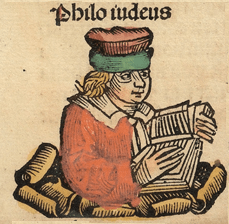
Philo Judaeus of Alexandria: Jews in the Greek World

Depiction of Philo Judaeus in the Schedelsche Weltchronik (1493).

Virtually ignored by Jewish philosophers, Philo of Alexandria represented the high point of synthesis between Greek and Jewish thought in the ancient world, and had a huge influence on early Christian thinkers. A prominent representative of the Egyptian Jewish community to the Roman Emperor, and well-respected in his day by his coreligionists, he nevertheless had little impact on the development of Jewish thought. Why was Philo removed from the currents of the Jewish intellectual tradition, yet so well-regarded in other faiths? This lecture was delivered on Wednesday, October 9 at 8:30 pm at the Young Israel of Bal Harbour.

The video is below, please click here for the Prezi.

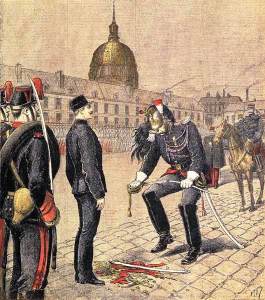
The Dreyfus Affair (This Week in Jewish History)

The Degradation of Alfred Dreyfus by Henri Meyer. Source: Wikimedia Commons.

Wrongly accused of espionage, Captain Alfred Dreyfus was sentenced to Devil’s Island on the basis of remarkably tenuous evidence. May critics, including the famous writer Emile Zola, argued that Dreyfus was unfairly charged simply because he was a Jew in the French army. As evidence mounted that another officer was guilty, the Dreyfus Affair exposed the persistence of pervasive and deep-rooted antisemitism, questioning how effectively Jews were accepted in French society a full century after they were first emancipated.

Who Was Josephus?

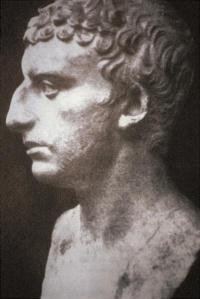
Roman bust believed to be a likeness of Flavius Josephus. Looks Jewish to me.

Captured by the Romans, Josephus was a Jewish general who ultimately served as a military advisor to General Titus. Josephus recorded his first-hand observations of the destruction of the Temple, and went on to a brilliant literary career in Rome, describing Jews and Judaism to a wider audience. Who was Josephus–traitor to his people or unfortunate captive to his circumstances? Self-hating Jew or apologist for Judaism? This lecture, delivered on October 2, 2013 at the Young Israel of Bal Harbour, discusses some of these questions.

The video is below; please click here for the Prezi.

Rembrandt and the Jews (This Week in Jewish History)

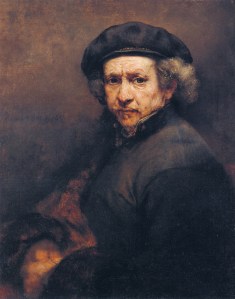
Rembrandt self-portrait.

Rembrandt is well-known for his depictions of Jewish subjects, both as contemporary portraits and as models for Christian biblical characters.

Who Was Josephus? Fall 2013 Lecture Series in Jewish History Resumes This Week

20130929-082451.jpg

Photo: Aryeh Abramson looks out over Iroquois Falls, Ontario, Canada, where he spent the Sukkot vacation visiting his grandparents.

Captured by the Roman General (and later Emperor) Vespasian while defending the Galilee, Josephus ultimately turned against his coreligionists and served as an advisor to the forces besieging Jerusalem during the first Roman-Jewish War. His first-hand observations of the destruction of the Temple and the collapse of Jewish sovereignty are an exceptionally important source for Jewish history–but are they reliable? Taking the name of his Roman patrons, he went on to a brilliant literary career as a prolific apologist for Judaism, but do his later works compensate for his affiliation with the Romans?

The Fall 2013 lecture series in Jewish History is scheduled to resume this Wednesday evening at 8:30 pm, Young Israel of Bal Harbour, 9592 Harding Avenue. The lectures are free and open to the community.

Pope Gregory I and the Jews (This Week in Jewish History) Dr. Henry Abramson

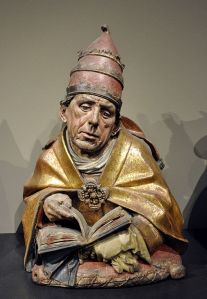
15th century bust of Gregorius I Maximus by Hans Bilger. Source: Wikimedia Commons.

Pope Gregory I (“the Great”) was one of the most influential Church leaders of the medieval period. His policy on the treatment of Jews in Christian Europe, known by the Latin phrase “Sicut Judaeis,” instituted an official if ambivalent position that lasted from the sixth century to the beginnings of the modern era.

Jewish Children Forced Into the Tsar’s Army (This Week in Jewish History)

Isidor Kaufman (1853-1921), Portrait of a Yeshiva Boy. Source: Wikimedia Commons.

Reeling from the humiliating defeat of the Crimean War, the Russian Empire decides its policy of forcibly conscripting Jewish boys into military service is counterproductive, and finally abandons the cruel decades-old policy of taking underage children into thirty-one years of military training and service.

The Fox in the Ruins: The Roman-Jewish Wars (HIS 155 Lecture 1.3)

Coin from the Bar-Kokhba movement. Source: Classical Numismatic Group, Inc. on Wikimedia Commons.


To view the Prezi associated with this lecture, please click here.

Excerpt from “The Jewish Diaspora: A Brief History”

Henry Abramson

3. The Roman-Jewish Wars

Our sources for the Roman-Jewish wars of the first and second centuries are more substantial than those of earlier periods, primarily because the importance of developments in this tiny region of the middle east extended far beyond its borders into the heart of the Empire itself.  From the Jewish perspective, the cataclysmic destruction of the Temple represented a collapse of Jewish nationhood that represented a dramatic interruption in the very cosmos. Rabbi Eleazar (no relation to the Eleazar of the 1st century) teaches, “from the day that the Temple was destroyed, a wall of iron separates the Jewish people from their Father in Heaven” (Talmud: Berakhot 32b). From the Roman perspective, this tiny country on the Mediterranean coast represented a perennial irritant, rebelling with the slightest provocation and draining military and administrative resources for centuries. Thus the Roman-Jewish wars received more historical attention, however biased, than any other period in Jewish history.

The principal Jewish source for the era is the Talmud, a massive and sprawling document that took centuries to compose, editing the oral teachings of Rabbis who lived well before the beginning of the Common Era and codified in its present form in the third century (the Jerusalem, or Palestinian Talmud) and the fifth century (the Babylonian Talmud). The scope and content of the Talmud will be discussed later in this work, but for our purposes at this point it is sufficient to note that the Talmud’s concern with history is principally religious in nature. Extracting historical data from the Talmud requires careful reading, often at odds with the intent of the authors of a given passage, who were more occupied with the transmission of ethical and spiritual truth than accurate historical data. Consider, for example, the Talmudic locus classicus on the causes of the  destruction of the Temple (Gittin 55b-56a):

Rabbi Yohanan said…the destruction of Jerusalem came through a Kamtsa and Bar Kamtsa in this way. A certain man had a friend named Kamtsa and an enemy named Bar Kamtsa. He once threw a party and said to his servant, “go summon Kamtsa.” The man went and brought Bar Kamtsa [by mistake]. When the host found him at the party he said, “…what are you doing here? Get out!”  Bar Kamtsa replied, “since I am here, let me stay, and I will pay you for whatever I eat and drink.” The host refused. Bar Kamtsa said, “then let me pay for half the cost of the party.” The host refused. “Let me pay for the whole party.” The host refused, and threw him out. 
 
 Bar Kamtsa said, “since the Rabbis were sitting there and did nothing, this shows that they agreed with the host. I will go to the state and malign them.” He went and said to the Emperor, “the Jews are rebelling against you!”  The Emperor asked, “how can this be proved?” Bar Kamtsa said, “send them an offering and see whether they will accept it as a sacrifice.” The Emperor sent Bar Kamtsa with a fine calf. 
 
 While on the way, Bar Kamtsa inflicted a wound on its upper lip, or as some say on the white of its eye, in a place that constitutes a blemish for a sacrifice for Jews but not for others. The Rabbis were inclined to offer it in order to avoid offending the state, but Rabbi Zekharyah ben Avkulas objected, saying “people will say that blemished animals are accepted as sacrifices.”  The Rabbis then proposed that Bar Kamtsa be killed to remove the threat he represented, but Rabbi Zekharyah ben Avkulas said, “is it a capital crime to inflict a wound on a consecrated animal?” 
 
 Rabbi Yohanan then noted, “Rabbi Zekahyah ben Avkulas’ attention to detail facilitated the destruction of our House, the burning of our Temple, and our exile from our land.

This passage continues with more geopolitical and regional political information, but for the composers of the Talmud, the underlying cause of the first Roman-Jewish war had nothing to do with taxation or national oppression. The real cause of the destruction of the second Temple was in fact “baseless hatred” (sinat hinam), exemplified by the cruel treatment of Bar Kamtsa and his outsized demand for revenge. Also implicated are the Rabbis (the Talmud, like the Hebrew Scriptures in general, rarely fails to miss an opportunity for scathing self-criticism), first for ignoring the insult to Bar Kamtsa, and then later for their inability to see past the immediate ritual detail to the larger national implications of Bar Kamtsa’s plot.  For the Rabbis (Rabbi Yohanan in particular), this historical analysis is ultimately the most important takeaway message from the first Roman-Jewish war, and in fact Rabbi Yohanan’s interpretation conforms closely to the general nature of internal Jewish sectarian politics as well as the general tenor of Roman-Jewish relations. It remains relevant even if, for example, the entire story of Kamtsa and Bar Kamtsa is entirely fictional.

From the Roman side, our principal source is the prolific and complex figure of Flavius Josephus, a Jew who initially participated in fighting against the Romans.  Among his extensive literary achievements is an autobiography, a longish history of the Jews entitled Jewish Antiquities, and a major work on the first Roman-Jewish war, easily the most important contemporary source on the topic. Unfortunately, Josephus’ historical work presents many problems of interpretation, especially because only his Greek-language version has survived. Josephus also composed a version in Aramaic, the lingua franca of the Jews of that era (more on this language later). The Greek version was certainly written for his Roman patrons and the wider population of the Empire, and it is difficult to imagine how he might have phrased things for a more parochial  Jewish readership in the land of Israel. His relationship with the Jewish population was certainly compromised by his defection to the Romans, especially given the particulars of his capture: surrounded by hostile forces, Josephus proposed a Masada-style mass suicide, but so engineered it that he would survive and then surrender. His decision has been characterized as treasonous, or at the very least a type of Pharisaic accommodation to overwhelming force, but at the very least it colors his depiction of the conflict as a whole.

Roman bust believed to be a likeness of Flavius Josephus. Looks Jewish to me.

* * * * *

With the decline of the Hasmonean kingdom in the first century BCE, the land of Israel came under the sway of the powerful Roman Empire. By 37 BCE the Romans ruled Israel directly through Herod, a descendant of the Idumean people whose conversion to Judaism was considered highly suspect by the Pharisees. Herod attempted to legitimize his rule by marrying a Hasmonean princess named Mariamne (Miriam), but later had her executed as part of a highly dysfunctional family dynamic that would satisfy the most jaded 21st century reality TV fan.  A controversial and powerful ruler, among his more lasting contribution to Jewish history are major renovations to the Temple and construction of impressive palaces.

Herod’s building campaign required extensive taxation, a burden on the Jewish population whose impact was felt decades after his death in 4 CE. Israel was divided among Herod’s sons, and then further downgraded to the status of a mere province of the Roman Empire. Tensions increased under the rule of Emperor Caligula (reigned 37-41 CE), particularly in the Jewish diaspora in Egypt, as Jews bristled under the imposition of civic requirements that directly assaulted their religious sensibilities.  Roman officials could not seem to understand that the Jews, with their intense monotheism and high aversion to physical representations of worship, would refuse to bow down to statues of the Emperor and the like. Such acts of overt obeisance and fealty were anathema to the Jews, even though Romans considered them simply markers of good citizenship, like standing for the national anthem at a sporting event today. Classical literature, both Greek and Latin, is rife with references to the supposed misanthropy of the Jews, invariably the result of basic misunderstandings of Jewish culture. Circumcision and the dietary laws were seen as exclusionary and clannish, the Sabbath laws were interpreted as inherent laziness and sloth, and so on. The Weltanschauung of the Jews was diametrically opposed to that of the Romans, and there seemed to be no way to mediate this conflict.

Judea erupted in open revolt in the year 66. According to Josephus, the flashpoint occurred in the coastal city of Caesaria, where Roman officials tolerated an open display of idol worship in front of a Jewish synagogue.  In Jerusalem, a Temple official named Eleazar formally ceased prayers on behalf of the Roman Empire, prompting a swift and brutal reaction from the Romans, which in turn ignited a larger outbreak led by the zealots, who overran the Roman garrison in Jerusalem.  Many of the leaders of this early revolt came from a group known as the sicarii (“knife-men,” from the latin term for dagger), a splinter group of Zealots.

The rebels enjoyed early successes, including a remarkable victory over the Romans at Bet Holon, but the endgame was inevitably in favor of the Romans. The Emperor Nero appointed his general Vespasian to manage the conflict, whose strategy apparently included a profound understanding of Jewish rebel behavior.  Vespasian intentionally ignored Jerusalem for the initial period of the war, allowing the Jewish rebels to engage in brutal and violent internecine struggles that eroded their strength without Roman interference. Vespasian and his son Titus conquered the Galilee region in the north, and then slowly made their way down the Mediterranean coast, leaving Jerusalem for last. Vespasian did not complete the task, as Rome was thrown in turmoil by the suicide of Nero and a succession of brief-lived emperors. In 69 Vespasian was proclaimed ruler of the Roman Empire, and he left Titus to crush the remnants of the Jewish rebellion.

Vespasian’s invitation to Rome had important reverberations in Jewish history. The Talmud describes Rabbi Yohanan ben Zakkai’s foresight in the context of the rebellion, as well as shedding light on the nature of Pharisee-Zealot relations. Convinced that the rebellion was doomed, Rabbi Yohanan ben Zakkai sought to negotiate with Vespasian and create a kind of intellectual Noah’s ark, ultimately preserving the spiritual heritage of Judaism. The Zealots, however, refused to allow him to leave the city, suspecting that he would betray their cause. Rabbi Yohanan ben Zakkai faked his own death and had his students request permission from the rebels to remove his coffin for burial, but the rebels remained suspicious.  Permission was granted, but only after the rebel guards drove iron bars through the top of the coffin to prove that he was in fact deceased. Amazingly, Rabbi Yohanan ben Zakkai survived, and emerged from his coffin outside the city walls to meet with Vespasian.  The Rabbi surprised Vespasian with the accurate prediction that he would become Emperor, and in gratitude Vespasian granted Rabbi Yohanan his three requests.

“Give me Yavneh and its Sages,” asked Rabbi Yohanan ben Zakkai, a fateful statement that would ensure nothing less than the survival of Judaism and the Jewish people. Vespasian agreed to allow the Rabbis to congregate unmolested in the coastal city of Yavneh.  Vespasian also spared the descendants of Rabban Gamilel and allowed a physician to treat Rabbi Tsadok. Unwittingly, Vespasian’s promise to Rabbi Yohanan ben Zakkai would ultimately allow the Jews to outlive the Roman Empire itself. Jerusalem would fall, and Vespasian would have his victory, but Rabbi Yohanan ben Zakkai’s triumph was still greater.

Jerusalem succumbed to Titus’ forces shortly thereafter.  The Temple was destroyed, an event that has been commemorated by Jews ever since on the 9th day of the month of Av, a day of fasting and mourning.  There is a story, perhaps apocryphal, of the French Emperor Napoleon entering a synagogue on the 9th of Av, expecting a warm welcome from the Jews for destroying the ghetto walls and proclaiming their freedom. He asked why they fasted and sat on the floor, and the story relates that he was amazed to hear that the Jews were mourning the destruction of the Temple and the loss of their homeland. “Any people who can mourn their homeland and Temple after nineteen hundred years,” he is reputed to have said, “will one day regain their homeland and Temple.”

* * * * *

Even with the Temple in ruins, the Zealots continued to fight on against the Romans, making their last stand at Masada, a stark and imposing flat-topped mountain next to the Dead Sea. Isolated in the arid Judean Desert and scorched by the sun at the lowest point relative to sea level on the face of the planet, the Zealots held off the Romans until the year 73, when they massacred themselves in a huge suicide pact which only a few survived.  In the twentieth century, Masada took on huge symbolic importance for the fledgling Israeli state, and many officers in the Israeli Defense Force were sworn into duty atop the mountain to the slogan “Masada will not fall again.” Josephus’ account of hundreds of suicides does not seem to be supported by the archaeological evidence, however, and the issue of suicide remains problematic in Jewish law, not to mention political ideology. The last stand at Masada and the characterization of role of the Zealots in the first Roman-Jewish War continues to be a subject of debate among Israelis.

The Second Roman-Jewish War was fought in the following century.  A much more modest conflict, some historians prefer not to use the term “war” to describe the conflict at all, while others prefer to call it the Third Roman-Jewish War, considering a revolt in 115 the second.  At any rate, the Bar Kokhba movement was clearly the most influential in Jewish history after the First Roman-Jewish War, and we will follow that designation here.  A charismatic leader by the name Shimon bar Kosiba, known popularly as Bar Kokhba (“son of a star”) because the Aramaic translation of his name could be rendered “son of a lie,” rallied Jews for another challenge to Roman domination (after the failure of the insurrection, his detractors used this in a derogatory fashion). His movement had very strong religious and even messianic overtones, and the elderly Pharisaic scholar Rabbi Akiva openly endorsed it, proclaiming Bar Kokhba the long-awaited Messiah despite the opposition of many of his contemporaries.

The movement learned from many of the errors of the earlier conflicts, and in the year 132 struck a Roman garrison in Modi’in. The Romans were unprepared for the conflict, and Bar Kokhba’s forces were able to hold them off for three years of brutal guerilla warfare before they succumbed at a final battle at Betar.  Emperor Hadrian imposed horrific persecutions following the defeat of the rebels, including the grotesque execution of Rabbis who had supported Bar Kokhba, known in Jewish tradition as the “Ten Martyrs of the State.”  They included Rabbi Akiva himself, whose death by flaying with iron combs was immortalized by his students in the Talmud. “All my life,” he said as he endured the Roman tortures, “I wanted to fulfill the verse, ‘and you shall love the Lord your God with all your heart, with all your soul, and with all your might. Now I finally have the opportunity to love God with all my soul, will I not take advantage of this?” He died with the verse, “Hear O Israel, the Lord our God, the Lord is One” on his lips, the last phrase that a Jew must utter before dying.


Create a website or blog at WordPress.com

Up ↑