Thanks to Rabbi Pesach Sommer for recording my brief comments at the conclusion of the hilula (74th anniversary of his martyrdom) for Rabbi Kalonymus Kalmish Shapira at The Shtiebl in Williamsburg, NY.
SHOW MORE
Lectures in Jewish History and Thought. No hard questions, please.
SHOW MORE
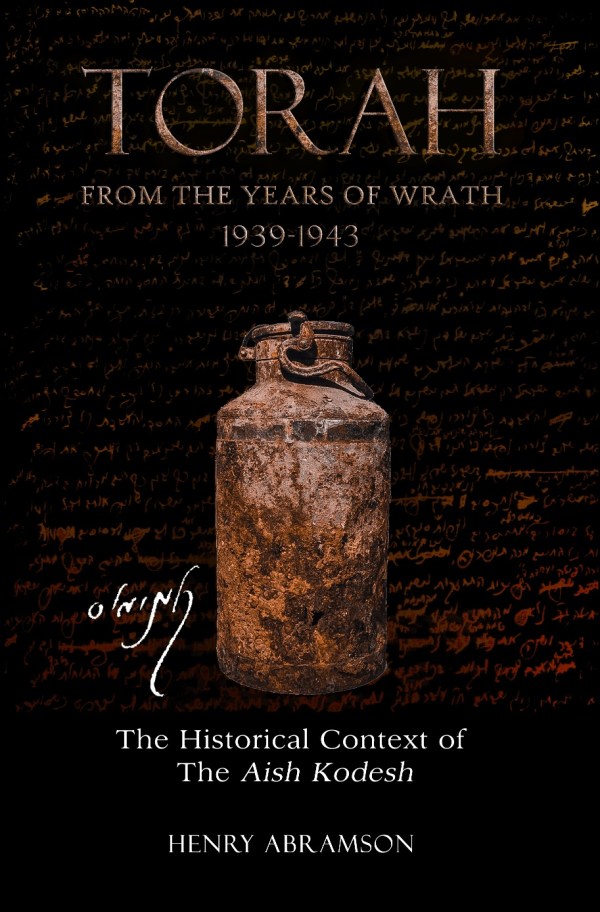
Very grateful to Rabbi Pesach Sommer for writing a kind and generous review of Torah from the Years of Wrath! My favorite passage is at the end: “Dr. Abramson has written a book which is destined to lead to an increase of study of the rebbe’s Torah and thought in both the academic and Jewish world. His is a work which while maintaining high academic standards and containing ideas which will advance the field, is at once also accessible to the non-scholar, and written in an engaging and compelling manner. Especially for the reader who is looking for a work which contains both Torah and Avodas HaShem, along with serious scholarship, I can’t recommend this incredible book strongly enough.”

Please watch this brief video. Really hoping you will join us for the book launch on Monday, October 30! Please visit bit.ly/aishkodesh to RSVP and for more information.
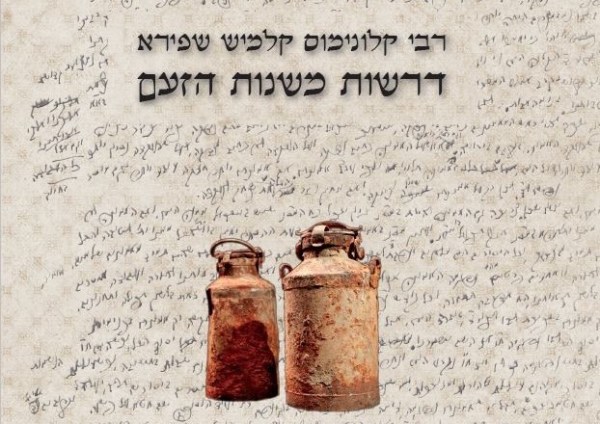
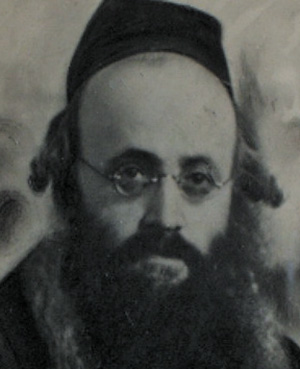
The Aish Kodesh died 74 years ago, martyred in the Trawniki labor camp. Now, Rabbi Kalonymus Kalmish Shapira is at the center of a surge of new research into the most profound questions surrounding the Holocaust. A new critical edition, prepared with phenomenal scholarly energy by Daniel Reiser, demonstrates that we have just started to plumb the depth of the thought of this twentieth century thinker.
First-generation Holocaust scholars like Lucy Dawidowicz, Raul Hilberg, and Yehuda Bauer described Hitler’s rise to power, the internal mechanics of the Nazi bureaucracy, and explored the forms of Jewish resistance. The impact of the Shoah on Jewish theology—another key avenue of research—was examined by thinkers like Emil Fackenheim, Richard Rubinstein, Eliezer Berkovits, Yitz Greenberg, and of course Elie Wiesel.
The second generation of scholarship emerged at the end of the twentieth century. This class of scholars—Christopher Browning, Gershon Greenberg and Michael Marrus, to name a few—challenged initial premises on the basis of closer examination of archival data, case studies, and interdisciplinary approaches. One question, however, received many responses but no definitive answer: where was God during the Holocaust?
Rabbi Shapira’s manuscript, discovered in the rubble of the Warsaw Ghetto in 1950, promised a singular, compelling perspective. The original 1960 printing of his work under the title Aish Kodesh (Holy Fire) attracted much attention. But the transcription was flawed, and the errors were compounded in a 2007 reprint. Much of the work’s moral and intellectual value was therefore missed or distorted.
A new generation of Holocaust scholars now has unprecedented access to the mind of this Hasidic Rabbi, and by extension to his beleaguered community in the hellish environment of wartime Warsaw. Reiser’s two-volume critical edition is published under Derashot mi-Shenot Ha-Za’am, “Sermons from the Years of Rage.” His prodigious efforts should form the basis of an entirely new sub-discipline, the very contours of which have yet to be defined. Reiser’s work isn’t merely a new and improved edition—it’s a revolution.
In his work, Reiser chronicles the original difficult process of transcription by four elders of the surviving Piaseczno Hasidim in Israel. Back then, the editors were often hampered by technological limitations, struggling to read the Rebbe’s cramped and idiosyncratic calligraphy off poor quality microfilm. The editors of this early edition were also motivated by pious considerations—some of the more arresting theological statements of the Rebbe, as well as pointed criticisms of the state of Hasidic life, were omitted. These and many other changes were made without editorial comment, effectively closing off the Rebbe’s thought process to later readers.
Reiser has, through stubborn and plodding scholarship, reversed these errors. His first volume presents the corrected text with full scholarly apparatus. More remarkable—and inevitable, from a scholarly perspective—is the second volume. This work is a facsimile edition, presenting a high-resolution photograph of the original handwritten manuscript on one page, and a painstaking transcription—in multiple colors and superscript—on facing pages.
How does this reflect on our central question of where was God during the Holocaust? Here, deciphering the Rosetta Stone was easier. Reiser has provided us a powerful telescope to probe the dark universe, but he has not attempted to locate the blackest hole of all.
The Rebbe’s wartime writings are sui generis. Unlike memoirs or diaries, they are essentially public in nature, delivered in real time as theological instruction, pastoral guidance, and psychological counsel to a traumatized population. They offer an unprecedented opportunity to view the workings of a God-fearing community under unimaginable conditions.
The Rebbe’s response therefore represents an attempt to understand the Holocaust as a leading Hasidic mind understood it, and how he explained it to his beleaguered followers. He returned to the question every week, delivering a sermon from the Nazi invasion in September 1939 through the horrible privations of Ghetto life right up until January 1943. It was at that time when he probably anticipated his own demise and gave his papers to the secret Oneg Shabbat archive for burial. They remained entombed in a metal milk container in the rubble of the post-uprising Ghetto until 1950, when they were discovered by a Polish construction worker.
Reiser’s research allows us to access the Rebbe’s thoughtfulness in crafting his important ideas. He chose one word initially, then struck it out and replaced it with another. Often, he struck out the revision and returned to the initial formulation. In some cases whole passages were deleted or modified. Reiser also paid tremendous attention to the placement of the texts in the manuscript, which was paginated by the Warsaw’s Jewish Historical Institute shortly after the writings were discovered—surprisingly, several sections were included out of sequence (in some cases, it is clear that the Rebbe apparently drafted them out of sequence).
Reiser’s devotion to maintaining fidelity to the text is sometimes a little excessive, in my opinion. For example, he refused to add dates to the entries because they were not presented in the original—just because a sermon is titled “The Second Day of Sukkot” in the year 5701, argued Reiser, this does not mean that the Rebbe actually delivered the sermon on the corresponding October 18, 1940.
Reiser’s work reveals one tefah while concealing two, in some cases, quite literally. While working with the original documents in situ, Reiser had the opportunity to examine the prewar manuscripts that the Rebbe deposited along with his wartime sermons. He noted, for example, that the Rebbe struck out some passages with an unusual amount of violence.
With the appearance of Reiser’s work, a new generation of scholars and students now have access to a deeper, sometimes darker level of understanding of the hardest questions of the Holocaust. It’s an important moment for everyone involved.
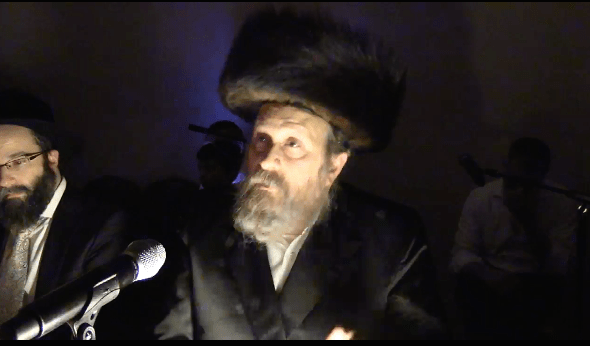
Conducted in darkness according to the Piaseczno custom, Rabbi Weinberger presided over a moving Hilula last night in honor of the Piaseczno Rebbe’s 74th yahrzeit. Visit http://www.aishkodesh.org/ and scroll down to watch the recording, featuring beautiful music by Yosef Karduner and of course the words of Rabbi Weinberger. He begins speaking at 1:00, and his opening joke is priceless–a reflection of his uniquely modern sensibility, infused with the warmth of Piaseczno hasidus. He also said some very kind words about my new book in his opening comments (1:04 ff.), but in punishment for my many sins, the audio feed seems to have been corrupted at that point, so you just hear a little bit of his comments. Most of the Rebbe’s words, however, came out perfectly, and it’s worthwhile to listen to his inspirational words on the Torah of the Aish Kodesh.
Brief overview of the life and work of the great Sefardic poet and thinker, Yehudah ha-Levi.
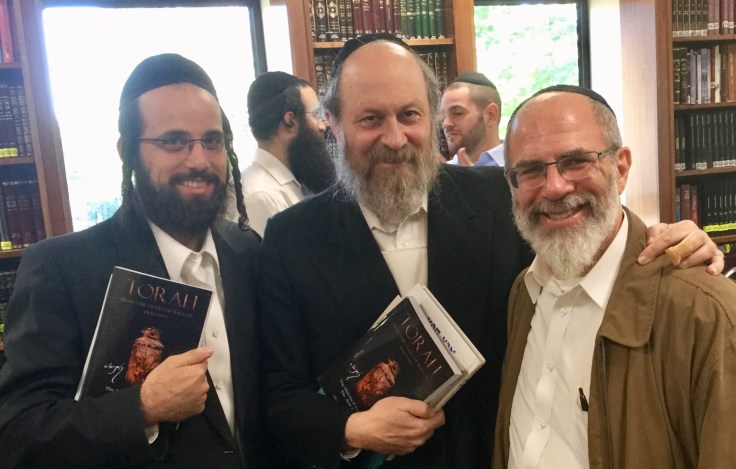
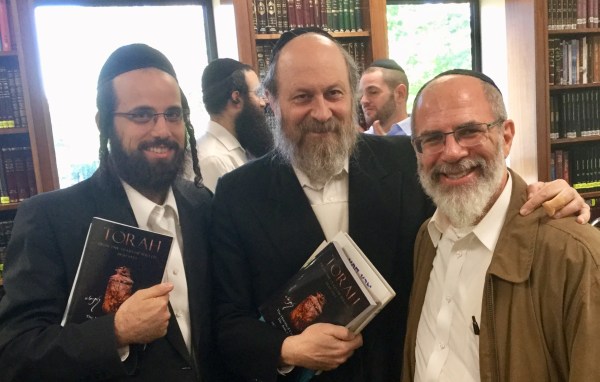
This moment made me feel really great–standing with two great Hasidim of the Piaseczno Rebbe! On the left is R. Yoel Rubin, center (the amud ha-emtsa’i) is R. Weinberger of Kehillas Aish Kodesh, and there’s me on the right (out of uniform again). R. Weinberger just gave a great shiur on Rav Kook, and we spoke for a few minutes afterward about the current surge of interest in Piaseczno Hasidus.
Reminder to all that the Piaseczno Rebbe’s 74th yohrtseit is 5 Heshvan (Tuesday night-Wednesday). That is an especially auspicious day to learn some of the Rebbe’s Torah, maybe even my book. In the cover letter he composed before burying his manuscripts, the Rebbe wrote:
Please also print in every work that I urge every single Jew to study my books, and the merit of my holy ancestors will stand by every student and his family, now and forever.
The Rebbe’s yohrtseit will be commemorated at Young Israel of Lawrence-Cedarhurst this Saturday night at 8:30 pm (hilula sponsored by Congregation Aish Kodesh). On Wednesday night Dr. Daniel Reiser will be the featured speaker at a major gathering at Heichal Shlomo in Jerusalem. And of course the book launch for Torah from the Years of Wrath, 1939-1943: The Historical Context of the Aish Kodesh is scheduled for Monday, October 30 at 7:00 pm at the mighty Avenue J campus of Touro College (please click here to RSVP and to order advance copies at the 20% discount).


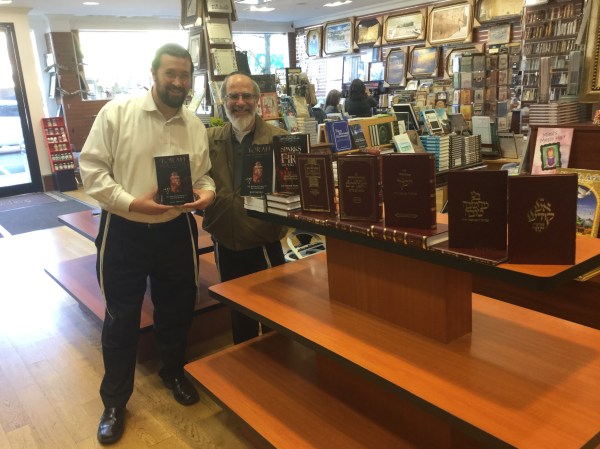
 Really happy to see the new book joining the impressive display of Piaseczno Hasidic works at my favorite local Jewish bookstore! Here I am (out of uniform, sorry) with Rabbi Ari Silverstein at Judaica Plus in Cedarhurst.
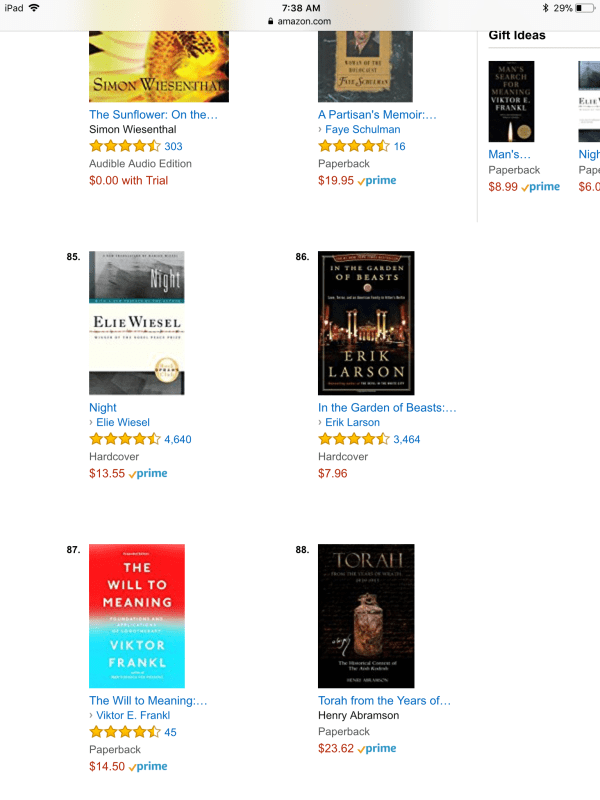

Wow—I checked the site this morning, and discovered that the book on the Piaseczno Rebbe made it to the top 100 in its category on Amazon! Just behind classics by Elie Wiesel, Viktor Frankl, and Simon Wiesenthal! Really proud that people are finding this book meaningful. Thank you! Bit.ly\aishkodesh
 Henry Abramson