Really looking forward seeing my friends at YILC!

Lectures in Jewish History and Thought. No hard questions, please.


This is a new experiment, suggested by Elya at TorahCafe.com: a weekly, 3-minute “This Week in Jewish History” mini-lecture. I’m trying it out, let me know what you think! Please click here for the refined, edited version from TorahCafe.com.

Here’s a new version of the Albert Einstein lecture, edited by the wonderful people at TorahCafe.com to include the PowerPoint. It’s basically the same, except without the lame jokes. Click on the icon below to watch the video.

This is a lecture I delivered at the University of Central Florida back in October 2004 (my hair was quite a bit darker and, well, there). Found the CD when I was cleaning out some old files. There’s a PPT that goes with this lecture, and I’m going to try to find a way to…

A presentation on the life and work of Rabbi Menachem Mendel Schneerson (1902-1994), the Seventh Rebbe of the Chabad-Lubavitch movement. A native of Nikolaev, Ukraine, and educated in Germany and France, his leadership transformed his Hasidic followers into an international movement that continues to shape the lives of Jews world wide. The lecture was held…

A presentation on the life and work of Betty Friedan, a prominent American Jewish feminist leader. The author of the landmark The Feminine Mystique (1963), she later became the Founder of the National Organization of Women, and an important political activist for women’s rights. The lecture was held at the Young Israel of Bal Harbour on May 29,…

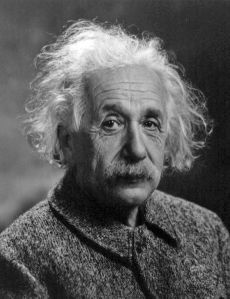
A presentation on Albert Einstein (1879-1955), one of the best-known Jews of the twentieth century. Although he had a complicated relationship with Judaism, he maintained a distinct pride in his Jewish identity, and once said “A Jew who abandons his Judaism is like a snail that abandons its shell. It’s still a snail.” The lecture…

An excerpt from The Kabbalah of Forgiveness: A Reader’s Guide to Rabbi Moshe Cordovero’s The Palm Tree of Devorah, a new translation and commentary on the 16th-century classic of Kabbalistic musar, is now available online. Anticipated publication date is August 2013. The Palm Tree of Devorah first appeared in 1588 and became and instant classic.…

A presentation on the life and work of Stephen Samuel Wise (1874-1949), an important American communal leader. The lecture will take a broader focus, looking at the history of Jewish settlement in the United States during the 19th century and the major issues facing this immigrant community through the middle of the twentieth century. The…

A study of the life of Menachem Begin (1913-1992). A native of Poland, he was a proponent of Vladimir Jabotinsky’s Revisionist party that stood in dramatic contrast to the dominant left-wing tendency in the Zionist movement. A major figure in Israel’s struggle for statehood, and a founder of the Likud party, he was elected to…

This lecture presents a broad overview of the three main intellectual-religious trends present in 19th century Jewish Eastern Europe: the traditionalist Mitnagdim, the innovative Hasidim, and the modernizing Maskilim. Good as an overall introduction, although I go into more detail on all of these movements in other lectures on this website. Taped on April 21,…


Part Four of the Jews of the Danube series. Filmed in a new location without my usual technical support–sorry for the lower video and audio quality, but the lecture is ok. To see the visuals better, please click here. Next week we are back at our usual location with IT support!
Okay, this is cool: just saw the trailer for a documentary project I worked on several months ago. I can’t wait to see the whole thing! I was especially honored to work with Dr. Lawrence Schiffman, world expert on the Dead Sea Scrolls and senior scholar in Jewish history (he’s the last talking head in…

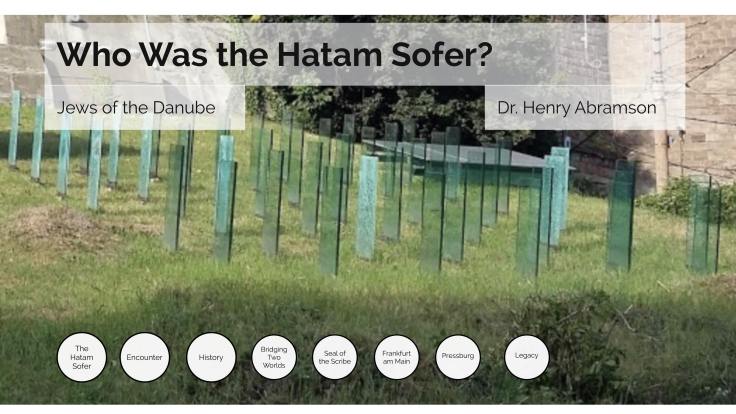
A scholar and a fighter, the Hatam Sofer articulated a definition of Orthodoxy for the modern era.

Brief video lecture on the life and work of Isaac of Vienna (c. 1180-c. 1250), author of the important Or Zaru’a.

We begin our discussion of the Jews of the Danube with the question: “Who Was Isaac of Vienna (the Or Zaru’a)?”

Unexpected and unexplained, a phalanx of glass obelisks emerge silently from the earthen mound, punctuating the atmosphere above what appears to be an anonymous tel. Some are transparent, others pebbled and translucent, but all glow with a faint green hue. Unyielding, they stand in rigid formation on the angled surface of the earth. These mute…

When the Hungarians purchased their alphabet, vowels were on sale (also plastic sofa coverings and chandeliers). By the time the Poles came around, all that was left were the consonants. This helps explain why we anglophones are so challenged by both languages: in the case of Hungarian, there are just way too many umlauts and…

Abandoned Nazi trucks were discovered by children playing in the shallows of the diminished Danube.