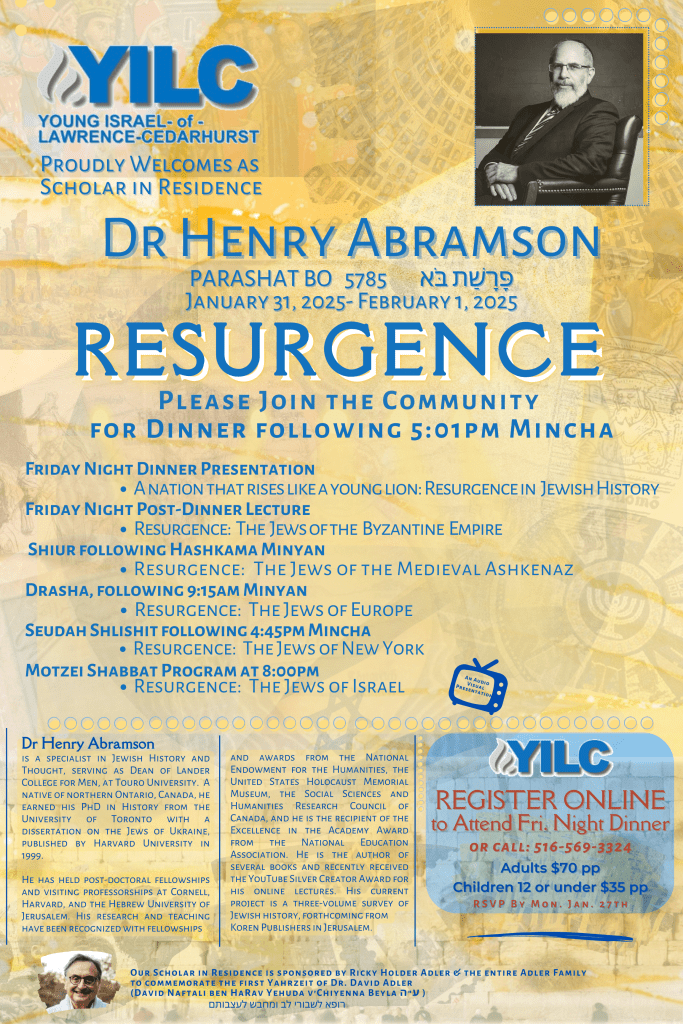
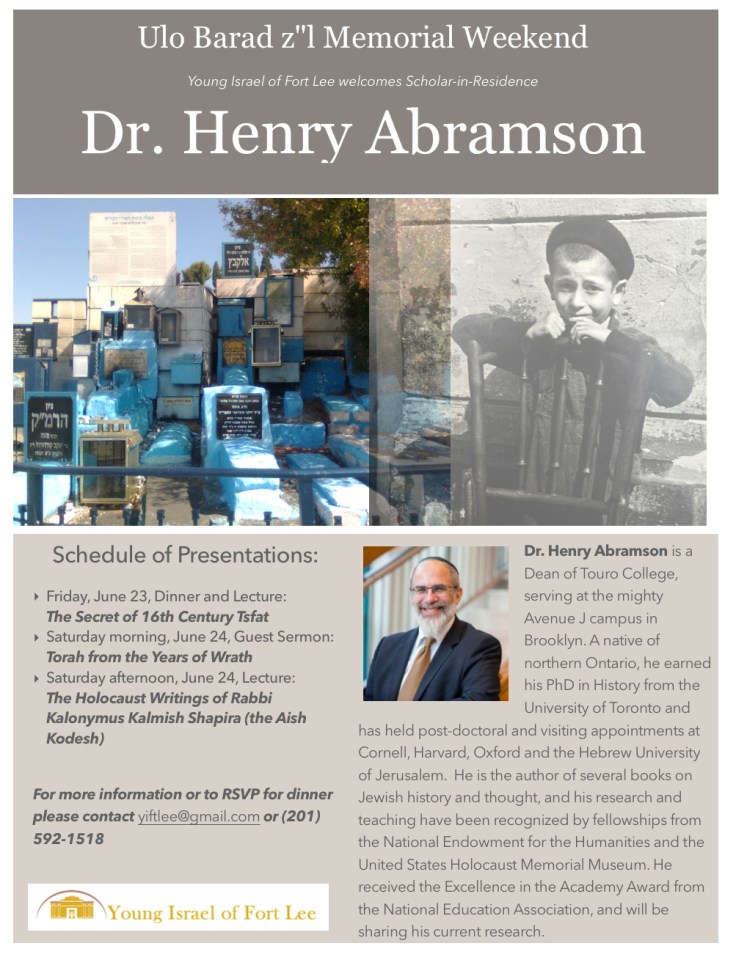
Really looking forward seeing my friends at YILC!

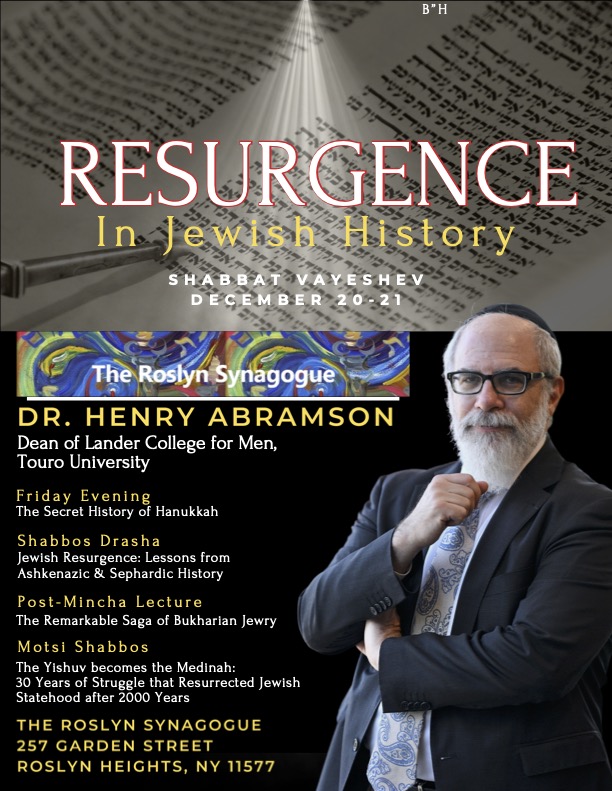
Lectures in Jewish History and Thought. No hard questions, please.


The Fourth Level: Remember the Family “In the Same Boat (Remember We are Family),” illustration of Level 4 by Rebecca Odessa, Courtesy The Wisdom Daily The Fourth Level: Remember the Family Translator’s Introduction The Fourth Level of Mercy calls attention to the fundamental connectedness of humanity. The Jewish people in particular maintain a strong familial…

The Third Level: Take Care of it Personally “Part of the Process (Take Care of it Personally),” illustration of Level 3 by Rebecca Odessa, Courtesy The Wisdom Daily The Third Level: Take Care of It Personally Translator’s Introduction The Third Level of Mercy addresses the personal role that God plays in the process of forgiveness. Rather…

The Second Level: Let it Go for Now “Whose K’tegors are These? (Let it Go)” Illustration of Level 2 by Rebecca Odessa, Courtesy The Wisdom Daily The Second Level: Let it Go for Now The second of the Thirteen Levels, “Who Bears Sin,” describes a degree of mercy that is even more profound than…

The First Level: The King who Endures Insult “The Insulted King,” illustration of Level 1 by Rebecca Odessa, Courtesy The Wisdom Daily Translator’s Introduction Rabbi Cordovero’s discussion of the Thirteen Levels of Mercy begins with an awesome depiction of human sin from God’s perspective. Given that all power in the Universe has God at…

Please visit https://www.smashwords.com/books/view/464044 and enter coupon code YT52E (Expires October 19, 2014). Please click here for excepts and supporting videos.
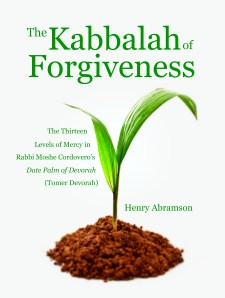
New for the Season of Repentance: a translation and modern commentary on Rabbi Moshe Cordovero’s classic of Jewish ethics, the Date Palm of Devorah (Tomer Devorah). Learn the Thirteen Levels of Mercy and discover how to forgive others (and yourself). Please visit http://www.jewishhistorylectures.org and click on “The Kabbalah of Forgiveness” for excerpts and videos. Publication date:…

Rabbi Samson Raphael Hirsch (1808-1888) articulated a strategy to allow Jews their traditional observances while participating actively in the modern world. Criticized from both the left and the right, his thought remains highly influential into the 21st century.

Founder of the famous Yeshiva of Volozhin, Rabbi Hayim ben Yitshad was one of the most influential proponents of traditional Talmudic study of the early 19th century. The author of Nefesh haHayim, he articulated a cogent response to the growing Hasidic movement.

In 1240 Nicholas Donin, a Jewish convert to Christianity, engaged in a public debate with his former teacher, Rabbi Yechiel of Paris. Donin charged that the Talmud was a noxious document that prevented the Jews from embracing Christianity, and brought a total of 35 distinct accusations against this ancient holy text. Ultimately, 24 carriage loads…

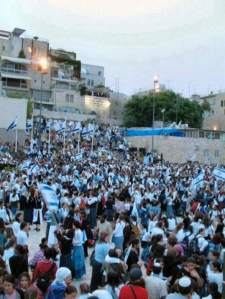
Jerusalem Day (Yom Yerushalayim) celebrates the unification of Jerusalem in the context of the Six-Day War of June 1967. This dramatic military achievement represented a victory that was both political and symbolic, giving Jews control over the the Old City and the Temple Mount after nearly 2000 years of exile.

Alexander has done well with his fundraising efforts to participate in the Boys Israel Leadership Training (BILT) program run by the National Council of Synagogue Youth. He’s already raised $858 toward his goal of $3,000! To all of you who participated, thanks very much. If you haven’t yet had a chance, please do so quickly,…

Rabbi Moshe Isserles was an exceptionally important Polish Jew of the 16th century. His commentary on the Code of Jewish Law brought Sephardic and Ashkenazic Jewry together to an unprecedented degree, and established the ascendancy of Polish Jewry over the older German community.


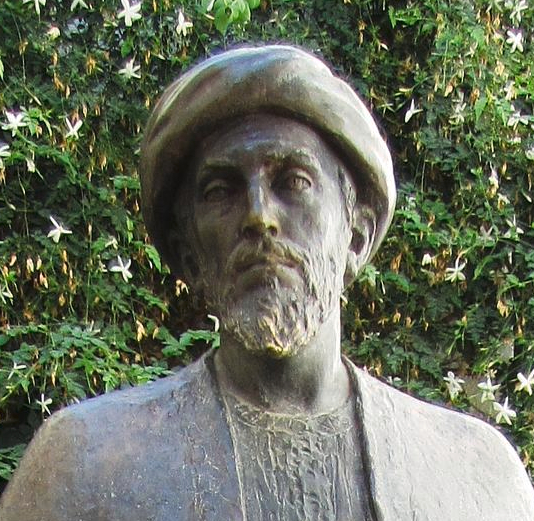
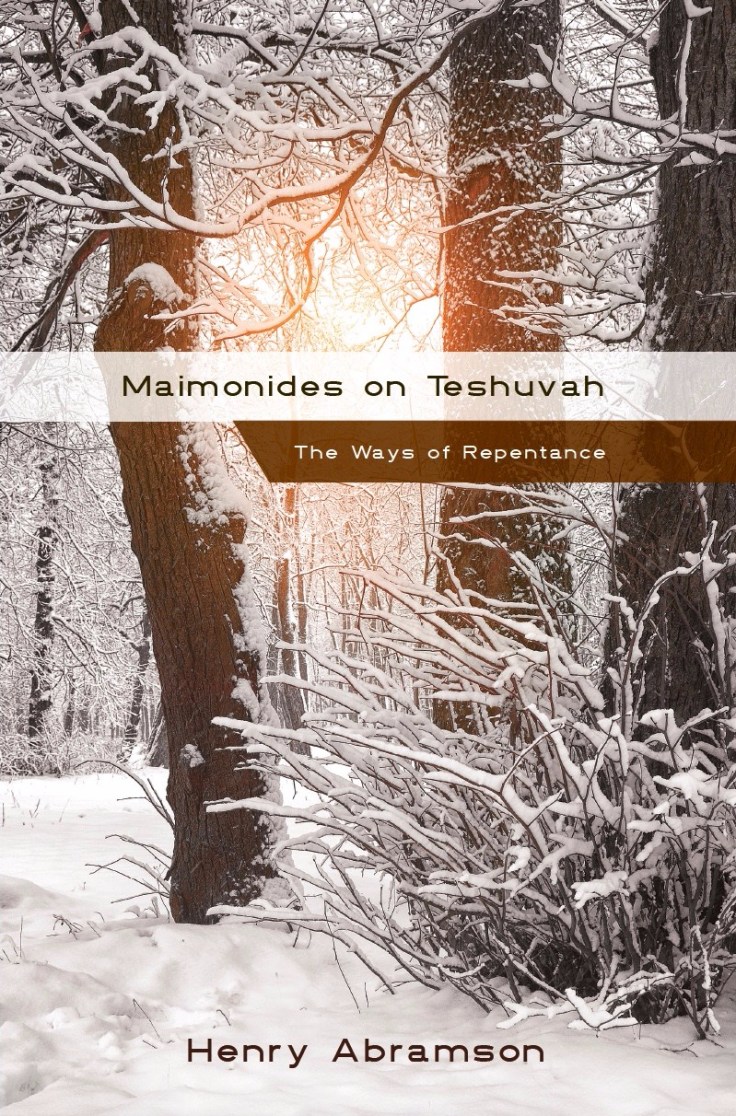
Dedicated to the memory of my father: A new translation and commentary of Moses Maimonides’ classic work on repentance. Softcover, 253 pages, illustrations. $18 after August 3, pre-order now for special price of $9 plus shipping. 5th edition (2017) Visit bit.ly/ordermot for more details.

Dedicated to the memory of my father: A new translation and commentary of Moses Maimonides’ classic work on repentance. Softcover, 253 pages, illustrations. $18. Click here to order.

All lectures will be held in the Main Auditorium of the mighty Avenue J Campus 7:00 PM Free and Open to the Community Touro College 1602 Avenue J Brooklyn, NY 11230 September 11 September 18 September 25 October 2 No Class October 9 October 16 October 23 October 30 November 6 November 13…

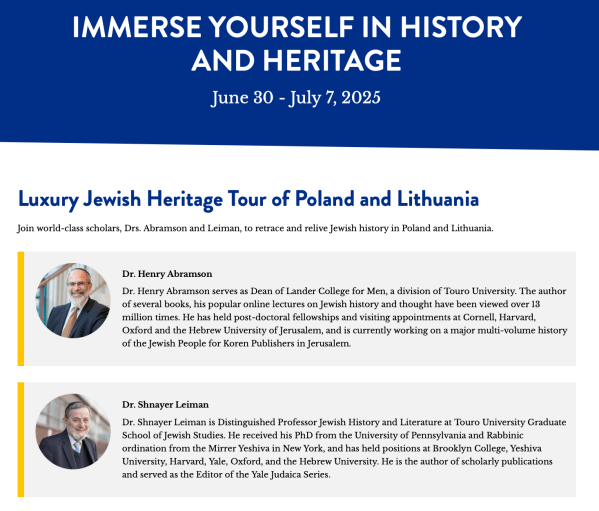
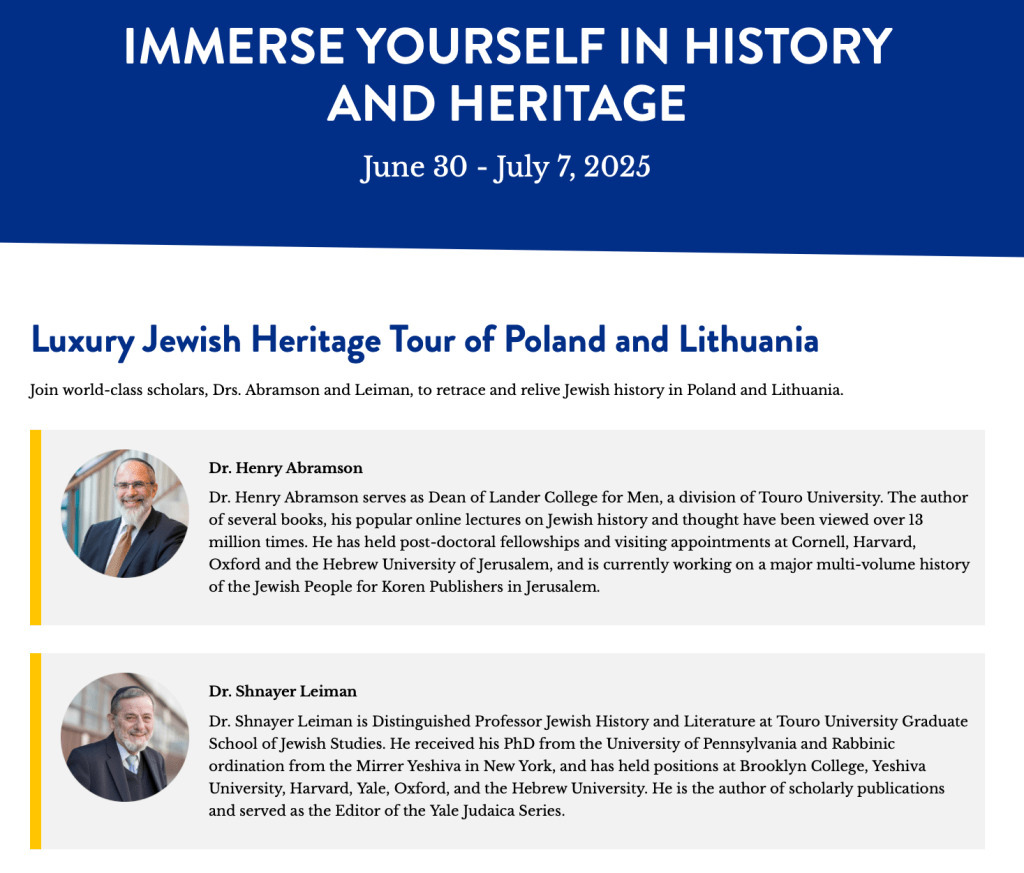
This amazing trip is now open to non-matriculated, visiting students! Join us–it promises to be a fantastic experience. Email me at abramson@touro.edu for more information.
The sixteenth century witnessed a phenomenal, short-lived explosion of Jewish spiritual creativity, centered in the sleepy Galilean town of Safed (Tsfat). Along with greats such as Rabbi Yosef Karo, Rabbi Moshe Cordovero was one of the founders of that unusual place, attracting still more Rabbis and especially Kabbalists to the mountaintop community, including Rabbi…
A brilliant 13th-century scholar of Rabbinic thought, Nahmanides’ defense of Judaism in a forced Church-sponsored debate earned him exile from his native Spain. An elderly sage, he emigrated to the Land of Israel, where he found a tiny Jewish community, desperately hanging onto the traditions of their ancestors. Summoning upon an immense reserve of energy,…
Brief survey of the major historical developments and themes affecting the land of Israel between the 2nd-century Bar Kochba rebellion and the Muslim conquest in the seventh century. Part of the Israel: The Land and its People series.
Certainly one of the greatest Rabbis of the entire Talmud, Akiva son of Joseph did not begin his study of Judaism before adulthood. His trajectory of incredible spiritual growth was punctuated by moments of great personal tragedy, and his martyrdom at the hands of the Romans after the failed second-century Bar-Kochba revolt has an enduring…
One of the greatest builders of ancient Israel, King Herod exploited his power as a Roman-sponsored ruler to develop the Temple, yet earned a reputation as a feared tyrant responsible for horrific massacres. HIs rule set the tone for the political climate in the Land of Israel during the tumultuous decades prior to the growth…
Born in the times of the Hasmonean rebellion celebrated with the holiday of Chanukah, Yohanan Cohen Gadol was one of the most prominent Jewish leaders during the brief period of Jewish freedom in the 2nd century BCE. Caught in the swirling controversy of internal religious debate, in his old age he abandoned his Pharisaic roots…
“Sweet singer of Israel,” David was the poet-warrior King who led the Jewish people to political and cultural prominence. Denied his most cherished goal of building the Temple, he lived a life of great personal challenge and heroic resurgence from tragedy, and his biography left an indelible mark on the Jewish understanding of leadership.