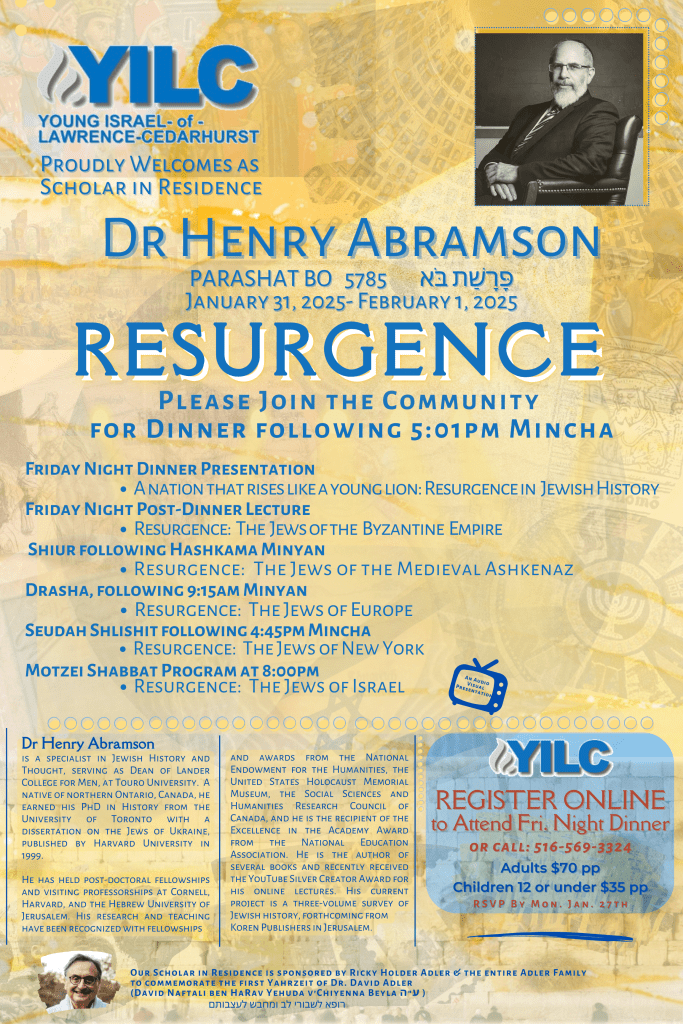
Really looking forward seeing my friends at YILC!

Lectures in Jewish History and Thought. No hard questions, please.
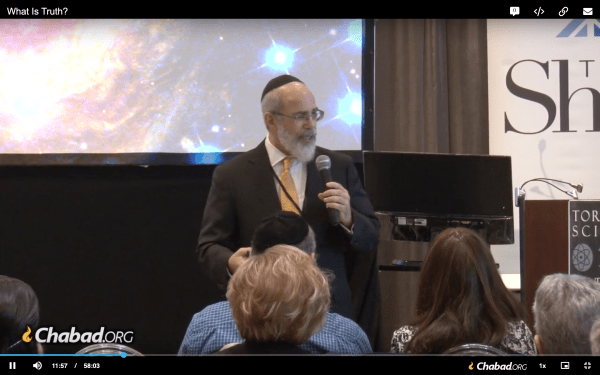


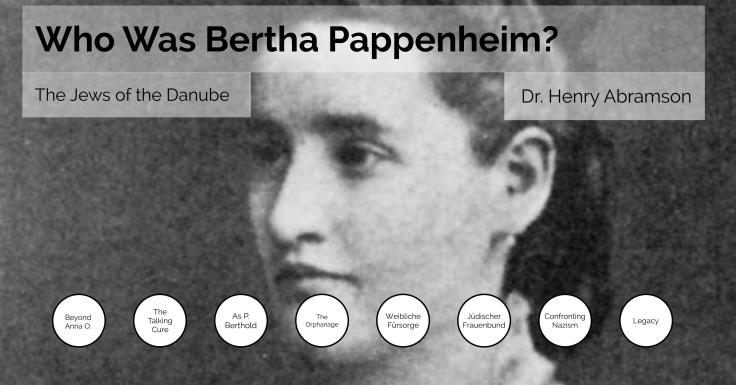
Part Four of the Jews of the Danube series. Filmed in a new location without my usual technical support–sorry for the lower video and audio quality, but the lecture is ok. To see the visuals better, please click here. Next week we are back at our usual location with IT support!
Okay, this is cool: just saw the trailer for a documentary project I worked on several months ago. I can’t wait to see the whole thing! I was especially honored to work with Dr. Lawrence Schiffman, world expert on the Dead Sea Scrolls and senior scholar in Jewish history (he’s the last talking head in…
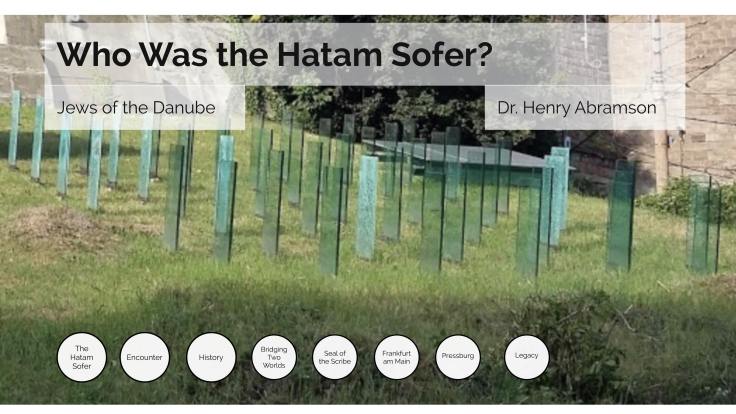
A scholar and a fighter, the Hatam Sofer articulated a definition of Orthodoxy for the modern era.

Brief video lecture on the life and work of Isaac of Vienna (c. 1180-c. 1250), author of the important Or Zaru’a.
We begin our discussion of the Jews of the Danube with the question: “Who Was Isaac of Vienna (the Or Zaru’a)?”

Unexpected and unexplained, a phalanx of glass obelisks emerge silently from the earthen mound, punctuating the atmosphere above what appears to be an anonymous tel. Some are transparent, others pebbled and translucent, but all glow with a faint green hue. Unyielding, they stand in rigid formation on the angled surface of the earth. These mute…

When the Hungarians purchased their alphabet, vowels were on sale (also plastic sofa coverings and chandeliers). By the time the Poles came around, all that was left were the consonants. This helps explain why we anglophones are so challenged by both languages: in the case of Hungarian, there are just way too many umlauts and…

Abandoned Nazi trucks were discovered by children playing in the shallows of the diminished Danube.


The Fourth Level: Remember the Family “In the Same Boat (Remember We are Family),” illustration of Level 4 by Rebecca Odessa, Courtesy The Wisdom Daily The Fourth Level: Remember the Family Translator’s Introduction The Fourth Level of Mercy calls attention to the fundamental connectedness of humanity. The Jewish people in particular maintain a strong familial…

The Third Level: Take Care of it Personally “Part of the Process (Take Care of it Personally),” illustration of Level 3 by Rebecca Odessa, Courtesy The Wisdom Daily The Third Level: Take Care of It Personally Translator’s Introduction The Third Level of Mercy addresses the personal role that God plays in the process of forgiveness. Rather…

The Second Level: Let it Go for Now “Whose K’tegors are These? (Let it Go)” Illustration of Level 2 by Rebecca Odessa, Courtesy The Wisdom Daily The Second Level: Let it Go for Now The second of the Thirteen Levels, “Who Bears Sin,” describes a degree of mercy that is even more profound than…

The First Level: The King who Endures Insult “The Insulted King,” illustration of Level 1 by Rebecca Odessa, Courtesy The Wisdom Daily Translator’s Introduction Rabbi Cordovero’s discussion of the Thirteen Levels of Mercy begins with an awesome depiction of human sin from God’s perspective. Given that all power in the Universe has God at…

Please visit https://www.smashwords.com/books/view/464044 and enter coupon code YT52E (Expires October 19, 2014). Please click here for excepts and supporting videos.
New for the Season of Repentance: a translation and modern commentary on Rabbi Moshe Cordovero’s classic of Jewish ethics, the Date Palm of Devorah (Tomer Devorah). Learn the Thirteen Levels of Mercy and discover how to forgive others (and yourself). Please visit http://www.jewishhistorylectures.org and click on “The Kabbalah of Forgiveness” for excerpts and videos. Publication date:…

Rabbi Samson Raphael Hirsch (1808-1888) articulated a strategy to allow Jews their traditional observances while participating actively in the modern world. Criticized from both the left and the right, his thought remains highly influential into the 21st century.

Founder of the famous Yeshiva of Volozhin, Rabbi Hayim ben Yitshad was one of the most influential proponents of traditional Talmudic study of the early 19th century. The author of Nefesh haHayim, he articulated a cogent response to the growing Hasidic movement.

In 1240 Nicholas Donin, a Jewish convert to Christianity, engaged in a public debate with his former teacher, Rabbi Yechiel of Paris. Donin charged that the Talmud was a noxious document that prevented the Jews from embracing Christianity, and brought a total of 35 distinct accusations against this ancient holy text. Ultimately, 24 carriage loads…

Jerusalem Day (Yom Yerushalayim) celebrates the unification of Jerusalem in the context of the Six-Day War of June 1967. This dramatic military achievement represented a victory that was both political and symbolic, giving Jews control over the the Old City and the Temple Mount after nearly 2000 years of exile.

Alexander has done well with his fundraising efforts to participate in the Boys Israel Leadership Training (BILT) program run by the National Council of Synagogue Youth. He’s already raised $858 toward his goal of $3,000! To all of you who participated, thanks very much. If you haven’t yet had a chance, please do so quickly,…

Rabbi Moshe Isserles was an exceptionally important Polish Jew of the 16th century. His commentary on the Code of Jewish Law brought Sephardic and Ashkenazic Jewry together to an unprecedented degree, and established the ascendancy of Polish Jewry over the older German community.