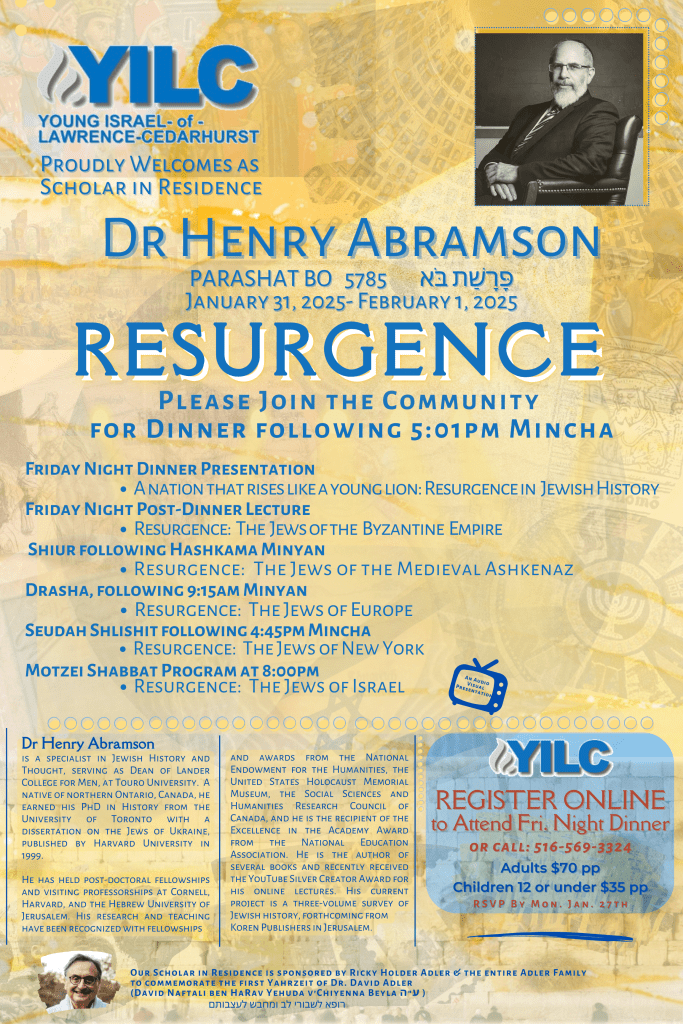
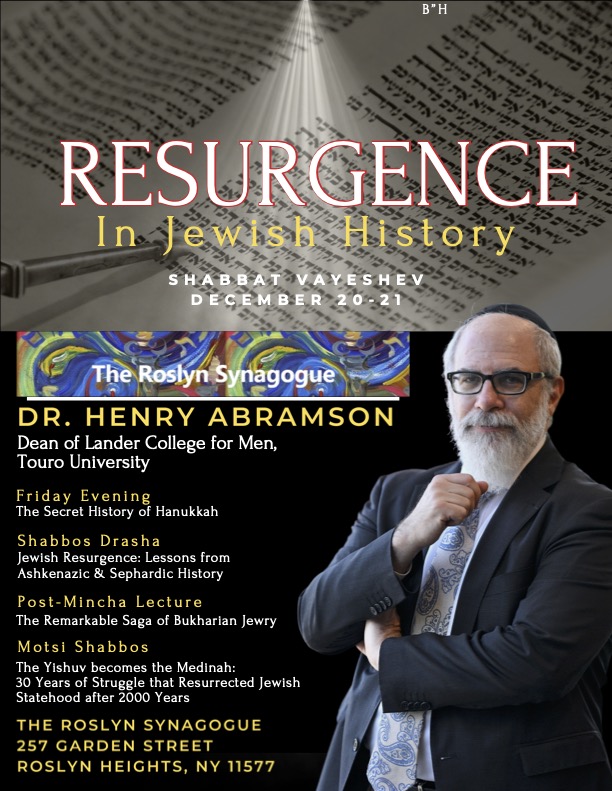
Really looking forward seeing my friends at YILC!

Lectures in Jewish History and Thought. No hard questions, please.


Sunday, January 10, 8pm. Sponsored by Congegration Darchei Noam of Fair Lawn, NJ. Register at dno.am/5781/webinar.

The Holocaust Writings of Rabbi Kalonymus Kalmish Shapira (The Aish Kodesh הי׳׳ד) Please join me on Sunday, January 10 at 8PM ET for a discussion of the Warsaw Ghetto experience of the Aish Kodesh, and what lessons we may glean for the present season of quarantine. http://dno.am/5781/webinar
Hello fellow students of Jewish history! I hope this message finds you and your loved ones healthy and secure. Just a brief note to let you know the website will have some reduced functionality over the next week or so. I like to take the turn-over of the Gregorian calendar to renovate and reorganize my…

Some historical reflections on the Fast of the 10th of Tevet.
Good afternoon fellow students of Jewish history! Please click here for the Fall 2020 series in Jewish history: an experiment I’m calling Jewish History Lab. Beginning with the Ancient Period!
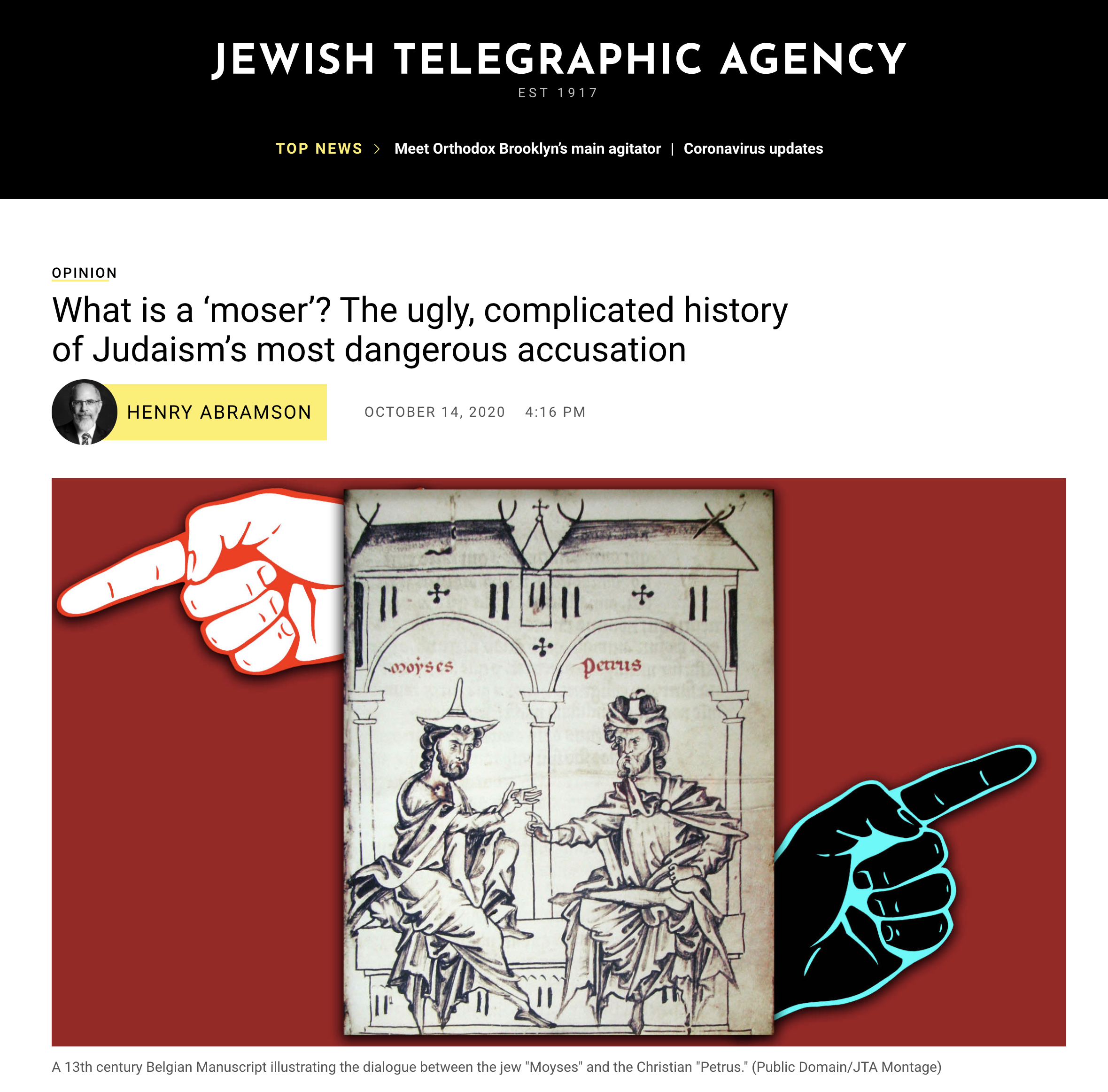
Thanks to Laura Adkins and Philissa Cramer for really strong edits in today’s article in JTA. (JTA) The intermediate days of Sukkot in the holy city of Brooklyn are normally a time of singing, prayer and communal fellowship. This year the celebrations were marred by violence. Egged on by a rabble-rousing individual who literally wore a political bumper sticker on…

Hasidism, Suffering, and Renewal: The Prewar and Holocaust Legacy of Rabbi Kalonymus Kalman Shapira. Forthcoming June 2021.
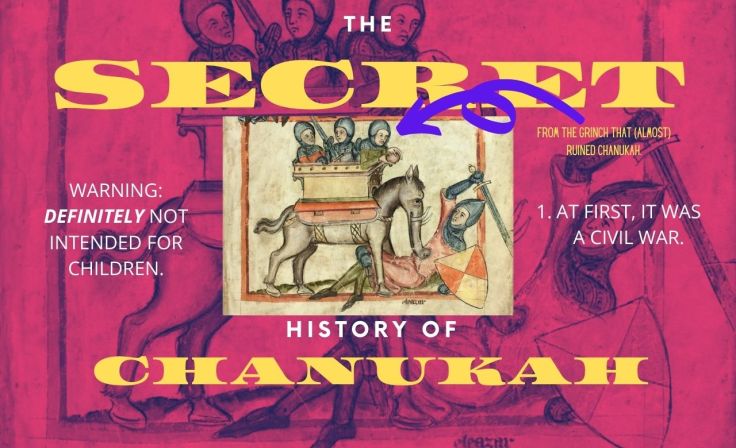
Some thoughts on what the pandemic means for Jewish history. Welcome to the Future, Third Time Around Historians Will Mark 2020 as a Revolutionary Year for Higher Education October 05, 2020 Dr. Henry Abramson Dr. Henry Abramson, historian and dean of Touro’s Lander College of Arts & Sciences, puts the transition to remote learning into…

Really honored to speak to Ms. Kathie Larkin’s bright, motivated 8th graders today about the Holocaust. Thank you Pace Academy for giving me the opportunity to interact with some wonderful young minds! Here’s a brief article on the talk.

Genesis 22–the description of the patriarch Abraham’s binding of his son Isaac and the angelic intervention that followed–is a key text in the Jewish tradition, and forms part of the Torah reading for Rosh Hashanah. Join philosopher Dr. Michael Chighel (Milton Friedman Egyetem, Budapest) and historian Dr. Henry Abramson (Touro College, New York) for a…


Known as simply “The Rav,” Rabbi Dr. Yosef Baer (J.D.) Soloveitchik was arguably the most influential figure shaping the Orthodox Rabbinate in the United States in the 20th century. From his position at the Rabbi Isaac Elchanan Rabbinical Seminary at Yeshiva University, he ordained some 2,000 Rabbis over four decades. To view the Prezi associated…

Discovered in the rubble of the Warsaw Ghetto, the wartime writings of Rabbi Kalonymus Kalmish Shapiro (1889-1943) offer a unique and powerful perspective on the life and suffering of religious Jews during the horrific years of the Nazi occupation. By Dr. Henry Abramson According to my knowledge of the words of the Sages and the…

I’m a runner. I’ve been running as long as I can remember, including my first half-marathon at age 12 and my first full marathon at 14. Running gives me energy, and makes me feel like I can accomplish anything. I’m proud of my finishes, and even more proud that over the years I’ve raised almost…

Rabbi Israel Meir Kagan, better known as the Chofetz Chaim for his classic work on the sanctity of speech, was one of the major Rabbinic leaders of the late 19th and early 20th century. To view the Prezi associated with this lecture, click on the image below or here.
Hello students– We are scheduled to resume our lecture series this evening with a presentation on the Chofetz Chaim,one of the most influential Rabbinic thinkers of the late 19th and early 20th century. Rabbi Israel Meir Kagan is known principally for his dramatically creative analysis of the topic of forbidden speech (lashon ha-ra), and rose…

This video describes the changes in the political boundaries of the State of Israel from its inception 1948 through the disengagement from Gaza in 2005. Part of the Essential Lectures in Jewish History series by Dr. Henry Abramson. To view the Prezi associated with this video please click here.

Jacob Rodrigues Periera (1715-1780) was the inventor of dactylology, a method for teaching deaf-mutes to communicate. A crypto-Jew from Portugal, his first student was his sister. His methodology received phenomenal acclaim, he received honors from the King of France and was named to both the Royal Society of London. This video is part of This…

This is a brief academic presentation of the history of the Nazi attempt to destroy the Jews of Europe during World War II. Part of the Essential Lectures in Jewish History series by Dr. Henry Abramson. To view the Prezi used in this lecture, please click here.

Revered by many as Germany’s greatest poet, Heine struggled mightily with his Jewish identity in the culturally inimical milieu of the 19th century. This phenomenon, known as Judenschmerz, was widespread among 19th century western European Jews. Despite his 1825 conversion to Christianity, Heine maintained a long, albeit conflicted, relationship to his Jewish background. Part of…

Sarah Schenirer (1883-1935) founded the Bais Yaakov (Bet Ya’akov) school system for women. One of the most visionary educators of the twentieth century, her movement had global impact. To view the Prezi associated with this lecture, please click here.

Baptized at age 12 as the result of his father’s dispute with a synagogue, Benjamin Disraeli (1804-1881) rose to prominence as a novelist and politician, serving several times as England’s Prime Minister. Colorful and flamboyant, Disraeli dismissed his antisemitic critics by emphasizing, rather than downplaying, his Jewish origins.

The discovery of the mutilated body of a young boy in Kiev led to the false arrest of a Jewish laborer named Mendel Beilis. Ignoring the argument of investigating officers, the Russian government under Tsar Nicholas II pressed ahead with the prosecution of Beilis, arguing that the boy was murdered as part of a Passover-related…