Really looking forward seeing my friends at YILC!

Lectures in Jewish History and Thought. No hard questions, please.


The remarkable 14th century Mikvah in the basement of the Carpentras Synagogue. Fed by an artesian well, the waters continue to fill the space, although in the 18th century a more modern Mikvah with heated, filtered water was constructed one floor above.
Part two of a series of videos on the amazing medieval synagogue in Carpentras, in the Provence region of France. This video looks at the 18th century representation in the Baroque style, with some remarkable features.

Today was an absolutely fascinating day of discovery of Jewish history, exploring the 14th century synagogue in Carpentras, France: the second-oldest currently functioning synagogue in Europe. There are so many amazing things to view, so I’ve decided to break it up into several small videos, starting with this one, which looks at the entrance to…
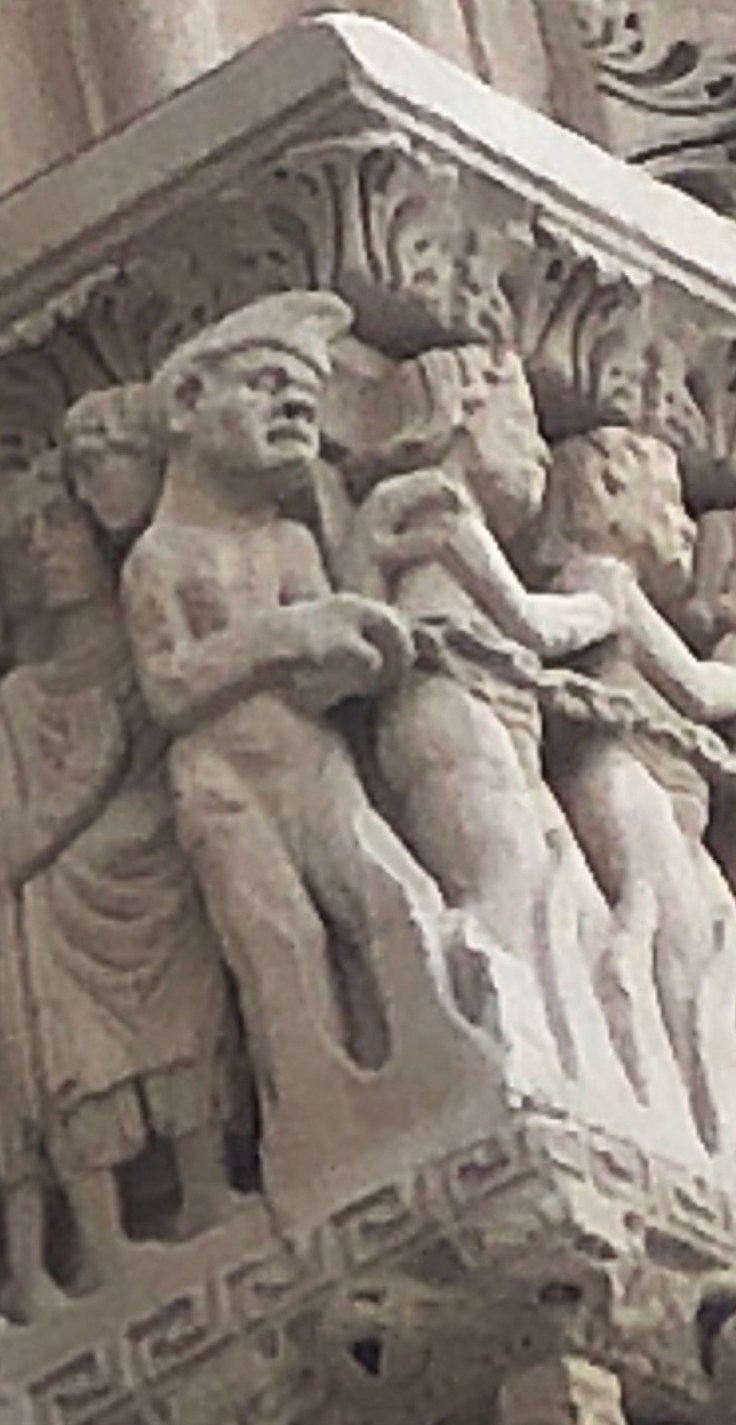
Expelled 500 years ago, a traces of medieval Jewish life yet remain in this city on the Rhone river.

Gut moed students of Jewish history! Peter Gwin of National Geographic just released a podcast discussing the research of Dr. Beverly Goodman, a marine archaeologist at the University of Haifa. She’s spent years studying the mysterious destruction of Herod’s port at Caesaria, and argues that it was destroyed in the tsunami of 115. Besides the…
A very special message on the eve of Yom Kippur. May my wife’s heroism and generosity be a merit for her, our family, and the entire Jewish people.

The Talmud in National Geographic! Specifically, the tsnuami of 115 CE and the famous debate over the oven of Akhnai. Just a teaser in this little trailer for the second season (see if you can identify my voice!), the whole podcast is scheduled for release later this month. Was really a lot of fun to…
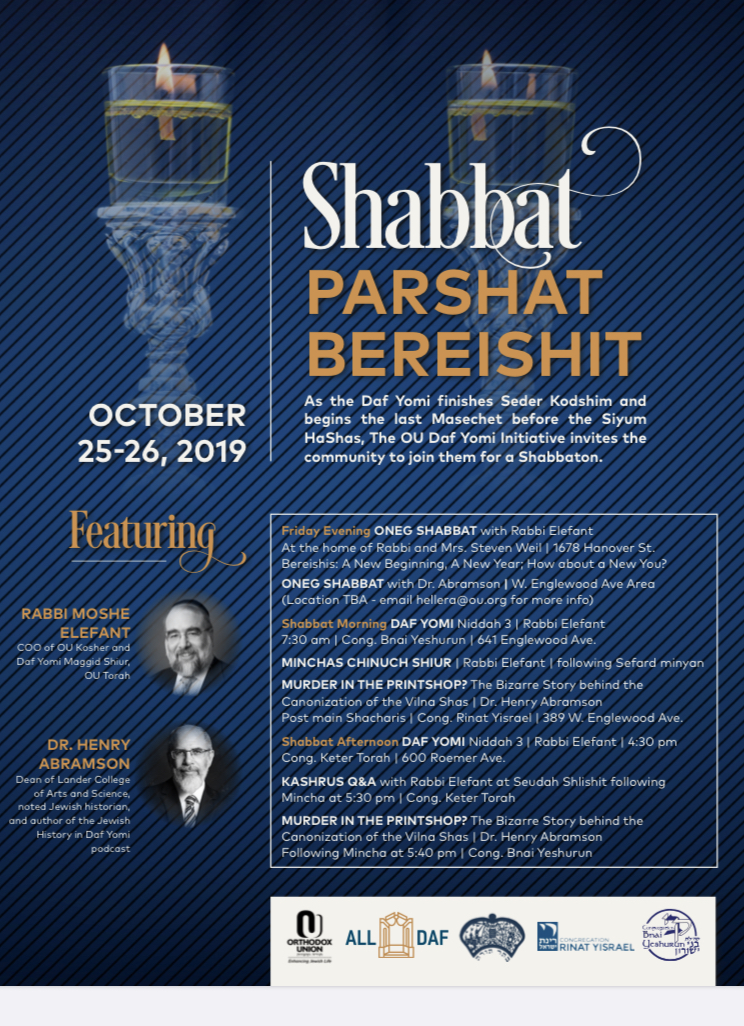
Here’s my review, published in the Life section of the OU.org blog: A Rosh Yeshiva Wrote a Novel Under a Pseudonym. It’s Pretty Good. Dr. Henry AbramsonSeptember 24, 2019 In the highly-polarized environment of contemporary Jewish culture, it’s easier to imagine a rosh yeshiva banning fiction than writing it. Imagine my surprise when I received a copy…
Final installment of the Four-Part Crash Course in Jewish History. Thanks to everyone at Young Israel of Lawrence-Cedarhurst, especially the very receptive audiences. Wishing you all a Shana Tovah!
Good morning students of Jewish history! Here’s part III of the Crash Course in Jewish History, looking at the Modern period. Thanks to everyone who came out to hear it live! Please click here for the recordings of the first two parts, and information on the final class, scheduled for Wednesday, September 25 at 7:30…

Good morning students of Jewish History! Looking forward to seeing you for the third installment in our fairly popular Crash Course in Jewish History. We’re grateful for the positive response from the live audience, not to mention an unusually large number of online views: as I write this post, the first two parts have been…


The summer of 1321 was plagued with rumors that Jews had entered into a conspiracy with lepers (some versions also included Muslims) to poison the wells of Europe, resulting in mass hysteria and mob violence. King Philip V was eventually able to quell the movement, but it resurfaced twenty years later in a much more…

In August of 1778, the non-Jewish writer Gotthold Ephraim Lessing wrote to his brother of a new literary project designed to further tolerance of Jews in German society. The result was Nathan the Wise, a sensation that was initially banned by the Church and heavily criticized by antisemites of the day.

Officially banned in 1479, no Jews lived in the Russian Empire until Tsarina Catherine II conquered a major portion of Polish territory, instantly inheriting the largest single concentration of Jews in the world. Under her rule the Pale of Settlement was established, determining the region where Jews were allowed to reside, however tenuously, until the…

To view the Prezi associated with this lecture, please click here. Excerpt from “The Jewish Diaspora: A Brief History” Henry Abramson 2. Jews and Judaism in the Year Zero Two Jews, three opinions. The year zero was not nearly as auspicious or significant for Jews as it would later be for Christians. Jews observe a…

Instructions: please watch the lecture, review the reading below, and kindly take the anonymous poll. Thank you! To view the Prezi associated with this lecture, please click here. Excerpt from The Jewish Diaspora: A Brief History Henry Abramson 1. What is Jewish History? “They tried to kill us, we survived, let’s eat.” So runs the…

Devastated and demoralized after the violence of the Khmelnytsky rebellion, the Jews of Europe were astounded to hear that a young Kabbalist named Shabbetai Tsvi had proclaimed himself the long-awaited Messiah.

In 1847, the citizens of London elected its first Jew, Lionel de Rothschild, to the House of Commons. Rothschild, however, refused to take the Christian oath required of all members, and resigned without taking his seat in Parliament. He was immediately reelected a second and even a third time until the Jews’ Disabilities Act was…

Beloved for his children’s stories, Henryk Goldszmidt wrote under the pen name Janusz Korczak. A lifelong advocate for children’s rights, he ran an orphanage in Warsaw that was world-famous for his innovative pedagogic techniques. Imprisoned in the Warsaw ghetto during the Nazi occupation, he continued to serve in this capacity until the terrible order…

This is a course trailer for JSH 481: Jewish Biography as History, scheduled for the Fall 2013 semester.

In the summer of 1858, 6-year old Edgardo Mortara, a Jewish boy living in Bologna, Italy, was forcibly taken from his home by Italian police acting at the behest of the Inquisition. It had come to the attention of the Church that a teenage non-Jewish servant girl had performed an “emergency baptism” on Edgardo several…

For a larger discussion of the five historical narratives, please see my article The end of intimate insularity: new narratives of Jewish history in the post-Soviet era, in Acts of Symposium “Construction and Deconstruction of National Histories in Slavic Eurasia,” originally delivered at Hokkaido University, Sapporo, Japan, on July 10–13, 2002.