Really looking forward seeing my friends at YILC!

Lectures in Jewish History and Thought. No hard questions, please.


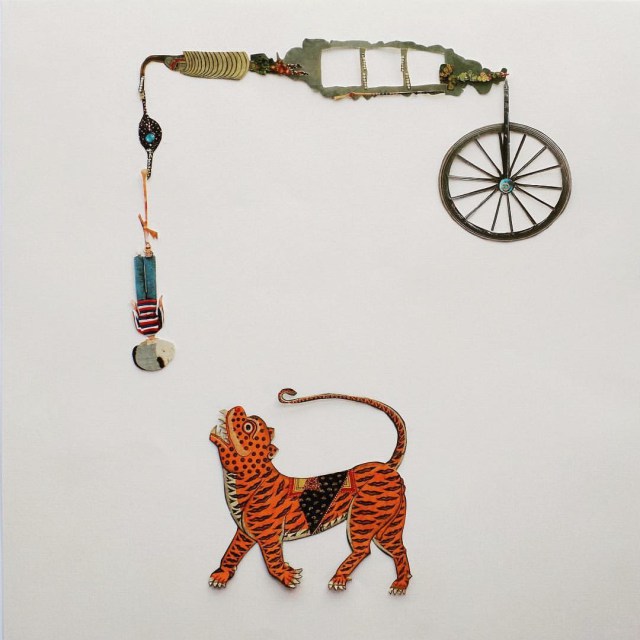
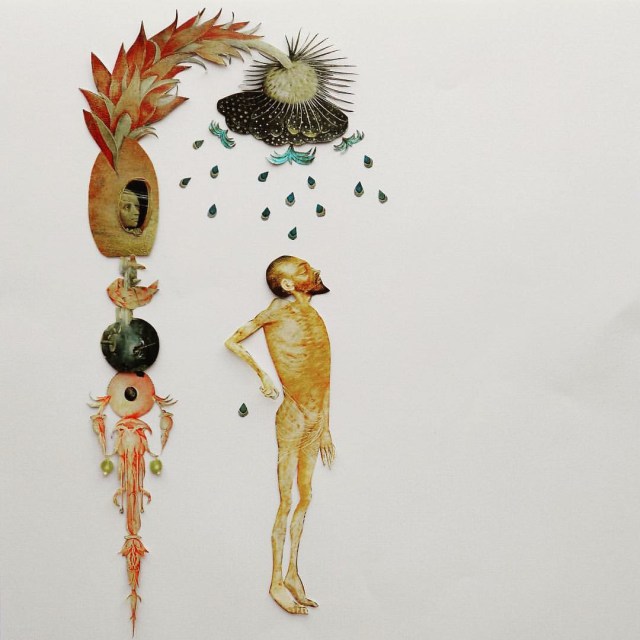
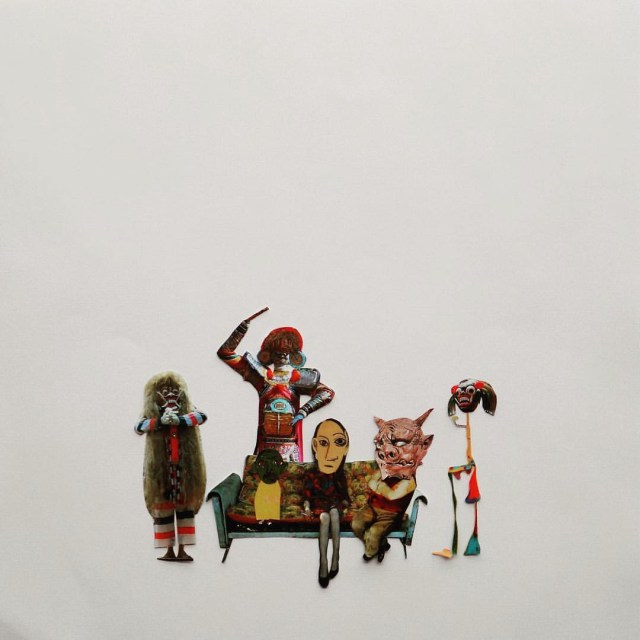
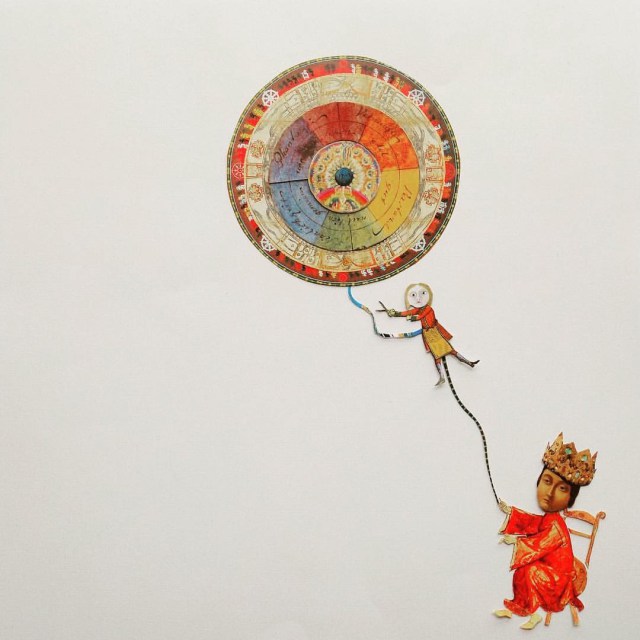
The Fourth Level: Remember the Family “In the Same Boat (Remember We are Family),” illustration of Level 4 by Rebecca Odessa, Courtesy The Wisdom Daily The Fourth Level: Remember the Family Translator’s Introduction The Fourth Level of Mercy calls attention to the fundamental connectedness of humanity. The Jewish people in particular maintain a strong familial…

The Third Level: Take Care of it Personally “Part of the Process (Take Care of it Personally),” illustration of Level 3 by Rebecca Odessa, Courtesy The Wisdom Daily The Third Level: Take Care of It Personally Translator’s Introduction The Third Level of Mercy addresses the personal role that God plays in the process of forgiveness. Rather…

The Second Level: Let it Go for Now “Whose K’tegors are These? (Let it Go)” Illustration of Level 2 by Rebecca Odessa, Courtesy The Wisdom Daily The Second Level: Let it Go for Now The second of the Thirteen Levels, “Who Bears Sin,” describes a degree of mercy that is even more profound than…

The First Level: The King who Endures Insult “The Insulted King,” illustration of Level 1 by Rebecca Odessa, Courtesy The Wisdom Daily Translator’s Introduction Rabbi Cordovero’s discussion of the Thirteen Levels of Mercy begins with an awesome depiction of human sin from God’s perspective. Given that all power in the Universe has God at…

Please visit https://www.smashwords.com/books/view/464044 and enter coupon code YT52E (Expires October 19, 2014). Please click here for excepts and supporting videos.
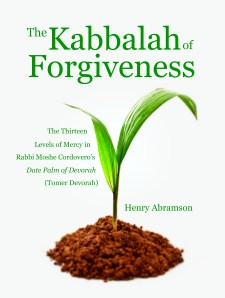
New for the Season of Repentance: a translation and modern commentary on Rabbi Moshe Cordovero’s classic of Jewish ethics, the Date Palm of Devorah (Tomer Devorah). Learn the Thirteen Levels of Mercy and discover how to forgive others (and yourself). Please visit http://www.jewishhistorylectures.org and click on “The Kabbalah of Forgiveness” for excerpts and videos. Publication date:…

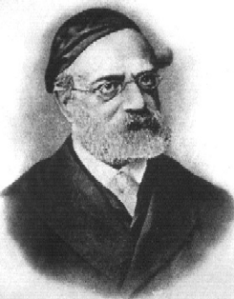
Rabbi Samson Raphael Hirsch (1808-1888) articulated a strategy to allow Jews their traditional observances while participating actively in the modern world. Criticized from both the left and the right, his thought remains highly influential into the 21st century.

Founder of the famous Yeshiva of Volozhin, Rabbi Hayim ben Yitshad was one of the most influential proponents of traditional Talmudic study of the early 19th century. The author of Nefesh haHayim, he articulated a cogent response to the growing Hasidic movement.

In 1240 Nicholas Donin, a Jewish convert to Christianity, engaged in a public debate with his former teacher, Rabbi Yechiel of Paris. Donin charged that the Talmud was a noxious document that prevented the Jews from embracing Christianity, and brought a total of 35 distinct accusations against this ancient holy text. Ultimately, 24 carriage loads…

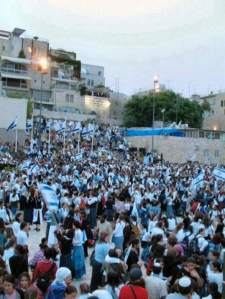
Jerusalem Day (Yom Yerushalayim) celebrates the unification of Jerusalem in the context of the Six-Day War of June 1967. This dramatic military achievement represented a victory that was both political and symbolic, giving Jews control over the the Old City and the Temple Mount after nearly 2000 years of exile.

Alexander has done well with his fundraising efforts to participate in the Boys Israel Leadership Training (BILT) program run by the National Council of Synagogue Youth. He’s already raised $858 toward his goal of $3,000! To all of you who participated, thanks very much. If you haven’t yet had a chance, please do so quickly,…

Rabbi Moshe Isserles was an exceptionally important Polish Jew of the 16th century. His commentary on the Code of Jewish Law brought Sephardic and Ashkenazic Jewry together to an unprecedented degree, and established the ascendancy of Polish Jewry over the older German community.


The summer of 1321 was plagued with rumors that Jews had entered into a conspiracy with lepers (some versions also included Muslims) to poison the wells of Europe, resulting in mass hysteria and mob violence. King Philip V was eventually able to quell the movement, but it resurfaced twenty years later in a much more…

In August of 1778, the non-Jewish writer Gotthold Ephraim Lessing wrote to his brother of a new literary project designed to further tolerance of Jews in German society. The result was Nathan the Wise, a sensation that was initially banned by the Church and heavily criticized by antisemites of the day.

Officially banned in 1479, no Jews lived in the Russian Empire until Tsarina Catherine II conquered a major portion of Polish territory, instantly inheriting the largest single concentration of Jews in the world. Under her rule the Pale of Settlement was established, determining the region where Jews were allowed to reside, however tenuously, until the…

To view the Prezi associated with this lecture, please click here. Excerpt from “The Jewish Diaspora: A Brief History” Henry Abramson 2. Jews and Judaism in the Year Zero Two Jews, three opinions. The year zero was not nearly as auspicious or significant for Jews as it would later be for Christians. Jews observe a…

Instructions: please watch the lecture, review the reading below, and kindly take the anonymous poll. Thank you! To view the Prezi associated with this lecture, please click here. Excerpt from The Jewish Diaspora: A Brief History Henry Abramson 1. What is Jewish History? “They tried to kill us, we survived, let’s eat.” So runs the…

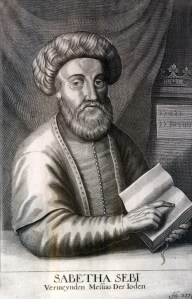
Devastated and demoralized after the violence of the Khmelnytsky rebellion, the Jews of Europe were astounded to hear that a young Kabbalist named Shabbetai Tsvi had proclaimed himself the long-awaited Messiah.

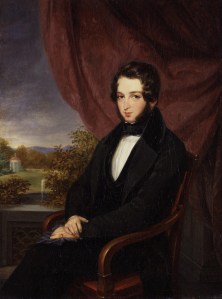
In 1847, the citizens of London elected its first Jew, Lionel de Rothschild, to the House of Commons. Rothschild, however, refused to take the Christian oath required of all members, and resigned without taking his seat in Parliament. He was immediately reelected a second and even a third time until the Jews’ Disabilities Act was…

Beloved for his children’s stories, Henryk Goldszmidt wrote under the pen name Janusz Korczak. A lifelong advocate for children’s rights, he ran an orphanage in Warsaw that was world-famous for his innovative pedagogic techniques. Imprisoned in the Warsaw ghetto during the Nazi occupation, he continued to serve in this capacity until the terrible order…

This is a course trailer for JSH 481: Jewish Biography as History, scheduled for the Fall 2013 semester.

In the summer of 1858, 6-year old Edgardo Mortara, a Jewish boy living in Bologna, Italy, was forcibly taken from his home by Italian police acting at the behest of the Inquisition. It had come to the attention of the Church that a teenage non-Jewish servant girl had performed an “emergency baptism” on Edgardo several…

For a larger discussion of the five historical narratives, please see my article The end of intimate insularity: new narratives of Jewish history in the post-Soviet era, in Acts of Symposium “Construction and Deconstruction of National Histories in Slavic Eurasia,” originally delivered at Hokkaido University, Sapporo, Japan, on July 10–13, 2002.