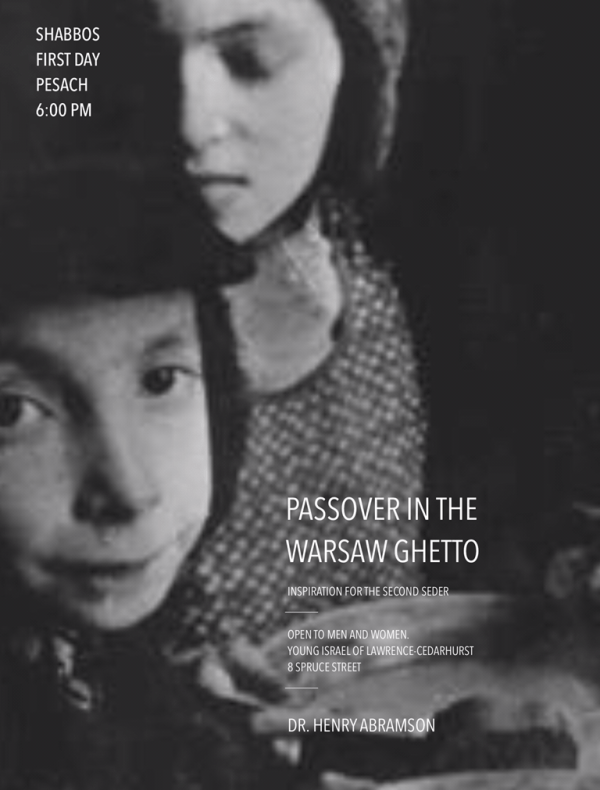
The Piaseczno Rebbe on Shabbat Ha-Gadol in the Warsaw Ghetto (April 5, 1941)

School principal Chaim Kaplan recorded the bleak mood in the Warsaw Ghetto on the eve of Passover of the Hebrew year 5701 (1941):

Like the Egyptian Passover, the Passover of Germany will be celebrated for generations.  The chaotic oppression of every day throughout this year of suffering will be reflected in the days of the coming holiday.  Last year the Joint’s project was functioning full force.  It was not conducted properly and many people criticized it, but in the last analysis it fed the hungry and brought the holiday into every Jewish home.  We lacked for nothing then.

This year everything is changed for the worse, and we are all faced with a Passover of hunger and poverty, without even the bread of poverty….What, then, will we eat during the eight days of the coming holiday?  I am afraid we will turn our holiday into a weekday.  For prayer there are no synagogues or houses of study.  Their doors are closed and darkness reigns in the dwelling places of Israel.  For eating and drinking there is neither matzoth nor wine.

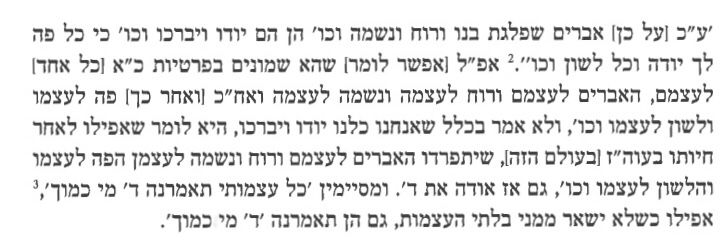
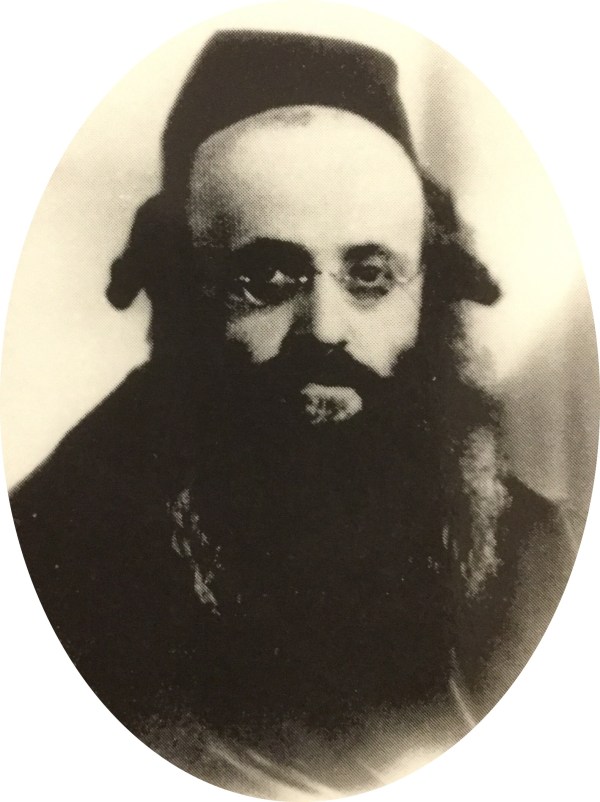
The Rebbe spoke to his Hasidim on the Sabbath preceding the holiday, known in Jewish tradition as “Shabat ha-Gadol”–The Great Sabbath. He began by asking an obvious question that must have resonated with his audience: what is so “great” about this Sabbath? His introductory remarks focussed on a Talmudic dispute (Yoma 69b) on the meaning of the word “great” as it relates to God. Rabbi Yohanan in the name of Rav argues that “greatness” is intrinsic to God’s ineffable Name, while Rabban Gamliel says God’s greatness is related to the blessing of the Jewish people. Both opinions, argued the Rebbe, are strangely dependent on the Jewish people, either through the High Priest pronouncing the Tetragrammaton in the Temple, or through the Jewish people as a whole blessing God.

The Blessed One is called “great” because the Jewish people call Him great.  The Talmud asks, what is this “greatness”?  On the surface, it is difficult to understand this question.  Isn’t God, after all, truly great?  The question arises because it is inappropriate to ascribe the term “great” to an isolated individual, since the adjective “great” can only apply in relation to something else which is not as great.  For example, if one were to find a grape the size of a small apple, it would be called a “great grape,” even though the apple is a small one.  Nevertheless, this grape is called “great” because it is great in relation to other grapes.  How, then, is it possible to say this regarding God, who is radically unique?  The Talmud responds that this is so  because the Jewish people magnify God’s honor and majesty in the world beyond what it had been.  God’s honor and holiness becomes “great” in comparison to what it once was.

This clarifies the dispute between Rabbi Yohanan in the name of Rav and Rabban Gamliel–dispute over God’s greatness was not limited to a discussion of the Name of God versus the blessing of the Jewish people. Rather, the debate was regarding whether the greatness was most realized through the High Priest’s utterance of God’s name on Yom Kippur, or whether it was manifested through the response of the assembled people with the verse, “Blessed is Hashem, God of the Jewish people, from this world to the next” (Psalms 41:14). Both the High Priest and the Jewish people pronounced the Tetragrammaton, and both blessed God–which of the two statements made God “greater” than before?

This is the sense of the dispute between Rav and Rabban Gamliel.  Rav contends that God is made great through the Tetragrammaton, whereas Rabban Gamliel states that God was not exclusively made great by the tremendous revelation in the Temple effected by the great righteous ones (for the ineffable Name was only uttered in the Temple).  Rather, God is also made “great” through the expression of the verse, Blessed is Hashem, God of The Jewish people, from this world to the next, even though this involved a repetition of the Tetragrammaton, and they did not approach the spiritual loftiness of the Kohen in the Temple.  Nevertheless, since they saidBlessed is Hashem, God of The Jewish people, and thereby accepted the God of the Jewish people upon themselves and upon the Jewish people to a greater extent than earlier, in this fashion the Blessed One is called “great.”  When an individual Jew, even the lowliest, accepts the yoke of the Kingdom of Heaven, and sanctifies one’s self with holiness and Divine worship to a greater extent than before–that is when the Blessed One truly becomes “great.”

The Rebbe discussed briefly some of the Kabbalistic elements in this concept of making God “great,” and then returned to the topic at hand: the Great Sabbath:

Consequently, when the Jews were in Egypt and did not perform commandments, they did not perceive the higher Light.  On this Sabbath, however, which was the tenth of the month, and they took for themselves a lamb for the Passover offering, they already began to desire this higher Light, and thereby it became the vehicle to make them greater and caused God’s Name to be called “great.”  It is for this reason that this Sabbath is referred to as “The Great Sabbath.”

In other words, this Sabbath was called “great” because it represented an elevation of human spiritual sensitivity, which in turn made the recognition of God’s presence more apparent in the world, thus making God also “greater” than before.

Ever-conscious of the pressing material needs of his congregation in the Warsaw Ghetto, the Rebbe concluded with a reflection on the concept of redemption from Egypt, a message of encouragement for his faithful Hasidim:

Perhaps this also sheds Light on the hardening of Pharaoh’s heart, for the verse states, in order that you will relate in the ears of your son…and you will known that I am God.  That is to say, the Jewish people will see the greatness of God and will believe in the Blessed One. In simple terms, why was it necessary for them to remain in Egypt to perceive this?  God could have taken them out immediately, and afterwards showed them other signs and wonders! Even without Pharaoh, God could have shown them something of divine greatness. 

In light of what we have said, however, it was necessary that the Jewish people experience yearning [for holiness]. This is human nature. When a person finds himself on a lowly physical and spiritual level, tormented, Heaven forbid, it is easier for him to arouse in himself a yearning for God. Therefore it was specifically in Egyptian exile that God showed them the signs, in order to relate to them and increase their faith in God and yearning for the Blessed One, and thereby draw down more Light.

Thus, on the Great Sabbath we begin to recite we were slaves…and Hashem our God took us out of there with a strong hand and an outstretched arm, that God did not withhold showing us the strong hand and outstretched arm until after our exodus from the land of Egypt, but instead He…took us out…with a strong hand and an outstretched arm, meaning that while yet in Egypt God showed this to us.  Therefore, “the more one expounds on the Exodus from Egypt, the more praiseworthy,” for the essence of this is to increase Light and holiness for us, and in so doing, to similarly affect the upper world as we have discussed.  This is the meaning of “the Great Sabbath.”

img_0935-2

Available in Hardcover (15% off), also paperback and ebook.

Recent Reviews:

Rabbi Josh Rosenfeld in Jewish Action

Dr. Chana Silberstein in Lubavitch International

Dr. Norman Ravvin in Canadian Jewish News

Dr. Michael Chigel

Rabbi Pesach Sommer in Pesach Sheini

Joels Davidi, Jewish History Channel, in Medium

Alan Jay Gerber in The Jewish Star


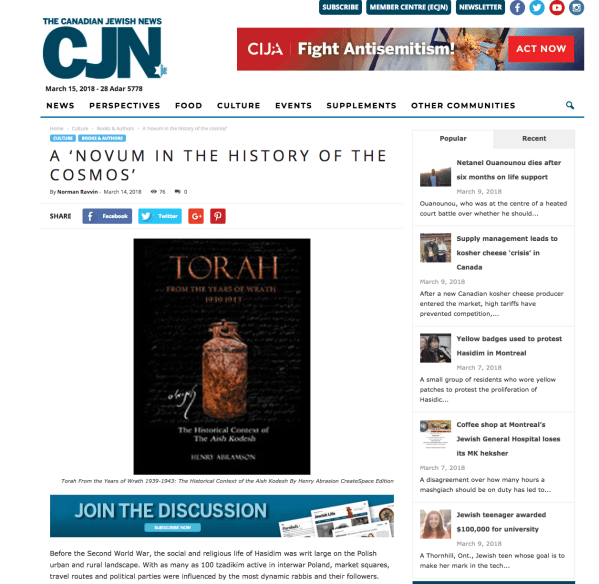
A ‘NOVUM IN THE HISTORY OF THE COSMOS:’ Dr. Norman Ravvin on The Piaseczno Rebbe

Really nice to see that readers in my native Canada are encountering the Piaseczno Rebbe: Here’s a new review by Dr. Norman Ravvin, appearing in the current Canadian Jewish News.

Note to my dear readers: the book is in Judaica stores, on Amazon and Kindle, but my favorite (and the best value) is the beautiful hardcover edition, available here with 15% discount.


Rabbi Josh Rosenfeld on the Aish Kodesh

I’m grateful to Rabbi Josh Rosenfeld for his kind and thoughtful review of Torah from the Years of Wrath, which appeared in this month’s Jewish Action. Please click here to read his thoughts on the work of the Piaseczno Rebbe.

Shabbat in the Warsaw Ghetto (Vayakhel 5700: March 2, 1940)

In early February 1940 the Nazis promulgated decrees that prohibited Jews from benefitting from general community charity services. Ration cards were distributed with racial distinctions: Jews received cards with a Star of David marked on them, while Poles and Germans received colored, otherwise unmarked cards. At this early date in the war, hunger did not stalk the ghetto as it would in subsequent years. The ration cards, however, only provided a daily average of 503 calories in the winter and spring of 1940, making the multiple charitable organizations such as the American Jewish Joint Distribution Committee (the “Joint”) absolutely essential (a black market economy, centered on food smuggled into the Ghetto, would become a major industry in the coming months). Even so, the Ghetto continued to absorb Jewish refugees from elsewhere in Poland, exacerbating the increasingly intolerable living conditions in Warsaw. The memoirs of Mary Berg, then sixteen years old, illustrate the news circulating in the Ghetto:

It seems that in Lodz the situation is even worse than here. A schoolmate of mine, Edzia Piaskowska, the daughter of a well-known Lodz manufacturer, who came to Warsaw yesterday, told us bloodcurdling stories about the conditions there. The ghetto has been established officially, and her family succeeded in getting out at the last moment only by bribing the Gestapo with good American dollars. The transfer of the Lodz Jews into the ghetto turned into a massacre. The Germans had ordered them to assemble at an appointed hour, carrying only fifty pounds of luggage apiece. At the same hour the Nazis organized extensive house searches, dragging the sick from their beds and the healthy from their hiding places, and beating, robbing, and murdering them. The quarter of Lodz which has been turned into the ghetto is one of the poorest and oldest sections of the city; it is composed mostly of small wooden houses without electricity or plumbing, which formerly were inhabited by the poor weavers. It has room for only a few tens of thousands; the Germans have crowded three hundred thousand Jews into it.  

The well-to-do Jews managed to escape the Lodz ghetto by various means. Some bribed the Gestapo, like my friend’s family; others smuggled themselves out in coffins. The Jewish cemetery is outside the ghetto, and it is possible to carry dead persons there. Thus some people had themselves boarded up in caskets, which were carried off with the usual funeral ceremonies; before reaching the cemetery they rose from their coffins and escaped to Warsaw. In one case the person locked in the coffin did not rise up again: his heart had failed during the ghostly trip.

On a physical level, the Piaseczno Rebbe contributed to the relief efforts by maintaining a soup kitchen in his Yeshiva and home at 5 Dzielna street. In the spiritual realm, however, he exhorted Warsaw Jews to remain true to the principles and practices of their ancestral faith. On Parashat Vayakhel of the Jewish Year 5700 (March 2, 1940), he focused on the sanctity of the Sabbath day:

Six days you will work, and on the seventh day it will be holy for you, a Sabbath unto G-d. A well-known question in raised in the holy writings: why was it necessary for the verse to command, six days you will work? They would work of their own accord, and thus it would only be necessary to command the Sabbath.

The Rebbe’s question is especially pertinent because Sabbath observance was noticeably declining as Warsaw Jewry struggled to provide for themselves under the new Nazi ration system.

The following interpretation is possible. The Talmud (Shabbat 70a) derives the thirty-nine forbidden forms of Sabbath activity from the phrase these are the words: words, being plural, represent two; the words, represent three; the combined numerical value of all of the Hebrew letters in the word these is thirty-six; producing  a total of thirty-nine. 

Typical for his analytical style, the Rebbe pushed the reading of this Talmudic passage into a more philosophic bent, strangely prescient of intellectual trends that would dominate western thought decades later:

The rationale behind this numerical calculation of the letters of the Torah is possible because the letters of the Torah are unlike any other letters in any other book in the world.  With regard other books, their essence is contained solely within the realm of their intent and intellectual framework. Since it is impossible to write pure thought in itself, therefore letters were employed as mere symbols from which words are built to thoughts and intentions. The letters, however, only have meaning as commonly-held symbols: the choice of representation is entirely arbitrary, and one letter could easily have replaced another letter.

In other words, the shape of letters in other languages is without intrinsic meaning. The form “P,” for example, represents a “p” sound in English but an “r” sound in Russian.

Such is not the case with the letters of the holy Torah. Every letter is precisely as it must be, and could not take a different shape. An alef could not represent a bet and a bet could not represent an alef. This is so because it is not merely the thought and intellectual content of the Torah that is holy—the holiness also diffuses to its physical vessels themselves, namely the letters. As this process of diffusion continues, even the fullness of the letters are suffused with holiness—not only the letters themselves, but even their individual and collective numerical values become holy, and are illuminated by the Torah such that we may learn from them.

 The physical embodiment of holiness, in this case into the very shapes and forms of the Hebrew letters, is a major theme in the Rebbe’s thought. He continued:

It is well known from the holy Zohar [3:94, parshat Emor] that the difference between the Sabbath and a festival is that a festival is a “called holy”—one calls it “holy”—whereas the Sabbath is intrinsically holy, as it is written, for it is holy unto you. Furthermore we see that the Sabbath does not have a commandment exclusively associated with it (as Rosh Hashanah has the shofar, Yom Kippur the five afflictions, and Sukot the booths and the four species). The Sabbath is defined by the abstention from specific activities that one engages in during the six days of the week, for the Sabbath itself transforms profane time into sacred time. Furthermore, it is well known that the holiness of the Sabbath even extends into the six days of the week, with the first three days receiving their measure of holiness from the preceding Sabbath and the latter three days from the coming Sabbath. That is to say, not only does physical reality derive holiness from the Sabbath, but even profane time itself receives a measure of sanctity.

The Rebbe concluded his remarks with encouragement, pointing the role of Shabbat in the anticipated Redemption:

This explains the Talmudic dictum, “were the Jewish people to observe two Sabbaths, they would be immediately redeemed.” The first Sabbath refers to the Sabbath itself, and the second Sabbath refers to the weekdays that draw their sanctity from the Sabbath. For six days you will work, [the seventh day] will be holy for you, a Sabbath of Sabbaths: two Sabbaths, because you will thereby draw the holiness of the Sabbath into the other days of the week. Thus with this dictum, the Torah alludes numerically to the thirty-nine categories of forbidden activity—an allusion to the fact that everything is sanctified, even the numerical values of the letters, and from this we may derive Torah.

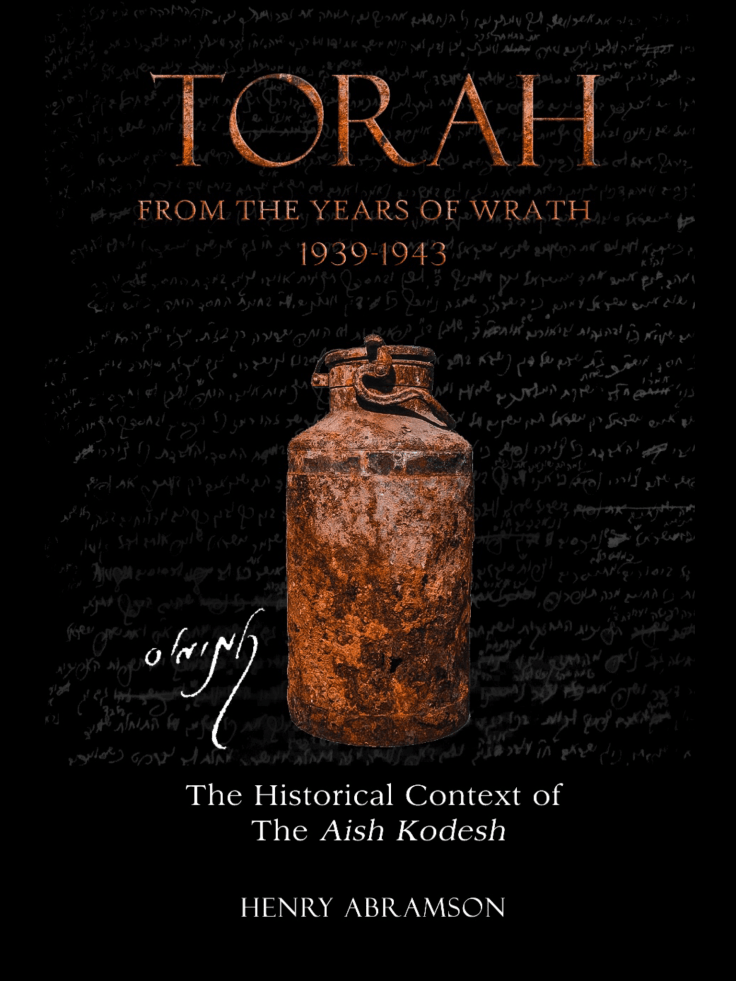
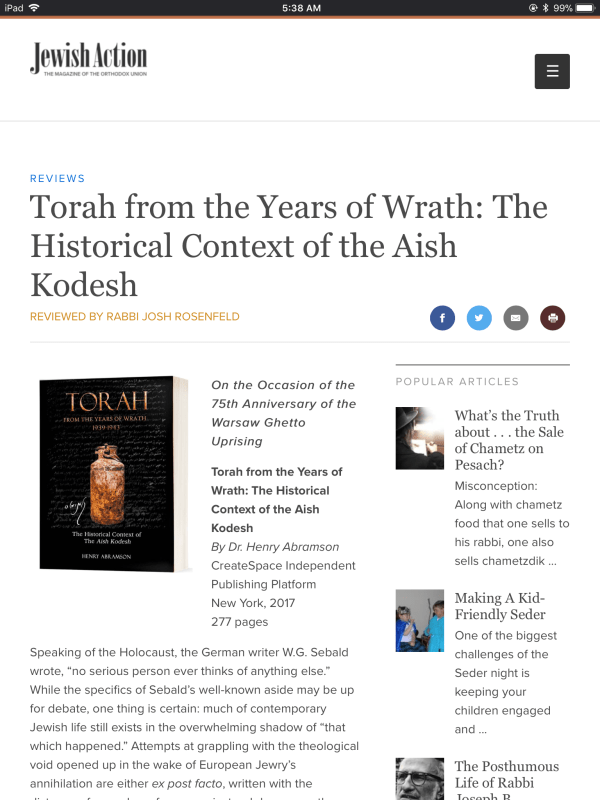
Torah from the Years of Wrath: The Historical Context of the Aish Kodesh

Paperback: $24.95

Hardcover special for readers with this link: $29.71

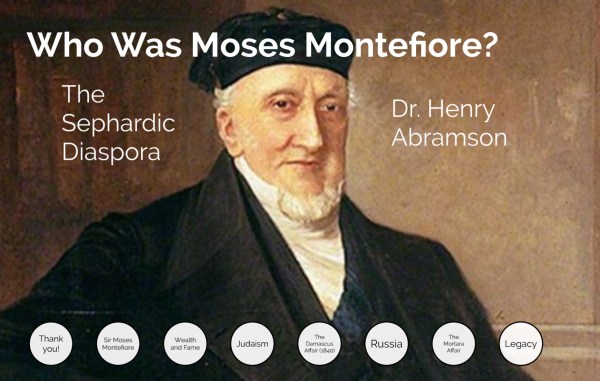
Who Was Sir Moses Montefiore?

Brief presentation on the life and works of Sir Moses Montefiore, an important 19th century Sephardic English philanthropist. Part of the Sephardic Diaspora series.

“Faith is not an argument. It is a conversation.”

“Faith is not an argument. It is a conversation, in which we listen, accept the premises of the interaction, make active choices and contributions, shift our direction as necessary based on the cues we hear, and most importantly, keep the conversation alive and active…Abramson’s work allows us to eavesdrop on one of the most powerful conversations of faith ever recorded.”

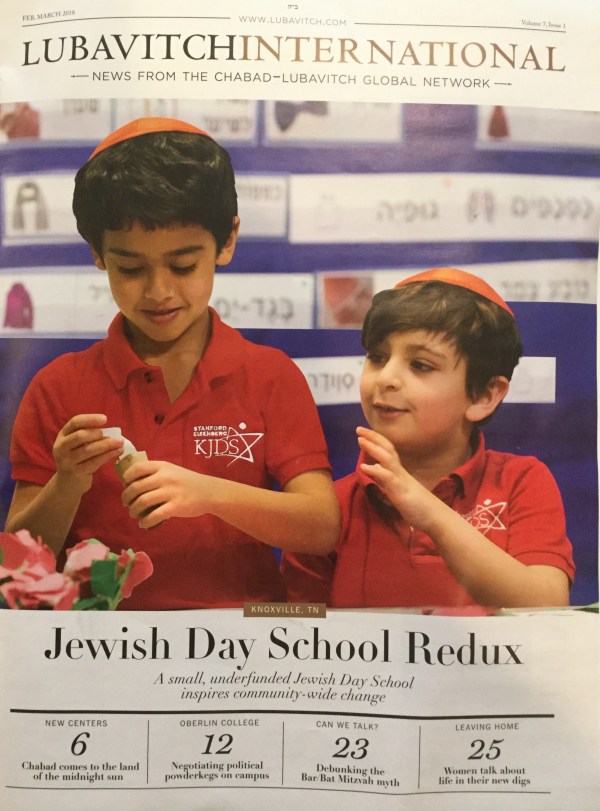
That’s my favorite passage from Dr. Chana Silberstein’s kind review, which I just read after receiving my copy of Lubavitch International (one of my favorite Jewish periodicals). Dr. Silberstein’s sophisticated review is unusually comprehensive, giving a lot of weight to Rabbi Shapiro’s prewar work, and then focussing his thoughts during the war.

The Piaseczno Rebbe was an associate of the Frierdiker Rebbe (the 6th Lubavitcher Rebbe, and the Tanya is one of the most quoted sources in his work, especially the Aish Kodesh. I’m very grateful to Lubavitch International for promoting the unique and powerful thought of the Piaseczno Rebbe to their wide readership.

Ukrainians and Jews in Revolutionary Times: New Review

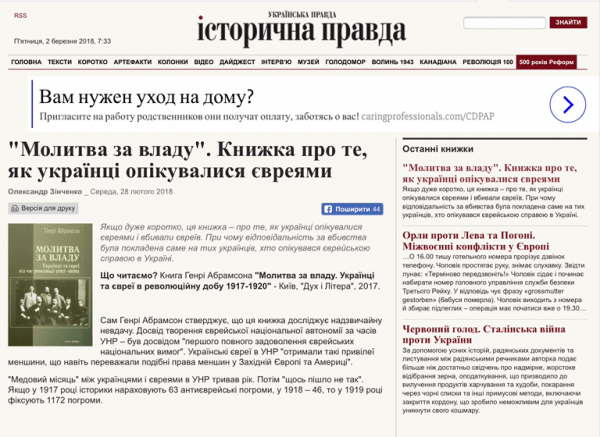
I am grateful for this thorough and kind review of the recent Ukrainian translation of “Ukrainians and Jews in Revolutionary Times” by Oleksandr Zinchenko, published in today’s Istorichna Pravda. If you don’t read Ukrainian (and refuse to read Google translate, which is close enough to the original to be seriously misleading), the revised English edition of the book just came out this week. Available on Amazon in paperback and ebook, and in a specially discounted hardcover straight from the publisher. 

Who Was the Chida? The Sephardic Diaspora Pt 3 (Video Online)

Brief presentation of the life and work of Rabbi Chaim Yosef David Azoulay, a fascinating Sephardic Rabbi of the 18th century. Part Three of The Sephardic Diaspora series.

Tonight in Crown Heights: Sephardic Jewry in Reconquista Spain

2018-02-1

Tonight at Machon Chana: part two of The History of Sephardic Jewry series. Last week we looked at the origins of Spanish Jewry and the Muslim period; tonight we will focus on the Reconquista up to the Expulsion of 1492.

Create a website or blog at WordPress.com

Up ↑