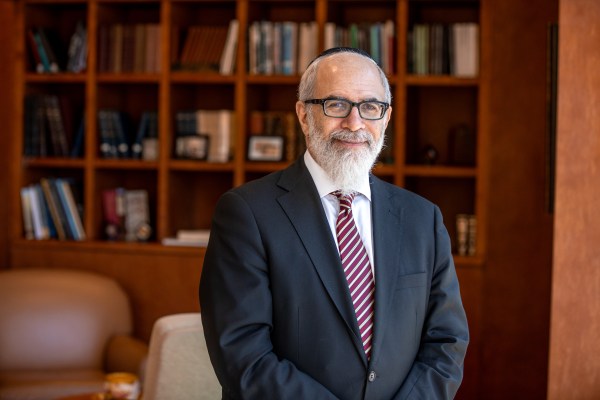
Really looking forward to meeting this community!
Lectures in Jewish History and Thought. No hard questions, please.


Photo: Aryeh Abramson looks out over Iroquois Falls, Ontario, Canada, where he spent the Sukkot vacation visiting his grandparents. Captured by the Roman General (and later Emperor) Vespasian while defending the Galilee, Josephus ultimately turned against his coreligionists and served as an advisor to the forces besieging Jerusalem during the first Roman-Jewish War. His first-hand…

Moses Maimonides (1135-1204) was one of the greatest minds the Jewish people ever produced: philosopher, jurist, physician, and an extremely prolific writer who left us classics like The Guide for the Perplexed and the Mishneh Torah. For several years I have been in the habit of reviewing his Laws of Repentance in the weeks leading up to the…

Pope Gregory I (“the Great”) was one of the most influential Church leaders of the medieval period. His policy on the treatment of Jews in Christian Europe, known by the Latin phrase “Sicut Judaeis,” instituted an official if ambivalent position that lasted from the sixth century to the beginnings of the modern era.
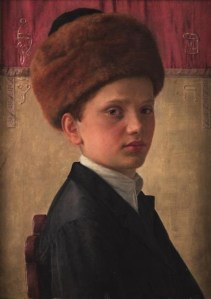
Reeling from the humiliating defeat of the Crimean War, the Russian Empire decides its policy of forcibly conscripting Jewish boys into military service is counterproductive, and finally abandons the cruel decades-old policy of taking underage children into thirty-one years of military training and service.
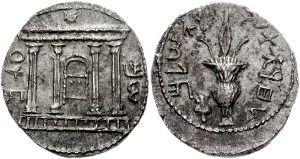
To view the Prezi associated with this lecture, please click here. Excerpt from “The Jewish Diaspora: A Brief History” Henry Abramson 3. The Roman-Jewish Wars Our sources for the Roman-Jewish wars of the first and second centuries are more substantial than those of earlier periods, primarily because the importance of developments in this tiny…
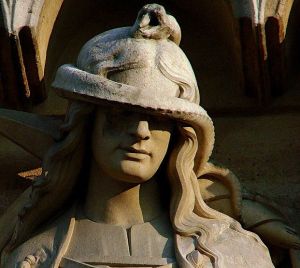
Born in turbulent times, Christianity emerged from its intensely Jewish roots to become the official religion of the Roman Empire within a remarkably brief period of time. As a daughter religion to Judaism, however, dissent between the two faiths slowly dominated the discourse as Christianity became less of a Jewish movement, and more of a…

The summer of 1321 was plagued with rumors that Jews had entered into a conspiracy with lepers (some versions also included Muslims) to poison the wells of Europe, resulting in mass hysteria and mob violence. King Philip V was eventually able to quell the movement, but it resurfaced twenty years later in a much more…

In August of 1778, the non-Jewish writer Gotthold Ephraim Lessing wrote to his brother of a new literary project designed to further tolerance of Jews in German society. The result was Nathan the Wise, a sensation that was initially banned by the Church and heavily criticized by antisemites of the day.
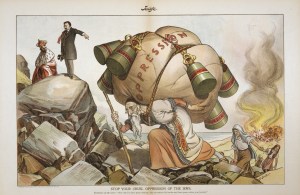
Officially banned in 1479, no Jews lived in the Russian Empire until Tsarina Catherine II conquered a major portion of Polish territory, instantly inheriting the largest single concentration of Jews in the world. Under her rule the Pale of Settlement was established, determining the region where Jews were allowed to reside, however tenuously, until the…

To view the Prezi associated with this lecture, please click here. Excerpt from “The Jewish Diaspora: A Brief History” Henry Abramson 2. Jews and Judaism in the Year Zero Two Jews, three opinions. The year zero was not nearly as auspicious or significant for Jews as it would later be for Christians. Jews observe a…

Instructions: please watch the lecture, review the reading below, and kindly take the anonymous poll. Thank you! To view the Prezi associated with this lecture, please click here. Excerpt from The Jewish Diaspora: A Brief History Henry Abramson 1. What is Jewish History? “They tried to kill us, we survived, let’s eat.” So runs the…
Brief discussion of the encounter of Provencal Jewry with the writings of the great Spanish thinkers and other Arabic-language material, and its impact on European Jewish history. Part of the Jews of the Rhone series, more at henryabramson.com.
https://youtu.be/F94bCi2hmBk Lecture delivered on Tisha B’Av 5779 (August 11, 2019) at the Young Israel of Lawrence-Cedarhurst. The lecture is also posted here: https://www.torahanytime.com/#/lectures?v=88833

This is what I’m thinking about during the Nine Days. Click here to read the article. Thanks to Laura Adkins for her superlative editing.

Answering a question from Dr. Fred Samuels of Rechovot regarding Synagogue architecture, I noticed that The Lost Wooden Synagogues of Eastern Europe (Carl Hersh, 1999) is available online for free. I think it’s especially appropriate viewing for the Nine Days and Tisha B’Av. Beautifully narrated by Theodor Bikel, the film documents the beauty and grandeur…

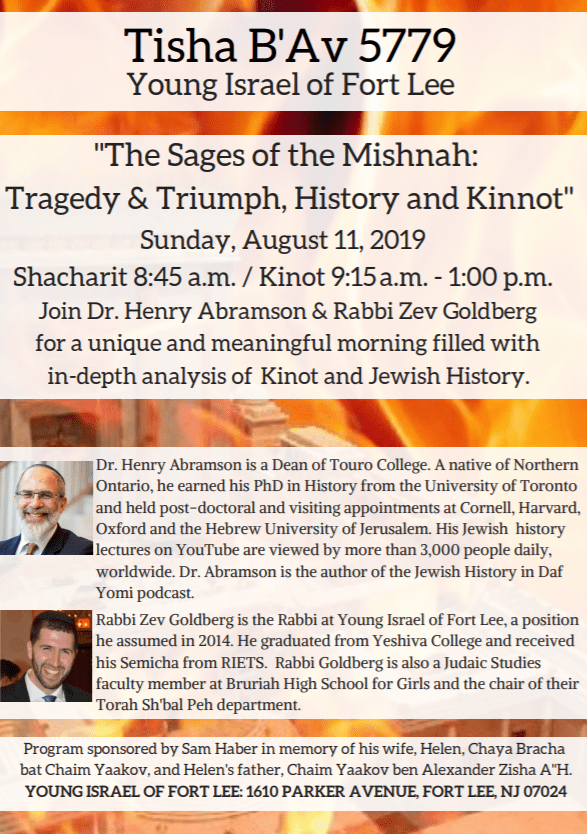
Hopefully this event will be cancelled. If not, please join me at The Young Israel of Ft. Lee with Rabbi Zev Goldberg on Sunday, August 11 at 8:45 am or at the Young Israel of Lawrence-Cedarhurst at 6:00 pm. Lecture is free and open to the community.

This one’s for my mother. Book interior beautifully designed by Danit Mills.

The amazing legend, repeated in several medieval sources, of a Jewish kingdom in 8th century France. Part III of the Jews of the Rhone series.

I read the Mueller Report (yes, the whole thing). You should too. Here’s some useful shortcuts if you need them.

Another opportunity for social media creep into your life! But this stuff is interesting, actually.

Great for magidei shiur: an index to over 150 videos on Jewish History in Daf Yomi! Over 2,600 more on the way.