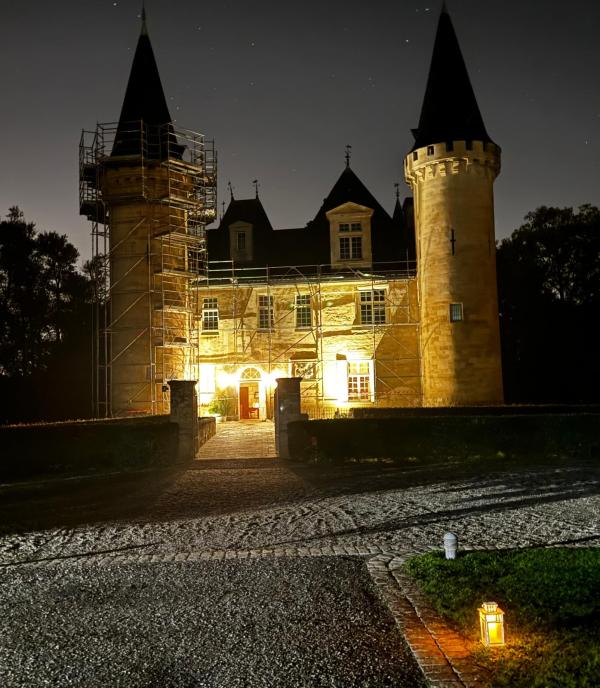
Really looking forward to meeting this community!
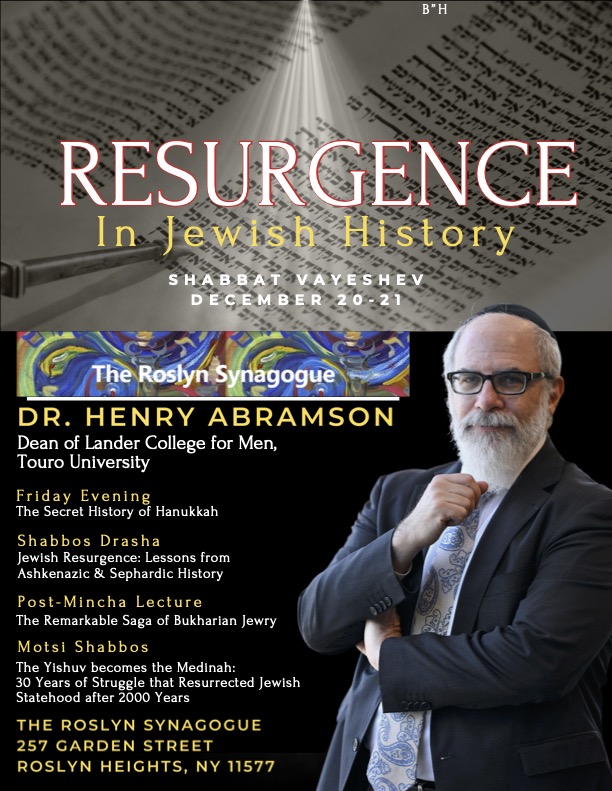
Lectures in Jewish History and Thought. No hard questions, please.




Wondering how to harness the power of the Internet for effective teaching? Confused and maybe alarmed by all the talk about using social media as a pedagogic tool? Sign up for these three workshops for teachers by visiting http://www.miamijewisheducators.org! A project of Touro College South and The Shul.

Pakistani terrorists attacked the Chabad House in Mumbai, India, on Wednesday, 29th of Heshvan, 5769 (26 November 2008). Part of a concerted attack that killed 179 and wounded hundreds, they murdered the young Chabad emissaries running the house, Rabbi Gavriel and Mrs. Rivky Holtzberg. Their infant son, who turned two the day after his parents…

Who, exactly, wrote down the foundational texts of the Oral Torah? Who is responsible for the compiling of the Talmud? These were some of the questions addressed to Sherira Gaon, the Rosh Yeshiva of the great city of Pumbedita in Babylon in 987 by a young Rabbi in Tunisia. His famous response, preserved for over…

Hannah Szenes was a young Hungarian Jewish woman who joined the resistance in 1943, parachuting into Nazi-occupied territories with British support. She was captured and tortured, but did not divulge secret information on her colleagues. Her poetry, including the classic “Blessed is the Match,” survive and add to her legacy.
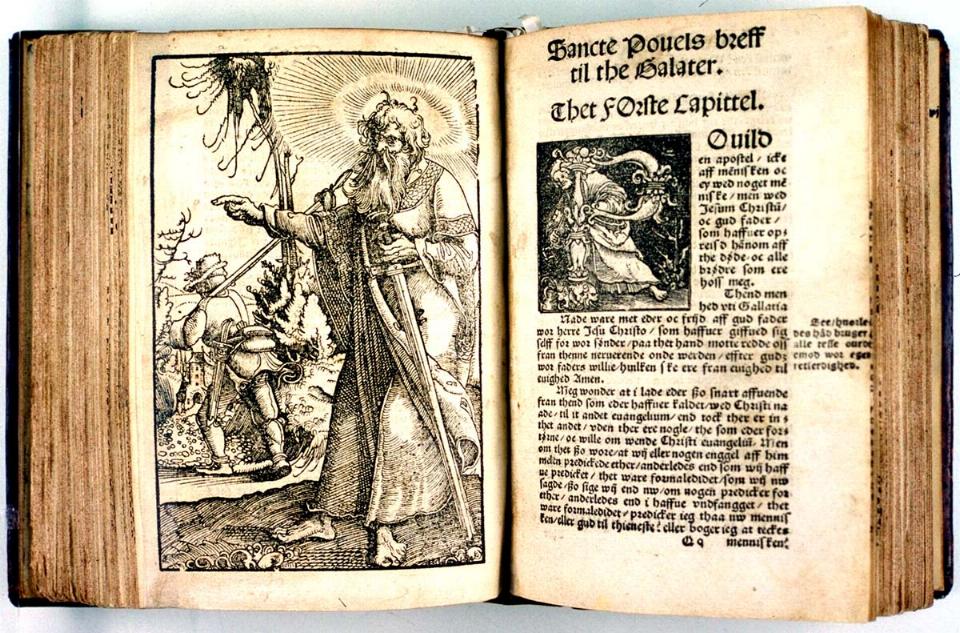
Credited with the popularization of Christianity, Saul (later Paul) of Tarsus was influential in mediating Jewish ideas to an increasingly Gentile audience. Combining appealing concepts such as life after death and a personal Deity with a relaxed approach to the requirements of Rabbinic Judaism, the former Pharisee succeeded in spreading Christianity well beyond its narrow…

Vladimir Ze’ev Jabotinsky (1880-1940) was one of the most influential political thinkers in the first half of the twentieth century, founder of the Revisionist movement.

Compiled by Rabbi Yehuda Ha-Nasi in an exceptionally difficult time for the Jewish people, the Mishnah created the possibility of creating a “portable Judaism.” After the destruction of the Temple in 70 and the dramatic escalation of the diaspora, the Mishnah allowed Jews to define their religion within an intellectual and textual context, outside of…

Virtually ignored by Jewish philosophers, Philo of Alexandria represented the high point of synthesis between Greek and Jewish thought in the ancient world, and had a huge influence on early Christian thinkers. A prominent representative of the Egyptian Jewish community to the Roman Emperor, and well-respected in his day by his coreligionists, he nevertheless had…

Wrongly accused of espionage, Captain Alfred Dreyfus was sentenced to Devil’s Island on the basis of remarkably tenuous evidence. May critics, including the famous writer Emile Zola, argued that Dreyfus was unfairly charged simply because he was a Jew in the French army. As evidence mounted that another officer was guilty, the Dreyfus Affair exposed…

Captured by the Romans, Josephus was a Jewish general who ultimately served as a military advisor to General Titus. Josephus recorded his first-hand observations of the destruction of the Temple, and went on to a brilliant literary career in Rome, describing Jews and Judaism to a wider audience. Who was Josephus–traitor to his people or…
Rembrandt is well-known for his depictions of Jewish subjects, both as contemporary portraits and as models for Christian biblical characters.
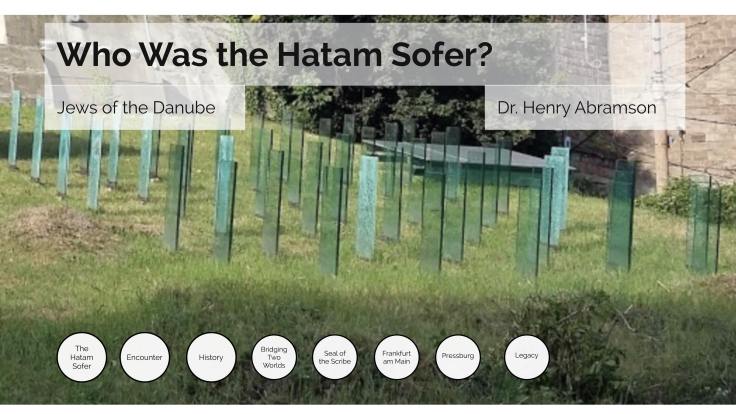
A scholar and a fighter, the Hatam Sofer articulated a definition of Orthodoxy for the modern era.

Brief video lecture on the life and work of Isaac of Vienna (c. 1180-c. 1250), author of the important Or Zaru’a.

We begin our discussion of the Jews of the Danube with the question: “Who Was Isaac of Vienna (the Or Zaru’a)?”

Unexpected and unexplained, a phalanx of glass obelisks emerge silently from the earthen mound, punctuating the atmosphere above what appears to be an anonymous tel. Some are transparent, others pebbled and translucent, but all glow with a faint green hue. Unyielding, they stand in rigid formation on the angled surface of the earth. These mute…

When the Hungarians purchased their alphabet, vowels were on sale (also plastic sofa coverings and chandeliers). By the time the Poles came around, all that was left were the consonants. This helps explain why we anglophones are so challenged by both languages: in the case of Hungarian, there are just way too many umlauts and…

Abandoned Nazi trucks were discovered by children playing in the shallows of the diminished Danube.

Hello fellow students of Jewish history! Today our exploration of Jewish heritage along the Danube River valley begins in Budapest, home to one of the largest concentrations of Jews at the turn of the 20th century. I’m really thrilled to be together with so many people who share my passion for the amazing story of…
Part One of The Jews of the Danube series (Fall 2018). Several lectures to be presented live in Europe this month, planning to return to Brooklyn for more live lectures beginning November 5. Enjoy in good health!

This article appeared, in slightly abbreviated form, in today’s Forward. So many colleagues and friends–fellow students of the Rebbe–contributed moving quotations on the Facebook page dedicated to the Rebbe. Laura Adkins’ editorship at the Forward is really great, and the final version is certainly more appropriate for the wider audience. If you would like to…

The Jews of the Danube Fall 2018 Lecture Series Lectures in Europe: October 2018 Lectures in Brooklyn: November-December 2018 From its headwaters in Germany’s Black Forest to its final destination in the Black Sea, the Danube River flows through ten countries and over ten centuries of Jewish history. Great cities like Vienna and Budapest punctuate…