Judaism and the Origins of Christianity HIS 155 Lecture 1.4

Synagoga, Notre Dame de Paris (19th c.). Source: Wikimedia Commons.

Born in turbulent times, Christianity emerged from its intensely Jewish roots to become the official religion of the Roman Empire within a remarkably brief period of time.  As a daughter religion to Judaism, however, dissent between the two faiths slowly dominated the discourse as Christianity became less of a Jewish movement, and more of a choice favored by gentiles throughout the Empire.

To view the Prezi associated with this lecture, please click here.

Excerpt from “The Jewish Diaspora: A Brief History”

Henry Abramson

4. Judaism and the Origins of Christianity

From a Jewish perspective, the pivotal figure in the birth of Christianity was Saint Paul rather than Jesus.  A self-described persecutor of the early followers of Jesus, he never met Jesus in life, but recounts a dramatic conversionary experience while on the road to Damascus sometime around the year 35 CE.  Jesus appeared to him and addressed him by less well-known Jewish name Saul, asking why he insisted on attacking the nascent movement.  Struck blind for three days, Paul emerged from the encounter as Jesus’ most devoted disciple, ultimately traveling throughout the eastern Mediterranean and initiating the landslide of support for Jesus that would culminate in the conversion of Emperor Constantine to Christianity in the early 4th century CE. Without Paul’s activity (and precluding any Divine status, of course), the ultimate trajectory of Jesus’ teachings Jesus would probably have been lost to Jewish history.

Who was Jesus, Jewishly speaking? Despite the phenomenal impact he had on world history, the sources we have to understand his life are precious few and deeply flawed. Specifically, we must rely on the testimonies of his followers, recorded often decades after Jesus’ death sometime in the 30s, and later redacted into the Christian Bible. Four of these texts, known as the Gospels of Matthew, Mark, Luke and John, describe the life of Jesus and his relationship with the larger Jewish community. The nuanced changes between these texts reflect not only the relationship of the authors to Jesus himself, but the image of Jews as they were perceived in the decades following Jesus’ death when the Gospels were set to writing. Other books in the Christian Bible, notably the many works of Paul, are also valuable as insights into the way Jesus was perceived by the Jews of his day.

Working with the four basic religio-political orientations of the early first century, it seems clear that Jesus be understood as a “rebellious Pharisee.” The predominant thrust of his teachings are certainly well in line with the Rabbis, in particular Hillel, whom Jesus borrows from liberally. Jesus’ emphasis on humility, pacifism, and the importance of basic ethical conduct place him squarely within the parameters of traditional Pharisaic, or Rabbinic, Judaism. Indeed, many of his most eloquent pronouncements are actually paraphrases or even direct quotations of biblical passages or rabbinic teachings, including Matthew 22:36-40, in which Jesus refers explicitly to the Hear, O Israel prayer (the shema, Deuteronomy 6:5) as the greatest commandment, followed by “love your neighbor as yourself” (quoting Leviticus 19:18).

At the same time, Jesus was known for his unconventional and often assertive challenges to authority, even Rabbinic authority. Consider for example one of his childhood exploits, the “overturning of the tables of the moneychangers,” described in Matthew 21:12-13. The Temple rituals required a large number of sacrificial animals, including doves that were purchased by pilgrims in Jerusalem. Furthermore, certain mandatory offerings required the use of specific coinage such as the half-shekel contribution. As a result, the Temple courtyard was a place of considerable business transactions, a  market where buyers and sellers would trade for religious purposes. Jesus evidently found this crass commercialism unbecoming to the dignity of the Temple, and created something of a ruckus, overturning the tables of the moneychangers and exclaiming “it is written, ‘My house shall be a house of prayer”…and you have turned it into a den of robbers!” The sentiment would sit well with the Rabbinic aversion to duplicity in business, but Jesus’ actions would clearly put him on the extreme end of the spectrum of Pharisaic response to corruption, hardly the  “strategic retreat” described in a previous chapter.

Christ Expels the Moneychangers from the Temple, Cecco del Caravaggio, 1610. Source: Wikimedia Commons

Another example of Jesus’ difference from conventional Pharisees would be his pronounced populism, a tendency that often put him in circles that the Rabbis would generally avoid, including prostitutes, thieves, and even tax collectors. Invariably, these individuals were admirably transformed by their contact with Jesus, but the very fact that Jesus ministered to them stands in contrast to many Rabbinic teachings, such as Nitai of Arbel’s statement, i”distance yourself from an evil neighbor” (Avot 1:7). Jesus clearly defined his own path, although the general direction of his teachings were clearly in line with the views of the Pharisees.

Readers of the New Testament may therefore be puzzled by the fact that Jesus has some remarkably strong debates with Pharisees.  How could he be a Pharisee himself, and voice such harsh criticism? Consider for example Matthew 23, in which Jesus launches into a chapter-long condemnation of the Pharisees, describing them as two-faced, cold, arrogant figures who care only for their own honor and little for the people as a whole. Passages such as this have caused the word “Pharisee” to enter the English language as a synonym for “hypocrite” or “self-righteous.”

In reality, Jesus’ invective must be understood as a type of family dynamic: Jesus condemns the Pharisees so harshly precisely because he is closest to them. Just as a sibling will not hesitate to voice strong criticism to a brother or sister because their close relationship permits such communication, so too Jesus criticizes the Pharisees because he considers himself (and was probably so considered) a member of the family.  Jesus and his teachings are best understood as the expressions of a strong statement of Pharisaic Judaism, perhaps couched in a stronger form than was considered appropriate for the Rabbis of his day, but nevertheless squarely within the family dynamic.

* * *

From the perspective of Jewish history, however, Jesus’ death was far more significant than his life. Jews have suffered centuries of persecution for their perceived role in his crucifixion, a charge which not only has no basis in historical reality, it also has no relationship to the Gospel text itself. Nevertheless, Jesus’ cruel fate, known as the Deicide or “killing of god,” was often the pretext for violence against Jewish communities well into the twentieth century.

The basics of Jesus’ end are well known to readers of the Christian New Testament. Jesus is betrayed by one of his own followers (the unfortunately named Judas) to the Roman authorities. This betrayal was likely viewed with sympathy by the Sadducees, represented by the High Priest Caiaphas, who convened a trial in the Jewish court of the Sanhedrin to condemn Jesus (described in Matthew 26). The Roman Prefect Pontius Pilate jailed Jesus and, as per a custom undocumented in any other source, he offered the Jews the opportunity to free him as an act of Roman clemency. The Jewish mob assembled before Pilate, however, insisted that he free Barabbas, a common thief, instead. When Pilate asked the Jews to confirm this choice, they responded “his blood be on us and on our children” (Matthew 27:25). Pilate then famously “washed his hands” of the affair, sealing Jesus’ fate. He was scourged and crucified, the typically Roman form of capital punishment. The Jews’ response, recorded by the author of the Gospel According to Matthew several decades after Jesus’ death, would be understood by contemporary readers as a prefigurement of the destruction of the Temple in 70 CE. Unfortunately, readers in later centuries have interpreted this passage as a biblical sanction for Jewish responsibility for the death of Jesus, with dire results.

Blaming Jews for the death of Jesus is also a direct violation of the very basic Christian theological principal that Jesus died for the sins of all humanity, and not because of historical accident of any particular group’s behavior at the time, neither Jew nor Roman nor Greek (see 1 Corinthians 15:3-8). As we will discuss in later chapter, however,  even a fundamental and inspiring Christian theological concept of the collective human guilt for Jesus’ death is no match for the elemental force that is human hatred. As Jean-Paul Sartre once famously put it, “if the Jew did not exist, the antisemite would invent him.”

* * *

The rise of Paul, Jesus’ most prominent disciple, signified a dramatic change in the fledgling Christian movement. Born in Tarsus to a middle-class Jewish family of tent makers, Paul’s personal conversion to early Christianity marked the beginning of an increasing gentlization of the movement, as more and more non-Jews chose to become followers of the martyred Jesus. Paul, in contrast to many of the other apostles, encouraged this trend, arguing that Jesus’ message of salvation was too big for the tiny circle of Jewish followers he had attracted in Judea, and deserved to be heard by Greeks and Romans as well.

Paul’s position provoked a major debate among early Christians with regards the proper role of the Torah, or as Paul repeatedly put it in Greek, “the Law” (nomos). Two aspects of the debate are especially relevant for our purposes. First, what was the relationship of the practical commandments of the Law for Christians, Jew and Gentile?  Did Jesus’ ministry obviate the standard requirements of Jewish life, including the dietary laws, the Sabbath and so on, or did halakhah remain as authoritative as ever?  Furthermore, were Gentile converts to Christianity similarly obligated as Jewish Christians to submit to circumcision and other Jewish practices? It must be remembered that “Christianity” per se did not even exist at this time, merely a circle of Jews struggling to articulate the legacy of their late, charismatic leader. Paul’s record on the demands of the Law is somewhat ambivalent, but history decided the matter for him: as Gentile Christians steadily outnumbered the dwindling percentage of Jewish Christians through the second and third centuries, the observance of any form of halakhah withered.

The second debate concerning the role of the Law was perhaps still more significant. As mentioned earlier, the very antiquity of Judaism was highly valued in the ancient world, and the Torah was correctly viewed as the central proof for the validity and value of the faith. If Jesus’ teachings were viewed as a departure from that text, the movement would lose a considerable amount of prestige among would-be Gentile converts. A passage in Deuteronomy illustrates the disdain the ancients had for the faddish new religions that Jews seem prone to adopt “for they worship gods that no one heard of, and people say, ‘oh,  that’s just a new Jewish thing.”  Christianity’s organic connection to the Torah was obvious to the early Jewish followers, but how would Gentiles understand it? Furthermore, it was very clear that the Torah and later prophetic writings were an extended story of a particular people and their God–how did the new religion describe the relationship of Gentiles to this story? In particular, what was to be done with the numerous passages that affirmed the Jews as God’s “chosen people”?

The consensus that emerged from Paul’s ministry is known as the Concept of Election, an aspect of the Pauline Doctrine that transformed Christianity into a Gentile movement. Basically, the solution to the contradiction between the chosen status of the Jews in the Bible and the elevation of the Christians (including Gentile converts to Christianity) was that Jews had lost God’s favor through their refusal to recognize Jesus as the Messiah.  This act of betrayal irreparably severed the relationship between the Jews and God, argues the theory, and this connection can only be regained through acceptance of Jesus as Messiah. The true inheritors of the biblical promise are the Christians, whether Jewish or Gentile, and the Hebrew scriptures must be read as an extended and sophisticated prefigurement of Jesus’ ministry and the future life of the  Church.

* * *

Representation of Church and Synagogue from the 14th century Cathedral of Notre Dame, Paris. Note the upright staff of the crowned Church, contrasted with the broken, bareheaded Synagogue. Church holds the Holy Grail whereas Synagogue is slowly releasing the tablets of the Law. Most significantly, Church’s eyes are open , while Synagogue’s eyes are blinded by an ominous snake wrapped around her head. Source: Wikimedia Commons.

The separation between traditionalist Jews and Jewish Christians was mutually reinforced by the turn of the first century with the institution of a specific “blessing” in the daily Amidah prayer.  Composed by Samuel the Lesser, the text of this liturgical insertion specifically calls down condemnation on the “informers” (malshinim) understood in context as a reference to Jewish Christians who may have slandered the Jewish community to Roman authorities. This insertion—which remains in the traditional liturgy to this day—was used as public litmus test to eliminate Jews who harbored Christian sensibilities from the broader community. A person suspected of Christian leanings would be asked to lead the prayer services, and the audience would listen carefully for the inclusion or exclusion of this new passage: if the prayer leader uttered it, that was a demonstration of fidelity to the community and a rejection of Christian belief. Omitting the passage would reveal the individual’s sympathy for the Christian movement, and could lead to forcible eviction from the synagogue and widespread communal ostracism.  Some scholars believe the apostle John suffered such a fate, and in fact the Gospel of John contains some of the strongest anti-Jewish language of the all Christian scripture. 

By the second or third decade of the second century, the rift between Judaism and Christianity was complete. Belief in a corporeal son of god was simply incompatible with traditionalist beliefs, let alone a deceased Messiah. Unlike many other heterodox movements within Judaism, however, the increasing proportion of Gentiles participating in the early Church, particularly given their non-observance of Jewish law, made reabsorption of Jewish Christians into the traditionalist community impossible. Writing decades and even centuries later, the Rabbis of the Talmud look back on this separation with a variety of perspectives, often condemning Jesus in harsh terms. One passage found in Tractate Sotah (47a), however, presents a more wistful perspective.  The section is hardly historical, yet it says much about how the Rabbis retrospectively viewed the development of Christianity.

The passage is cited in the context of a discussion of proper pedagogic behavior: teachers are urged to “draw close with the right hand and push away with the left,” meaning, make students feel valued (draw close with the right, stronger hand) while maintaining appropriate professional distance (push away with the left). Teachers should not, the Talmud warns, “push away with both hands…like Yehoshua ben Perahyah, who pushed away his student with both hands.” His student is identified as none other than Jesus, and the Talmud records an incident that, at least metaphorically, marked the origins of Christianity.

Rabbi Yehoshua ben Perahyah were traveling and stopped at an in, where they were treated with great honor and hospitality by a female inkeeper. The Rabbi remarked to Jesus, “How pleasant is this woman,” using a Hebrew word (na’ah) that could be misunderstood as “beautiful.” Jesus, the story goes, took the Rabbi’s comment the wrong way, and responded “well, her eyes are a little too round.” Incensed that Jesus thought he was speaking of her physical appearance, Rabbi Yehoshua ben Perahyah placed Jesus in excommunication with a blast of four hundred shofar horns (a typical Talmudic use of hyperbole). Chastened, Jesus begged forgiveness on several occasions, only to be repeatedly rejected. Finally, Jesus approached his teacher during the shema prayer, which may not be interrupted. Rabbi Yehoshua ben Perahyah had in mind to accept Jesus back into his good graces, and held up his hand to indicate that he should wait until the prayer was concluded. Once again Jesus misunderstood the gesture, thinking it was yet another rejection, and he left for good. The separation—the result of tragic miscommunication—was complete.

The fascinating aspect of this story, and its inclusion in  the Talmud, is that the point of the story for Jewish readers is not the origins of Christianity, but the criticism of Jesus’ teacher. His overly harsh treatment of Jesus, “pushing away with both hands,” contributed to the divorce between Judaism and early Christianity, with far-reaching ramifications.

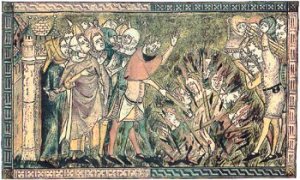
Jews, Lepers and the Black Death (This Week in Jewish History)

Jews Burned to Death in Strasbourg, c. 1349. Source: Wikimedia Commons.

The summer of 1321 was plagued with rumors that Jews had entered into a conspiracy with lepers (some versions also included Muslims) to poison the wells of Europe, resulting in mass hysteria and mob violence. King Philip V was eventually able to quell the movement, but it resurfaced twenty years later in a much more potent form as the Black Death swept through Europe.

Nathan the Wise by Gotthold Ephraim Lessing (This Week in Jewish History)

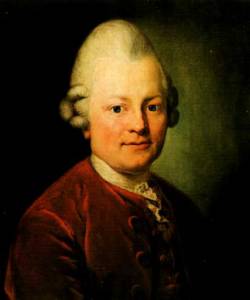
Gotthold Ephraim Lessing (1729-1781) Source: Wikimedia Commons

In August of 1778, the non-Jewish writer Gotthold Ephraim Lessing wrote to his brother of a new literary project designed to further tolerance of Jews in German society. The result was Nathan the Wise, a sensation that was initially banned by the Church and heavily criticized by antisemites of the day.

The Pale of Settlement (This Week in Jewish History)

Emil Flohri, "Stop Your Cruel Oppression of the Jews" (1904).  Source: Wikimedia Commons.
Emil Flohri, “Stop Your Cruel Oppression of the Jews” (1904). Source: Wikimedia Commons.
Officially banned in 1479, no Jews lived in the Russian Empire until Tsarina Catherine II conquered a major portion of Polish territory, instantly inheriting the largest single concentration of Jews in the world. Under her rule the Pale of Settlement was established, determining the region where Jews were allowed to reside, however tenuously, until the 20th century.

Two Jews, Three Opinions: Jews and Judaism in the Year Zero (HIS 155 Lecture 1.2)

Duro-Europas Synagogue Mural (3rd c.).  Source: Wikimedia Commons.
Duro-Europas Synagogue Mural (3rd c.). Source: Wikimedia Commons.

To view the Prezi associated with this lecture, please click here.

 Excerpt from

“The Jewish Diaspora: A Brief History”

Henry Abramson

2. Jews and Judaism in the Year Zero

Two Jews, three opinions. 

The year zero was not nearly as auspicious or significant for Jews as it would later be for Christians. Jews observe a calendar beginning with the Biblical account of Creation, which would make 0 in the contemporary Gregorian calendar the year 3760 through 3761 in the Jewish calendar. Why 3760 through 3761?  The Jewish New Year (Hebrew: Rosh Hashanah, “the head of the year”) occurs in the fall, perfectly timed for maximal interference with the beginning of the school year. There’s a lot more to say about the nature of the Hebrew calendar (like, for example, Rosh Hashanah actually marks the beginning of the seventh month, not the first), but let us just clarify one small point: the Jewish holidays are never “late” or “early” in relation to the Gregorian calendar. The Jewish calendar is lunisolar, meaning, it follows the lunar calendar of approximately 354 days per year, with periodic corrections to keep the seasons aligned with particular months. It is unlike the purely lunar Muslim calendar, in “loses” eleven days out of the 365 solar cycle every year, thus shifting the seasons every eight years (imagine January in the middle of the summer).  The Jewish calendar is also unlike the solar Gregorian calendar of 365 days, which corrects itself by subtracting a day in leap years which occur approximately every four years. In place of that small, periodic adjustment, the Jewish calendar adds a leap month seven times over a sixteen-year cycle.

Returning to our discussion of the non-event of the Year Zero: it may not have been an auspicious date, but it has a certain ring to it, and it serves as a good marker to illustrate the fractious and difficult nature of Jewish communal politics of that era. It was certainly a time when the proverbial statement, “two Jews, three opinions” would apply, as Jews were divided along several major fault lines regarding one crucial notion: what to do about the Roman occupation of Israel. These fault lines would deepen though the course of the first century, ultimately ending in political disaster with the outbreak of the Roman-Jewish wars, the destruction of the Temple and the exile of the Jews from their homeland.

* * * * *

Our primary sources for the earliest period of Jewish history may be classified into three basic categories. First and foremost, we have the Bible, a massive and massively important document that is at the foundation of Judaism, Christianity, Islam, and western culture in general. Second, we have the texts that were also-rans to the Hebrew Bible, books that circulated in the ancient period yet were not incorporated into the canonical text. Finally, we have exogenous sources, meaning those texts that originate from outside the Jewish tradition, authored by Egyptians, Greeks and Romans. Let us briefly consider each of these in turn.

The Hebrew Bible is known by the acronym “TaNaKh,” which stands for Torah, Nevi’im, and Ketuvim (Pentateuch, Prophets and Writings). According to traditional Jewish theology, the Torah is the complete and correct transcript of God’s dictation to Moses (although some medieval commentators disagree regarding the passage in Deuteronomy 34 that describe’s Moses’ death and burial). The Prophets and the Writings, on the other hand, are understood as the writings of individuals blessed with divine inspiration. These books are placed within a coherent narrative tradition by a parallel body of teachings known as the Oral Torah, using a complex and  distinctive hermeneutical system of interpretation, a subject that we will return to later in this text. For our purposes at this point, it is significant only to mention that the Tanakh is an excellent source of religious information, but its authors were not primarily concerned with the production of a scholarly historical document. The Tanakh is a religious document, intended to promote spiritual edification and conformity to the will of God. The fact that it includes some valuable historical data is ancillary to its main purpose.

Nevertheless, the Tanakh is our first go-to source for early Jewish history, and we can only attempt to verify or modify its account with other discoveries such as new archaeological finds. It is from the Tanakh that we derive the ur-history of the Jewish people, originating with Abraham’s migration from Mesopotamia to Israel, followed by the descent of the Jews into Egyptian slavery (Genesis), their miraculous redemption and wandering in the desert (Exodus and Numbers in particular), conquest of Israel (Joshua, Judges), and their first monarchies (Samuel).

Alongside the Tanakh are a series of fascinating books that circulated in the ancient Jewish world but did not, for various reasons, make the grade of inclusion in the Tanakh. These works, known in Rabbinic literature by the scandalous term “outside books” (sefarim hitsoni’im), were nevertheless sometimes incorporated into the canonical texts of other faiths under the Greek term apocrypha (“writings that are hidden away”). In contemporary usage, the term apocryphal carries the meaning of something that is obscure and perhaps not totally reliable, consonant with the mainstream Jewish perspective of the ancient period. These books, most of which were authored by Jews and with broadly similar intent to the books collected in Tanakh, tend to date from the later centuries of the ancient period, and provide additional clarification and details on historical events that are ignored or mentioned only in passing in the Tanakh and later Rabbinic literature.  The Catholic Bible, for example, included two apocryphal works entitled I and II Maccabees that shed tremendous light on the Hasmonean movement of the 2nd century BCE.

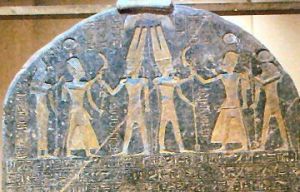
Finally, we have scattered references to Jews in explicitly non-Jewish literary and archaeological sources. The earliest of these sources is the stele of the Pharaoh Merneptah (c. 1230 BCE), discovered in 1896. The text includes a passage that reads “Israel is wasted, it’s seed exists no more.” A dire and evidently false statement, it stands in ironically dramatic contrast to the remains of the Pharaoh Merneptah himself, who is not holding up nearly as well as his stele is.

Merneptah Stele
Merneptah Stele. Source: Wikimedia Commons.
Merneptah. Source: Wikimedia Commons.

This illustrates two obvious drawbacks of non-Jewish sources from the ancient period. First, they are rather few in number, in marked contrast to the huge role that Jewish history would play in the development of western culture. Second, they are highly tendentious, more often than not portraying the Jews in an unnecessarily negative light. Usually these early ruminations on Jews and Jewish culture are based on simple misunderstanding. For example, many cultures found the Jewish Sabbath hard to comprehend, and the mandatory rest on that day was often confused with laziness. Similarly, the dietary restrictions of kashrut meant that only specially prepared food could be consumed, and this was misperceived as a type of misanthropy or clannishness. Thus non-Jewish sources, while valuable for their perspective, must nevertheless be put into the context of their preconceived notions of Jews and Judaism.

* * * * *

The last historical events treated in the Tanakh include the division of the early Jewish polity into two warring states, Judah in the south and Israel in the north (see the the Book of Kings), followed by the conquest of Israel by the Assyrians in the late 8th century BCE and the deportation of the population (the so-called Ten Lost Tribes). Another conquest, this time by the Babylonians in the sixth century resulted in a fairly brief exile of much of the Judean population to Mesopotamia (Jeremiah). After a few decades, the Jews are allowed to return and rebuild the Temple (Ezra, Nehemiah, Daniel).

The scene for most post-biblical history begins in the late 4th century, when Alexander the Great emerges from Macedon and creates a massive empire linking the entire eastern portion of the Mediterranean, stretching through Mesopotamia and extending as far as contemporary Afghanistan and Pakistan.

Source: Wikimedia Commons.

Alexander’s conquest allowed for the rapid spread of Greek culture throughout the region. Hellenism, from the Greek word “hellas” for Greece, refers to the infusion of Greek ideas, everything from philosophy to science, from literature to art, from political theory to aesthetic value. Hellenism found a deeply receptive audience in the Jews, and the impact of Greek thought is pervasive in virtually every area of Jewish activity after the Alexandrian conquest.  In many ways, western culture as a whole can be tied to this specific moment, the point of contact between Greek and Jewish thought, the meeting of Athens and Jerusalem.  The Greeks provided much of the logic and basic principles that underpin western thought, whereas the Jews provided ethical monotheism, the concept of a personal Deity who listens to prayer, who rewards and punishes based on a consistent behavioral code laid down in a revealed text.

The Jews immediately recognized the complementary aspects of Greek and Jewish thought, incorporating for example much of the style of Socratic argument into debates over the meaning of scripture, recording them later in the Talmud. In other ways, however, Greek and Jewish thought were polar opposites, exterting conflicting gravitational pressures on the Jewish people that threatened to destroy the integrity of their national community. Take, for example, the Hellenistic concept of beauty. There was nothing more beautiful than the naked human form engaged in strenuous athletic activity. The Greeks celebrated this through nude wrestling competitions, and spectators enjoyed the display of athletic prowess of the contestants as an aesthetic event. Judaism, on the other hand, emphasizes the value of modesty in dress.  Also relevant is the contraditction between the distinct and emphatic Jewish prohibitions against male homosexual activity on the one hand, and Greek adulation of relations between men as the ideal form of love (the origins of the often misused term “Platonic relationship”).

Matters came to a head in the middle of the 2nd century BCE when a revolt lead by Matthias, known as the “Hammer,” developed into a full-scale civil war between the Hellenizing Jews, known in Hebrew as the mityavnim (literally, “those who make themselves Greek”) and the more traditionalist-minded Jews who sought to reject the creeping influence of Greek mores into Jewish society.  The Maccabees were ultimately successful in wresting control of the region from their Greek-supported coreligionists, initiating the Hasmonean dynasty of Jewish rule. The entire conflict, celebrated in the Jewish calendar as the holiday of Hanukah (“dedication,” so named for the removal of Greek from the Temple and its rededication to traditional Jewish worship), is fundamentally a triumph of traditionalism over assimilation. It is therefore the height of irony that the holiday falls in December, when mistakenly celebrate it with symbols of ecumenism like a “Hanuakhah Bush.” Decorating a Christmas tree with blue-and-white Stars of David is precisely the kind of phenomenon that started the Hanukah rebellion in the first place.

* * * * *

Internal conflict within the Hasmonean dynasty led to its inevitable decline and ultimate subjugation to the power of Rome ascendant, and Israel was firmly under Roman rule by the last decades of the 1st century BCE.  Four distinct strategies developed among Jews on the question of how to relate to the Roman overlords, and no love was lost between the adherents of each position. It is too trite to apply the tired cliché “history repeats itself” to Jewish history, but the bon mot attributed to Mark Twain may be appropriate: “history never repeats itself but it rhymes.” The example of Jewish disunity in the face of disaster is a trope that plagues the Jewish people from time immemorial.

The first major group were the Sadducees, who argued that capitulation to the Romans was the best national policy for the Jewish people. Roman power was overwhelming, toppling far greater empires than the tiny Jewish state, and its control would ultimately stretch from Atlantic in the west to eastern shores of the Black Sea. Moreover, the Romans were content to allow the Jews their cultic Temple rituals, and therefore the Sadducees sought to cement their power around the Temple and its mandatory, daily sacrifices. They differed on key points in Jewish theology, particulary regarding the authority of the Oral Torah and the existence of life after death. Protected by Roman authority, they grew further and further from the Jewish masses.

By contrast, the Pharisees advocated a policy of tactical retreat. Faced with the choice of revolt against the Romans or complete surrender, the Pharisees elected to separate themselves from political debate as much as possible, even though this meant ceded control of the Temple rituals.  Known in Hebrew as ther perushim, or “those that separate,” the Pharisees maintained small circles around populist, charismatic teachers. Closer to the people than to authority, the Pharisees engendered strong discipleship, with students eagerly attending to the teachings of their master, then passing that wisdom onto their students in return. Jews who did not have the freedom or ability to engage in in-depth study of the Torah (and especially the Oral Torah) were known as amei ha-arets, or “people of the land,” a term that was obliquely syonymous with “unlearned.” Despite the inherent elitism fostered by the intellectual meritocracy of the Pharisees, they were largely respected by the larger population, and ultimately formed the basis of what would later be called Rabbinic Judaism.

A third strategy was advocated by the Zealots, an umbrella term that includes several groups united by the quixotic and ill-fated goal of driving the Romans out of Israel. The Zealots, completely unrealistic in their assessment of Jewish and Roman military might, often fought with Jewish groups that opposed their self-destructive strategy. Ultimately, the Zealots’ policy of rejection of Roman rule would precipitate the Roman-Jewish wars of the first and second century, a topic that will be treated more extensively in the next chapter.

Finally, it should be recalled that Israel, then as now, is a perpetual vortex of spirituality. The belief that the long-awaited Messiah was nigh permeated, in one form or another, all of the groups mentioned so far, but none greater than the Essenes and other ascetic Jewish groups that advocated immediate and radical withdrawal from the political environment. Celibate and often living in remote isolation, these groups argued that Jews should retreat from everything and focus on preparation for the end of history. Much of what we know of this last category of political stategy is revealed by the discovery in the 1950s of the Dead Sea Scrolls, a treasure trove of documents (including portions of all the books of the Hebrew bible) found in a cave near Qumran, near the Dead Sea.

Ultimately, these four political strategies (the capitulation of the Sadducees, the tactical retreat of the Pharisees, the rejection of the Zealots and the radical retreat of the Essenes) defined the borders of Jewish political thought in the Year Zero, and set the stage for the conflagration that would shortly engulf them all.

Please click here to return to the course home page.

“They tried to kill us, we survived, let’s eat.” (HIS 155 Lecture 1.1)

Merneptah Stele, earliest non-Jewish reference to Jewish history. Source: Wikimedia Commons.

Instructions: please watch the lecture, review the reading below, and kindly take the anonymous poll.  Thank you!

To view the Prezi associated with this lecture, please click here.

Excerpt from The Jewish Diaspora: A Brief History

Henry Abramson

1. What is Jewish History?

“They tried to kill us, we survived, let’s eat.” 

So runs the old joke, condensing the massive scope of Jewish history into a single pithy statement. From Pharaoh to Haman, from Hadrian to Hitler, this vision of Jewish history describes a pattern of persecution by vicious, even pathological enemies, followed by miraculous salvation and a brief respite before the cycle begins again. Implicit also is the belief in an ultimate and final redemption that will finally bring everything to a glorious and fulfilling end. In the words of Martin Luther King Jr. (paraphrasing Theodore Parker), “the arc of the moral universe is long, but it bends toward justice.”  In the Jewish tradition, Maimonides’ statement of faith encapsulates the confidence in the final denouement of Jewish history:  “I believe with perfect faith in the coming of the Messiah, and even though he may tarry, nevertheless I await his arrival.”

History in general, and Jewish history in particular, should be understood as the encapsulation of a distinct and coherent narrative that lays a strata of meaning on the otherwise chaotic and random series of events that make up quotidian life. History provides a framework for the creation of civic mythology, the term used here not in the sense of something false, rather in the sense of widely shared stories that define the essential values of a culture or society.  Circulated in a Homeric fashion, children are often taught these stories at an early age, inculcating a common consciousness of the elements that render meaning to the assembly of a discrete group of people and their collective activity.  What American child, for example, has not heard of George Washington’s response to his father, surveying a fallen cherry tree: “I cannot tell a lie, I did it with my little hatchet?” The fact that this story may have emerged fully-formed from the imagination of an early 19th century biographer, without any basis in reality, is not relevant: children hearing this story about the first President of the United States learn that truthfulness, courage, and even repentance after error are all American values (not to mention wanton disregard for the environment). The veracity of historical data is not nearly as important as the willingness to share a common perception of that reality.  It is no coincidence that the word “story” is fully embedded in the word “history.”

Jews, perhaps more than any other people on this planet, have mastered the narrative power of history, imbuing this power into centures of shared ritual activities that initiate children and reconfirm adults, generation after generation. Consider the narrative impact of the Passover ritual, a classic example of the “they tried to kill us, we survived, let’s eat” narrative. The family gathers around a table that has been radically transformed for the event, completely removing all leavened products from the home. Each participant is given symbolic equal access to the historical data in the form of the Haggadah, translated and illustrated to maximize its communicative ability as the text is read, studied, and debated. The patriarch of the family typically leads the seder, but great prominence is given at the beginning of the meal to the youngest participants, who must ask the four ritual questions, all of which focus on the purely physical and even technical minutiae of the evening: why do we lean, why do we dip our food twice, and so on. The observations of the mundane provide an excuse for a deep communal participation in historical memory,  a multi-media event that stimulates not only the intellect but even the body through the gastronomic experiences.  I remember myself how, when I couldn’t have been more than three or four years old and my father insisted I taste a small amount of my Aunt Enid’s ground horseradish. Never having eaten anything like it, I took a generous helping of what I thought was a candy-like substance into my mouth. It was as if my entire body rejected the bitter herbs all at once: my eyes thickened and teared, my temperature rose several degrees, my throat constricted, and so on. I turned to my father in surprise and shock, and he said to me, “that’s slavery.” I remember thinking that if just a small spoonful of slavery tasted this bad, how awful it must have been to endure it for an entire day, a year, a lifetime!  The historical experience of the Exodus was forever seared in my memory.

Thus the Jews, throughout their millennial travels, translated their narrative of history into thousands of rituals large and small, communicating common values through shared storytelling.  The term “storytelling” has a distinctly childish connotation, but its importance is deadly serious. Without storytelling, the Jewish people cannot survive. Good stories–stories that are logical, comprehensible but sophisticated, stories with mystery and wonder–serve a distinct social function by reinforcing commitment to group integrity. The breakdown of these stories, or the dearth of good storytellers, represent challenges to the spiritual, philosophical, and even physical well-being of the Jewish polity. Stories convey meaning to group existence: when there is no story to be told, there is no point belonging to a community, a nation, or a people.

Ironically, the traditionally Jewish narrative of history is not weakened by periods of persecution, it is strengthened thereby. Another Jewish ritual to illustrate: hard boiled eggs are customarily consumed on occasions of loss or tragedy, such as after funerals, on the eve of Tisha B’Av (commemorating the destruction of the Temples in Jerusalem), and even as an appetizer in the aforementioned Passover meal. This is because Jewish tradition compares the egg to the Jewish people as a whole: the longer it boils, the harder it gets. Persecution, loss, and tragedy make the Jewish people stronger, not weaker.  How so? Through the narrative power of history. The experience of persecution links a generation to their past, absorbing the meaning of that specific tragedy within the larger narrative of the long arc that describes the Jewish passage through time. “In each and every generation,” reads the Haggadah, “someone arises against us to destroy us, but the Holy One who is Blessed rescues us from their hands.” Just as the readers at the Seder may reflect on whatever tribulations affect them in their immediate present, they simultaneously validate the second proposition: we are here because we survived the earlier persecutions, and just as we survived those, the Jewish people will survive the current difficulties.  This is followed, of course, by the festive meal.  “Let’s eat.”

* * * * *

The narrative power of history is certainly useful in an anthropological or sociological sense, but what does it actually say about history itself? Furthermore, what value can be ascribed to the traditional Jewish understanding of history, if we look it as merely a device for maintaining group alliances? Leopold von Ranke (1795-1886) recognized these questions in his pioneering research in the field of historiography, that is, the discipline of writing history.  He stressed above all the need for accuracy in reporting, or in his memorable phrase, wie es eigentlich gewesen war, “the way it actually was.”  Historical data must be presented comprehensively and objectively, in order to describe as valid a portrait of the past as possible.  Jews, perhaps the most historical of all peoples, reacted to his thinking with remarkable alacrity.

Jewish historical documents are at at the very beginnings of western culture. The Bible, after all, contains a wealth of historical accounts, from the Exodus through the conquest of Canaan and the establishment of the Israelite monarchy, and so on. After the biblical period, documents such as the ancient Scroll of Fasts (Megilat Ta’anit) that chronicle historical events for the purpose of maintaining a commemorative calendar and medieval histories such as Rabbi Menachem Meiri’s 13th century Seder ha-Kabalah continued this tradition. These texts, however, were not composed with von Ranke’s sensibility, rather they were purposed with the task of reinforcing Jewish attachment to Judaism, and should properly be viewed as primarily religious in nature. Their primary concern was not “the way it actually was,” rather “the way it actually should be.” They contain immeasurable historical value, but they are not histories in the modern sense at all, and reading them in that manner would distort both the author’s intention and likely the historical record as well.

Research into Jewish history began in earnest in the middle of the 19th century in Germany, with the works of early scholars like Isaac Marcus Jost (1793-186)  and especially Heinrich Graetz (1817-1891). Many were associated with a movement called  Wissenschaft des Judenthums, or the “science of Judaism,” an attempt to create a modern analytical approach to Jewish civilization in all its elements. German Jewry was enduring an exceptionally tumultuous period at the time, and much of the research undertaken by adherents of the Wissenschaft des Judenthums movement was directed toward political and social goals, explicitly or otherwise. Jews were struggling to achieve emancipation, that is, the granting of equal citizenship alongside non-Jewish Germans. This was a goal achieved by French Jewry in the aftermath of the 1789 revolution, and throughout the century Germany’s neighbors followed suit one by one.  Even in Germany itself (which was not a unified country for most of the century), Jews enjoyed brief periods of emancipation in the wake of the short-lived 1848 rebellion. Disillusioned by the lack of progress, many German Jews elected to simply convert to Christianity to gain social and economic advantage, including the poet Heinrich Heine (1797-1856) who famously described baptism as his “ticket of admission into European culture.”

Some Jews, arguing that emancipation should be granted without conversion, felt that Jews had to somehow “earn” the right to stand alongside German non-Jews as equals by demonstrating their value and loyalty. Some, like Abraham Geiger (1810-1874) of the Liberal (Reform) movement, felt that Judaism itself had to adapt to the sensibilities of the modern era, and instituted innovations into traditional Jewish practice such as the introduction of organs into the synagogue service, the removal of the mehitsah separating men and women during prayer, and so on. Others were more traditional-minded, such as Rabbi Samson Raphael Hirsch (1808-1888), who argued that Jewish practice may be adapted to modern sensibilities only to the point that Jewish law would not be violated. It is in this context that Jewish historians began to compose modern histories. Some historians scoffed at traditional understandings of historical events (especially those impinging on religious doctrines), and hoped to demonstrate that Judaism and the Jewish people could be sufficiently reformed to meet 19th-century German social standards. Others downplayed this approach, preferring instead to emphasize the heroic aspects of Jewish history, portraying them as a wrongfully persecuted minority who invariably conferred benefit on whatever society welcomed them.  Heinrich Graetz was clearly in the latter camp.  He enjoyed widespread popularity among Jewish readers (not surprising), but attracted the ire of reactionary German historians (also not surprising).  His contemporary Heinrich von Treitschke (1834-1896) accused him of distorting Jewish history, and argued that the Jews only brought destruction and decay to their neighbors. In his memorable phrase, later adopted as a slogan by the Nazis, die Juden sind unser Unglück, “the Jews are our misfortune.”

The point for us, as early 21st century students of Jewish history, is obvious: despite von Ranke’s exhortations to record history “as it actually was,” we cannot separate it from “who we actually are.” 19th-century German Jewish historians cast their work in terms of their struggles for emancipation. 20th-century Israeli historians cast their work in terms of their perception of the ideological basis for the modern Jewish state. Who are we, and what coloration will that have on our understanding of Jewish history? It doesn’t take much to imagine the concerns that impact our perspective: we live in an era slowly emerging from the long shadow of the Holocaust, when it is harder and harder to meet people who have Nazi tattoos burned on their forearms. Israel is firmly established as a geopolitical reality, but constantly threatened by hostile neighbors, and its government often adopts policies that dissatisfy large swaths of Jewish opinion, both within the state and in the larger Jewish diaspora. American Jewry, a huge demographic chunk of world Jewry, is drowning in its own wealth, with assimilation far outpacing anything Jews have experienced in two millennia, despite a resurgent Orthodox minority.  These are the conditions, for better or worse, under which this book is written.

Please click here to return to the course home page.

The Strange Story of Shabbetai Tsvi (This Week in Jewish History)

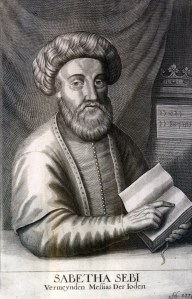
Source: Wikimedia Commons

Devastated and demoralized after the violence of the Khmelnytsky rebellion, the Jews of Europe were astounded to hear that a young Kabbalist named Shabbetai Tsvi had proclaimed himself the long-awaited Messiah.

The Jews’ Oath vs. Rothschild (This Week in Jewish History)

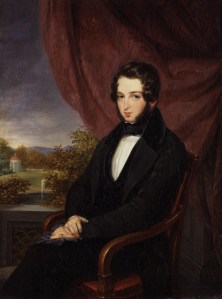
Lionel Nathan de Rothschild by Moritz Daniel Oppenheim (Source: Wikimedia Commons)
In 1847, the citizens of London elected its first Jew, Lionel de Rothschild, to the House of Commons. Rothschild, however, refused to take the Christian oath required of all members, and resigned without taking his seat in Parliament. He was immediately reelected a second and even a third time until the Jews’ Disabilities Act was passed on July 23, 1858, allowing Rothschild to represent Londoners without sacrificing his Jewish principles.

Create a website or blog at WordPress.com

Up ↑