New for the Season of Repentance: a translation and modern commentary on Rabbi Moshe Cordovero’s classic of Jewish ethics, the Date Palm of Devorah (Tomer Devorah). Learn the Thirteen Levels of Mercy and discover how to forgive others (and yourself). Please visit http://www.jewishhistorylectures.org and click on “The Kabbalah of Forgiveness” for excerpts and videos. Publication date: Rosh Hodesh Elul (August 26-27, 2014).
Rabbi Isaac Luria (The Arizal) Jewish Biographies Lecture

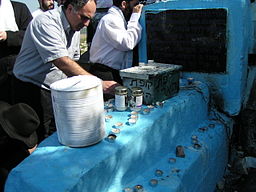
Emerging from the sixteenth-century Safed Circle of Jewish mystics, Rabbi Isaac Luria (the Arizal) was a pivotal figure in the history of Kabbalah. His influence on later Jewish movements, in particular Hasidism, is still felt to this day. Part of the Jewish Biography as History lecture series by Dr. Henry Abramson.
Excerpt from The Kabbalah of Forgiveness Now Online

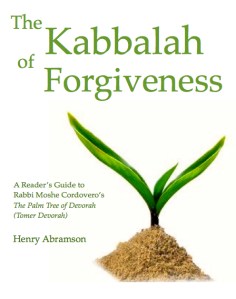
An excerpt from The Kabbalah of Forgiveness: A Reader’s Guide to Rabbi Moshe Cordovero’s The Palm Tree of Devorah, a new translation and commentary on the 16th-century classic of Kabbalistic musar, is now available online. Anticipated publication date is August 2013.
The Palm Tree of Devorah first appeared in 1588 and became and instant classic. The author, Rabbi Moshe Cordovero, was the most celebrated Kabbalist of his day, a student of Rabbi Yosef Karo (the author of the Code of Jewish Law) and the teacher of Rabbi Isaac Luria (the Arizal) among others.
The topic of this phenomenal work is imitatio Dei, or the “imitation of God,” through emulation of the 10 Kabbalistic sefirot. The first chapter is certainly the most well known, dealing with the sefirah of Keter in the form of the 13 Attributes of Mercy. Rabbi Cordovero uses this to describe 13 distinct levels of forgiveness. As human beings learn to forgive each other, this will elicit further Divine influence through the sefirah of Keter, expanding forgiveness in the world, perfecting it through tikun olam, and hastening the Messianic redemption.
The Kabbalah of Forgiveness provides the Hebrew original, a new English translation, and commentary by Dr. Abramson, including a description of practical applications of Rabbi Cordovero’s teachings.
Click here to read the excerpt.
 Henry Abramson