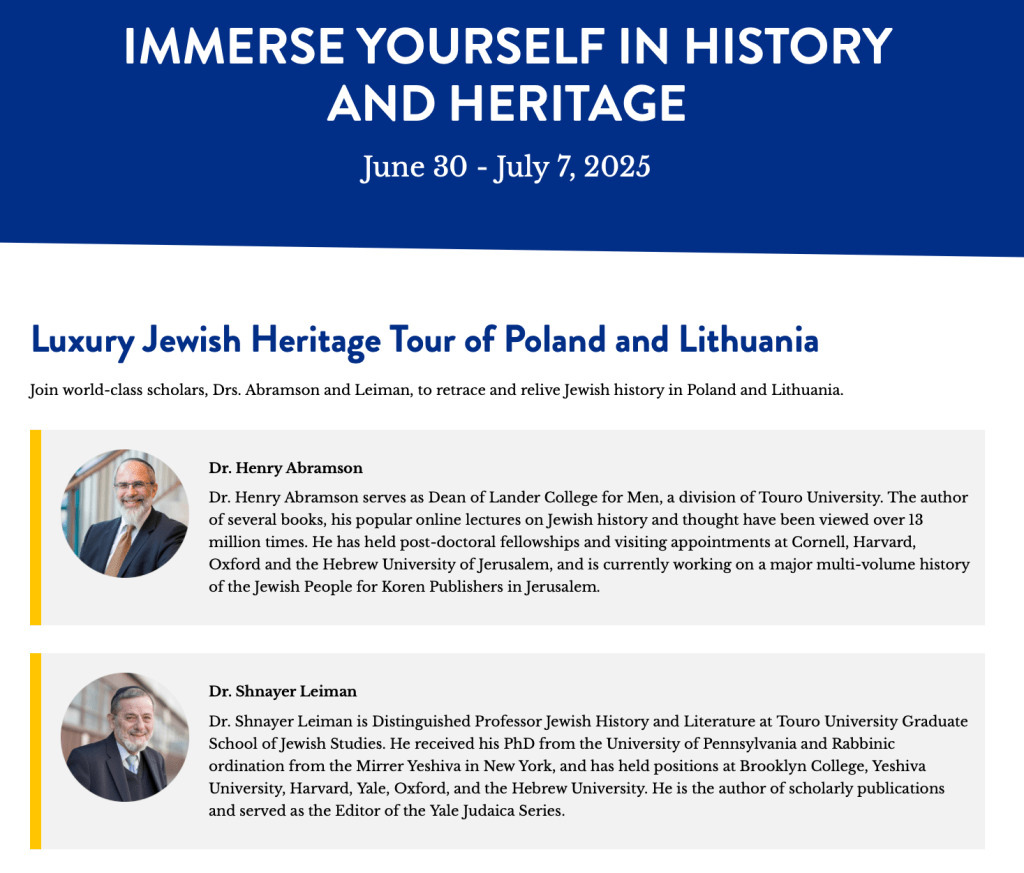
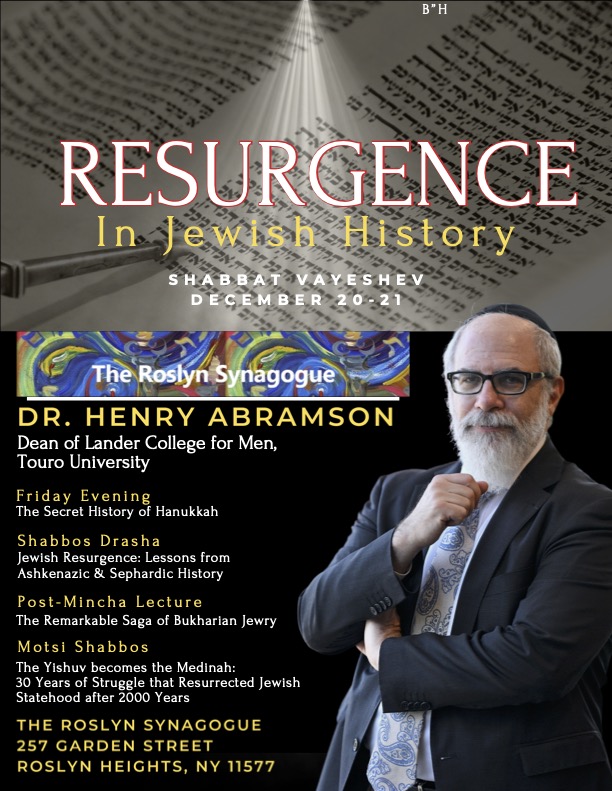
Really looking forward to meeting this community!

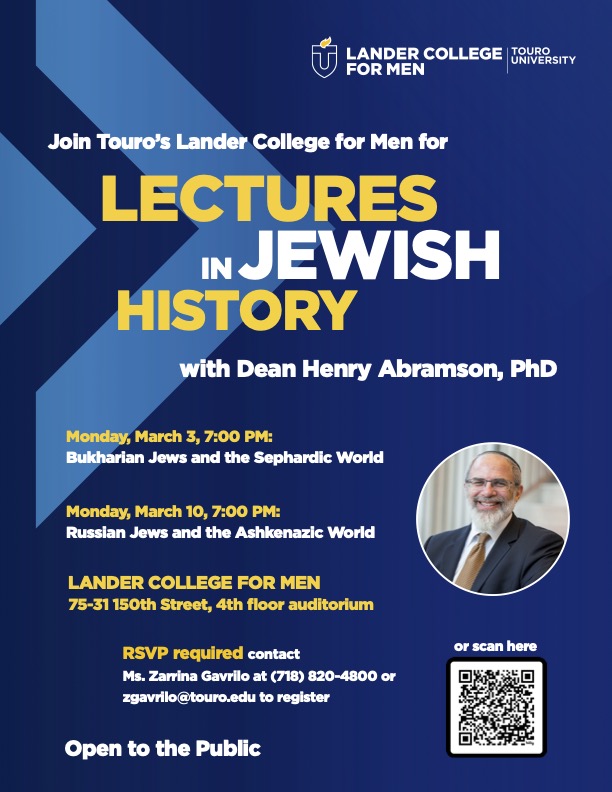
Lectures in Jewish History and Thought. No hard questions, please.


Free for the High Holiday Season: a free download of The Kabbalah of Forgiveness, a translation and commentary of Rabbi Moshe Cordovero’s Tomer Devorah. Especially valuable reading in preparation for Yom Kippur! To download, visit https://www.smashwords.com/books/view/464044 and enter coupon code BQ57Y, valid through October 7, 2015. If you really must have a hard copy, visit Amazon……

Brief discussion of the anniversary of Tisha B’Av, the onset of World War I, and its implications for Jewish History.

In July of 1942 (coinciding with Av 5702), the Nazis began a major deportation of Jews from the Warsaw ghetto to the Treblinka concentration camp. By September, 235,000 Warsaw Jews were murdered in the gas chambers.

Rashi (Rabbi Shlomo ben Yitshak) was a great 11th century commentator on the Torah. This brief video outlines his major scholarly contribution within historical context.

Viktor Frankl was a noted psychologist whose experience in the Holocaust formed the basis of logotherapy, his therapeutic approach to help people find meaning in suffering and in life.

A brief biography of Sigmund Freud, with emphasis on his Jewish background and identity. Part of the Jewish Biography as History Series, more available at http://www.henryabramson.com.

An introduction to the major themes in modern antisemitic ideology (1880-present). Warning: not quite as nasty as the lecture on medieval antisemitism, but disturbing nevertheless. Part of the Essential Lectures in Jewish History series, more available at http://www.henryabramson.com.

Rabbi Yosef Yitzchak Schneerson, also known as “Der Frierdiker Rebbe” (The Earlier Rebbe) to distinguish him from his successor, Rabbi Menachem Mendel Schneerson, was the sixth leader of the Chabad-Lubavitch movement. Living in tumultuous times, he shifted the center of the movement from its Eastern European origins to its current headquarters in the United States.

Heinrich Graetz (1817-1891) was the first encyclopedic historian of the Jewish people, and his massive 10-volume History of the Jews had a phenomenal impact on the way Jews saw themselves as a nation living in the diaspora. Looking forward to seeing you at Limmud this Sunday! Click the image below to learn more about my……

Imagine that, while browsing in the library, you come across one book unlike the rest, which catches your eye because on its spine is written the name of your family. Intrigued, you open it and see many pages written by different hands in many languages. You start reading it, and gradually you begin to understand……

One of the most creative, unusual, and controversial Hasidic leaders at the turn of the 19th century, Rabbi Nahman of Bratzlav (Nachman of Breslov) continues to inspire generations of disciples. Part of the Jewish Biography as History series, more available at http://www.henryabramson.com.


To view the Prezi associated with this lecture, please click here. http://www.youtube.com/watch?v=1OnArXdHQdc

L.L. Zamenhof (1859-1917) was a Polish Jew who invented the world’s most successful artificial language, Esperanto. Conceived as a vehicle for world peace, Esperanto is even regarded by the Oomoto religion of Japan as the “language of heaven.”

This week marks the death anniversary of King Boleslaw V (The Chaste) in 1279. Boleslaw followed the tradition of his predecessors in Poland by creating incentives for Jewish settlement in Poland, including the establishment of Magdeburg Recht. Ultimately, these policies proved extremely attractive to Ashkenazi Jews from the Rhineland, making Poland a great center of……

To view the Prezi associated with this lecture, please click here.

To view the Prezi associated with this lecture, please click here.

The Fourth Lateran Council, which met in 1215 at the behest of Pope Innocent III, issued several pieces of Church legislation with dire implications for Jews. The doctrine of transubstantiation was confirmed, leading to a new element in antisemitic canards: accusations that Jews “desecrated the host.”

Poet, politician and philosopher, Shmuel ha-Nagid was an exemplar of the Golden Age of Spanish Jewry.

In November of 1977, Egyptian President Anwar Sadat flew to Israel to address the Knesset. His meeting with his former enemy Prime Minister Menachem Begin ultimately resulted in the sometimes strained but nevertheless enduring Israel-Egypt peace accord, but his unpopularity with hardline Egyptians, opposed to making peace with Israel, resulted in his assassination in 1981.

To view the Prezi associated with this lecture, please click here. Excerpts from The Sea of Talmud: A Brief and Personal History Henry Abramson (2012) The Yeshiva administration must have put considerable thought into the wording of the hand-lettered sign posted outside the cafeteria. Many young men studying Talmud at this Jerusalem institution were taking……

Rabbi Moshe ben Maimon (1135-1204) was a towering figure in medieval Jewish history, and continues to cast a long shadow into the Jewish present. Nevertheless, the work of the philosopher-physician endured significant controversy, including an especially sad episode in which Jews actually consigned his works to the flames.

To view the Prezi associated with this lecture, please click here.