He survived the Ferrara earthquake of 1570, and went on to become the world’s first Modern Orthodox Jew.
Who Was Azariah de’ Rossi?
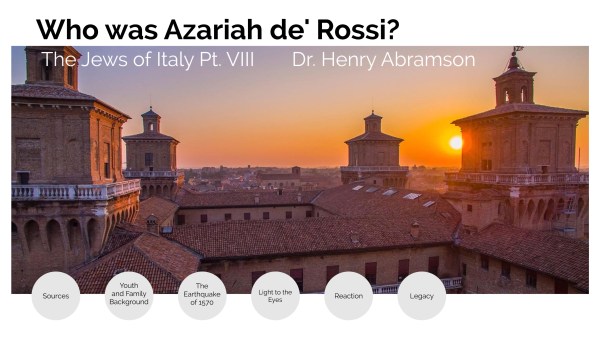
Lectures in Jewish History and Thought. No hard questions, please.
He survived the Ferrara earthquake of 1570, and went on to become the world’s first Modern Orthodox Jew.
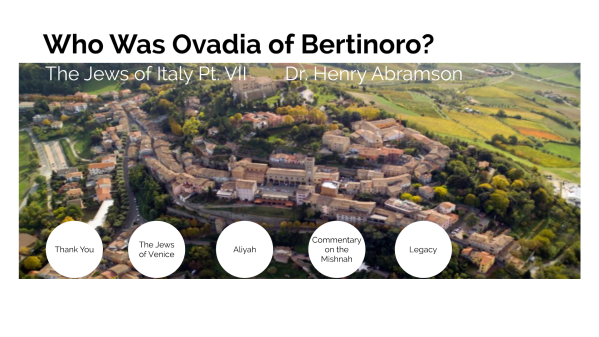
Brief overview of the life and work of Rabbi Ovadiah of Bertinoro (Bartenura), best known for his commentary on the Mishnah but also an important communal leader in late 15th-early 16th century Jerusalem. Part VII of the Jews of Italy series.


Hello everyone–here’s a brief historical article for this time of year that appeared in today’s JTA. Thanks to my daughter Raphaela and Laura Adkins at JTA for some amazing editing help. Enjoy in good health!

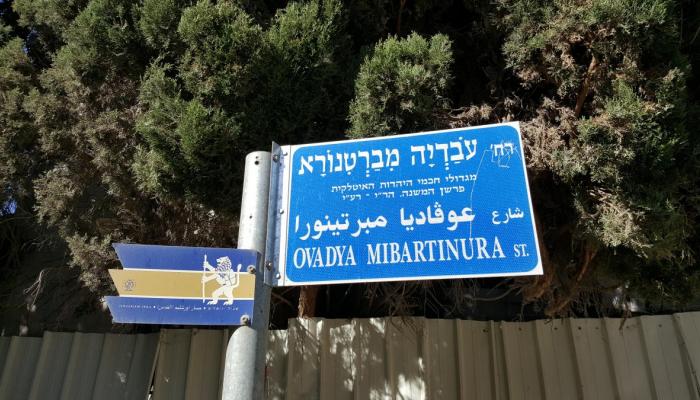
Friends of Jewish History! I just finished putting together the lecture on Rabbi Ovadia of Bertinoro, known to centuries of Mishnah students as “The Rav” for his crystalline commentary. After doing the research, I have to say I had no idea how courageous he was! I feel very privileged to have the opportunity to speak about his life on Monday night at 7pm, and I hope you will be able to join me in person or online.
Meanwhile, it seems a shame that we haven’t received a sponsor for this lecture! Please consider making a donation to our Jewish History Scholarship Fund, which we use to support our students at Touro College. Send me an email before, say, 5pm on Monday, I’ll be able to add your name to the dedication page, and your generosity will be associated with the life of this incredible thinker and leader as long as there is an Internet. Please don’t forget to let me know if your dedication is in memory of someone or in honor of someone.
A full sponsorship is $500. Partial sponsorships are also welcome! All tax-deductible. Here’s the link:
Thank you!
Good morning friends and students of Jewish history!
Coming from Iroquois Falls, Ontario, I have a hard time understanding why New Yorkers get so energized about a little spring snowfall. I mean, we are well below the average snowfall of 13 inches recorded in my home town in March–and it’s so much warmer than the record cold of -72 degrees Farenheit that Brooklyn might as well be Miami. Nevertheless, the good news is that despite the late opening of Touro College this morning, we are on schedule for the 7pm lecture on Nathan of Rome.
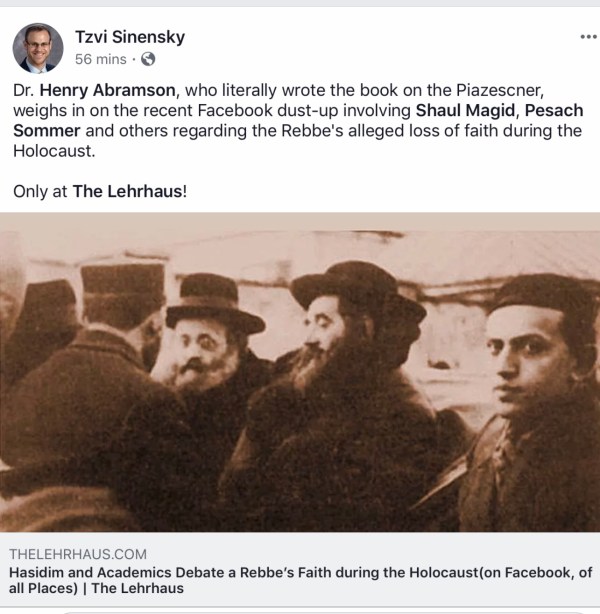
Also, this piece on the Piaseczno Rebbe came out in the Lehrhaus today, great editing by Yehuda Fogel and Mindy Schwartz. I thought it turned out well.
For those of you brave (or Canadian) enough to make it to the lecture–I look forward to seeing you tonight!
HMA
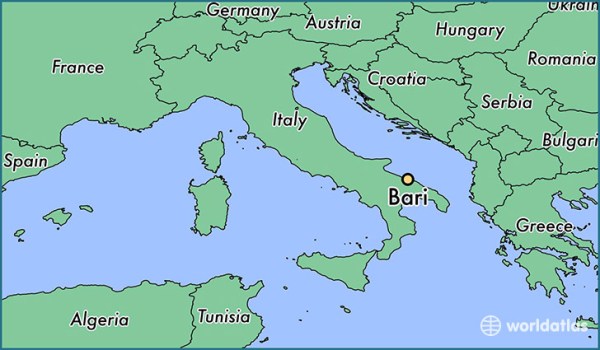
Brief reading of ibn Daud’s description of four Rabbis who left Italy by sea, only to fall prey to pirates. Their survival and eventual redemption, according to the medieval historian, is the reason for the development of Torah learning throughout the Mediterranean basin.
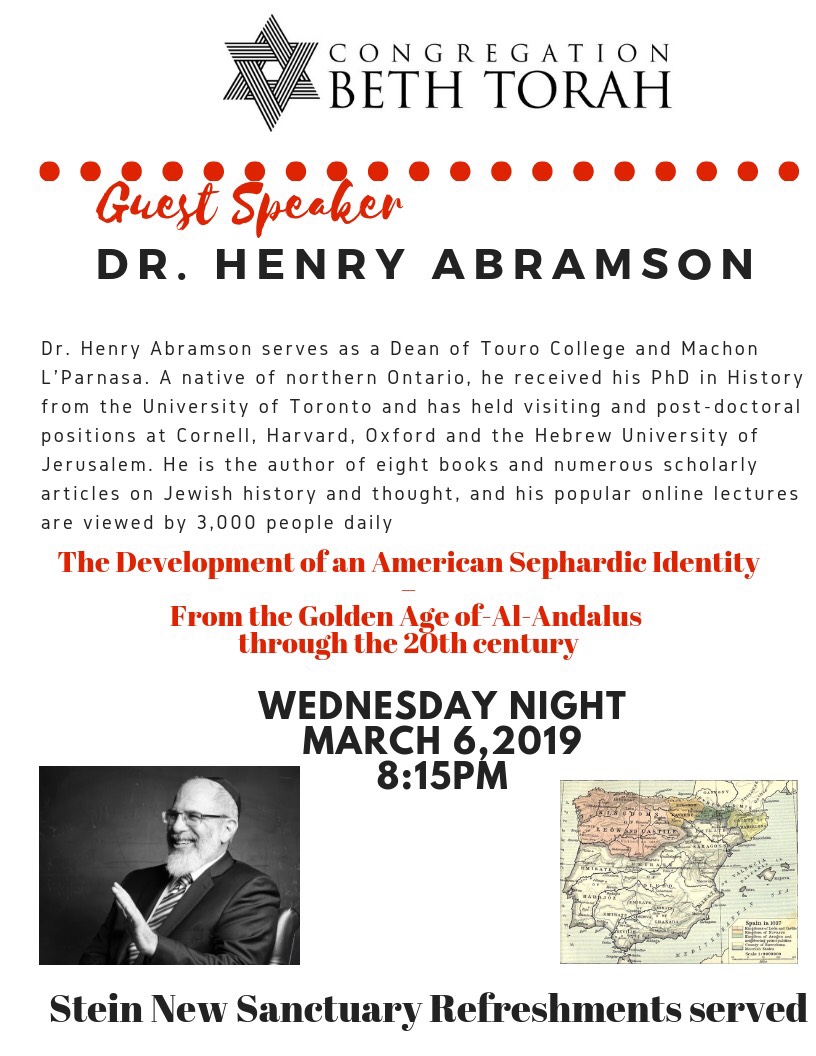
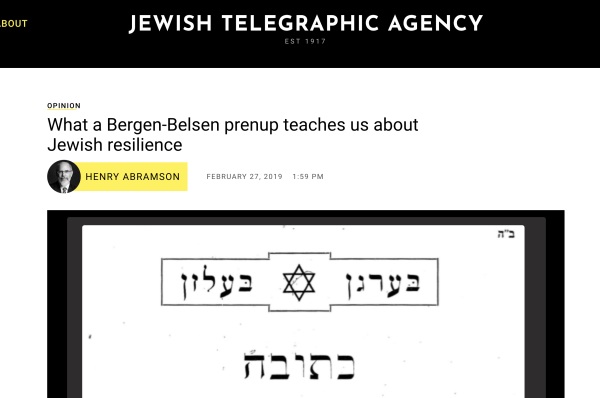
Please click here for a link to my recent article on a document I came across in the archives of the YIVO Institute for Jewish Research, published by the Jewish Telegraphic Agency. I’m really grateful to Laura Adkins, Opinion Editor, for shaping the piece. Also thanks to the incredibly helpful staff of YIVO for permission to reproduce documents from their collections.

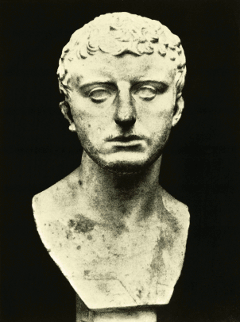
Who was Josephus, the Roman Jew?
As a youth, he was dazzled by the brilliance of Rome, an experience that ultimately led him to betray his people and join Vespasian’s army in the first Roman-Jewish war. He watched the Temple burn in Jerusalem, and in Rome he lived a life of luxury as Jewish prisoners of war were taken to the city and enslaved. His account of the war and his massive books on Jewish history offer an unparalleled look into the ancient world: do his final books indicate regret of his youthful choices?
The opening lecture of the Jewish History @ J series for Spring 2019 is scheduled for 7:00 pm (prompt) at the mighty Avenue J campus of Touro College, 1602 Avenue J. Free and open to the community. No hard questions, please.
The Jewish History @ J series of lectures is a service to the larger New York community of Jewish History enthusiasts. Please consider supporting our student Jewish History Scholarships with a donation or by sponsoring a lecture for $500.
Good morning students of Jewish history–
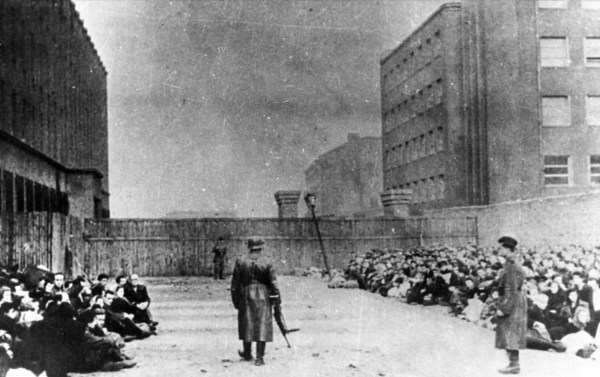
If you are in Washington Heights tonight, please consider dropping by Yeshiva University at 8pm for a gathering of scholars and Hasidim of the Piaseczno Rebbe, the saintly Rabbi Kalonymus Kalmish Shapiro הי׳׳ד. I’ll be speaking in the Sky Cafe of Belfer Hall (2495 Amsterdam Avenue, Wilf Campus of Yeshiva University) on the recent, heated discussions taking place regarding the Rebbe’s last months in the Warsaw Ghetto and Trawniki Labor Camp.
Members of the Piaseczno Rebbe Facebook group recently witnessed an intense exchange involving colleagues Professor Shaul Magid and Rabbi Pesach Sommer (Professor Daniel Reiser, winner of the 2018 Yad Vashem prize for Holocaust research for his critical edition of the Rebbe’s work, tried to calm the discussion by suggesting that “everyone should practice yoga to achieve inner peace”). The principal locus of the dispute was Professor Magid’s assertion that the Rebbe’s faith was “broken” by the Holocaust.
Since then there’s been a lot of back-channel communication that places this argument within the category of “controversies for the sake of Heaven,” in my opinion. I’m especially grateful to Shaul for sharing proofs from his forthcoming book, Piety and Rebellion: Essays in Hasidism, which includes a lengthy and sophisticated chapter on the Piaseczno Rebbe.
I hope to spend the hour discussing the specific historic events of the final days of Warsaw Jewry and link them to the Rebbe’s sermons, with a view to clarifying the parameters of the controversy.
Please do join us and participate in the conversation.
HELLO STUDENTS OF JEWISH HISTORY!
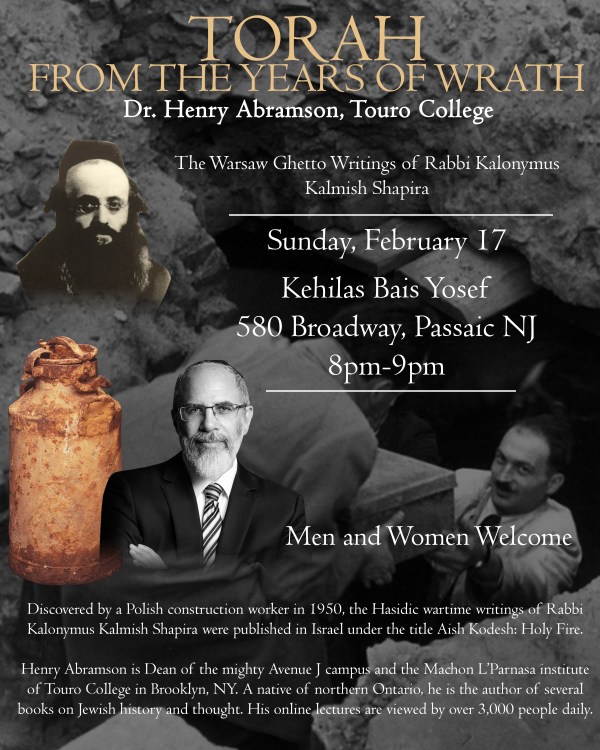
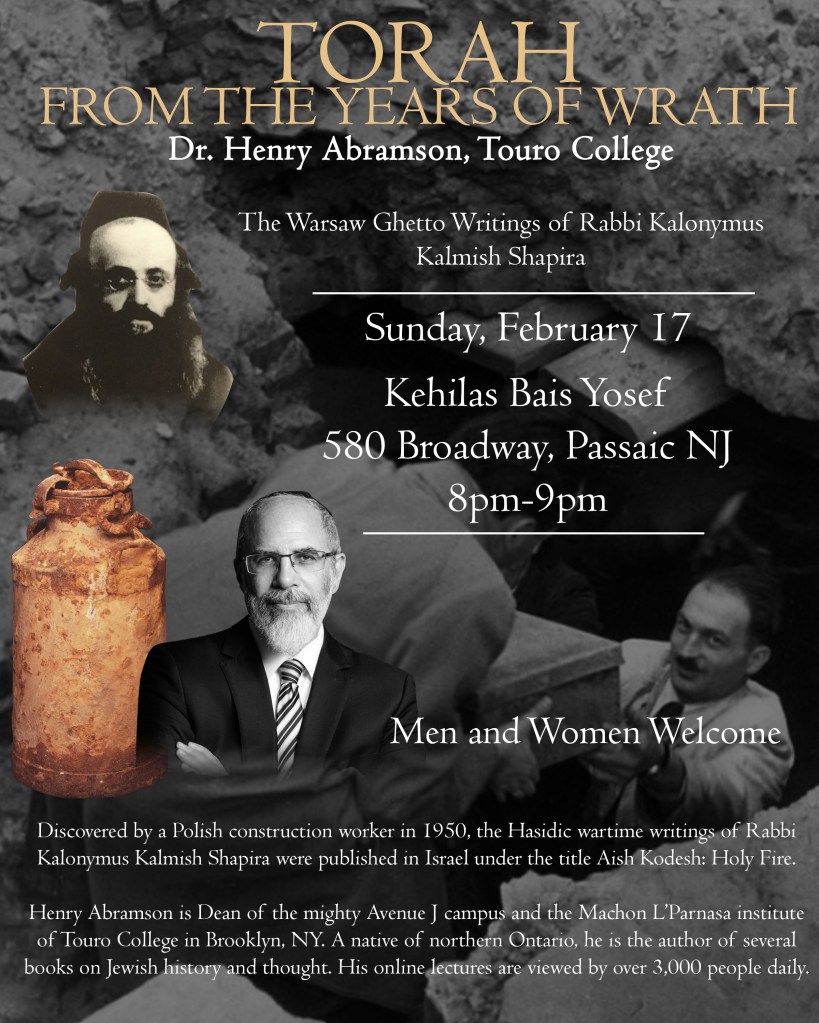
IF YOU ARE IN PASSAIC/CLIFTON TONIGHT, PLEASE FEEL FREE TO DROP BY AND SAY HELLO. TONIGHT’S TALK WILL BE A DESCRIPTION OF THE LIFE OF RABBI KALONYMUS KALMISH SHAPIRO (THE AISH KODESH), TAKEN FROM MY RECENT BOOK ON HIS HEROIC SPIRITUAL LEADERSHIP AND TRAGIC MARTYRDOM IN THE HOLOCAUST.

