New Column in the Five Towns Jewish Times!

Please enjoy my first column in the Five Towns Jewish Times!

People of the Book: Classic Works of the Jewish TraditionAbramson-Letter
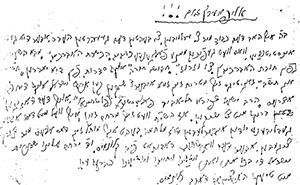
By Dr. Henry Abramson

According to my knowledge of the words of the Sages and the history of the Jewish people in general, we have never experienced such horrific suffering as has been visited upon us by the wicked ones since the end of 5702 (fall 1942)—may Hashem have mercy on us and rescue us immediately.

—Entry from January 11, 1943.

Discovered in the rubble of the Warsaw Ghetto, the Aish Kodesh (Holy Fire) is one of the most remarkable works of Jewish spirituality to emerge from the Holocaust. A slim volume of some 150 pages in the first printing, Aish Kodeshpresents the Torah spoken at the clandestine seudahshlishis gatherings convened by Rabbi Kalonymus Kalman Shapiro, known to his followers as the Piaseczno Rebbe.

The author, a scion of the Grodzhisk Chassidic dynasty, was a creative thinker whose literary fame was established with the 1932 publication of Chovas haTalmidim (The Students’ Obligation). Trapped in Warsaw when the war broke out, he lived through all its tragedies: the sealing of the ghetto in the fall of 1939, the horrific typhus plague of the winter of 1941, the massive deportations to Treblinka in the summer of 1942, and the heroic but doomed uprising of April 1943. He was ultimately deported to a labor camp and shot in November 1943, most probably for his involvement in a second attempted uprising. Unlike Holocaust memoirs, journals, or diaries, Aish Kodesh is a book that is sui generis for many reasons.

Aish Kodesh is a public document, representing the real-time efforts of the beleaguered Jewish community to deal with the theological implications of the Holocaust as it unfolded in the Warsaw Ghetto. The intellectual task of understanding the meaning of unimaginable suffering was common to both Orthodox and secular Jews, and third-party reports of the Rebbe’s gatherings confirm that they were attended by believers and non-believers alike. Aish Kodesh is also a profoundly sustained work of theodicy, its pages filled with philosophical meditation on the meaning of evil in Jewish thought, and much scholarly attention has been devoted to this aspect of the work, notably Dr. Nehemia Polen’s masterly 1999 study, Holy Fire.

Aish Kodesh has not, however, been studied extensively by historians, who have typically been stymied by the sometimes abstruse Kabbalistic passages and the almost complete absence of explicit references to quotidian events in the ghetto: not once in the entire work do the terms “German” or “Nazi” appear, and the reader must wade through veiled Aesopian language to determine the message of hope that the Rebbe offered in response to the horrors of that week under Nazi occupation.

After the war, a desperate post-war search for the OnegShabbos archives (a collection of documents that chronicled the realities of ghetto life) unearthed the Rebbe’s manuscripts of Aish Kodesh and its subsequent publication in Israel. Popularized in song by Rabbi Shlomo Carlebach, a renaissance of interest in Piaseczno chassidus developed in both scholarly and popular circles, notably under the leadership of Rabbi Moshe Weinberger of Woodmere, whose Aish Kodesh congregation takes its inspiration from the life and work of Rabbi Kalonymus Kalman Shapiro.

Publication information: Esh Kodesh, Tel Aviv: Va’ad Hasidei Piaseczno, 1960

Dr. Henry Abramson is a specialist in Jewish History and Thought. He serves as dean at the Avenue J Campus of Touro’s Lander Colleges and may be reached at abramson@touro.edu.

Who Was Sigmund Freud? Jewish Biography as History

A brief biography of Sigmund Freud, with emphasis on his Jewish background and identity. Part of the Jewish Biography as History Series, more available at http://www.henryabramson.com.

Jewish History Manifesto by Dr. Henry Abramson

Imagine that, while browsing in the library, you come across one book unlike the rest, which catches your eye because on its spine is written the name of your family. Intrigued, you open it and see many pages written by different hands in many languages. You start reading it, and gradually you begin to understand what it is. It is the story each generation of your ancestors has told for the sake of the next, so that everyone born into this family can learn where they came from, what happened to them, what they lived for and why. As you turn the pages, you reach the last, which carries no entry but a heading. It bears your name.

Jonathan Sacks, A Letter in the Scroll

We believe:

  • that the study of Jewish history adds value and meaning to human existence for both Jews and non-Jews
  • that academic Jewish history lectures need not sacrifice content to be entertaining
  • that access to high-quality information on Jewish history should be free
  • that shared intellectual curiosity about Jewish history is a healthy way to build a community
  • that the study of Jewish history is one of many paths that lead to the study of Torah, and that Torah study is enriched by a fuller understanding of Jewish history

Jewish History in the Sixteenth Century (Essential Lectures in Jewish History)

The Jewish people experienced dramatic changes in the sixteenth century that reverberate to this day. This lecture discusses three aspects of this century in particular: 1) the demographic upheavals associated with the expulsions from Spain and Portugal as well as the Ashkenazic migration, 2) the impact of the disruptive technology of printing, and 3) the ramifications of the Safed circle.

Thanks for not asking too many hard questions! Henry Abramson’s 2014 Lectures in Review

The WordPress.com stats helper monkeys prepared a 2014 annual report for this blog.

Here’s an excerpt:

The concert hall at the Sydney Opera House holds 2,700 people. This blog was viewed about 31,000 times in 2014. If it were a concert at Sydney Opera House, it would take about 11 sold-out performances for that many people to see it.

Click here to see the complete report.

What is Chanukah, and How Do You Spell it? This Week in Jewish History

Screen Shot 2014-12-12 at 1.11.32 PM

What, exactly is Chanukah (or is it Hanukah, or Hannukkah)? This short video describes the historical origins of the holiday, notes the ironic nature of its observance in the American context, and has a couple of jokes besides.

Suggested Holiday Gifts (Maybe for people you don’t especially like).

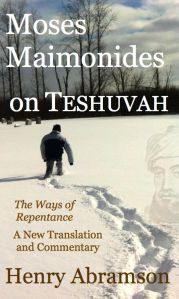
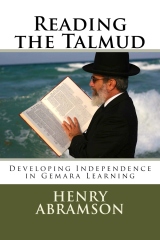
The Sea of Talmud   kof cover DMA_Fotor   Rambam CoverTHUMBNAIL_IMAGE   prayer-for-the-government-cover   art of hatred cover

Many titles available as eBooks.

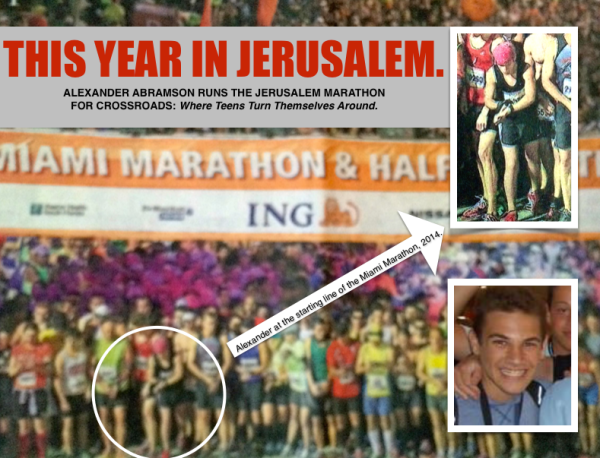
THIS YEAR IN JERUSALEM: Alexander Abramson Runs the Jerusalem Marathon for Crossroads

Screen Shot 2014-12-09 at 10.12.10 AM

A MESSAGE FROM ALEXANDER ABRAMSON:

Hey everybody, this year I have the good fortune to be in Israel and to be able to run the Jerusalem Marathon. The charity that I am going to be running for is called Crossroads and I believe it is an excellent cause. Their mission is to help teens who are stranded on the streets whether because they are homeless, receiving abuse, or have drug or alcohol substance issues, and Crossroads gets them back into a better place. I myself have never been in any of those negative situations but I can’t imagine what I would do in their situations. I’m assuming it’s very scary and traumatic, thankfully though for those teens there is a organization (Crossroads) that helps them get out of their horrible situation and I would like to help them out. Please donate whatever you can to this worthy cause at my page http://run4crossroads.com/give/alexander-abramson/ whatever you can give is fantastic, thanks.

Create a website or blog at WordPress.com

Up ↑