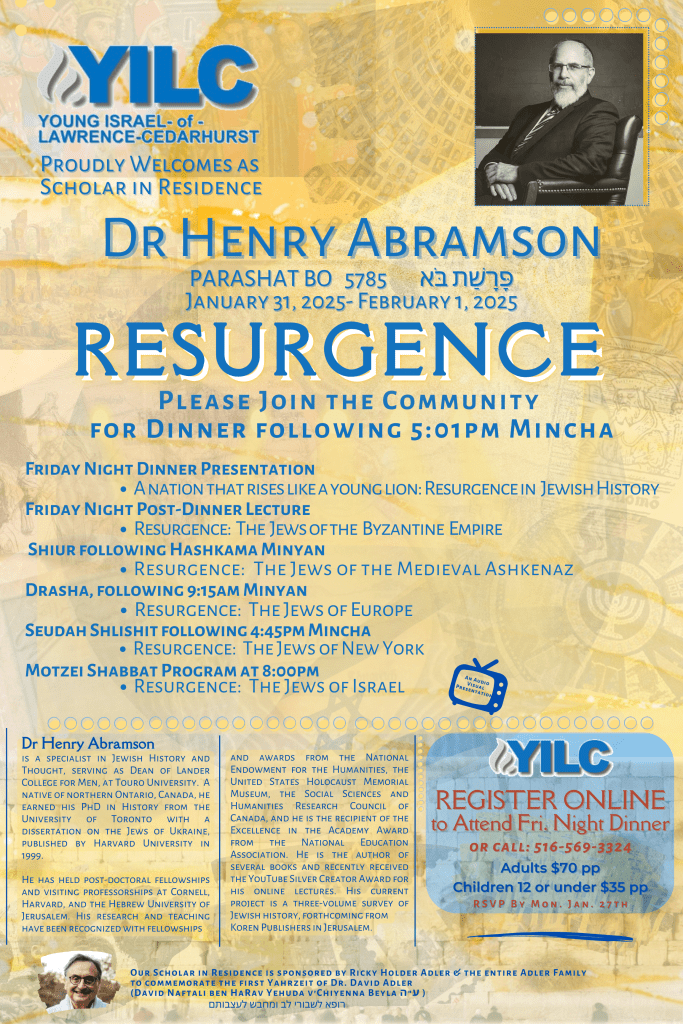
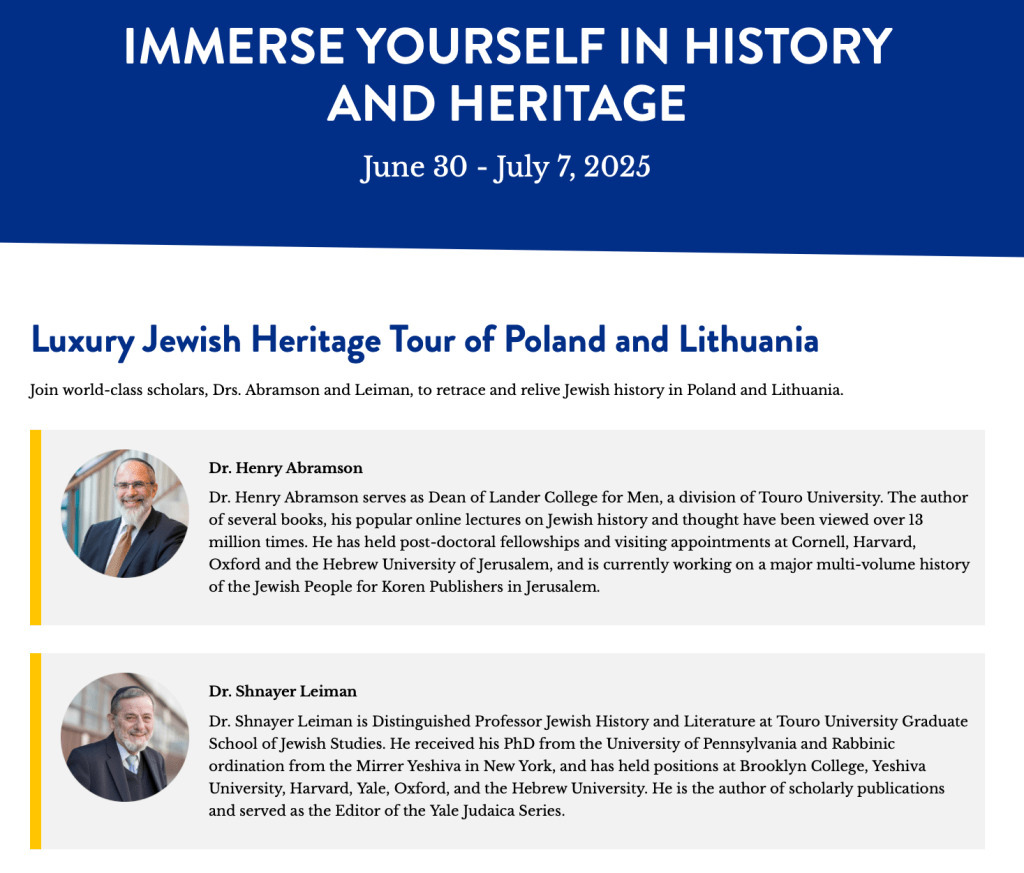
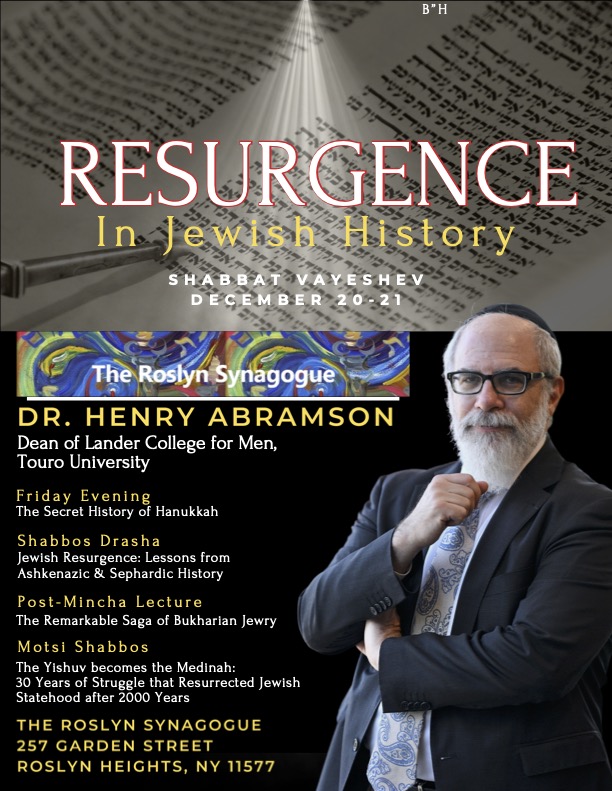
Really looking forward seeing my friends at YILC!

Lectures in Jewish History and Thought. No hard questions, please.


The remarkable 14th century Mikvah in the basement of the Carpentras Synagogue. Fed by an artesian well, the waters continue to fill the space, although in the 18th century a more modern Mikvah with heated, filtered water was constructed one floor above.
Part two of a series of videos on the amazing medieval synagogue in Carpentras, in the Provence region of France. This video looks at the 18th century representation in the Baroque style, with some remarkable features.

Today was an absolutely fascinating day of discovery of Jewish history, exploring the 14th century synagogue in Carpentras, France: the second-oldest currently functioning synagogue in Europe. There are so many amazing things to view, so I’ve decided to break it up into several small videos, starting with this one, which looks at the entrance to…

Expelled 500 years ago, a traces of medieval Jewish life yet remain in this city on the Rhone river.

Gut moed students of Jewish history! Peter Gwin of National Geographic just released a podcast discussing the research of Dr. Beverly Goodman, a marine archaeologist at the University of Haifa. She’s spent years studying the mysterious destruction of Herod’s port at Caesaria, and argues that it was destroyed in the tsunami of 115. Besides the…
A very special message on the eve of Yom Kippur. May my wife’s heroism and generosity be a merit for her, our family, and the entire Jewish people.

The Talmud in National Geographic! Specifically, the tsnuami of 115 CE and the famous debate over the oven of Akhnai. Just a teaser in this little trailer for the second season (see if you can identify my voice!), the whole podcast is scheduled for release later this month. Was really a lot of fun to…

Here’s my review, published in the Life section of the OU.org blog: A Rosh Yeshiva Wrote a Novel Under a Pseudonym. It’s Pretty Good. Dr. Henry AbramsonSeptember 24, 2019 In the highly-polarized environment of contemporary Jewish culture, it’s easier to imagine a rosh yeshiva banning fiction than writing it. Imagine my surprise when I received a copy…
Final installment of the Four-Part Crash Course in Jewish History. Thanks to everyone at Young Israel of Lawrence-Cedarhurst, especially the very receptive audiences. Wishing you all a Shana Tovah!
Good morning students of Jewish history! Here’s part III of the Crash Course in Jewish History, looking at the Modern period. Thanks to everyone who came out to hear it live! Please click here for the recordings of the first two parts, and information on the final class, scheduled for Wednesday, September 25 at 7:30…

Good morning students of Jewish History! Looking forward to seeing you for the third installment in our fairly popular Crash Course in Jewish History. We’re grateful for the positive response from the live audience, not to mention an unusually large number of online views: as I write this post, the first two parts have been…


Heinrich Graetz (1817-1891) was the first encyclopedic historian of the Jewish people, and his massive 10-volume History of the Jews had a phenomenal impact on the way Jews saw themselves as a nation living in the diaspora. Looking forward to seeing you at Limmud this Sunday! Click the image below to learn more about my…

Imagine that, while browsing in the library, you come across one book unlike the rest, which catches your eye because on its spine is written the name of your family. Intrigued, you open it and see many pages written by different hands in many languages. You start reading it, and gradually you begin to understand…

One of the most creative, unusual, and controversial Hasidic leaders at the turn of the 19th century, Rabbi Nahman of Bratzlav (Nachman of Breslov) continues to inspire generations of disciples. Part of the Jewish Biography as History series, more available at http://www.henryabramson.com.

One of the strongest critics of early Hasidism, Joseph Perl was a fervent advocate of the Haskalah, or Jewish Enlightenment, in 19th century Galicia. Part of the Jewish Biography as History series by Dr. Henry Abramson, more available at http://www.henryabramson.com.

This is a more-or-less scholarly discussion of the origins of modern Jewish history in Enlightenment Europe. Warning: there are a few jokes in this video, but they only start around the 15 minute mark. The rest is more theoretical and historical. Part of the Essential Lectures in Jewish History series, more available at http://www.henryabramson.com. ****************…

Hello everyone! I’m excited and challenged to be taking a new position in New York this summer, but I’ll be very sorry to leave this community that has been my home for almost twenty years. One of the last rituals of departure will be a last series of classes for the Florence Melton School for…

Gluckel of Hameln, a Jewish woman who lived in late 17th-century Germany, left a remarkable memoir describing her life. Part of the Jewish Biography as History series by Dr. Henry Abramson, more available at http://www.henryabramson.com.

Yud Shvat, the tenth day of the Hebrew month of Shvat, is an auspicious date for Chabad Hasidm, commemorating the passing of the 6th Rebbe in 1950 and the ascension to leadership of the 7th Rabbe, Rabbi Menachem Mendel Schneerson, one year later on January 17, 1951.

The Jewish people experienced dramatic changes in the sixteenth century that reverberate to this day. This lecture discusses three aspects of this century in particular: 1) the demographic upheavals associated with the expulsions from Spain and Portugal as well as the Ashkenazic migration, 2) the impact of the disruptive technology of printing, and 3) the…

Famed author of the Lecha Dodi hymn sung on the eve of the Jewish sabbath, Rabbi Alkabets was one of the founding members of the 16th-century school of Kabbalists based in Safed (Tsfat), Israel. Next week’s lecture: Gluckel of Hameln! Love Yiddish culture? Check out the new poster for the 2015 Kultur Festival in Boca…

Early adopters of the newest disruptive technology, the Soncino family were the first Jewish printers in 15th century Europe. This lecture discusses some aspects of the early decades of Jewish printing, and meditates on the meaning of the current digital revolution for Jewish culture and society. Planning to attend Limmud Miami this year? I would…
Sorry, folks. Laid low by the flu. See you next week?