Really looking forward to meeting this community!

Lectures in Jewish History and Thought. No hard questions, please.


To view the Prezi associated with this lecture, please click here. http://www.youtube.com/watch?v=1OnArXdHQdc

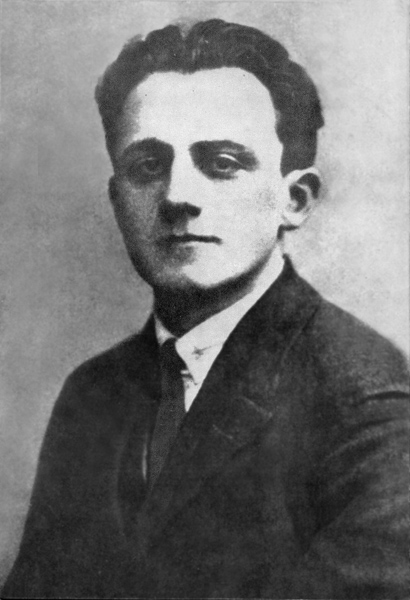
L.L. Zamenhof (1859-1917) was a Polish Jew who invented the world’s most successful artificial language, Esperanto. Conceived as a vehicle for world peace, Esperanto is even regarded by the Oomoto religion of Japan as the “language of heaven.”

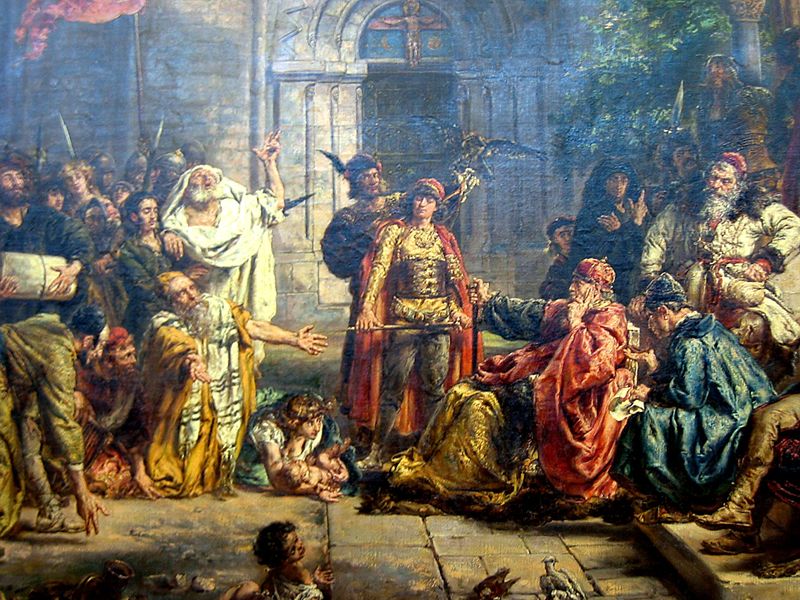
This week marks the death anniversary of King Boleslaw V (The Chaste) in 1279. Boleslaw followed the tradition of his predecessors in Poland by creating incentives for Jewish settlement in Poland, including the establishment of Magdeburg Recht. Ultimately, these policies proved extremely attractive to Ashkenazi Jews from the Rhineland, making Poland a great center of……

To view the Prezi associated with this lecture, please click here.

To view the Prezi associated with this lecture, please click here.

The Fourth Lateran Council, which met in 1215 at the behest of Pope Innocent III, issued several pieces of Church legislation with dire implications for Jews. The doctrine of transubstantiation was confirmed, leading to a new element in antisemitic canards: accusations that Jews “desecrated the host.”

Poet, politician and philosopher, Shmuel ha-Nagid was an exemplar of the Golden Age of Spanish Jewry.

In November of 1977, Egyptian President Anwar Sadat flew to Israel to address the Knesset. His meeting with his former enemy Prime Minister Menachem Begin ultimately resulted in the sometimes strained but nevertheless enduring Israel-Egypt peace accord, but his unpopularity with hardline Egyptians, opposed to making peace with Israel, resulted in his assassination in 1981.

To view the Prezi associated with this lecture, please click here. Excerpts from The Sea of Talmud: A Brief and Personal History Henry Abramson (2012) The Yeshiva administration must have put considerable thought into the wording of the hand-lettered sign posted outside the cafeteria. Many young men studying Talmud at this Jerusalem institution were taking……

Rabbi Moshe ben Maimon (1135-1204) was a towering figure in medieval Jewish history, and continues to cast a long shadow into the Jewish present. Nevertheless, the work of the philosopher-physician endured significant controversy, including an especially sad episode in which Jews actually consigned his works to the flames.

To view the Prezi associated with this lecture, please click here.

Part I: Part II: Part III: Solomon Mikhoels (1890-1948) was one of the most prominent actors and directors in early Soviet Russia. His career coincides with the brief flourishing of Yiddish culture under the policy of korenizatsiia, or “indiginization,” when the Communist authorities sought to develop folk culture as a means of developing loyalty to the……

Shimon Dubnow (1860-1941), a noted historian and activist whose theories of Jewish survival in the diaspora were extremely influential in the shaping Jewish identity in the modern world, from the future of Russian Jewry to the establishment of the modern Federation movement in the United States. Dubnow’s scholarship was inextricably intertwined with the effort to……
Moses Mendelssohn was a hugely influential thinker in 18th-century Germany. An unusually gifted intellect, he became the primary spokesperson for the emancipation of Jews in the 18th century, and his cause was championed by many non-Jewish liberals of the era. Heralded as the founder of the Reform movement even though Mendelssohn himself maintained an observant……

Nathan of Hanover is best known for his moving chronicle of the Khmel’nyts’kyi (Chmielnicki) Rebellion. Entitled Yeven Metsulah (“The Abyss of Despair”), it records with remarkable fairness the social, political, economic and religious background of the mid-17th century Ukrainian movement against the Poles, along with the horrible pogroms perpetrated in the context of that violent……

Here’s the Torahcafe.com edited version, in one piece, with the PPTs integrated. A little easier to watch.

Here’s a lecture I delivered at the Shul of Bal Harbour, not part of the regular HIS 155/156 Series, but kind of nice. Edited by the great people at TorahCafe.com. Please click on the icon above to see the video. I hope you find it interesting!

The nice folks over at TorahCafe took my lecture on Rabbi Yosef Karo and worked their magic on it, integrating the PowerPoint well with the lecture, and edited it down to a tighter presentation. Please click on the TorahCafe icon below to view the improved version.