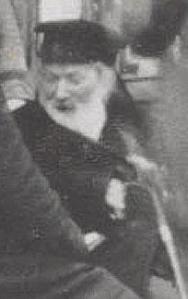
Rabbi Kalonymus Kalmish Shapiro, The Esh Kodesh (Jewish Biography as History)

Piacetzna Rebbe

Discovered in the rubble of the Warsaw Ghetto, the wartime writings of Rabbi Kalonymus Kalmish Shapiro (1889-1943) offer a unique and powerful perspective on the life and suffering of religious Jews during the horrific years of the Nazi occupation.

By Dr. Henry Abramson

According to my knowledge of the words of the Sages and the history of the Jewish people in general, we have never experienced such horrific suffering as has been visited upon us by the wicked ones since the end of 5702 (fall 1942)—may Hashem have mercy on us and rescue us immediately.

—Entry from January 11, 1943.

Discovered in the rubble of the Warsaw Ghetto, the Aish Kodesh (Holy Fire) is one of the most remarkable works of Jewish spirituality to emerge from the Holocaust. A slim volume of some 150 pages in the first printing, Aish Kodeshpresents the Torah spoken at the clandestine seudahshlishis gatherings convened by Rabbi Kalonymus Kalman Shapiro, known to his followers as the Piaseczno Rebbe.

The author, a scion of the Grodzhisk Chassidic dynasty, was a creative thinker whose literary fame was established with the 1932 publication ofChovas haTalmidim (The Students’ Obligation). Trapped in Warsaw when the war broke out, he lived through all its tragedies: the sealing of the ghetto in the fall of 1939, the horrific typhus plague of the winter of 1941, the massive deportations to Treblinka in the summer of 1942, and the heroic but doomed uprising of April 1943. He was ultimately deported to a labor camp and shot in November 1943, most probably for his involvement in a second attempted uprising. Unlike Holocaust memoirs, journals, or diaries, Aish Kodesh is a book that is sui generis for many reasons.

Aish Kodesh is a public document, representing the real-time efforts of the beleaguered Jewish community to deal with the theological implications of the Holocaust as it unfolded in the Warsaw Ghetto. The intellectual task of understanding the meaning of unimaginable suffering was common to both Orthodox and secular Jews, and third-party reports of the Rebbe’s gatherings confirm that they were attended by believers and non-believers alike. Aish Kodesh is also a profoundly sustained work of theodicy, its pages filled with philosophical meditation on the meaning of evil in Jewish thought, and much scholarly attention has been devoted to this aspect of the work, notably Dr. Nehemia Polen’s masterly 1999 study, Holy Fire.

Aish Kodesh has not, however, been studied extensively by historians, who have typically been stymied by the sometimes abstruse Kabbalistic passages and the almost complete absence of explicit references to quotidian events in the ghetto: not once in the entire work do the terms “German” or “Nazi” appear, and the reader must wade through veiled Aesopian language to determine the message of hope that the Rebbe offered in response to the horrors of that week under Nazi occupation.

After the war, a desperate post-war search for the OnegShabbos archives (a collection of documents that chronicled the realities of ghetto life) unearthed the Rebbe’s manuscripts of Aish Kodesh and its subsequent publication in Israel. Popularized in song by Rabbi Shlomo Carlebach, a renaissance of interest in Piaseczno chassidus developed in both scholarly and popular circles, notably under the leadership of Rabbi Moshe Weinberger of Woodmere, whose Aish Kodesh congregation takes its inspiration from the life and work of Rabbi Kalonymus Kalman Shapiro.

Publication information: Esh Kodesh, Tel Aviv: Va’ad Hasidei Piaseczno, 1960

Rabbi Israel Meir Kahan, The Chofetz Chaim (Jewish Biography as History)

Israel Meir Kagan (photo courtesy Baruch Chafetz via Wikimedia Commons)

Rabbi Israel Meir Kagan, better known as the Chofetz Chaim for his classic work on the sanctity of speech, was one of the major Rabbinic leaders of the late 19th and early 20th century.

To view the Prezi associated with this lecture, click on the image below or here.

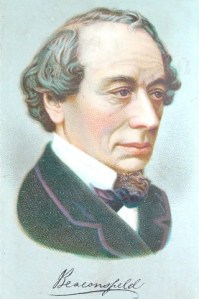
Benjamin Disraeli: Jewish-born Prime Minister of England

Benjamin Disraeli. Source: Wikimedia Commons.

Baptized at age 12 as the result of his father’s dispute with a synagogue, Benjamin Disraeli (1804-1881) rose to prominence as a novelist and politician, serving several times as England’s Prime Minister.  Colorful and flamboyant, Disraeli dismissed his antisemitic critics by emphasizing, rather than downplaying, his Jewish origins.

Rabbi Israel Salanter: The Mussar Movement


Rabbi Yisrael Lipkin of Salant (Israel Salanter, 1810-1883) was the founder of the modern Mussar movement that revolutionized traditional Jewish education. Controversial during his lifetime, his ideas ultimately permeated the Yeshiva system as a whole. Part of the Jewish Biography as History series in Jewish History.

Salomon Maimon: Incipient Rebellion

Source: Wikimedia Commons.

Blessed with a fine mind but an obstreperous personality, Salomon Maimon was one of the most erudite rebels against Judaism in the 18th century, leaving a powerful memoir that betrayed some of the stress points in traditional society.

Eliyahu ben Shlomo: The Vilna Gaon and Lithuanian Judaism

256px-Vilna_Gaon_authentic_portrait

Rabbi Eliyahu ben Shlomo, the 18th century Talmudic scholar better known as The Vilna Gaon, is revered as the father of traditional Lithuanian Judaism.  Part of the Jewish Biography as History series by Dr. Henry Abramson.

Rabbi Schneur Zalman of Liadi: The Alter Rebbe

Schneur_Zalman_of_Liadi

Author of the Tanya, a hugely influential 18th-century work of Jewish spirituality, Rabbi Scheur Zalman of LIadi is considered the founder of the Chabad (Lubavitch) movement.


People Of The Book:

Classic Works Of The Jewish Tradition

By Dr. Henry Abramson

This article appeared in the February 25, 2016 edition of the Five Towns Jewish Times.

The appearance of Rabbi Schneur Zalman of Liadi’s Tanya at the turn of the 19th century represented a sea change in Eastern European Jewish history. With this work, the Chassidic revolution, which had been building momentum in western Ukraine and southern Poland, burst into a constituency that had until that point prided itself on its immunity to the Kabbalah-inspired populism of the Ba’al Shem Tov.

The publication of Tanya dramatically illustrated the profound intellectual foundations of Chassidic thought, placing it in direct competition with the traditional Talmudic community in Lithuania for the hearts and minds of spiritually sensitive Jews. The Lithuanian yeshiva community, centered around Rabbi Chaim of Volozhin, principal disciple of the recently deceased Vilna Gaon, could no longer dismiss the chassidim as superstitious, uneducated folk (or worse, as neo-Sabbatean heretics).

The Tanya placed Chassidism firmly within the Jewish literary tradition, articulating a fully documented path to holiness that had until then received little attention from more left-brained Talmudic thinkers.

The book itself was published in several stages, some posthumously, until it reached its current form in 1804. It begins with the modestly titled LekuteiAmarim (“Collected Statements”), which is a bold and psychologically gripping analysis of the human condition. Opening with the Talmudic passage that describes the angelic oath given to a person in utero (“be righteous and not wicked”), Tanya offers a remarkably original and persuasive description of the inner conflict of the soul as it encounters the challenges and temptations of the temporal world.

The title “Tanya,” literally “it is taught,” is taken from the opening line of this Talmudic citation. The remaining four sections of the work continue the discussion in several modalities, including a novel understanding of the meaning of repentance and deeper Kabbalistic insights on the nature of the soul. Overall, the work is deceptively complex, with sections that appear highly accessible while others hint to arcane, elusive depths.

The Tanya is known as the “Written Torah of Chassidism” because it represents the first work authored directly by a Chassidic master (previous works were collections of teachings published by various disciples). Rabbi Schneur Zalman is recognized as the first Rebbe of the Chabad movement, but the influence of his work reaches into every Chassidic dynasty and is regarded with great respect by non-Chassidic thinkers as well.

Tanya proved itself highly popular in the yeshiva world, much to the chagrin of traditional authorities, who could barely keep Talmudic students away from its intoxicating introduction of Kabbalistic concepts to pragmatic elements of the Jewish condition. In response, Rabbi Chaim of Volozhin composed his master work, Nefesh HaChaim (1824), a Lithuanian-style primer in Kabbalah that provided an alternative to students attracted to the rapidly expanding Chassidic movement.

For its part, Chabad embraced Tanya by instituting a daily study regimen to promote yearly completion of the entire work. Tanya remains a brilliant gem in the treasure of Jewish spirituality.

Bilhah Abigaill Levy Franks: Jewish Women Building America

Source: Jewish Women's Archive.
Source: Jewish Women’s Archive.

Bilhah Abigaill Levy Franks lived in New York City in the early decades of the eighteenth century. Her correspondence with Naftali, her eldest son, reveals much about the inner life of a Jewish woman in colonial America. Part of the Jewish Biography as History series by Dr. Henry Abramson.

Johann Eisenmenger and the Talmud

Title Page of Entdeckes Judenthum.

Posing as a would-be convert to Judaism, Johann Andreas Eisenmenger studied Rabbinic literature for 19 years before publishing a massive two-volume denunciation of the Talmud called “Judaism Revealed” in 1711. His defamation of Jews and Judaism has been the foundation of much antisemitic diatribe for the last three centuries. Part of the Jewish Biography as History series by Dr. Henry Abramson.

Sarah bas Tovim: The Power of Women’s Prayer

Jewish woman placing a kvitel in the Western Wall. Photo by Yonina via Wikimedia Commons.

Sarah bas Tovim was one of the most prolific authors of tekhines, prayers composed specifically for Jewish women in Eastern Europe. Her work illustrates the deeply spiritual lives of simple women, and sheds significant light on the social history of the shtetlPart of the Jewish Biography as History series by Dr. Henry Abramson.

Create a website or blog at WordPress.com

Up ↑