Really looking forward seeing my friends at YILC!

Lectures in Jewish History and Thought. No hard questions, please.
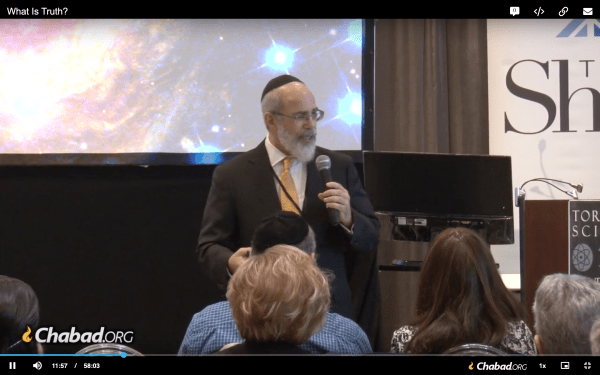


Brief overview of the life and work of Abraham Zacuto, important Jewish Iberian astronomer and historian. Now available: revised edition of The Kabbalah of Forgiveness. Click here for more information.

Aish Kodesh scholar Daniel Reiser holding a copy of my new book. Like Shakespeare holding a copy of one’s sonnets. Thank you!

The Piaseczno Rebbe, Rabbi Kalonymus Kalmish Shapira, refused to dignify the Nazis by naming them in his wartime sermons in the Warsaw Ghetto. In a rare moment of transparency, perhaps motivated by anguish over the suffering of his Hasidim, the Rebbe briefly suspended his euphemistic terminology with a curt third-person reference in his drashah on Parashat…
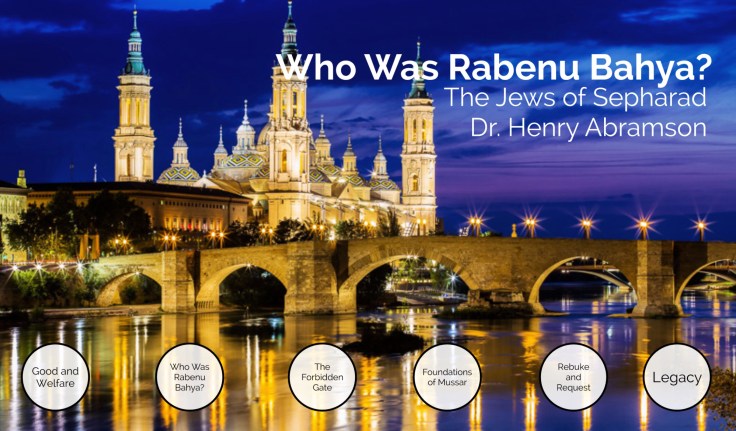
This was a huge amount of fun. If you are into Duties of the Heart, I think you will like this lecture! The video has a reference to Despacito by The Maccabeats, link provided below. Enjoy in good health!

I’m really happy that TorahAnytime.com is including my lectures, starting with The Jews of Sepharad series! Sign up for a free membership–there are some amazing speakers at TorahAnytime.com.
I was stopped on my way in to davening this morning by someone who told me about the incredible shiur that Rabbi Efrem Goldberg of Boca Raton Synagogue gave on the Aish Kodesh this week. Here’s the excerpt–Rabbi Goldberg captures the agony of the Rebbe after the loss of his family in his typically powerful…

Please click here to read the review at The Jewish Star. By Alan Jay Gerber The name and history of the Aish Kodesh in our community is well known. This legacy from the tragedy of the Warsaw Ghetto of one of its towering leaders, Rebbi Kalonymus Kalmish Shapira, the Aish Kodesh, has been taught to us…

I was deeply moved by the kind support of my research into the life of the Aish Kodesh at the book launch this week. By all accounts, it was a wonderful evening–we had such a diverse crowd in attendance, from pious Hasidim well familiar with the Piaseczno Rebbe to students who knew nothing about his…

Thanks to Rabbi Pesach Sommer for recording my brief comments at the conclusion of the hilula (74th anniversary of his martyrdom) for Rabbi Kalonymus Kalmish Shapira at The Shtiebl in Williamsburg, NY. SHOW MORE

Very grateful to Rabbi Pesach Sommer for writing a kind and generous review of Torah from the Years of Wrath! My favorite passage is at the end: “Dr. Abramson has written a book which is destined to lead to an increase of study of the rebbe’s Torah and thought in both the academic and Jewish…


The Fourth Level: Remember the Family “In the Same Boat (Remember We are Family),” illustration of Level 4 by Rebecca Odessa, Courtesy The Wisdom Daily The Fourth Level: Remember the Family Translator’s Introduction The Fourth Level of Mercy calls attention to the fundamental connectedness of humanity. The Jewish people in particular maintain a strong familial…

The Third Level: Take Care of it Personally “Part of the Process (Take Care of it Personally),” illustration of Level 3 by Rebecca Odessa, Courtesy The Wisdom Daily The Third Level: Take Care of It Personally Translator’s Introduction The Third Level of Mercy addresses the personal role that God plays in the process of forgiveness. Rather…

The Second Level: Let it Go for Now “Whose K’tegors are These? (Let it Go)” Illustration of Level 2 by Rebecca Odessa, Courtesy The Wisdom Daily The Second Level: Let it Go for Now The second of the Thirteen Levels, “Who Bears Sin,” describes a degree of mercy that is even more profound than…

The First Level: The King who Endures Insult “The Insulted King,” illustration of Level 1 by Rebecca Odessa, Courtesy The Wisdom Daily Translator’s Introduction Rabbi Cordovero’s discussion of the Thirteen Levels of Mercy begins with an awesome depiction of human sin from God’s perspective. Given that all power in the Universe has God at…

Please visit https://www.smashwords.com/books/view/464044 and enter coupon code YT52E (Expires October 19, 2014). Please click here for excepts and supporting videos.
New for the Season of Repentance: a translation and modern commentary on Rabbi Moshe Cordovero’s classic of Jewish ethics, the Date Palm of Devorah (Tomer Devorah). Learn the Thirteen Levels of Mercy and discover how to forgive others (and yourself). Please visit http://www.jewishhistorylectures.org and click on “The Kabbalah of Forgiveness” for excerpts and videos. Publication date:…

Rabbi Samson Raphael Hirsch (1808-1888) articulated a strategy to allow Jews their traditional observances while participating actively in the modern world. Criticized from both the left and the right, his thought remains highly influential into the 21st century.

Founder of the famous Yeshiva of Volozhin, Rabbi Hayim ben Yitshad was one of the most influential proponents of traditional Talmudic study of the early 19th century. The author of Nefesh haHayim, he articulated a cogent response to the growing Hasidic movement.

In 1240 Nicholas Donin, a Jewish convert to Christianity, engaged in a public debate with his former teacher, Rabbi Yechiel of Paris. Donin charged that the Talmud was a noxious document that prevented the Jews from embracing Christianity, and brought a total of 35 distinct accusations against this ancient holy text. Ultimately, 24 carriage loads…

Jerusalem Day (Yom Yerushalayim) celebrates the unification of Jerusalem in the context of the Six-Day War of June 1967. This dramatic military achievement represented a victory that was both political and symbolic, giving Jews control over the the Old City and the Temple Mount after nearly 2000 years of exile.

Alexander has done well with his fundraising efforts to participate in the Boys Israel Leadership Training (BILT) program run by the National Council of Synagogue Youth. He’s already raised $858 toward his goal of $3,000! To all of you who participated, thanks very much. If you haven’t yet had a chance, please do so quickly,…

Rabbi Moshe Isserles was an exceptionally important Polish Jew of the 16th century. His commentary on the Code of Jewish Law brought Sephardic and Ashkenazic Jewry together to an unprecedented degree, and established the ascendancy of Polish Jewry over the older German community.