The Jews of Bukhara (Sunday in Denver); the Maimonidean Controversy; Save the Date for Roslyn NY

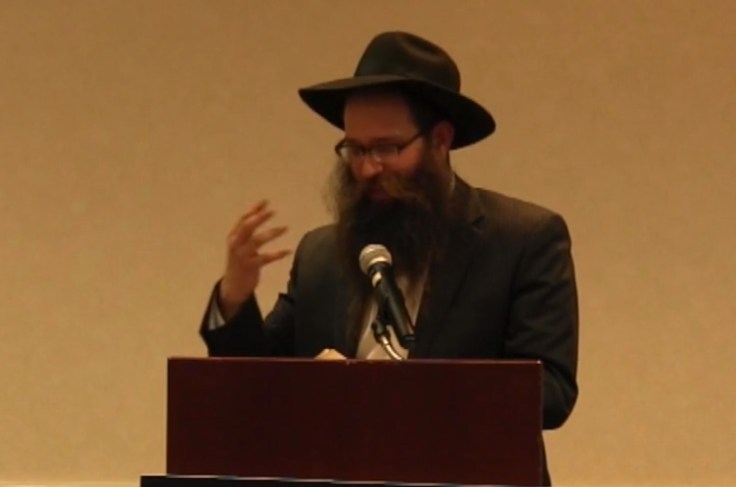
Really looking forward to speaking to the Or Avner community in Aurora, CO!


The Maimonidean Controversy


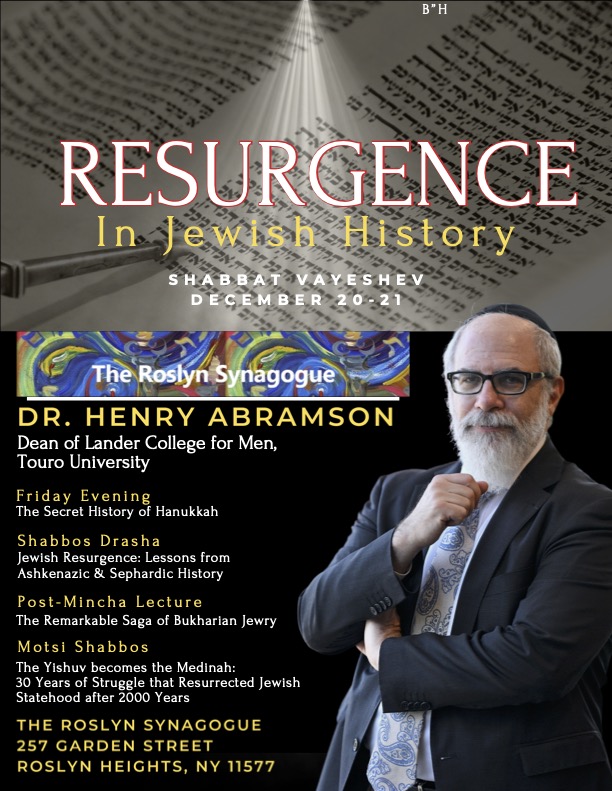
Save the Date: Shabbaton in Roslyn NY, December 20-21
  • The Deleted Drasha: Aish Kodesh on Parashat Bo 5700 (January 13, 1940)

    The Deleted Drasha: Aish Kodesh on Parashat Bo 5700 (January 13, 1940)

    The Rebbe’s entry for Parashat Bo (January 13, 1940) is unusual. Recorded in the scribe’s careful hand, with minimal annotation, it has two bold diagonal lines drawn through the center of the text, indicating that the Rebbe rejected it altogether. A brief and uncharacteristic first-person comment is appended: “more of what we said I do…

  • Working on Spanish Edition of Kabbalah of Forgiveness!

    Working on Spanish Edition of Kabbalah of Forgiveness!

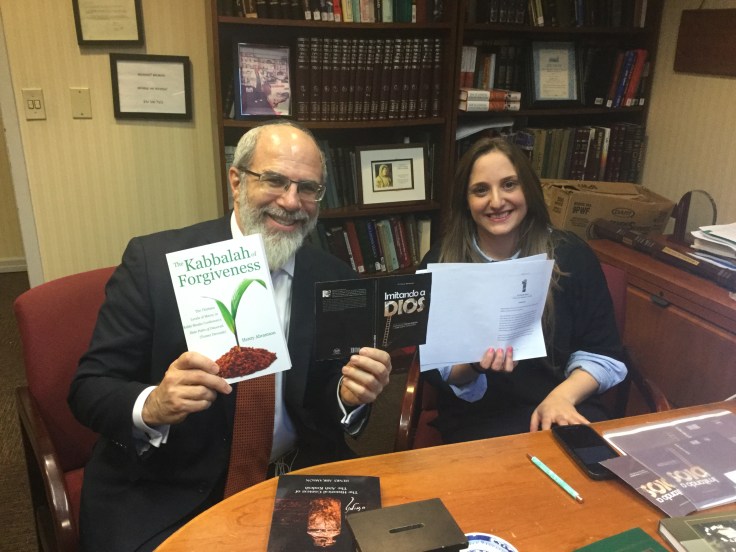
    Really nice to meet with Jésica Neuah of Editorial Perspectivas to work on the tentative cover and book design of the Spanish edition of The Kabbalah of Forgiveness! Great to work with her and the whole team. G-d willing the book will be released in the summer of this year.

  • Rabbi Shlomo Katz on the Aish Kodesh

    Rabbi Shlomo Katz on the Aish Kodesh

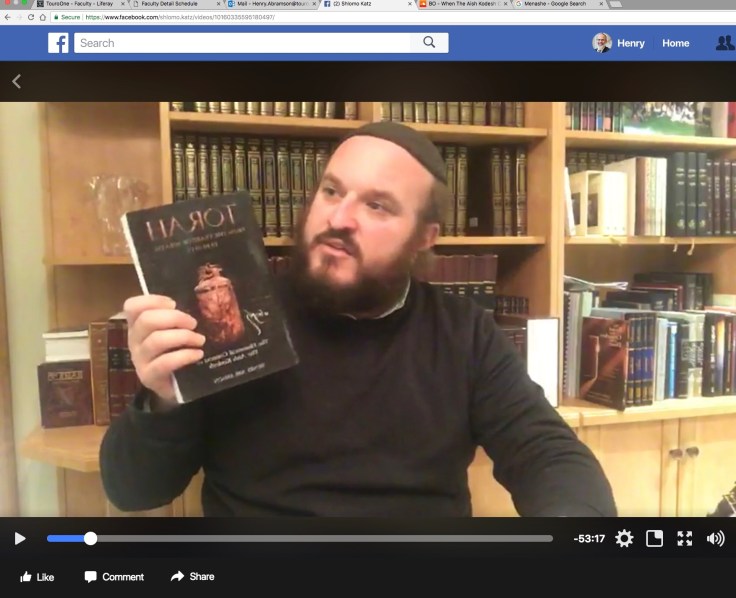
    I had chills listening to Rabbi Shlomo Katz review the Rebbe’s words on this week’s parashah. I am grateful for his kind words of praise for my recent book on the historical context of the Aish Kodesh, but to tell the truth, I hardly recognized my own words from the masterful treatment they received from…

  • The Aish Kodesh On Vaera 5702 (January 1942 in the Warsaw Ghetto)

    The Aish Kodesh On Vaera 5702 (January 1942 in the Warsaw Ghetto)

    Chaim Kaplan recorded the mood in the Warsaw Ghetto in January 1942:  The cold is so intense that my fingers are often too numb to hold a pen. There is no coal for heating and electricity is sporadic or nonexistent. In the oppressive dark and unbearable cold your mind stops functioning. Yet even in such…

  • The Aish Kodesh on Vaera 5700 (Torah from the Warsaw Ghetto, January 1940)

    The Aish Kodesh on Vaera 5700 (Torah from the Warsaw Ghetto, January 1940)

    Five months into the Nazi occupation, the Jews of Warsaw struggled to keep up with the barrage of administrative decrees inflicted upon them by the Germans. When the Rebbe spoke on Parashat Vaera, which fell on January 6, 1940, the worst was still far off. The Nazis had replaced the leadership of the Jewish Council…

  • The Aish Kodesh on Shemot 5702

    The Aish Kodesh on Shemot 5702

    The winter of 5702 brutalized the Jews of the Warsaw ghetto with unforgiving cold. Chaim Kaplan, a school principal whose journal Scroll of Agony survived the war, recounts in his typically blunt prose how the physical privations of January 1942 affected the spiritual life of Ghetto inhabitants: Gone is the spirit of Jewish brotherhood. The…

  • The Sephardic Diaspora (Spring 2018 Lecture Series)

    The Sephardic Diaspora (Spring 2018 Lecture Series)

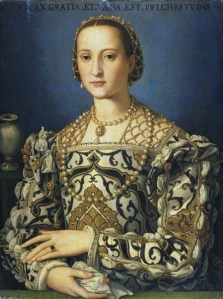
    The Sephardic Diaspora Spring 2018 Lecture Series Monday Nights @ 7:00 pm Main Auditorium, Touro College, 1602 Avenue J Brooklyn NY 11230 (718) 535-9333 Free and Open to the Public No hard questions, please. Image: Eleanora of Toledo, student of Benvenida Abravanel February 5: Who Was Benvenida Abravanel? February 12 :Who Was Samuel Usque? (No Class Feb…

  • The Piaseczno Rebbe on Vayigash

    The Piaseczno Rebbe on Vayigash

    On December 27, 1941, the Piaseczno Rebbe delivered his last recorded drashah on Parashat Vayigash in the Warsaw Ghetto. The previous month was especially brutal: an especially cold winter, combined with a severe coal shortage, exacerbated the typhus epidemic, and each morning a detail of the chevra kadisha patrolled the streets to collect the bodies…

  • Year End Report 2017

  • Ukrainian Translation Now Available!

    Ukrainian Translation Now Available!

    Really pleased to receive author copies of the new Ukrainian translation of my first book! Thanks to translators Anton Kotenko and Oleksandra Nadtoky and all the great people at Dukh i Litera.

  • Who Was Don Yitshak Abravanel?

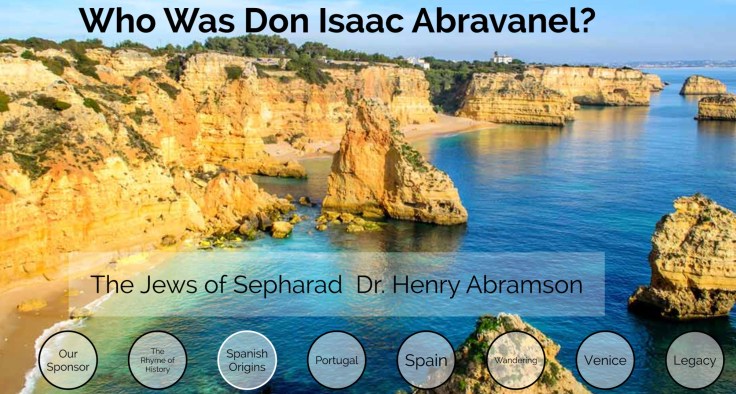
    Who Was Don Yitshak Abravanel?

    Brief video describing the life and work of Don Yitshak Abravanel (Abarbanel), a great Portuguese-Spanish Jewish thinker and leader.  Part of The Jews of Sepharad series.   Click here to view books by Dr. Abramson (remarkably amazing Chanukah reading)

  • Professor Yehoshua November’s Poetry

    Professor Yehoshua November’s Poetry

    This was a wonderful evening.

The Jews of Bukhara (Denver, CO); The Jews of the Lesser Antilles; Varieties of Crypto-Jewish Identity; Wait, Alexander Hamilton was Jewish?

Looking forward to a wonderful Shabbat in the Denver Jewish community!


Our Itinerary of Discovery in the Western Caribbean


Channel Members


Premiering at 10am ET


  • Who Was R. Pinhas Hurwitz?

    Who Was R. Pinhas Hurwitz?

      Two hundred years ago, Sefer Ha-Brit was a fixture in the library of every educated Jewish home. First published anonymously in 1797, this hugely popular 800-page tome appeared in forty editions, including translations into Ladino and Yiddish. It was widely read by Ashkenazim and Sefardim, western and eastern European Jews, Hasidim, Mitnagdim and Maskilim…

  • Sefer Ha-Heshek

    Sefer Ha-Heshek

    People Of The Book: Classic Works Of The Jewish Tradition This article originally appeared in the Five Towns Jewish Times on March 3, 2016. Click here for a video lecture on the topic. By Dr. Henry Abramson Working in the abandoned Judaica collection of the Kiev Vernadsky Library during the immediate post-Soviet period, a brilliant…

  • Who Was Hillel Ba’al Shem?

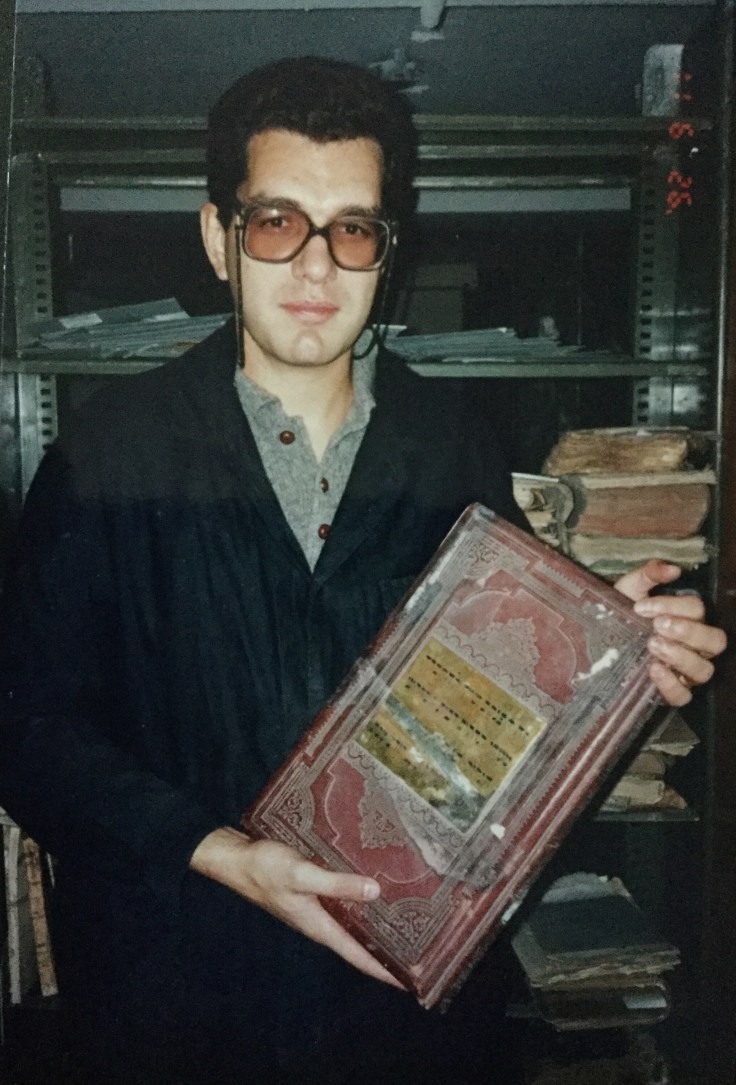
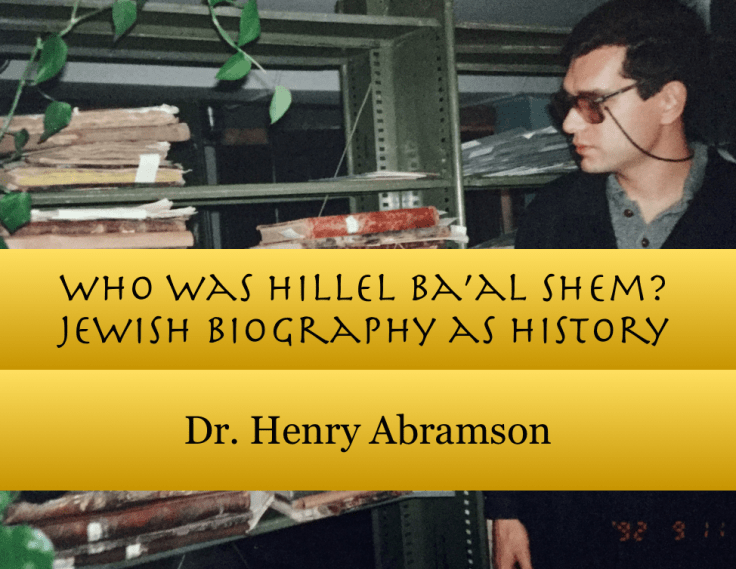
    Who Was Hillel Ba’al Shem?

    A mysterious figure of the early 18th century whose work, recently discovered by Dr. Yohanan Petrovsky-Stern, sheds light on the world of popular culture from which Hasidism emerged.

  • Tanya: People of the Book

    Tanya: People of the Book

    People Of The Book: Classic Works Of The Jewish Tradition By Dr. Henry Abramson This article appeared in the February 25, 2016 edition of the Five Towns Jewish Times. The appearance of Rabbi Schneur Zalman of Liadi’s Tanya at the turn of the 19th century represented a sea change in Eastern European Jewish history. With…

  • March 2016 Lectures: Jews of the 18th Century

    March 2016 Lectures: Jews of the 18th Century

    Jewish History @ Avenue J A Community Project of the Lander College of Arts and Sciences 1602 Avenue J Monday Nights, 7-8pm Free and Open to the Community Lectures by Dean Henry Abramson No hard questions, please. March 7: R. Pinhas Hurwitz Author of the influential Sefer Ha-Brit, the work of Rabbi Hurwitz represented the…

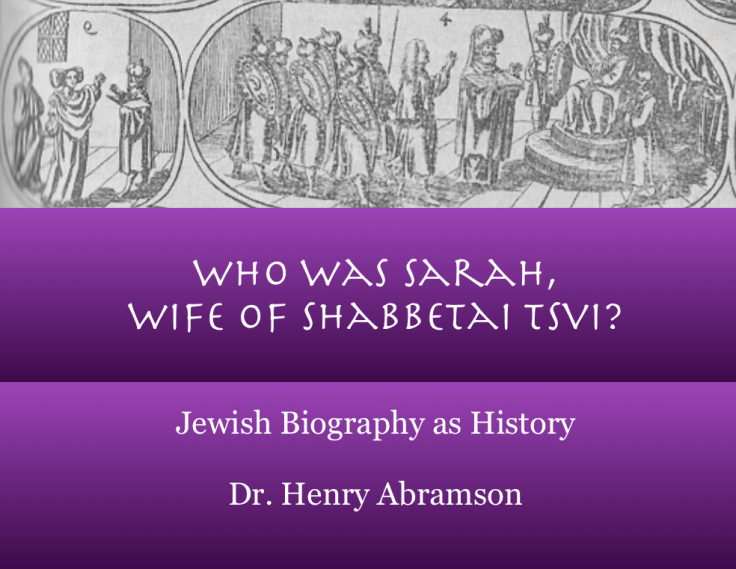
  • Who Was Sarah, Wife of Shabbetai Tsvi?

    Who Was Sarah, Wife of Shabbetai Tsvi?

    Orphaned by the Eastern European pogroms of 1648-49, the volatile Sarah became the spouse of the infamous messianic pretender. Her life, filled with controversy, illustrates the egalitarian elements in Shabbetai Tsvi’s antinomian message.   Here is a link to the Prezi.

  • Sarra Copia Sulem’s Manifesto

    Sarra Copia Sulem’s Manifesto

    Sarra Copia Sulam’s Manifesto People of the Book: Great Works of the Jewish Tradition Dr. Henry Abramson This article appeared in the February 17, 2016 edition of the Five Towns Jewish Times.  An unlikely literary duel in Venice took an unexpected turn in 1621 with the appearance of a slim volume entitled “The Manifesto of…

  • NO CLASS THIS MONDAY! PRESIDENTS’ DAY

    NO CLASS THIS MONDAY! PRESIDENTS’ DAY

    Feb 22. Sarah, wife of Shabbetai Tsvi Orphaned by the Eastern European pogroms of 1649-49, the volatile Sarah became the spouse of the infamous messianic pretender. Feb 29. Hillel Ba’al Shem A mysterious figure of the late 17th and early 18th centuries whose recently discovered work sheds light on the world of popular culture from…

  • The Tzemach David

    The Tzemach David

    The Tzemach David People Of The Book:  Classic Works Of The Jewish Tradition (This article originally appeared in the Five Towns Jewish Times on February 11, 2016.) David Gans (1541–1613) was a scientist and a rabbi in an age when the dual pursuit of these intellectual passions was a life-threatening occupation. He studied Torah under Rabbi…

  • Who Was Sarra Copia Sulem?

    Who Was Sarra Copia Sulem?

    When Sarra, a bright young poetry lover of 17th century Venice, wrote to a senior literary figure, she thought she was merely expressing her admiration for his literary work.  In the end, she was forced to defend publicly her refusal to leave Judaism. Click here for the Prezi.  Sarra Copia Sulam’s Manifesto People of the…

  • Who Was Rabbi David Gans?

    Who Was Rabbi David Gans?

    David Gans (1541-1613) was a Rabbinic scholar, historian, and astronomer.  A student of Rabbi Moshe Isserles and the Maharal of Prague, he collaborated actively with Tycho Brahe and Johannes Kepler and left behind important scholarly works.   Click here for the Prezi.    

  • Sefer HaChinuch (People of the Book)

    Sefer HaChinuch (People of the Book)

    People Of The Book: Classic Works Of The Jewish Tradition By Dr. Henry Abramson Written with a deep humility that nevertheless could not disguise the author’s brilliance,Sefer HaChinuch remains one of the most thought-provoking halachic studies some 800 years after it first appeared in the Iberian Peninsula. The deceptively simple title, “The Book of Education,” alludes to the anonymous…

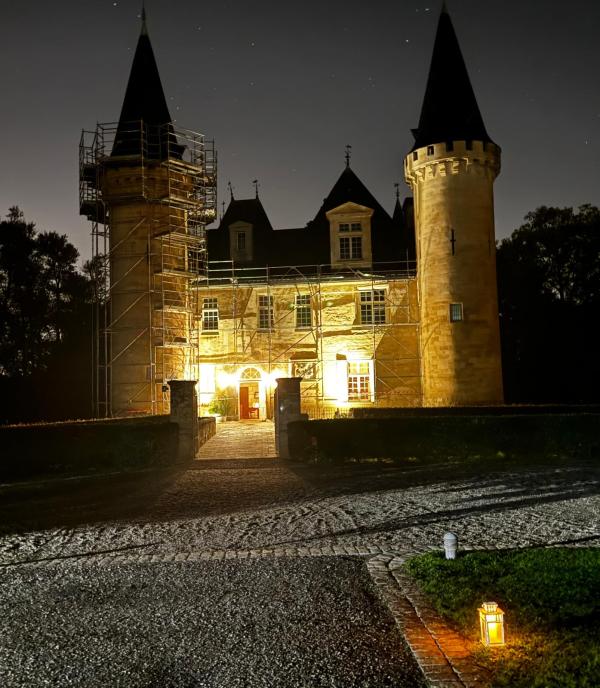
Visits to Synagogues in Bordeaux and Libourne (France); Another Open Letter to Jewish Participants in anti-Israel Protests re: Amsterdam; Conference Presentation on Sheptytsky and WW II

Fantastic Voyage of Discovery with Kosher River Cruises


A Difficult Conversation


Recent Conference Presentation in Toronto


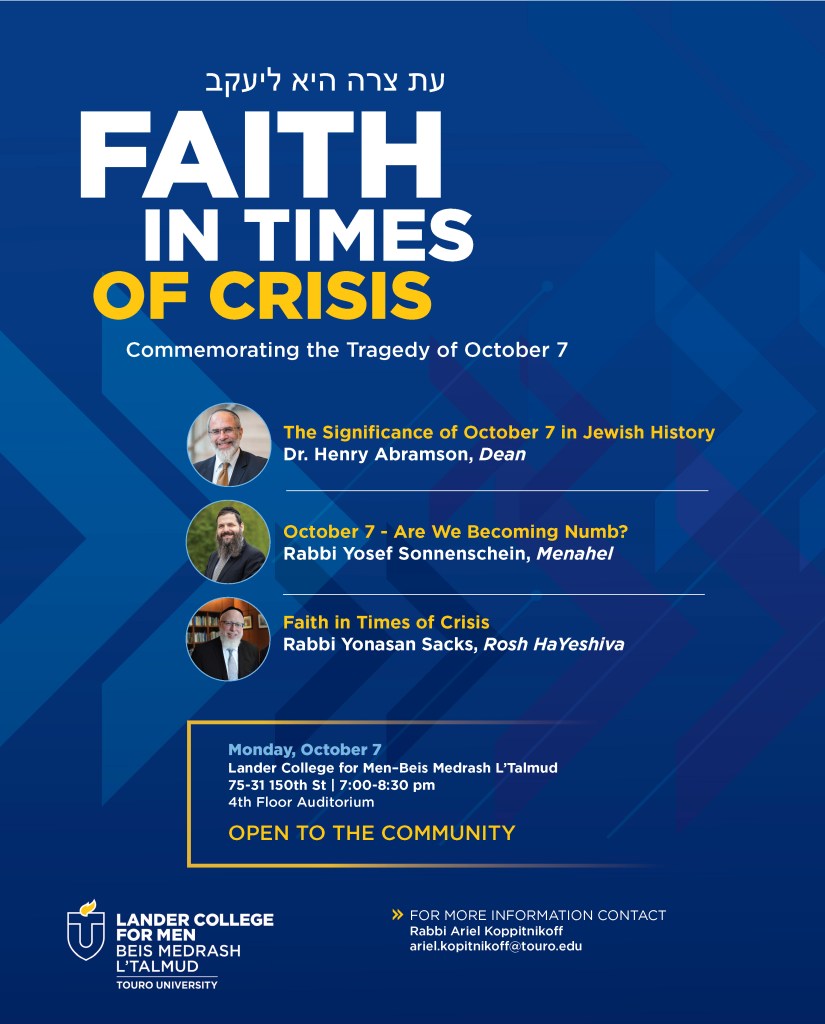
Jewish Life in Visigothic Spain; Commemorating October 7

This is one of the most bizarre periods of Jewish history, and that’s saying a lot.

Dropping on Sunday, September 22 at 10am ET. 70 minutes.


A Thousand Years of Ashkenaz

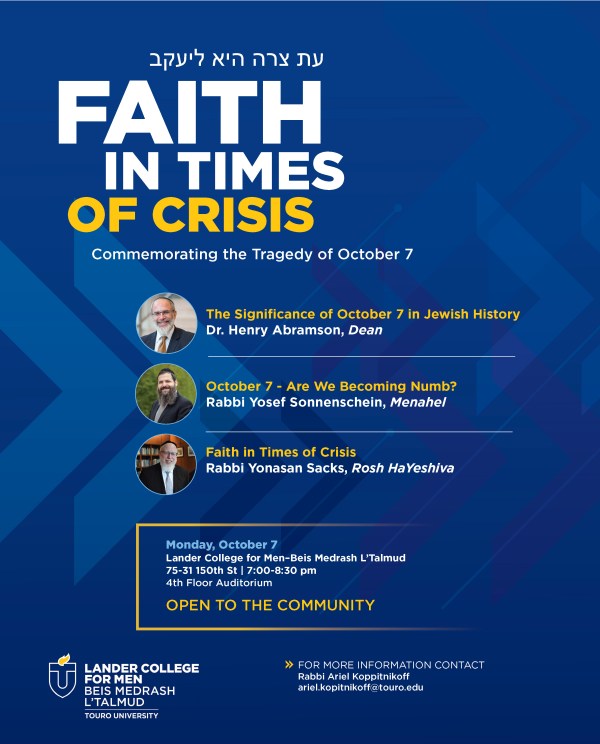
New Lecture Series: The Sweep of Sephardic History; Faith in Times of Crisis: Commemorating the Tragedy of October 7

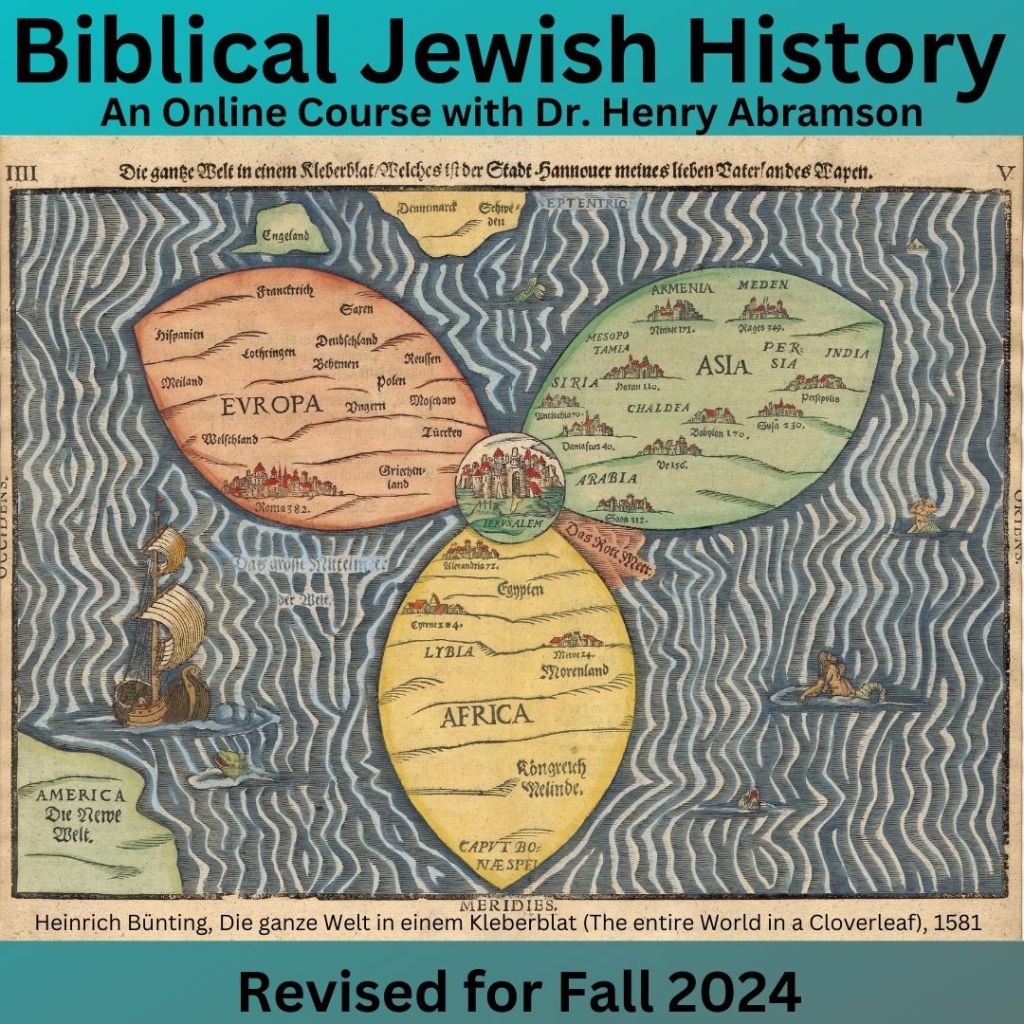
New Lecture Series: The History of Sephardic Jewry

Public at 10 am ET. Duration: 72 minutes.
Channel Members: Duration 70 minutes.
Channel members: 44 minutes.

Shabbat in Silver Spring; The History of Sephardic Jewry; Jews, Wine, and Bordeaux; Napoleon’s 1808 Decree on Jewish Names

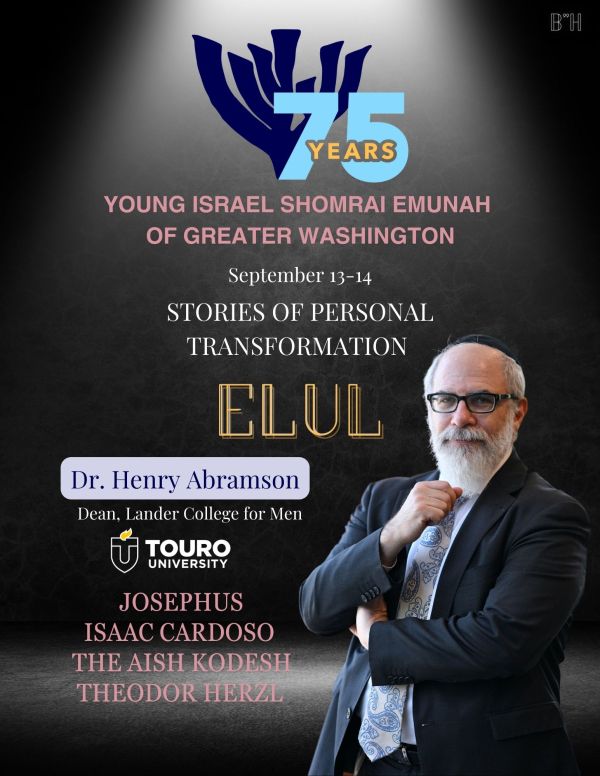
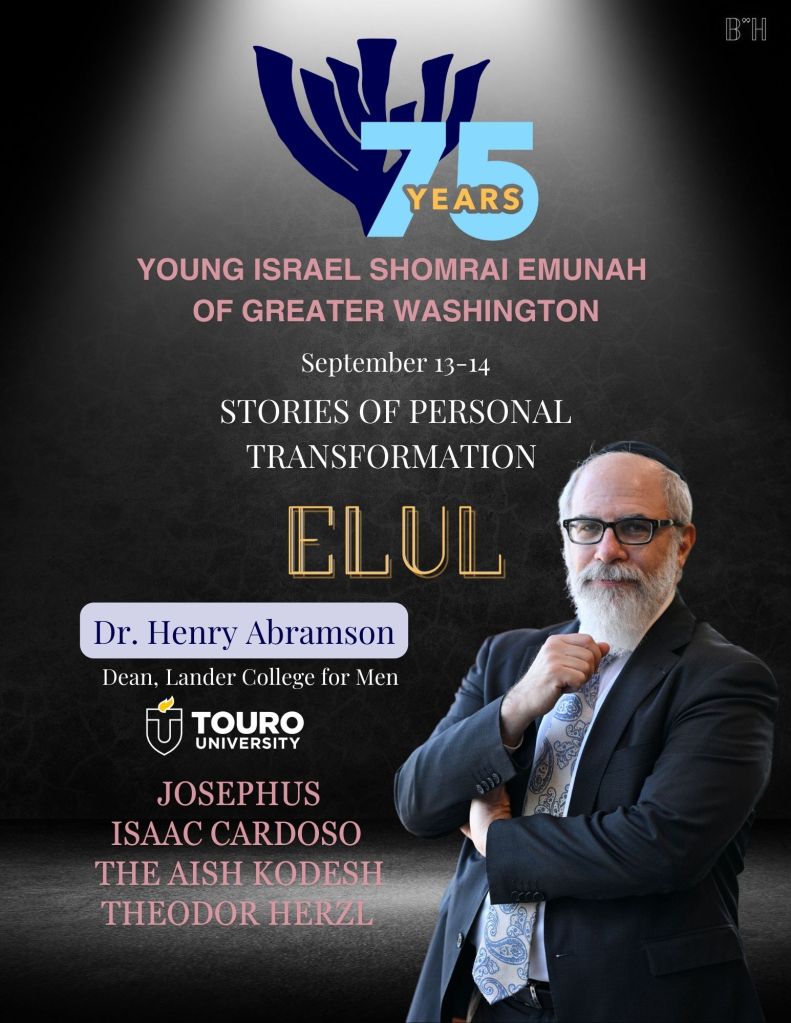
Stories of Personal Transformation for Elul


Napoleon’s 1808 Imperial Decree on Jewish Names


The History of Sephardic Jewry (Lecture, 75 minutes)

Jews, Wine, and Bordeaux (7 minutes)


A Thousand Years of Ashkenaz

Create a website or blog at WordPress.com

Up ↑