Really looking forward to meeting this community!
Lectures in Jewish History and Thought. No hard questions, please.


Nathan of Hanover is best known for his moving chronicle of the Khmel’nyts’kyi (Chmielnicki) Rebellion. Entitled Yeven Metsulah (“The Abyss of Despair”), it records with remarkable fairness the social, political, economic and religious background of the mid-17th century Ukrainian movement against the Poles, along with the horrible pogroms perpetrated in the context of that violent…
Here’s the Torahcafe.com edited version, in one piece, with the PPTs integrated. A little easier to watch.
Here’s a lecture I delivered at the Shul of Bal Harbour, not part of the regular HIS 155/156 Series, but kind of nice. Edited by the great people at TorahCafe.com. Please click on the icon above to see the video. I hope you find it interesting!
The nice folks over at TorahCafe took my lecture on Rabbi Yosef Karo and worked their magic on it, integrating the PowerPoint well with the lecture, and edited it down to a tighter presentation. Please click on the TorahCafe icon below to view the improved version.

Hello everyone: my son Alexander is once again training to run the ING Miami Marathon to raise funds for Friendship Circle, a non-profit organization that helps children, teens and adults with special needs. Alexander is an avid runner with a long history of running for charitable causes: in 2010 he ran his first half-marathon (at…

Emerging from the sixteenth-century Safed Circle of Jewish mystics, Rabbi Isaac Luria (the Arizal) was a pivotal figure in the history of Kabbalah. His influence on later Jewish movements, in particular Hasidism, is still felt to this day. Part of the Jewish Biography as History lecture series by Dr. Henry Abramson.

David Reubeni was one of the most colorful messianic figures of Jewish history. A little person with a shady background, he was received with dignity by Popes and Kings in the fifteenth century, regaling them with tales of the Jews of the east and promising them great military victories should they enlist his service. He…

Nahmanides (Rabbi Moshe ben Nahman, or Ramban) was one of the most important thinkers of Jewish history. Brilliantly creative and intellectually courageous, his commentary on the Torah is widely studied eight centuries after his passing. Part of the Jewish Biography as History series by Dr. Henry Abramson.

American-born Henrietta Szold was an extremely influential Zionist leader and organizer, founder of Hadassah, the Women’s Zionist Organization of America. To view the Prezi associated with this video, click here.

Nicholas Donin was an erstwhile Talmudic scholar who converted to Christianity and made a career of denouncing the Talmud. His charges, brought before the Pope, resulted in a massive destruction of priceless Jewish manuscripts in Paris, 1242. Part of the Jewish Biography as History lecture series by Dr. Henry Abramson.
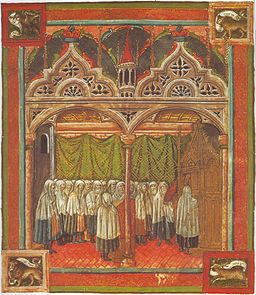
Rabenu Gershom, Me’or Ha-Golah (Our Teacher Gershom, Light of the Exile) was one of the most influential Jewish legislators of the High Middle Ages, affecting a wide variety of Jewish practices including monogamy, divorce law, and the right to privacy. Part of the Jewish Biography as History lecture series by Dr. Henry Abramson.

Yocheved was the daughter of one of Judaism’s greatest scholars: Rabbi Shlomo Yitzhaki, better known as Rashi. A fascinating woman in her own right, this lecture will survey some of the references to Yocheved (and her illustrious sisters) and what light this sheds on the history of medieval Jewish women.

To view the Prezi associated with this lecture, please click here. http://www.youtube.com/watch?v=1OnArXdHQdc

L.L. Zamenhof (1859-1917) was a Polish Jew who invented the world’s most successful artificial language, Esperanto. Conceived as a vehicle for world peace, Esperanto is even regarded by the Oomoto religion of Japan as the “language of heaven.”
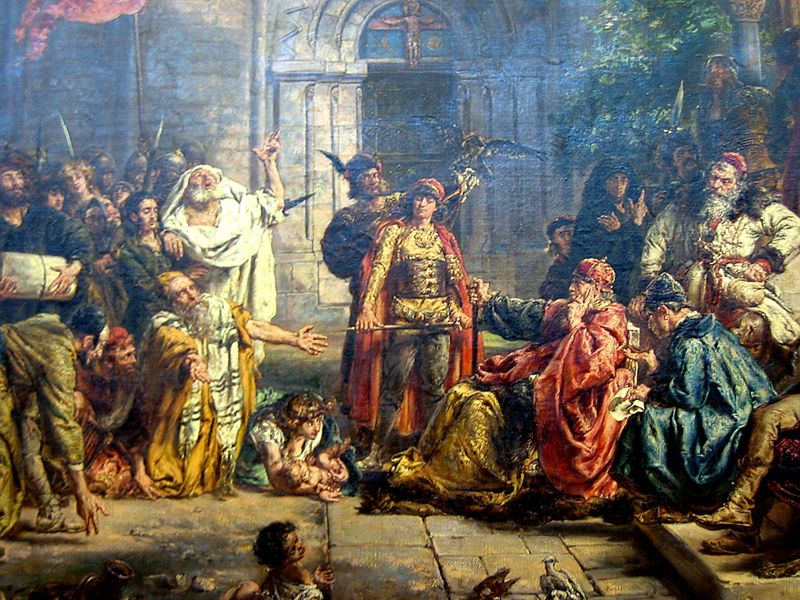
This week marks the death anniversary of King Boleslaw V (The Chaste) in 1279. Boleslaw followed the tradition of his predecessors in Poland by creating incentives for Jewish settlement in Poland, including the establishment of Magdeburg Recht. Ultimately, these policies proved extremely attractive to Ashkenazi Jews from the Rhineland, making Poland a great center of…