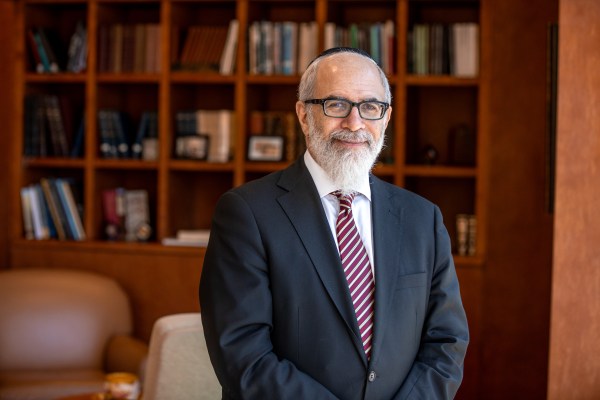
Really looking forward to meeting this community!
Lectures in Jewish History and Thought. No hard questions, please.


Jacob Rodrigues Periera (1715-1780) was the inventor of dactylology, a method for teaching deaf-mutes to communicate. A crypto-Jew from Portugal, his first student was his sister. His methodology received phenomenal acclaim, he received honors from the King of France and was named to both the Royal Society of London. This video is part of This…

This is a brief academic presentation of the history of the Nazi attempt to destroy the Jews of Europe during World War II. Part of the Essential Lectures in Jewish History series by Dr. Henry Abramson. To view the Prezi used in this lecture, please click here.
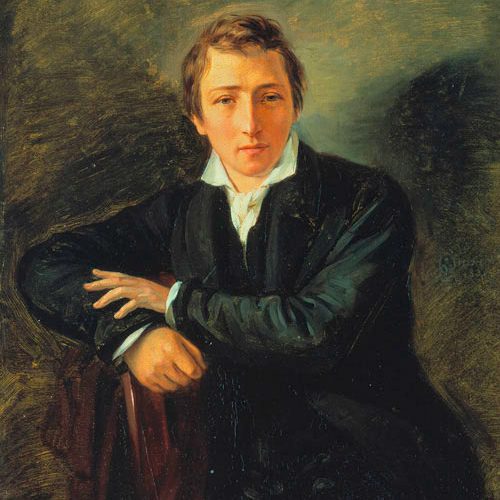
Revered by many as Germany’s greatest poet, Heine struggled mightily with his Jewish identity in the culturally inimical milieu of the 19th century. This phenomenon, known as Judenschmerz, was widespread among 19th century western European Jews. Despite his 1825 conversion to Christianity, Heine maintained a long, albeit conflicted, relationship to his Jewish background. Part of…
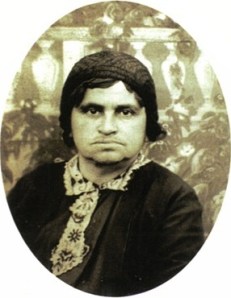
Sarah Schenirer (1883-1935) founded the Bais Yaakov (Bet Ya’akov) school system for women. One of the most visionary educators of the twentieth century, her movement had global impact. To view the Prezi associated with this lecture, please click here.

Baptized at age 12 as the result of his father’s dispute with a synagogue, Benjamin Disraeli (1804-1881) rose to prominence as a novelist and politician, serving several times as England’s Prime Minister. Colorful and flamboyant, Disraeli dismissed his antisemitic critics by emphasizing, rather than downplaying, his Jewish origins.

The discovery of the mutilated body of a young boy in Kiev led to the false arrest of a Jewish laborer named Mendel Beilis. Ignoring the argument of investigating officers, the Russian government under Tsar Nicholas II pressed ahead with the prosecution of Beilis, arguing that the boy was murdered as part of a Passover-related…
A thematic introduction to the topic of women in Jewish history, part of the Essential Lectures in Jewish History series by Dr. Henry Abramson. To view the Prezi associated with this lecture please click here.
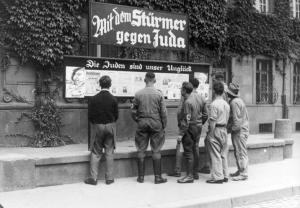
In October of 1946, ten Nazi defendants were hung on gallows erected by the International Military Tribunal. One of the most notorious, the propagandist Julius Streicher, uttered the phrase “Purimfest 1946” moments before his death, unconsciously echoing a mysterious passage in the Biblical book of Esther itself. Fascinating footnote in Jewish History!
Rabbi Yisrael Lipkin of Salant (Israel Salanter, 1810-1883) was the founder of the modern Mussar movement that revolutionized traditional Jewish education. Controversial during his lifetime, his ideas ultimately permeated the Yeshiva system as a whole. Part of the Jewish Biography as History series in Jewish History.
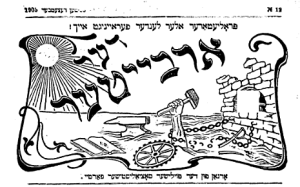
This lecture briefly covers the rise of mass Jewish politics at the turn of the 20th century, looking at the rise of Jewish Socialism, Zionism, and other movements. Part of the Essential Lectures in Jewish History series available at http://www.jewishhistorylectures.org. To view the Prezi associated with this lecture, please click here.

Blessed with a fine mind but an obstreperous personality, Salomon Maimon was one of the most erudite rebels against Judaism in the 18th century, leaving a powerful memoir that betrayed some of the stress points in traditional society.

Murder on Purim? That’s the charge of Socrates Scholasticus, whose lone account of an alleged Purim celebration that got out of hand in the year 415 has become part of the historical record, for good or ill. Although the validity of the accusation is highly questionable, the incident at Inmestar had a larger impact centuries…

Wondering how to harness the power of the Internet for effective teaching? Confused and maybe alarmed by all the talk about using social media as a pedagogic tool? Sign up for these three workshops for teachers by visiting http://www.miamijewisheducators.org! A project of Touro College South and The Shul.

Pakistani terrorists attacked the Chabad House in Mumbai, India, on Wednesday, 29th of Heshvan, 5769 (26 November 2008). Part of a concerted attack that killed 179 and wounded hundreds, they murdered the young Chabad emissaries running the house, Rabbi Gavriel and Mrs. Rivky Holtzberg. Their infant son, who turned two the day after his parents…

Who, exactly, wrote down the foundational texts of the Oral Torah? Who is responsible for the compiling of the Talmud? These were some of the questions addressed to Sherira Gaon, the Rosh Yeshiva of the great city of Pumbedita in Babylon in 987 by a young Rabbi in Tunisia. His famous response, preserved for over…

Hannah Szenes was a young Hungarian Jewish woman who joined the resistance in 1943, parachuting into Nazi-occupied territories with British support. She was captured and tortured, but did not divulge secret information on her colleagues. Her poetry, including the classic “Blessed is the Match,” survive and add to her legacy.
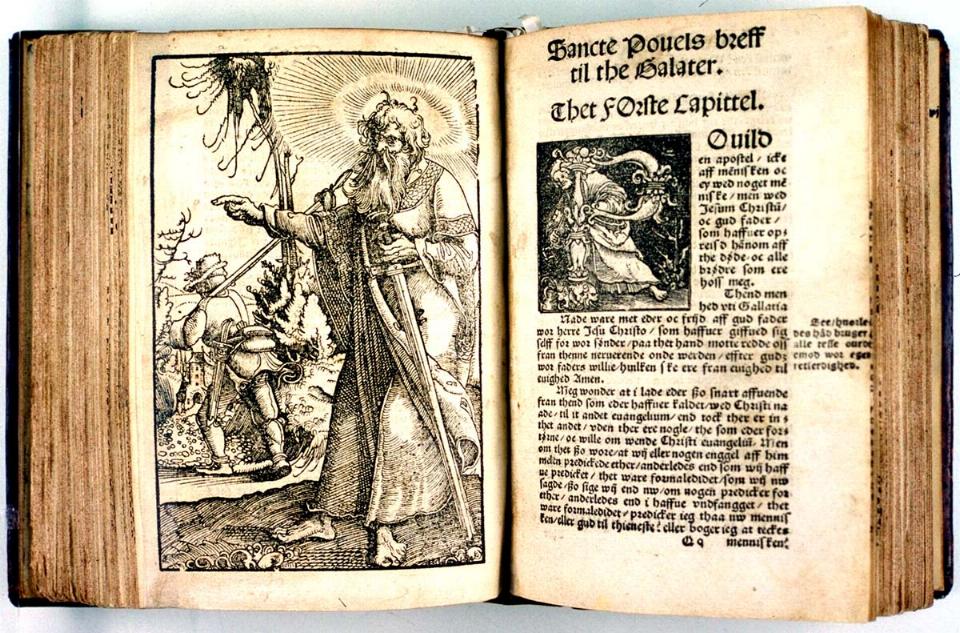
Credited with the popularization of Christianity, Saul (later Paul) of Tarsus was influential in mediating Jewish ideas to an increasingly Gentile audience. Combining appealing concepts such as life after death and a personal Deity with a relaxed approach to the requirements of Rabbinic Judaism, the former Pharisee succeeded in spreading Christianity well beyond its narrow…

Vladimir Ze’ev Jabotinsky (1880-1940) was one of the most influential political thinkers in the first half of the twentieth century, founder of the Revisionist movement.

Compiled by Rabbi Yehuda Ha-Nasi in an exceptionally difficult time for the Jewish people, the Mishnah created the possibility of creating a “portable Judaism.” After the destruction of the Temple in 70 and the dramatic escalation of the diaspora, the Mishnah allowed Jews to define their religion within an intellectual and textual context, outside of…

Virtually ignored by Jewish philosophers, Philo of Alexandria represented the high point of synthesis between Greek and Jewish thought in the ancient world, and had a huge influence on early Christian thinkers. A prominent representative of the Egyptian Jewish community to the Roman Emperor, and well-respected in his day by his coreligionists, he nevertheless had…

Wrongly accused of espionage, Captain Alfred Dreyfus was sentenced to Devil’s Island on the basis of remarkably tenuous evidence. May critics, including the famous writer Emile Zola, argued that Dreyfus was unfairly charged simply because he was a Jew in the French army. As evidence mounted that another officer was guilty, the Dreyfus Affair exposed…

Captured by the Romans, Josephus was a Jewish general who ultimately served as a military advisor to General Titus. Josephus recorded his first-hand observations of the destruction of the Temple, and went on to a brilliant literary career in Rome, describing Jews and Judaism to a wider audience. Who was Josephus–traitor to his people or…
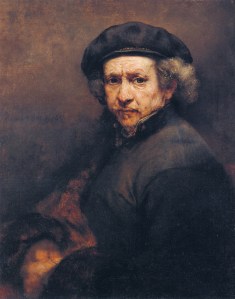
Rembrandt is well-known for his depictions of Jewish subjects, both as contemporary portraits and as models for Christian biblical characters.