Known as simply “The Rav,” Rabbi Dr. Yosef Baer (J.D.) Soloveitchik was arguably the most influential figure shaping the Orthodox Rabbinate in the United States in the 20th century. From his position at the Rabbi Isaac Elchanan Rabbinical Seminary at Yeshiva University, he ordained some 2,000 Rabbis over four decades.
Discovered in the rubble of the Warsaw Ghetto, the wartime writings of Rabbi Kalonymus Kalmish Shapiro (1889-1943) offer a unique and powerful perspective on the life and suffering of religious Jews during the horrific years of the Nazi occupation.
By Dr. Henry Abramson
According to my knowledge of the words of the Sages and the history of the Jewish people in general, we have never experienced such horrific suffering as has been visited upon us by the wicked ones since the end of 5702 (fall 1942)—may Hashem have mercy on us and rescue us immediately.
—Entry from January 11, 1943.
Discovered in the rubble of the Warsaw Ghetto, the Aish Kodesh (Holy Fire) is one of the most remarkable works of Jewish spirituality to emerge from the Holocaust. A slim volume of some 150 pages in the first printing, Aish Kodeshpresents the Torah spoken at the clandestine seudahshlishis gatherings convened by Rabbi Kalonymus Kalman Shapiro, known to his followers as the Piaseczno Rebbe.
The author, a scion of the Grodzhisk Chassidic dynasty, was a creative thinker whose literary fame was established with the 1932 publication ofChovas haTalmidim (The Students’ Obligation). Trapped in Warsaw when the war broke out, he lived through all its tragedies: the sealing of the ghetto in the fall of 1939, the horrific typhus plague of the winter of 1941, the massive deportations to Treblinka in the summer of 1942, and the heroic but doomed uprising of April 1943. He was ultimately deported to a labor camp and shot in November 1943, most probably for his involvement in a second attempted uprising. Unlike Holocaust memoirs, journals, or diaries, Aish Kodesh is a book that is sui generis for many reasons.
Aish Kodesh is a public document, representing the real-time efforts of the beleaguered Jewish community to deal with the theological implications of the Holocaust as it unfolded in the Warsaw Ghetto. The intellectual task of understanding the meaning of unimaginable suffering was common to both Orthodox and secular Jews, and third-party reports of the Rebbe’s gatherings confirm that they were attended by believers and non-believers alike. Aish Kodesh is also a profoundly sustained work of theodicy, its pages filled with philosophical meditation on the meaning of evil in Jewish thought, and much scholarly attention has been devoted to this aspect of the work, notably Dr. Nehemia Polen’s masterly 1999 study, Holy Fire.
Aish Kodesh has not, however, been studied extensively by historians, who have typically been stymied by the sometimes abstruse Kabbalistic passages and the almost complete absence of explicit references to quotidian events in the ghetto: not once in the entire work do the terms “German” or “Nazi” appear, and the reader must wade through veiled Aesopian language to determine the message of hope that the Rebbe offered in response to the horrors of that week under Nazi occupation.
After the war, a desperate post-war search for the OnegShabbos archives (a collection of documents that chronicled the realities of ghetto life) unearthed the Rebbe’s manuscripts of Aish Kodesh and its subsequent publication in Israel. Popularized in song by Rabbi Shlomo Carlebach, a renaissance of interest in Piaseczno chassidus developed in both scholarly and popular circles, notably under the leadership of Rabbi Moshe Weinberger of Woodmere, whose Aish Kodesh congregation takes its inspiration from the life and work of Rabbi Kalonymus Kalman Shapiro.
Publication information: Esh Kodesh, Tel Aviv: Va’ad Hasidei Piaseczno, 1960
Alexander Abramson runs the 2013 ING Miami Marathon
I’m a runner. I’ve been running as long as I can remember, including my first half-marathon at age 12 and my first full marathon at 14. Running gives me energy, and makes me feel like I can accomplish anything. I’m proud of my finishes, and even more proud that over the years I’ve raised almost $10,000 for charities like the Joe DiMaggio Childrens’ Hospital Foundation and Friendship Circle. I’m Alexander Abramson, I’m 15, and a proud sophomore at Weinbaum Yeshiva High School in Boca Raton.
My mom suggested I try out for BILT, a program run by the National Council of Synaogue Youth. It stands for Boys Israel Leadersthip Training, and I think it’s really sick that I got accepted. BILT will let me visit Israel, train on IDF bases, and help out at camps for Israeli kids in Sderot who have to live with terrorist bombing attacks all the time. I think it’s going to change my life, and help me understand what I can do for Israel and the Jewish people when I get older.
I need your help to attend BILT. I”ve got an ambitious goal of raising $3,000 to participate, and I’m going to prepare by learning a lot more about Israel’s history, geography, and culture. Please help me by sponsoring me for this program. Click here to visit my sponsor page.
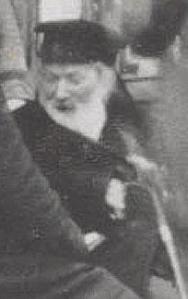
Israel Meir Kagan (photo courtesy Baruch Chafetz via Wikimedia Commons)
Rabbi Israel Meir Kagan, better known as the Chofetz Chaim for his classic work on the sanctity of speech, was one of the major Rabbinic leaders of the late 19th and early 20th century.
To view the Prezi associated with this lecture, click on the image below or here.
We are scheduled to resume our lecture series this evening with a presentation on the Chofetz Chaim,one of the most influential Rabbinic thinkers of the late 19th and early 20th century. Rabbi Israel Meir Kagan is known principally for his dramatically creative analysis of the topic of forbidden speech (lashon ha-ra), and rose to prominence as a major scholar-leader of the Jewish people. 8:30 at Young Israel. Look forward to seeing you!
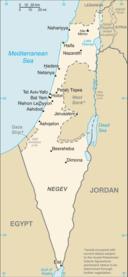
This video describes the changes in the political boundaries of the State of Israel from its inception 1948 through the disengagement from Gaza in 2005. Part of the Essential Lectures in Jewish History series by Dr. Henry Abramson. To view the Prezi associated with this video please click here.
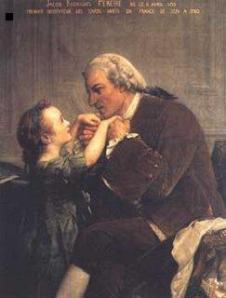
Jacob Rodrigues Periera (1715-1780) was the inventor of dactylology, a method for teaching deaf-mutes to communicate. A crypto-Jew from Portugal, his first student was his sister. His methodology received phenomenal acclaim, he received honors from the King of France and was named to both the Royal Society of London. This video is part of This Week in Jewish History videos by Dr. Henry Abramson, available at http://www.jewishhistorylectures.org.
To view the Prezi used in this video, please click here.
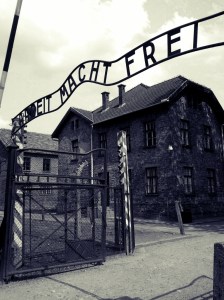
Entrance to Auschwitz. Photo by Petar Milosevic via Wikimedia Commons.
This is a brief academic presentation of the history of the Nazi attempt to destroy the Jews of Europe during World War II. Part of the Essential Lectures in Jewish History series by Dr. Henry Abramson.
To view the Prezi used in this lecture, please click here.
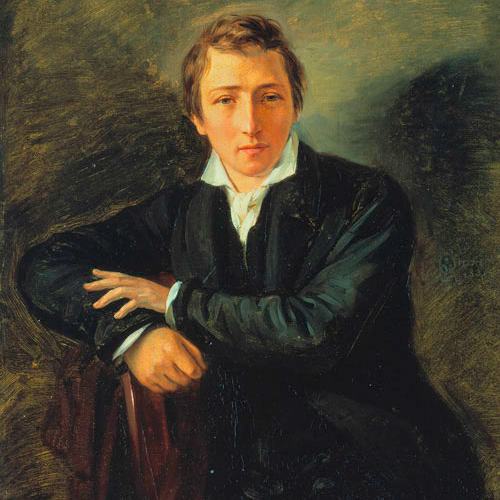
Heinrich Heine, portrait by Moritz Daniel Oppenheim via Wikimedia Commons.
Revered by many as Germany’s greatest poet, Heine struggled mightily with his Jewish identity in the culturally inimical milieu of the 19th century. This phenomenon, known as Judenschmerz, was widespread among 19th century western European Jews. Despite his 1825 conversion to Christianity, Heine maintained a long, albeit conflicted, relationship to his Jewish background. Part of the Jewish Biography as History lecture series by Dr. Henry Abramson.
To view the Prezi associated with this video, please click here.
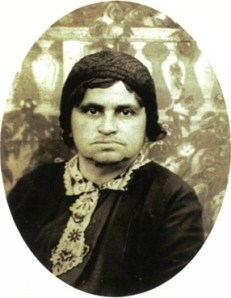
Sarah Schenirer (1883-1935) founded the Bais Yaakov (Bet Ya’akov) school system for women. One of the most visionary educators of the twentieth century, her movement had global impact.
To view the Prezi associated with this lecture, please click here.









 Henry Abramson