Twelve Lectures on the Jews of Ashkenaz (Free Registration)
With gratitude to Dean Michael Chighel of The Ashkenazium of Budapest, my new series of lectures on the history of the Jews of Ashkenaz will be open to the global community of students of Jewish history via webinar. Please visit http://www.bit.ly/ASHKENAZ2022 for details and registration. Lectures are scheduled for Monday-Thursday, March 21-24 and Monday-Tuesday March 28-29, 13:00-16:30 CET (8:00 am-11:30 am ET). Visit the course website for advance preparation. Join us!
A Selection of Historically Significant Ukrainian Jews
Premiering at 12:00 noon ET, with live chat (12 minutes). Join us!
New Material in Online Biblical Jewish History Course
Returning students: thanks so much for contributing comments to the draft chapters of the textbook! Please be sure to check out the additions to Chapter 3. New students welcome! Please click here for information and to register.
New Video in Jewish History Lab Series: The Holocaust
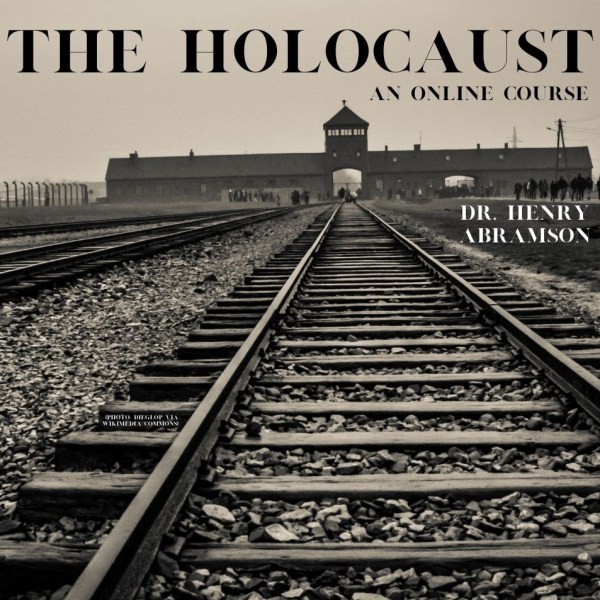
This video is a very brief treatment, in keeping with the format of the Jewish History Lab series. For a more sophisticated and extended discussion, please visit the online course (free registration).
A brief discussion of the election of Volodomyr Zelensky in the larger context of Ukrainian-Jewish history. Recorded on March 4, 2022 with hope for a speedy return to peace for Ukraine and its people.
My grandfather died, suddenly, on the rarest date of the year: March 3, 1957, which coincides with today, the 30th of Adar Rishon.
It’s a leap year date that only appears seven times in the nineteen-year cycle of the Hebrew calendar. Following our Lithuanian Jewish custom, we observe his death anniversary on the 1st of Adar in non-leap years, but if we were to hold by the strict standard of the exact date, his yahrzeit has only appeared 24 times in the last 65 years.
More strikingly, this is the very first time that the Hebrew date of 30 Adar I and the Gregorian date of March 3 have coincided since his passing. In a way, it’s as if he died just last year.
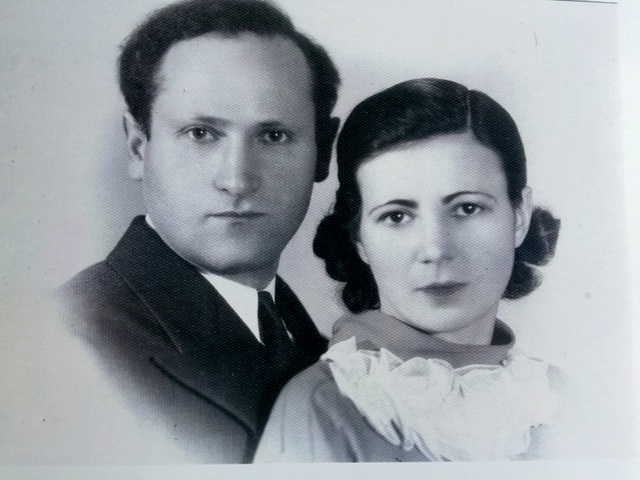
I never met my grandfather Henry, but his daughter—my mother—chose to bestow his name on me, and I feel a special responsibility to reflect on his life and legacy.
Henry was only fifty-two years old when he died. I’ve relived the scene many times in my imagination, especially on Yom Kippur when I contemplate the fragile brevity of our human lifespans.
My uncle Leon, then fourteen years old, was having difficulty with his homework. My grandmother Pauline sent him downstairs to speak with my grandfather in the finished basement of their Montreal duplex, a quiet place to which Henry often retreated for personal study. Leon remembers hearing Henry’s labored breathing just before he collapsed to the floor and died within moments, right in front of him. Coronary thrombosis was later listed on the death certificate.
I picture Uncle Leon as a young boy, just starting high school, suddenly burdened with the task of telling his mother that she is a widow, his eighteen-year-old sister that she is an orphan. I reach out with my mind and gingerly touch the mental picture, tentatively placing myself and my own wife and children in my namesake’s place, looking sideways at the result so as not to be overwhelmed.
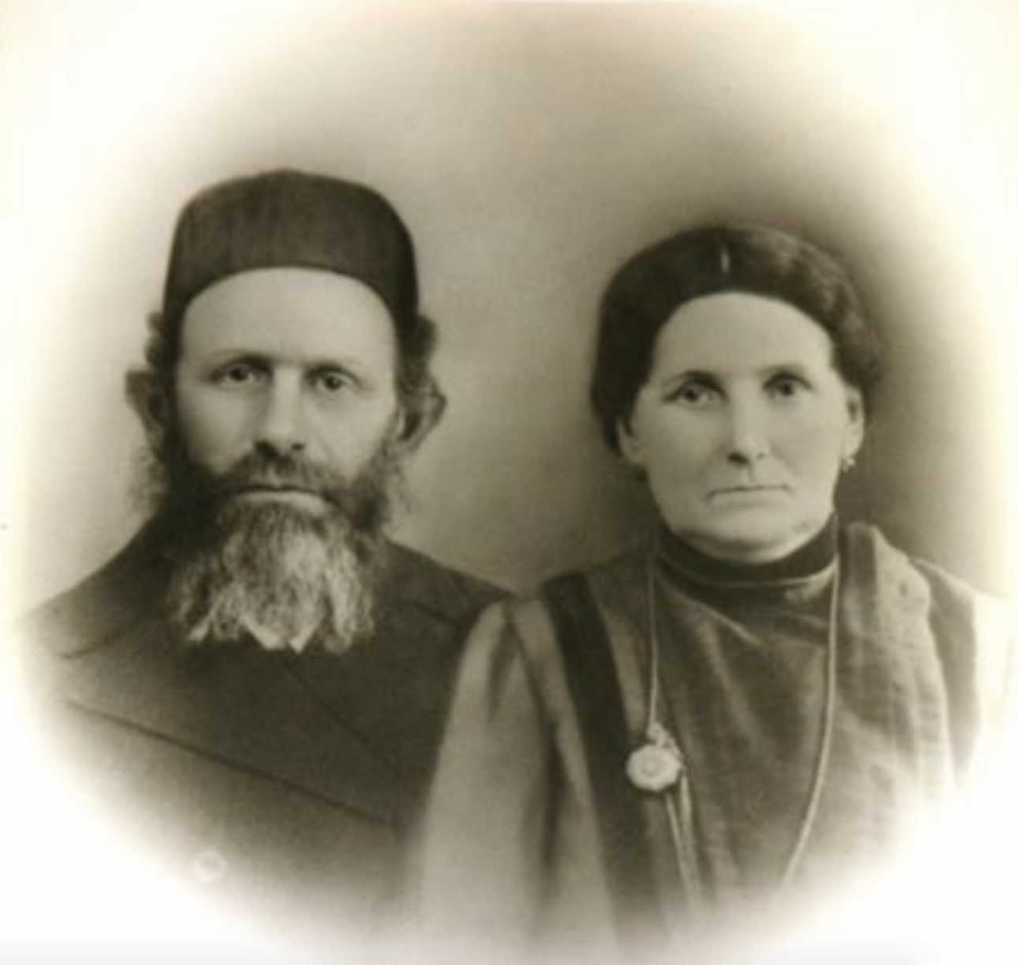
Yehuda Leib and Shifra Ravvin ע׳׳ה, c. 1910
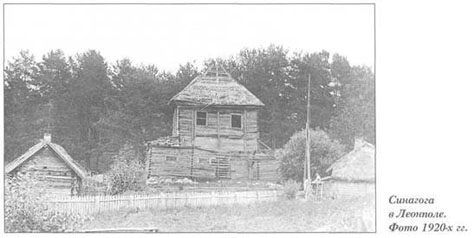
Yehudah Leib and Shifra Ravvin, originally of Zagare, Lithuania, gave their newborn son the Hebrew name Hillel when he was born in Leonpol’e, Belarus in 1905. I don’t know why they moved from Zagare to tiny Leonpol’e: Zagare was a significant Lithuanian town, famous as the birthplace of Rabbi Yisrael Salanter a century earlier, father of the Mussar movement. Leonpol’e, on the other hand, barely registered on the map. Some 800k to the south-east, closer to Kyiv than Vilnius, it was known principally for the ramshackle wooden synagogue that stood on the outskirts of the shtetl.
The 18th century Wooden Synagogue of Leonpole, c. 1920.
Henry’s childhood was shaped by the turmoil of World War I and the Russian Civil War, and antisemitism truncated his studies at the University of Moscow. When he emigrated to Canada he booked passage with his Russian name Ilya, although he would later use the English name Henry, hoping to avoid prejudice in the new world.
It was on his journey from Rotterdam to Halifax in February 1930 that he met his wife Pauline, also a Lithuanian Jew (their names are sequential in the Canadian immigration record, suggesting that they got off the boat together). They were married in the Chevra Kadish congregation of Montreal, where they lived for the rest of their lives.
Henry was linguistically gifted, and he mastered Canadian English with an accent that was reportedly undetectable, eh? He completed his degree in Electrical Engineering and worked in the aeronautics industry. When he died he was studying toward a PhD candidate in History at the University of Montreal, specializing in the Slavic studies, a fact I only learned when I was accepted to graduate school for the same degree.
He was a man who valued a well-rounded education, working in science and technology yet appreciating literature, music and culture. My mother and my uncle Leon tell me he was a loving father, a hard worker who supported them with an encouraging warmth. His wife Pauline never remarried, but before her passing in 2010 she merited to see his children have children of their own—me and three cousins, one of whom also bears his name—and many great-grandchildren.
My cousin Michael is flying in from Washington, DC to commemorate our grandfather’s yahrzeit at a siyum, a traditional celebration on the completion of a Talmudic tractate. If you are in New York, please feel free to join us at the 8:00 am minyan at Young Israel of Lawrence-Cedarhurst.
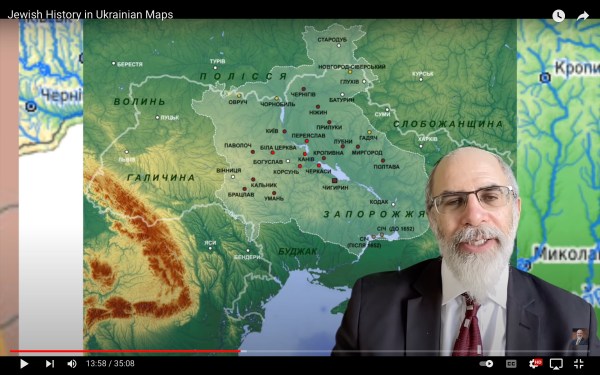
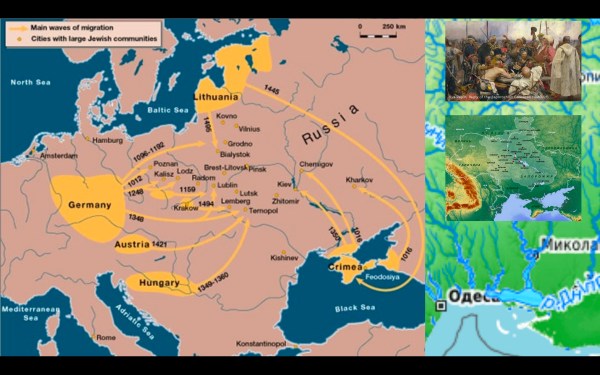
I recorded this video just hours before the Russian invasion of Ukraine, motivated by Mr. Putin’s bizarre speech denying the historical legacy of the Ukrainian people. It’s a dense talk, with lots of maps in various languages, intended to demonstrate the millennial role of Ukraine in Jewish history.
The Ghettos
Second brief lecture (10m) in the sequence of talks on the Holocaust, part of the Jewish History Lab series. Premieres today at 12 noon ET (New York Time). For a more sophisticated discussion, please note the free online course on the Holocaust (registration information below). This course now has over 100 students.
When was the Book of Esther Written?
Brief video added to the Biblical Jewish History online course, available also to YouTube channel members at the Researcher and Colleague level. Introduction to some of the more challenging issues related to dating this book.
Judaism Demystified Podcast
I recently enjoyed a conversation with the Judaism Demystified team, Ben Koren and Benzion Siouni. Wide-ranging discussion of methodological and philosophical approaches to the study of Jewish History.
I recorded this video after Vladimir Putin delivered his February 21 speech denying the historical validity of Ukraine, a clear pretext to the invasion that began a few hours ago. This brief video provides a survey of the long Jewish presence in the region, framed in the context of maps: political, ethnolinguistic, military and social. Please join me for a premiere and live chat at 1pm ET (New York time, 34 minutes).
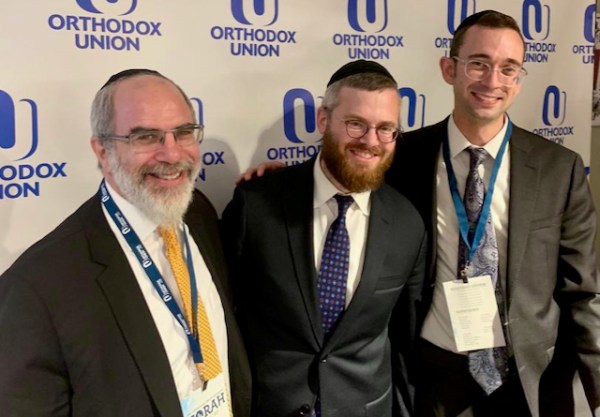
Join us today at 11:00 am ET (New York Time) for a discussion of the implications of Digital Learning for Torah and Torah-adjacent study. Rabbi Schwed is the visionary director of multiple initiatives for the Orthodox Union, including the revolutionary All Daf app, also All Mishnah and All Parsha.
The Jewish history Lab begins a discussion of the Holocaust.
Premieres today at 12 noon ET (New York Time) with live chat. Join us!
Premieres today at 12 noon ET (New York time) with live chat
Archaeological Forgeries and Biblical History
Discussion of the difficulty of working with forged artifacts and the study of Biblical History. This video is available to YouTube Channel members at the Researcher and Colleague level as well as to students registered in the online course in Biblical Jewish History.
Live Zoom Discussion with Rabbi Moshe Schwed of All Daf (Tuesday at 11:00 am ET)
Looking forward to this discussion with my colleague Rabbi Moshe Schwed, creator of the wildly successful All Daf app, on the implications of digital learning for Torah and Torah-adjacent study. Register for the Zoom by clicking here.
Online Courses
Biblical Jewish History students: please check your Course Page for new updates to the draft chapters of the volume in progress!
We got Zoombombed by Neo-Nazis in the middle of the conference, but I manage to deliver my presentation. Join us at 12 noon ET (New York time) for a premiere and live chat! 23 minutes, presentation is a little different than most of my lectures but still fun I think. I hope.
Also: Origins of the Jewish People; Neo-Nazis Zoombomb the Sri Lankan Conference of Jews and Buddhists; Soviet Jews During the Interwar Period, and What’s with the Queen of Heaven Business?
What is a Synagogue? 7. A Place of Community (Carpentras, France)
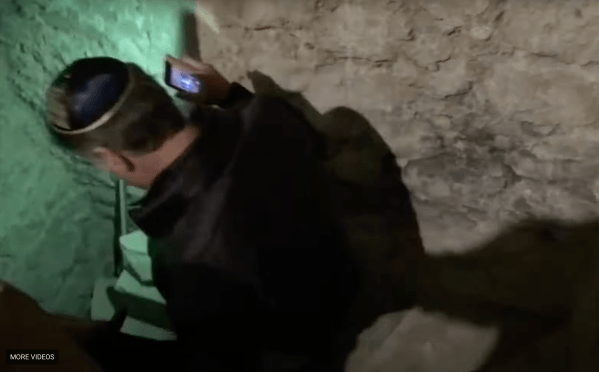
Final installment in the What is a Synagogue? series. Amazing things in the basement and sub-basement of this medieval synagogue!
Abraham to Yehudah Maccabee: The Ancient Origins of the Jewish People
Part One of a new lecture series, delivered at Congregation Beth Israel in Vancouver, British Columbia, Canada. Series title: All Jewish History, but Skipping the Boring Parts.
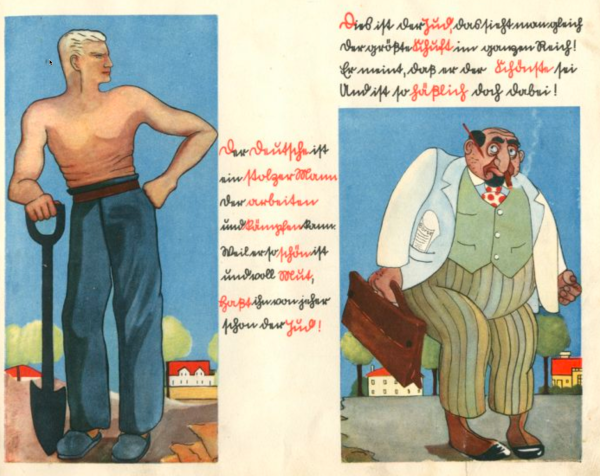
Soviet Jewry in the Interwar Period (Jewish History Lab)
Premieres Sunday at 12 Noon ET (New York Time) with Live Chat
Judaism: The Four Noble Truths
Premieres Tuesday at 12 Noon ET (New York Time) with Live Chat
Recording of a presentation to a scholarly conference organized by the University of Kelaniya, Sri Lanka. Unfortunately–and to the great surprise of the saffron-robed Buddhist monks that made up much of the audience–the conference was attacked, and ultimately shut down, by Neo-Nazi zoom bombers who disrupted our discussions by displaying pornography and shouting “Heil Hitler” over the speakers. I managed, after an interruption of two or three minutes, to complete my paper, but the Neo-Nazis returned and the Sri Lankan tech team were unable to control the intellectual vandalism.
We plan to reconvene the conference, but now our Buddhist colleagues have received a more powerful lesson in the realities of Jewish life than any of us could have described in text.
Premieres Tuesday at 12 noon ET (New York Time) with live chat. Moderated, btw.
What’s with this Queen of Heaven business?
Discussion of the “Queen of Heaven” inscriptions discovered at Kuntillet Ajrud and their implications for reading the book of Jeremiah, among other Biblical passages. Available to members of my YouTube channel at the Researcher and Colleague level and to students enrolled in the online Biblical Jewish history course.
The Learning Revolution: How the Digital Age is Transforming Access to Torah and Torah-Adjacent Study






 Henry Abramson