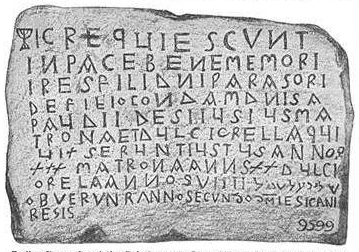
The Jews of Bukhara (Sunday in Denver); the Maimonidean Controversy; Save the Date for Roslyn NY

Really looking forward to speaking to the Or Avner community in Aurora, CO!


The Maimonidean Controversy


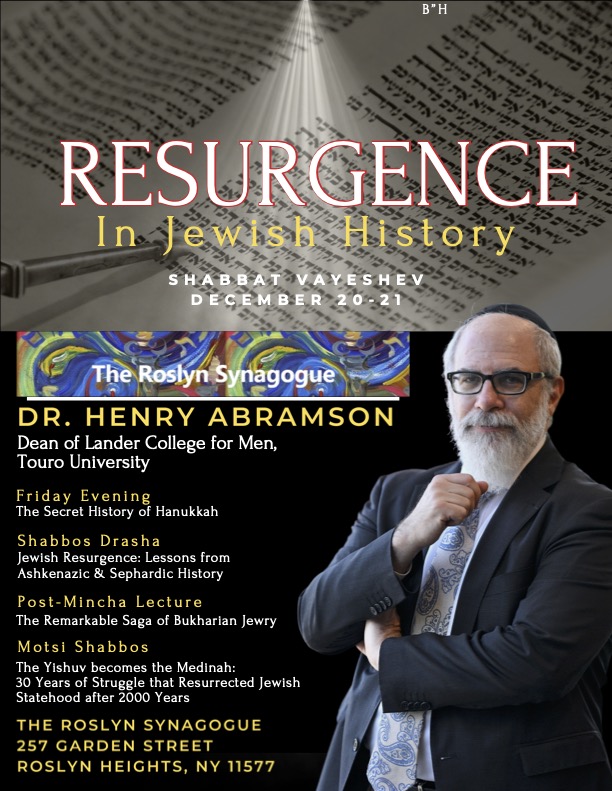
Save the Date: Shabbaton in Roslyn NY, December 20-21
  • Rav Sherira Gaon: The Jews of Babylon (Next Week: Sa’adia Gaon)

    Rav Sherira Gaon: The Jews of Babylon (Next Week: Sa’adia Gaon)

    Who, exactly, wrote down the foundational texts of the Oral Torah? Who is responsible for the compiling of the Talmud? These were some of the questions addressed to Sherira Gaon, the Rosh Yeshiva of the great city of Pumbedita in Babylon in 987 by a young Rabbi in Tunisia. His famous response, preserved for over…

  • Hannah Szenes: Poet-Martyr of the Resistance (This Week In Jewish History)

    Hannah Szenes: Poet-Martyr of the Resistance (This Week In Jewish History)

      Hannah Szenes was a young Hungarian Jewish woman who joined the resistance in 1943, parachuting into Nazi-occupied territories with British support. She was captured and tortured, but did not divulge secret information on her colleagues. Her poetry, including the classic “Blessed is the Match,” survive and add to her legacy.

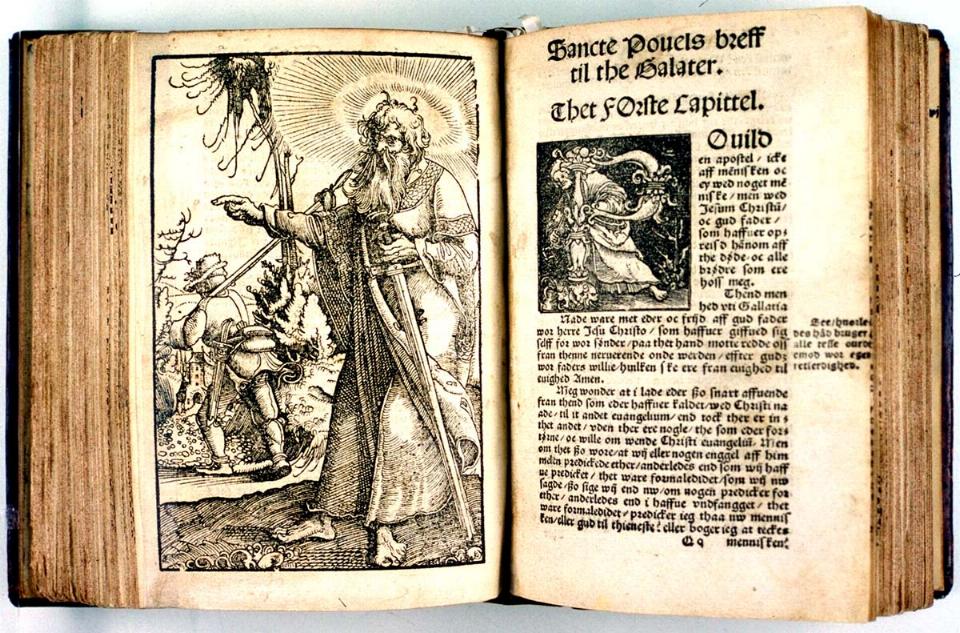
  • Paul of Tarsus: The Origins of Christianity in Jewish Context

    Paul of Tarsus: The Origins of Christianity in Jewish Context

    Credited with the popularization of Christianity, Saul (later Paul) of Tarsus was influential in mediating Jewish ideas to an increasingly Gentile audience. Combining appealing concepts such as life after death and a personal Deity with a relaxed approach to the requirements of Rabbinic Judaism, the former Pharisee succeeded in spreading Christianity well beyond its narrow…

  • Vladimir Ze’ev Jabotinsky (This Week in Jewish History)

    Vladimir Ze’ev Jabotinsky (This Week in Jewish History)

    Vladimir Ze’ev Jabotinsky (1880-1940) was one of the most influential political thinkers in the first half of the twentieth century, founder of the Revisionist movement.

  • The Mishnah: Creating a Portable Judaism HIS 155 Lecture 1.5

    The Mishnah: Creating a Portable Judaism HIS 155 Lecture 1.5

    Compiled by Rabbi Yehuda Ha-Nasi in an exceptionally difficult time for the Jewish people, the Mishnah created the possibility of creating a “portable Judaism.” After the destruction of the Temple in 70 and the dramatic escalation of the diaspora, the Mishnah allowed Jews to define their religion within an intellectual and textual context, outside of…

  • Philo Judaeus of Alexandria: Jews in the Greek World

    Philo Judaeus of Alexandria: Jews in the Greek World

    Virtually ignored by Jewish philosophers, Philo of Alexandria represented the high point of synthesis between Greek and Jewish thought in the ancient world, and had a huge influence on early Christian thinkers. A prominent representative of the Egyptian Jewish community to the Roman Emperor, and well-respected in his day by his coreligionists, he nevertheless had…

  • The Dreyfus Affair (This Week in Jewish History)

    The Dreyfus Affair (This Week in Jewish History)

    Wrongly accused of espionage, Captain Alfred Dreyfus was sentenced to Devil’s Island on the basis of remarkably tenuous evidence. May critics, including the famous writer Emile Zola, argued that Dreyfus was unfairly charged simply because he was a Jew in the French army. As evidence mounted that another officer was guilty, the Dreyfus Affair exposed…

  • Who Was Josephus?

    Who Was Josephus?

    Captured by the Romans, Josephus was a Jewish general who ultimately served as a military advisor to General Titus. Josephus recorded his first-hand observations of the destruction of the Temple, and went on to a brilliant literary career in Rome, describing Jews and Judaism to a wider audience. Who was Josephus–traitor to his people or…

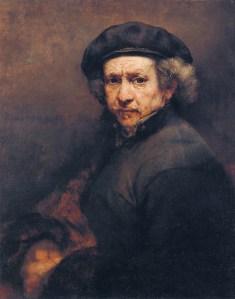
  • Rembrandt and the Jews (This Week in Jewish History)

    Rembrandt and the Jews (This Week in Jewish History)

    Rembrandt is well-known for his depictions of Jewish subjects, both as contemporary portraits and as models for Christian biblical characters.

  • Who Was Josephus? Fall 2013 Lecture Series in Jewish History Resumes This Week

    Who Was Josephus? Fall 2013 Lecture Series in Jewish History Resumes This Week

    Photo: Aryeh Abramson looks out over Iroquois Falls, Ontario, Canada, where he spent the Sukkot vacation visiting his grandparents. Captured by the Roman General (and later Emperor) Vespasian while defending the Galilee, Josephus ultimately turned against his coreligionists and served as an advisor to the forces besieging Jerusalem during the first Roman-Jewish War. His first-hand…

  • Free Download of Maimonides on Teshuvah by Dr. Henry Abramson

    Free Download of Maimonides on Teshuvah by Dr. Henry Abramson

    Moses Maimonides (1135-1204) was one of the greatest minds the Jewish people ever produced: philosopher, jurist, physician, and an extremely prolific writer who left us classics like The Guide for the Perplexed and the Mishneh Torah.  For several years I have been in the habit of reviewing his Laws of Repentance in the weeks leading up to the…

The Jews of Bukhara (Denver, CO); The Jews of the Lesser Antilles; Varieties of Crypto-Jewish Identity; Wait, Alexander Hamilton was Jewish?

Looking forward to a wonderful Shabbat in the Denver Jewish community!


Our Itinerary of Discovery in the Western Caribbean


Channel Members


Premiering at 10am ET


  • Excerpt from The Kabbalah of Forgiveness Now Online

    Excerpt from The Kabbalah of Forgiveness Now Online

      An excerpt from The Kabbalah of Forgiveness: A Reader’s Guide to Rabbi Moshe Cordovero’s The Palm Tree of Devorah, a new translation and commentary on the 16th-century classic of Kabbalistic musar, is now available online.  Anticipated publication date is August 2013.  The Palm Tree of Devorah first appeared in 1588 and became and instant classic.…

  • Stephen Samuel Wise and the Jews of America

    Stephen Samuel Wise and the Jews of America

    A presentation on the life and work of Stephen Samuel Wise (1874-1949), an important American communal leader. The lecture will take a broader focus, looking at the history of Jewish settlement in the United States during the 19th century and the major issues facing this immigrant community through the middle of the twentieth century.  The…

  • Menachem Begin: A New Israel

    Menachem Begin: A New Israel

    A study of the life of Menachem Begin (1913-1992). A native of Poland, he was a proponent of Vladimir Jabotinsky’s Revisionist party that stood in dramatic contrast to the dominant left-wing tendency in the Zionist movement. A major figure in Israel’s struggle for statehood, and a founder of the Likud party, he was elected to…

  • Mitnagdim, Hasidim, Maskilim: The Cultural Geography of Jewish Eastern Europe

    Mitnagdim, Hasidim, Maskilim: The Cultural Geography of Jewish Eastern Europe

    This lecture presents a broad overview of the three main intellectual-religious trends present in 19th century Jewish Eastern Europe: the traditionalist Mitnagdim, the innovative Hasidim, and the modernizing Maskilim. Good as an overall introduction, although I go into more detail on all of these movements in other lectures on this website.  Taped on April 21,…

  • Golda Meir and the Foundations of Israel

    Golda Meir and the Foundations of Israel

    A presentation of the life of Golda Meir (1898-1978), spanning her immigration to Israel in 1921 through the end of her term as the fourth Prime Minister of Israel in 1974. The lecture will discuss the foundations of the Yishuv, the pre-state Jewish community, and touch on the major social and military conflicts that Israel…

  • Evgenia Ginzburg: Jewish Life Under Stalin

    Evgenia Ginzburg: Jewish Life Under Stalin

    Evgenia Ginzburg (1904-1977) was a Jewish woman who endured the horrors of the Stalinist Gulag.  Charged and convicted of anti-Soviet activity in 1937, she was sent to the infamous work camps of Siberia for nearly two decades until her case was reviewed two years after Stalin’s death.  She was ultimately rehabilitated, and published her memoirs…

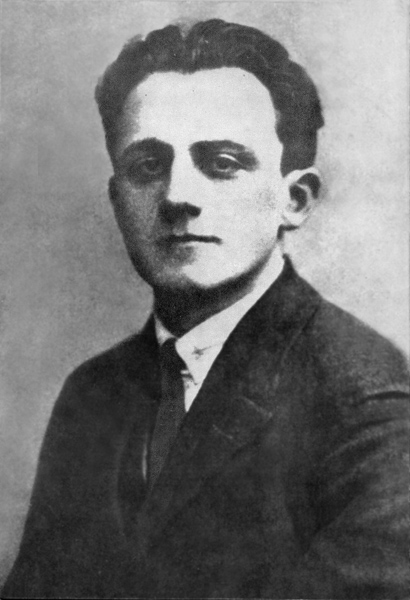
  • Emanuel Ringelblum: Heroic Scholar of the Warsaw Ghetto

    Emanuel Ringelblum: Heroic Scholar of the Warsaw Ghetto

    An examination of the life and work of Emanuel Ringelblum (1900-1944), the heroic Polish scholar who organized the underground Oneg Shabbat society in the Warsaw Ghetto. Ringelblum recognized the extreme and unprecedented nature of the Nazi onslaught early in the war, and brought together a group of highly dedicated volunteers who recorded every aspect of…

  • Solomon Mikhoels: Jews and Jewish Art in the USSR

    Part I: Part II: Part III: Solomon Mikhoels (1890-1948) was one of the most prominent actors and directors in early Soviet Russia. His career coincides with the brief flourishing of Yiddish culture under the policy of korenizatsiia, or “indiginization,” when the Communist authorities sought to develop folk culture as a means of developing loyalty to the…

  • Shimon Dubnow: The Politics of Jewish Identity in the Modern World

    Shimon Dubnow: The Politics of Jewish Identity in the Modern World

    Shimon Dubnow (1860-1941), a noted historian and activist whose theories of Jewish survival in the diaspora were extremely influential in the shaping Jewish identity in the modern world, from the future of Russian Jewry to the establishment of the modern Federation movement in the United States.  Dubnow’s scholarship was inextricably intertwined with the effort to…

  • Moses Mendelssohn and the Haskalah Movement

    Moses Mendelssohn was a hugely influential thinker in 18th-century Germany.  An unusually gifted intellect, he became the primary spokesperson for the emancipation of Jews in the 18th century, and his cause was championed by many non-Jewish liberals of the era. Heralded as the founder of the Reform movement even though Mendelssohn himself maintained an observant…

  • Nathan of Hanover and the Ukrainian Revolution of 1648-1649

    Nathan of Hanover and the Ukrainian Revolution of 1648-1649

    Nathan of Hanover is best known for his moving chronicle of the Khmel’nyts’kyi (Chmielnicki) Rebellion. Entitled Yeven Metsulah (“The Abyss of Despair”), it records with remarkable fairness the social, political, economic and religious background of the mid-17th century Ukrainian movement against the Poles, along with the horrible pogroms perpetrated in the context of that violent…

Visits to Synagogues in Bordeaux and Libourne (France); Another Open Letter to Jewish Participants in anti-Israel Protests re: Amsterdam; Conference Presentation on Sheptytsky and WW II

Fantastic Voyage of Discovery with Kosher River Cruises


A Difficult Conversation


Recent Conference Presentation in Toronto


Jewish Life in Visigothic Spain; Commemorating October 7

This is one of the most bizarre periods of Jewish history, and that’s saying a lot.

Dropping on Sunday, September 22 at 10am ET. 70 minutes.


A Thousand Years of Ashkenaz

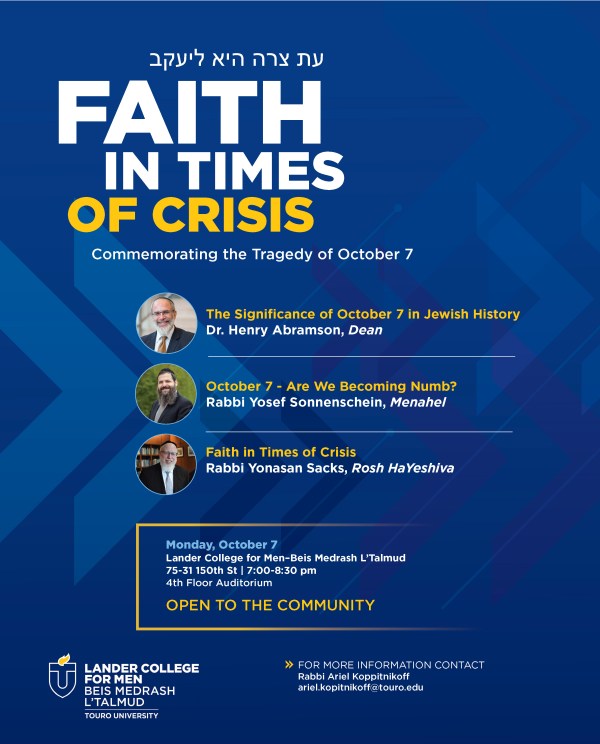
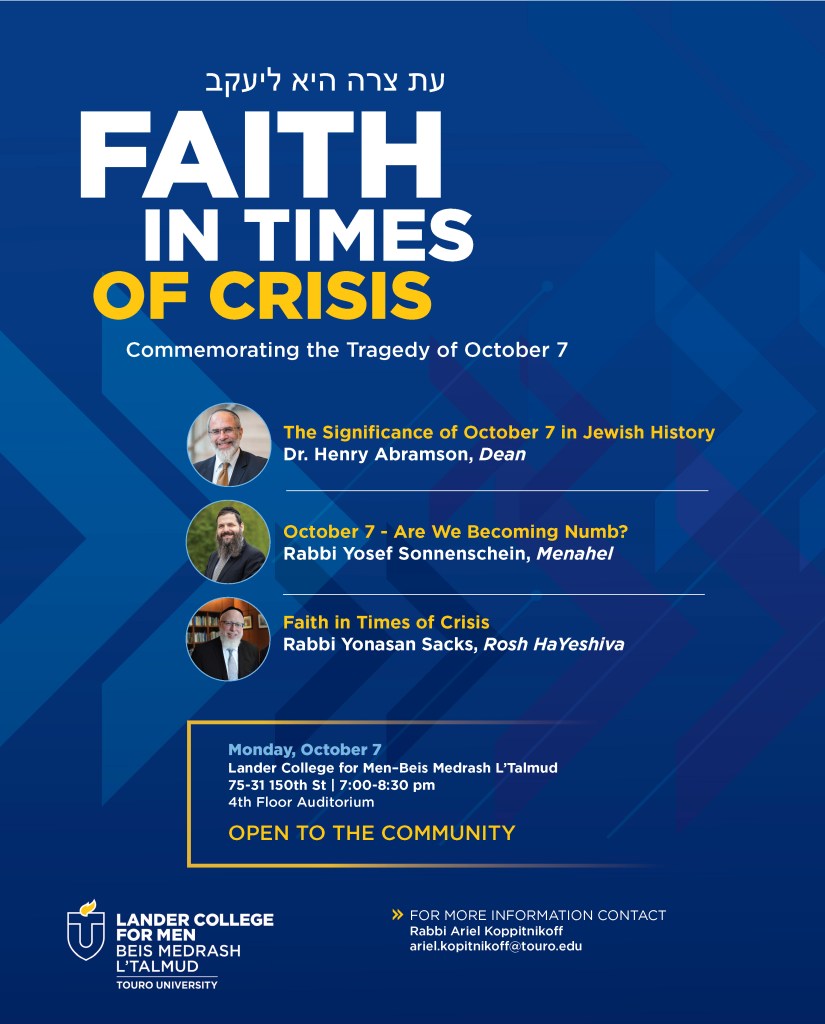
New Lecture Series: The Sweep of Sephardic History; Faith in Times of Crisis: Commemorating the Tragedy of October 7

New Lecture Series: The History of Sephardic Jewry

Public at 10 am ET. Duration: 72 minutes.
Channel Members: Duration 70 minutes.
Channel members: 44 minutes.

Shabbat in Silver Spring; The History of Sephardic Jewry; Jews, Wine, and Bordeaux; Napoleon’s 1808 Decree on Jewish Names

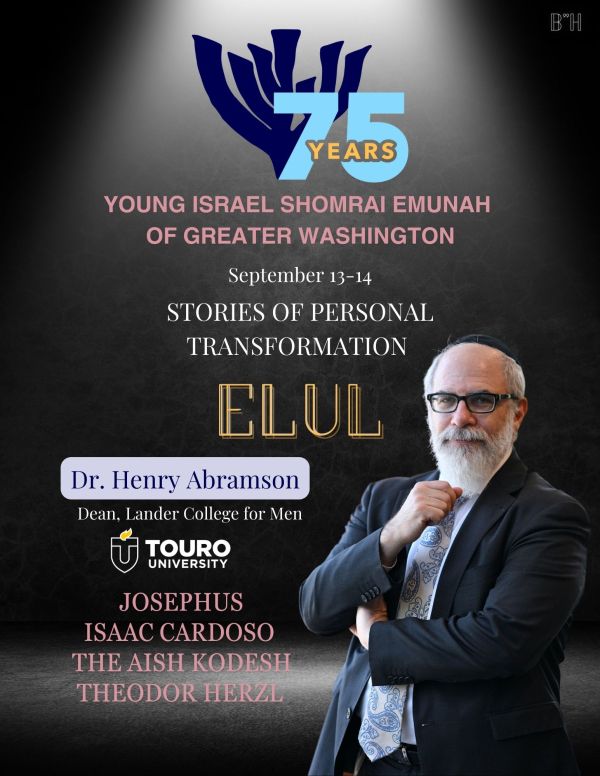
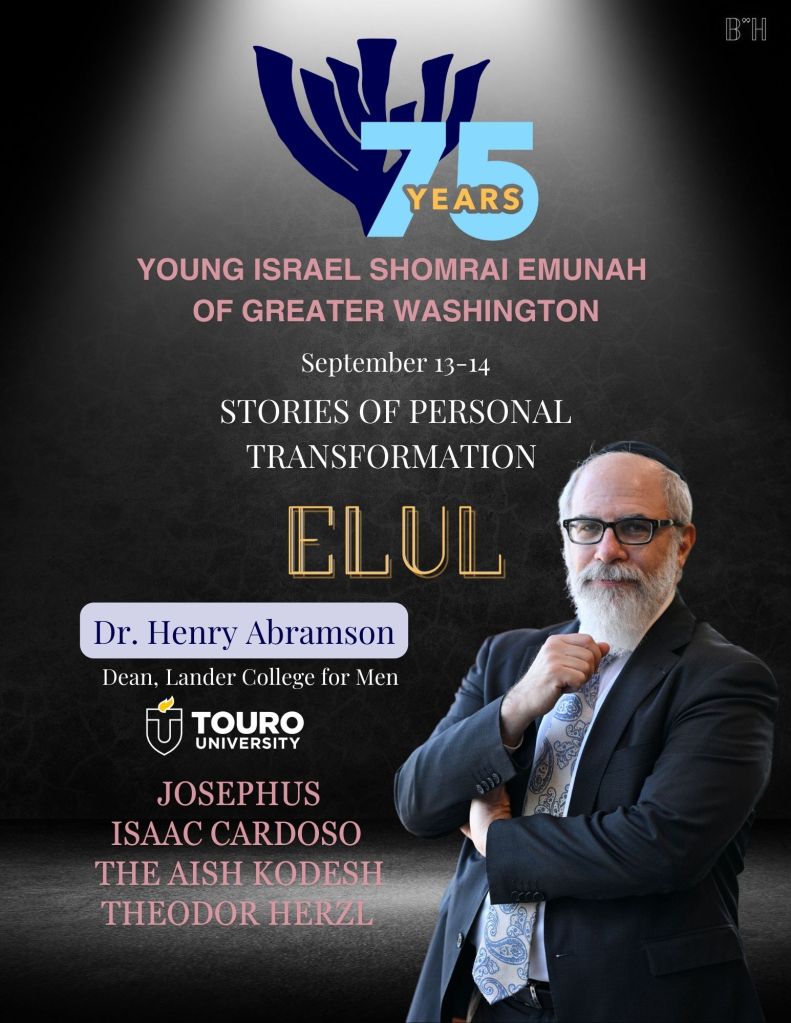
Stories of Personal Transformation for Elul


Napoleon’s 1808 Imperial Decree on Jewish Names


The History of Sephardic Jewry (Lecture, 75 minutes)

Jews, Wine, and Bordeaux (7 minutes)


A Thousand Years of Ashkenaz

Create a website or blog at WordPress.com

Up ↑