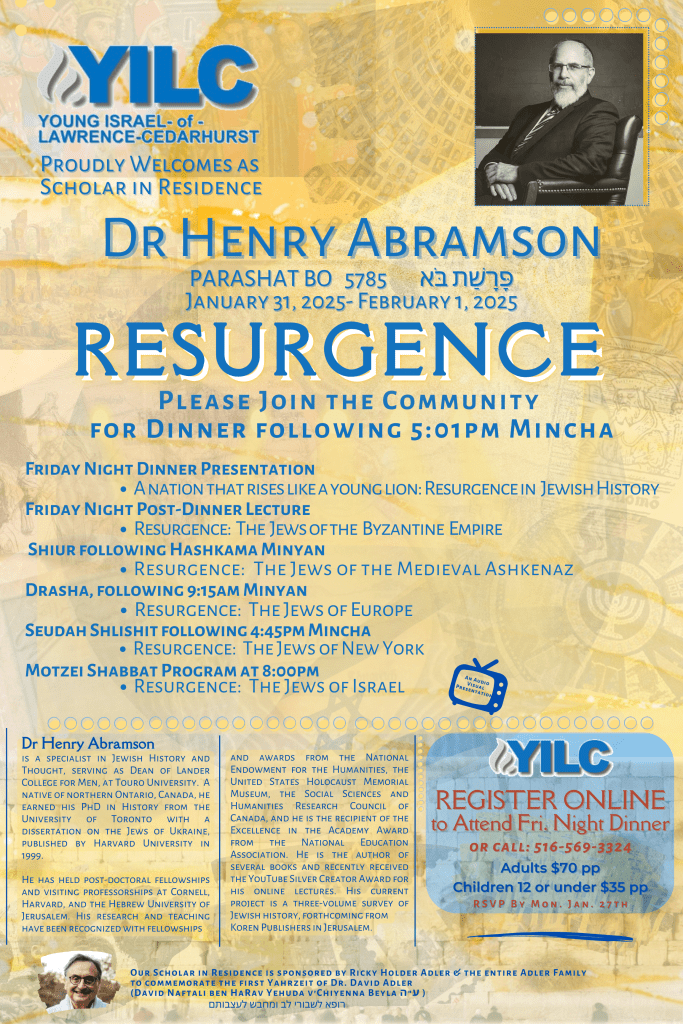
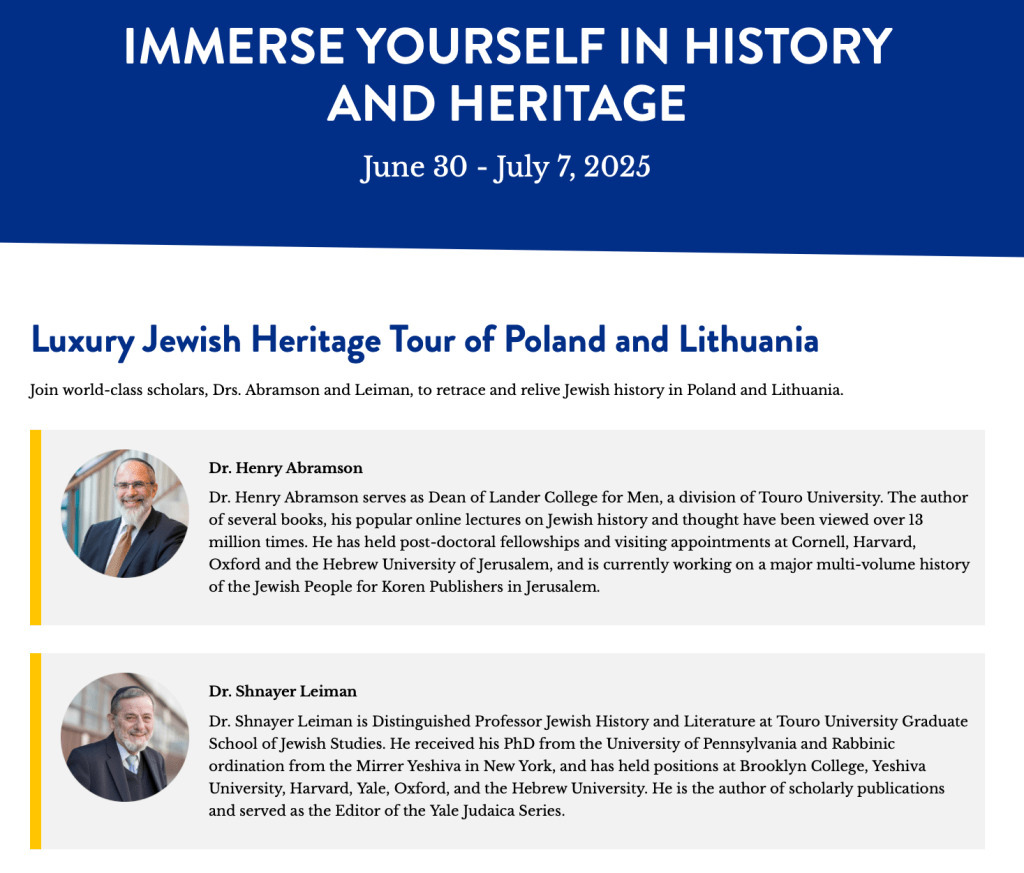
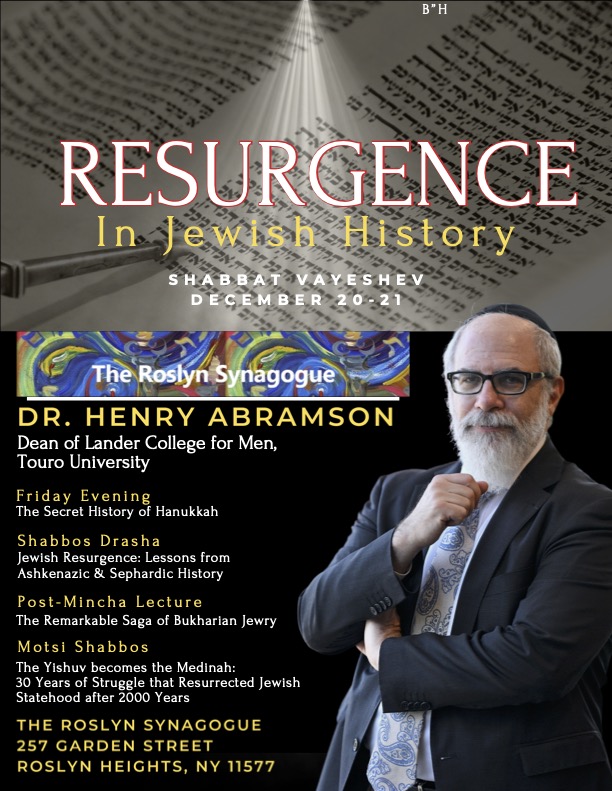
Really looking forward seeing my friends at YILC!

Lectures in Jewish History and Thought. No hard questions, please.


Rabbi Moshe ben Maimon (1135-1204) was a towering figure in medieval Jewish history, and continues to cast a long shadow into the Jewish present. Nevertheless, the work of the philosopher-physician endured significant controversy, including an especially sad episode in which Jews actually consigned his works to the flames.

To view the Prezi associated with this lecture, please click here.

One of the more colorful false messiahs in Jewish history, Jacob Frank made a career of conversion–first to Islam, then to Christianity, all the while leading a neo-Sabbatean movement that emphasized antinomian “purification through transgression.” His appeal to the Church in 1757 resulted in a modern-day disputation over the Talmud, and ultimately the burning of…

In one of the most bizarre episodes in Jewish history, the Central Asian kingdom of Khazaria converted to Judaism in the eighth century. Multiple sources confirm the conversion, yet the entire story remains a mystery. What was the nature of their Judaism? More importantly, what happened to them?

Sa’adia Gaon was an important Jewish philosopher and communal leader of the 9th and 10th centuries, famous in particular for his massive Book of Beliefs and Opinions. A child prodigy to rose to the highest ranks of Jewish scholarship, his thought left an indelible imprint on the Jewish spiritual tradition.

Wondering how to harness the power of the Internet for effective teaching? Confused and maybe alarmed by all the talk about using social media as a pedagogic tool? Sign up for these three workshops for teachers by visiting http://www.miamijewisheducators.org! A project of Touro College South and The Shul.

Pakistani terrorists attacked the Chabad House in Mumbai, India, on Wednesday, 29th of Heshvan, 5769 (26 November 2008). Part of a concerted attack that killed 179 and wounded hundreds, they murdered the young Chabad emissaries running the house, Rabbi Gavriel and Mrs. Rivky Holtzberg. Their infant son, who turned two the day after his parents…

Who, exactly, wrote down the foundational texts of the Oral Torah? Who is responsible for the compiling of the Talmud? These were some of the questions addressed to Sherira Gaon, the Rosh Yeshiva of the great city of Pumbedita in Babylon in 987 by a young Rabbi in Tunisia. His famous response, preserved for over…

Hannah Szenes was a young Hungarian Jewish woman who joined the resistance in 1943, parachuting into Nazi-occupied territories with British support. She was captured and tortured, but did not divulge secret information on her colleagues. Her poetry, including the classic “Blessed is the Match,” survive and add to her legacy.

Credited with the popularization of Christianity, Saul (later Paul) of Tarsus was influential in mediating Jewish ideas to an increasingly Gentile audience. Combining appealing concepts such as life after death and a personal Deity with a relaxed approach to the requirements of Rabbinic Judaism, the former Pharisee succeeded in spreading Christianity well beyond its narrow…

Vladimir Ze’ev Jabotinsky (1880-1940) was one of the most influential political thinkers in the first half of the twentieth century, founder of the Revisionist movement.


A presentation of the life of Golda Meir (1898-1978), spanning her immigration to Israel in 1921 through the end of her term as the fourth Prime Minister of Israel in 1974. The lecture will discuss the foundations of the Yishuv, the pre-state Jewish community, and touch on the major social and military conflicts that Israel…

Evgenia Ginzburg (1904-1977) was a Jewish woman who endured the horrors of the Stalinist Gulag. Charged and convicted of anti-Soviet activity in 1937, she was sent to the infamous work camps of Siberia for nearly two decades until her case was reviewed two years after Stalin’s death. She was ultimately rehabilitated, and published her memoirs…

An examination of the life and work of Emanuel Ringelblum (1900-1944), the heroic Polish scholar who organized the underground Oneg Shabbat society in the Warsaw Ghetto. Ringelblum recognized the extreme and unprecedented nature of the Nazi onslaught early in the war, and brought together a group of highly dedicated volunteers who recorded every aspect of…
Part I: Part II: Part III: Solomon Mikhoels (1890-1948) was one of the most prominent actors and directors in early Soviet Russia. His career coincides with the brief flourishing of Yiddish culture under the policy of korenizatsiia, or “indiginization,” when the Communist authorities sought to develop folk culture as a means of developing loyalty to the…

Shimon Dubnow (1860-1941), a noted historian and activist whose theories of Jewish survival in the diaspora were extremely influential in the shaping Jewish identity in the modern world, from the future of Russian Jewry to the establishment of the modern Federation movement in the United States. Dubnow’s scholarship was inextricably intertwined with the effort to…
Moses Mendelssohn was a hugely influential thinker in 18th-century Germany. An unusually gifted intellect, he became the primary spokesperson for the emancipation of Jews in the 18th century, and his cause was championed by many non-Jewish liberals of the era. Heralded as the founder of the Reform movement even though Mendelssohn himself maintained an observant…

Nathan of Hanover is best known for his moving chronicle of the Khmel’nyts’kyi (Chmielnicki) Rebellion. Entitled Yeven Metsulah (“The Abyss of Despair”), it records with remarkable fairness the social, political, economic and religious background of the mid-17th century Ukrainian movement against the Poles, along with the horrible pogroms perpetrated in the context of that violent…

Here’s the Torahcafe.com edited version, in one piece, with the PPTs integrated. A little easier to watch.