Really looking forward to meeting this community!

Lectures in Jewish History and Thought. No hard questions, please.


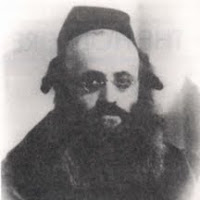
Rabbi Israel Meir Kagan, better known as the Chofetz Chaim for his classic work on the sanctity of speech, was one of the major Rabbinic leaders of the late 19th and early 20th century. To view the Prezi associated with this lecture, click on the image below or here.
Hello students– We are scheduled to resume our lecture series this evening with a presentation on the Chofetz Chaim,one of the most influential Rabbinic thinkers of the late 19th and early 20th century. Rabbi Israel Meir Kagan is known principally for his dramatically creative analysis of the topic of forbidden speech (lashon ha-ra), and rose……

This video describes the changes in the political boundaries of the State of Israel from its inception 1948 through the disengagement from Gaza in 2005. Part of the Essential Lectures in Jewish History series by Dr. Henry Abramson. To view the Prezi associated with this video please click here.

Jacob Rodrigues Periera (1715-1780) was the inventor of dactylology, a method for teaching deaf-mutes to communicate. A crypto-Jew from Portugal, his first student was his sister. His methodology received phenomenal acclaim, he received honors from the King of France and was named to both the Royal Society of London. This video is part of This……

This is a brief academic presentation of the history of the Nazi attempt to destroy the Jews of Europe during World War II. Part of the Essential Lectures in Jewish History series by Dr. Henry Abramson. To view the Prezi used in this lecture, please click here.

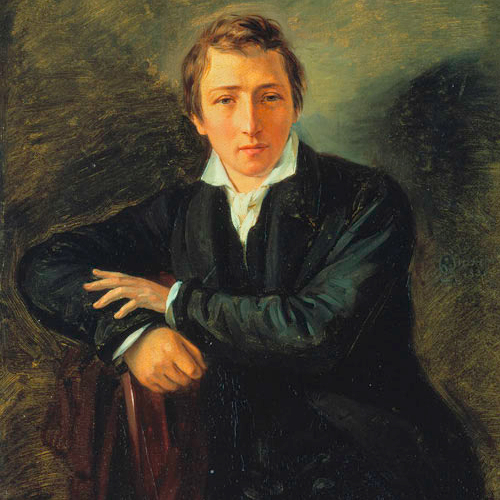
Revered by many as Germany’s greatest poet, Heine struggled mightily with his Jewish identity in the culturally inimical milieu of the 19th century. This phenomenon, known as Judenschmerz, was widespread among 19th century western European Jews. Despite his 1825 conversion to Christianity, Heine maintained a long, albeit conflicted, relationship to his Jewish background. Part of……

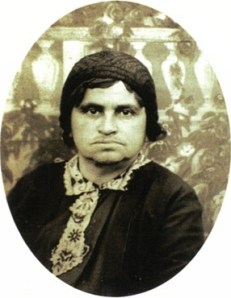
Sarah Schenirer (1883-1935) founded the Bais Yaakov (Bet Ya’akov) school system for women. One of the most visionary educators of the twentieth century, her movement had global impact. To view the Prezi associated with this lecture, please click here.

Baptized at age 12 as the result of his father’s dispute with a synagogue, Benjamin Disraeli (1804-1881) rose to prominence as a novelist and politician, serving several times as England’s Prime Minister. Colorful and flamboyant, Disraeli dismissed his antisemitic critics by emphasizing, rather than downplaying, his Jewish origins.

The discovery of the mutilated body of a young boy in Kiev led to the false arrest of a Jewish laborer named Mendel Beilis. Ignoring the argument of investigating officers, the Russian government under Tsar Nicholas II pressed ahead with the prosecution of Beilis, arguing that the boy was murdered as part of a Passover-related……

A thematic introduction to the topic of women in Jewish history, part of the Essential Lectures in Jewish History series by Dr. Henry Abramson. To view the Prezi associated with this lecture please click here.

In October of 1946, ten Nazi defendants were hung on gallows erected by the International Military Tribunal. One of the most notorious, the propagandist Julius Streicher, uttered the phrase “Purimfest 1946” moments before his death, unconsciously echoing a mysterious passage in the Biblical book of Esther itself. Fascinating footnote in Jewish History!
Rabbi Yisrael Lipkin of Salant (Israel Salanter, 1810-1883) was the founder of the modern Mussar movement that revolutionized traditional Jewish education. Controversial during his lifetime, his ideas ultimately permeated the Yeshiva system as a whole. Part of the Jewish Biography as History series in Jewish History.

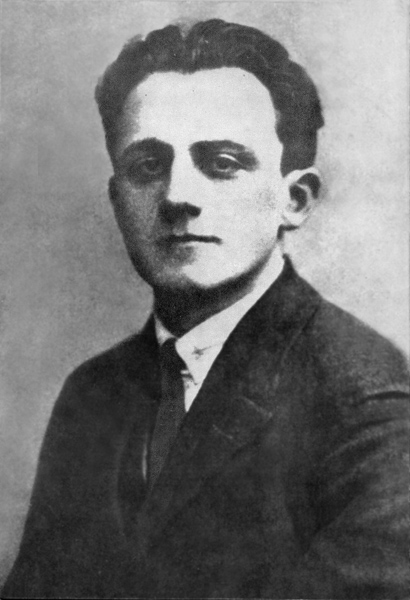
Part I: Part II: Part III: Solomon Mikhoels (1890-1948) was one of the most prominent actors and directors in early Soviet Russia. His career coincides with the brief flourishing of Yiddish culture under the policy of korenizatsiia, or “indiginization,” when the Communist authorities sought to develop folk culture as a means of developing loyalty to the……

Shimon Dubnow (1860-1941), a noted historian and activist whose theories of Jewish survival in the diaspora were extremely influential in the shaping Jewish identity in the modern world, from the future of Russian Jewry to the establishment of the modern Federation movement in the United States. Dubnow’s scholarship was inextricably intertwined with the effort to……
Moses Mendelssohn was a hugely influential thinker in 18th-century Germany. An unusually gifted intellect, he became the primary spokesperson for the emancipation of Jews in the 18th century, and his cause was championed by many non-Jewish liberals of the era. Heralded as the founder of the Reform movement even though Mendelssohn himself maintained an observant……

Nathan of Hanover is best known for his moving chronicle of the Khmel’nyts’kyi (Chmielnicki) Rebellion. Entitled Yeven Metsulah (“The Abyss of Despair”), it records with remarkable fairness the social, political, economic and religious background of the mid-17th century Ukrainian movement against the Poles, along with the horrible pogroms perpetrated in the context of that violent……

Here’s the Torahcafe.com edited version, in one piece, with the PPTs integrated. A little easier to watch.

Here’s a lecture I delivered at the Shul of Bal Harbour, not part of the regular HIS 155/156 Series, but kind of nice. Edited by the great people at TorahCafe.com. Please click on the icon above to see the video. I hope you find it interesting!

The nice folks over at TorahCafe took my lecture on Rabbi Yosef Karo and worked their magic on it, integrating the PowerPoint well with the lecture, and edited it down to a tighter presentation. Please click on the TorahCafe icon below to view the improved version.