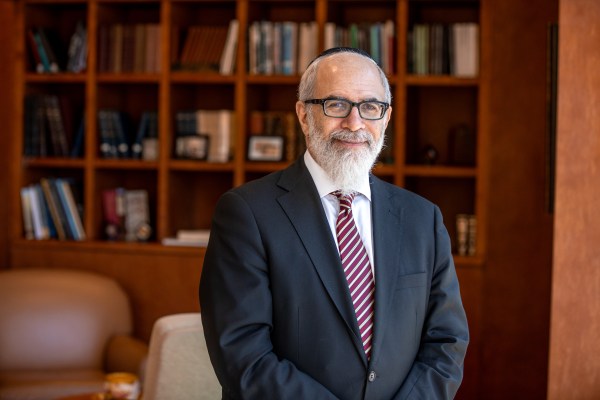
Really looking forward to meeting this community!
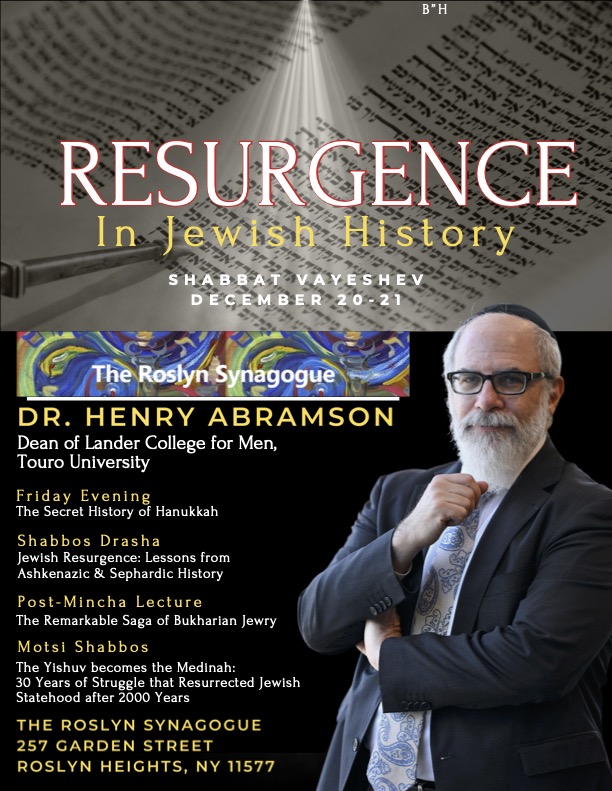
Lectures in Jewish History and Thought. No hard questions, please.


A presentation on the life and work of Betty Friedan, a prominent American Jewish feminist leader. The author of the landmark The Feminine Mystique (1963), she later became the Founder of the National Organization of Women, and an important political activist for women’s rights. The lecture was held at the Young Israel of Bal Harbour on May 29,…
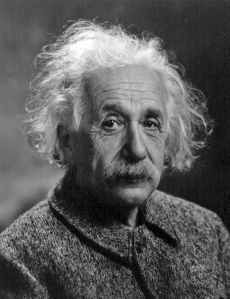
A presentation on Albert Einstein (1879-1955), one of the best-known Jews of the twentieth century. Although he had a complicated relationship with Judaism, he maintained a distinct pride in his Jewish identity, and once said “A Jew who abandons his Judaism is like a snail that abandons its shell. It’s still a snail.” The lecture…

An excerpt from The Kabbalah of Forgiveness: A Reader’s Guide to Rabbi Moshe Cordovero’s The Palm Tree of Devorah, a new translation and commentary on the 16th-century classic of Kabbalistic musar, is now available online. Anticipated publication date is August 2013. The Palm Tree of Devorah first appeared in 1588 and became and instant classic.…

A presentation on the life and work of Stephen Samuel Wise (1874-1949), an important American communal leader. The lecture will take a broader focus, looking at the history of Jewish settlement in the United States during the 19th century and the major issues facing this immigrant community through the middle of the twentieth century. The…

A study of the life of Menachem Begin (1913-1992). A native of Poland, he was a proponent of Vladimir Jabotinsky’s Revisionist party that stood in dramatic contrast to the dominant left-wing tendency in the Zionist movement. A major figure in Israel’s struggle for statehood, and a founder of the Likud party, he was elected to…

This lecture presents a broad overview of the three main intellectual-religious trends present in 19th century Jewish Eastern Europe: the traditionalist Mitnagdim, the innovative Hasidim, and the modernizing Maskilim. Good as an overall introduction, although I go into more detail on all of these movements in other lectures on this website. Taped on April 21,…

A presentation of the life of Golda Meir (1898-1978), spanning her immigration to Israel in 1921 through the end of her term as the fourth Prime Minister of Israel in 1974. The lecture will discuss the foundations of the Yishuv, the pre-state Jewish community, and touch on the major social and military conflicts that Israel…

Evgenia Ginzburg (1904-1977) was a Jewish woman who endured the horrors of the Stalinist Gulag. Charged and convicted of anti-Soviet activity in 1937, she was sent to the infamous work camps of Siberia for nearly two decades until her case was reviewed two years after Stalin’s death. She was ultimately rehabilitated, and published her memoirs…
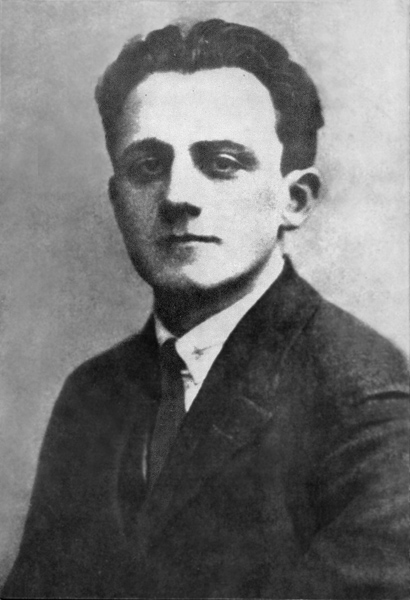
An examination of the life and work of Emanuel Ringelblum (1900-1944), the heroic Polish scholar who organized the underground Oneg Shabbat society in the Warsaw Ghetto. Ringelblum recognized the extreme and unprecedented nature of the Nazi onslaught early in the war, and brought together a group of highly dedicated volunteers who recorded every aspect of…
Part I: Part II: Part III: Solomon Mikhoels (1890-1948) was one of the most prominent actors and directors in early Soviet Russia. His career coincides with the brief flourishing of Yiddish culture under the policy of korenizatsiia, or “indiginization,” when the Communist authorities sought to develop folk culture as a means of developing loyalty to the…

Shimon Dubnow (1860-1941), a noted historian and activist whose theories of Jewish survival in the diaspora were extremely influential in the shaping Jewish identity in the modern world, from the future of Russian Jewry to the establishment of the modern Federation movement in the United States. Dubnow’s scholarship was inextricably intertwined with the effort to…
Moses Mendelssohn was a hugely influential thinker in 18th-century Germany. An unusually gifted intellect, he became the primary spokesperson for the emancipation of Jews in the 18th century, and his cause was championed by many non-Jewish liberals of the era. Heralded as the founder of the Reform movement even though Mendelssohn himself maintained an observant…

The Haskalah was a major intellectual-political movement of the 18th and 19th centuries. Seeking political emancipation and intellectual freedom, it challenged the hegemony of the traditionalist authorities, leading to widespread assimilation on one hand but exceptionally creative solutions to modernity on the other. Part of the Essential Lectures in Jewish History series. To view the…
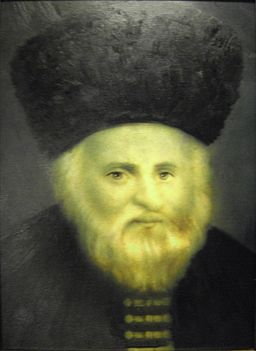
Rabbi Eliyahu ben Shlomo, the 18th century Talmudic scholar better known as The Vilna Gaon, is revered as the father of traditional Lithuanian Judaism. Part of the Jewish Biography as History series by Dr. Henry Abramson.

Dr. Bernard Lander (1915-2010) was one of the most influential Jewish educators of the 20th and 21st century. Scholar and social activist, he founded Touro College in 1971, which now serves almost 19,000 students world wide. This short video was prepared to commemorate the recent anniversary of his passing.
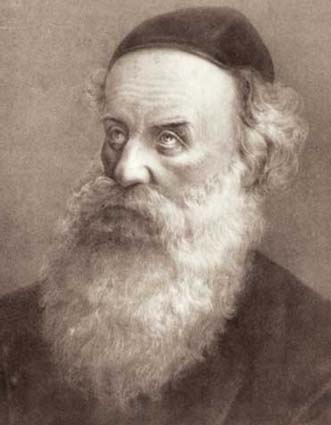
Author of the Tanya, a hugely influential 18th-century work of Jewish spirituality, Rabbi Scheur Zalman of LIadi is considered the founder of the Chabad (Lubavitch) movement. People Of The Book: Classic Works Of The Jewish Tradition By Dr. Henry Abramson This article appeared in the February 25, 2016 edition of the Five Towns Jewish…
A brief overview of the settlement and activity of the Jewish people in the Polish-Lithuanian Commonwealth. Part of the Essential Lectures in Jewish History series by Dr. Henry Abramson. To view the Prezi associated with this lecture, please click here.

Bilhah Abigaill Levy Franks lived in New York City in the early decades of the eighteenth century. Her correspondence with Naftali, her eldest son, reveals much about the inner life of a Jewish woman in colonial America. Part of the Jewish Biography as History series by Dr. Henry Abramson.

Forced debates between Jews and Christians were a feature of medieval Jewish life, often with dire consequences.
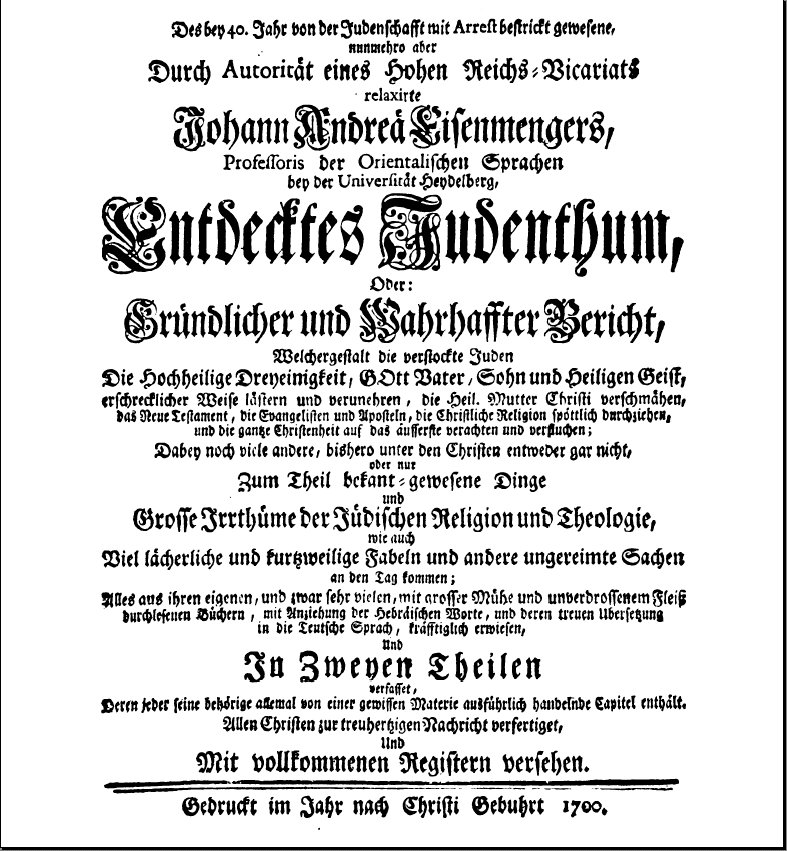
Posing as a would-be convert to Judaism, Johann Andreas Eisenmenger studied Rabbinic literature for 19 years before publishing a massive two-volume denunciation of the Talmud called “Judaism Revealed” in 1711. His defamation of Jews and Judaism has been the foundation of much antisemitic diatribe for the last three centuries. Part of the Jewish Biography as…

Sarah bas Tovim was one of the most prolific authors of tekhines, prayers composed specifically for Jewish women in Eastern Europe. Her work illustrates the deeply spiritual lives of simple women, and sheds significant light on the social history of the shtetl. Part of the Jewish Biography as History series by Dr. Henry Abramson.

This brief lecture inaugurates a new series: Essential Lectures in Jewish History, brief overviews of major themes and periods, designed as introductions to more detailed treatments in the Jewish Biography as History s series. Enjoy in good health! Lectures by Dr. Henry Abramson. To view the Prezi associated with this lecture, please click here.
My son Alexander shows up in official Miami Marathon video at 0:38 seconds (red bandana) http://youtu.be/gxJRzYzQfoQ Please sponsor him at http://www.teamfriendship.org/Alexander to help kids with disabilities!

Revered by many as a pivotal figure in modern religious philosophy yet reviled by his contemporaries in the Jewish community of Amsterdam, Baruch Spinoza was placed in herem (excommunication) in 1666 for his public pronouncements challenging religious doctrine. Part of the Jewish Biography as History lecture series by Dr. Henry Abramson.