Early adopters of the newest disruptive technology, the Soncino family were the first Jewish printers in 15th century Europe. This lecture discusses some aspects of the early decades of Jewish printing, and meditates on the meaning of the current digital revolution for Jewish culture and society.
Planning to attend Limmud Miami this year?
I would love to see you at the session on The Kabbalah of Forgiveness! Register here.
Rabbi Shlomo ben Adret, known to his student by the acronym of his name Rashba, was one of the most brilliant Talmudists of medieval Spain. Student of Nachmanides (Ramban) and teacher to the Ritva, his writings are studied to the present day.
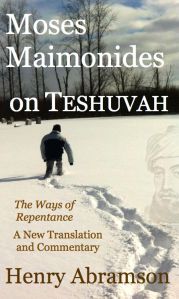
Here’s Dr. Abramson in print (because there are times and places where one just can’t enjoy a video). Check out the eBook versions as well.
The WordPress.com stats helper monkeys prepared a 2014 annual report for this blog.
Here’s an excerpt:
The concert hall at the Sydney Opera House holds 2,700 people. This blog was viewed about 31,000 times in 2014. If it were a concert at Sydney Opera House, it would take about 11 sold-out performances for that many people to see it.
Preserved in a medieval anthology of women poets, Qasmunah’s unique voice stands out as one of the few surviving voices of the Jewish Golden Age in Spain.
Recent Publications by Dr. Abramson (better in print than on video anyway):
What, exactly is Chanukah (or is it Hanukah, or Hannukkah)? This short video describes the historical origins of the holiday, notes the ironic nature of its observance in the American context, and has a couple of jokes besides.
Suggested Holiday Gifts (Maybe for people you don’t especially like).
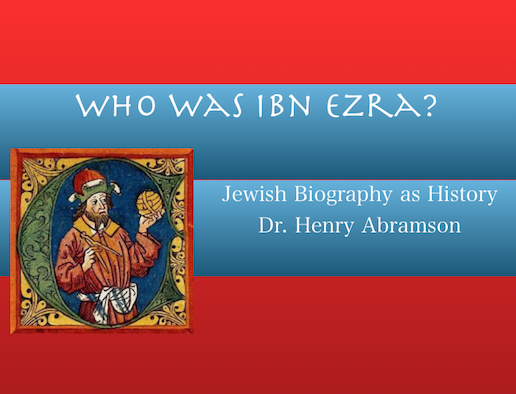
Hailed as one of the greatest commentators on the Torah, Abraham ibn Ezra lived a life of great scholarly accomplishment amidst great personal suffering.
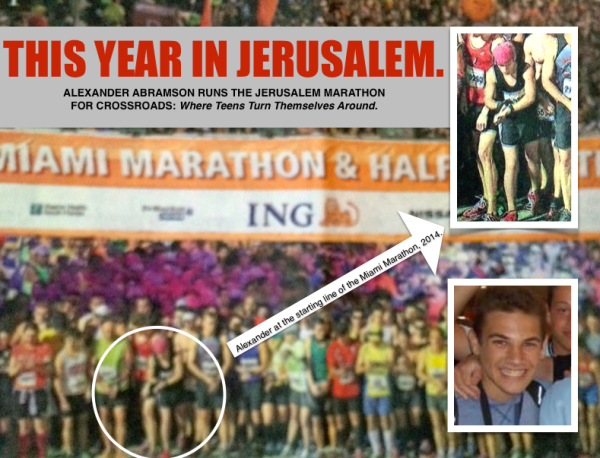
Hey everybody, this year I have the good fortune to be in Israel and to be able to run the Jerusalem Marathon. The charity that I am going to be running for is called Crossroads and I believe it is an excellent cause. Their mission is to help teens who are stranded on the streets whether because they are homeless, receiving abuse, or have drug or alcohol substance issues, and Crossroads gets them back into a better place. I myself have never been in any of those negative situations but I can’t imagine what I would do in their situations. I’m assuming it’s very scary and traumatic, thankfully though for those teens there is a organization (Crossroads) that helps them get out of their horrible situation and I would like to help them out. Please donate whatever you can to this worthy cause at my page http://run4crossroads.com/give/alexander-abramson/ whatever you can give is fantastic, thanks.
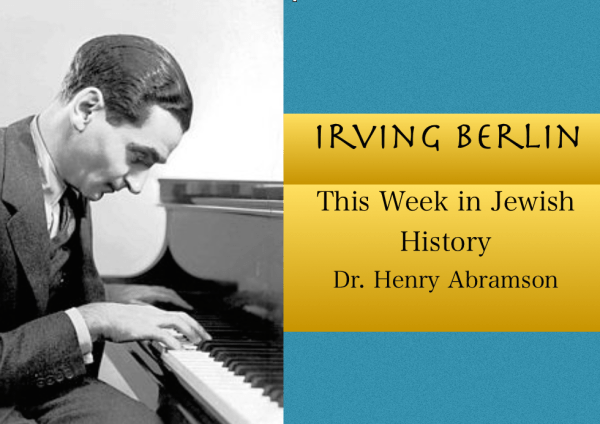
At this time of year it’s impossible to escape the ubiquitous holiday music that assults us whenever we turn on the radio or walk through a shopping mall. Few listeners are aware, however, that the syrupy, commercialized versions of holiday cheer have their origins in the musical genius of a Jewish immigrant from Siberia, the phenomenal Irving Berlin. Whatever we may think of the 21st century interpretations of his work, it is undeniable that Berlin had the amazing ability to express the core values of American culture in a way that transcended religious ideology.
Here’s some additional useful comments from Dr. Carl Singer:
His actions were acknowledged with such accolades as the Army’s Medal of Merit from President Truman in 1945; a Congressional Gold Medal for “God Bless America” and other patriotic songs from President Eisenhower in 1954; and the Freedom Medal from President Ford in 1977. In 2002, the U.S. Army at Fort Belvoir, Virginia, named the Army Entertainment Division (AED) World Headquarters “The Irving Berlin Center” in his honor. Also that year he was commemorated on a U.S. postage stamp.
I believe there was a slight error towards the end of the presentation: “CongressionalMedal of Honor” — is likely a misnomer. To the best of my knowledge there is no such medal.
There is the Congressional Gold Medal. The “Medal of Honor” (no “Congressional“) is the nation’s highest military award.











 Henry Abramson